

Self-Watering Containers:
A Smart Solution for Hot or Dry Climates
I love container gardening! And in some of the places where I have lived, containers offered the only chance I had to garden – on a terrace, on a patio, on a balcony. But container gardening inside and outside in arid regions like my home of Colorado is a real challenge.
Potted plants and containers dry out more quickly than raised beds or plants in the ground. Their soil is more exposed, water evaporates more quickly, and they need more consistent watering. And many people assume this only applies to plants outside, but it is also true for houseplants. The humidity levels inside suffer as well which makes life for our houseplants more challenging.
Traditional watering methods often lead to water waste and inconsistent moisture levels. Not to mention: watering is time consuming! And what happens when you go on that July vacation? Will the neighborhood teen remember to water your plants every day?
Let me introduce you to the joys of the self-watering planter! When well-designed, these planters can be the solution to all of your watering woes! They aren't always inexpensive, but I would offer that the convenience and the health of your plants justifies the expense. I mean: if your plants don't die, that saves money, right?
So let's talk about when to use them, what to look for, and my favorite self-watering planters and how they perform in the hot and dry Colorado summers.
NOTE: Crescent Garden sent me their products to review, but the opinions expressed are purely my own.
Why Self-Watering Containers Matter in Dry Climates
Do you ever feel like you need to water your containers multiple times per day in the summer? This can certainly be true, and as inconvenient as it is for you to maintain, it also means that your plants are stressed constantly. In dry climates, the combination of intense sun and low humidity can cause soil to dry out rapidly. This is particularly true in pots and containers where evaporation can even happen through the sides of the container, depending on how porous the material is.
Of course, one solution is to only plant drought-tolerant plants. And that certainly can help. But even drought-tolerant plants need extra support. They may not be all that drought-tolerant in a pot in the afternoon sun, you know?
Self-watering containers address this issue by providing a consistent moisture supply directly to the plant roots, reducing the frequency of watering and minimizing water loss due to evaporation.
Key Benefits:
Water Conservation: Self-watering planters use a reservoir system that allows plants to absorb water as needed, reducing overall water usage.
Consistent Moisture Levels: These containers maintain optimal moisture levels, promoting healthy root development and plant growth.
Reduced Watering Frequency: With a built-in reservoir, these planters can go weeks without needing a refill, making them ideal for busy gardeners or those with limited access to water.
Prevention of Overwatering: Self-watering systems help prevent overwatering by allowing excess water to drain away, reducing the risk of root rot.
How Self-Watering Planters Work
At a basic level, all self-watering planters work in the same way: the planter has a reservoir for water which keeps the soil moist but not soggy. Instead of watering from the top, moisture travels upward through capillary action: the soil wicks water from the reservoir as it dries out, maintaining a consistent level of hydration around the roots. This prevents both overwatering and underwatering, two of the most common causes of plant stress.
However, HOW this works varies from planter to planter.
The Basic Components
Most self-watering planters include:
A water reservoir – a separate chamber at the bottom that stores extra water.
A wicking system – this could be a wick, mesh, or portion of soil that connects the plant’s root zone to the reservoir.
An overflow hole – prevents excess water buildup and root rot by letting out extra moisture.
A fill tube or indicator – makes it easy to refill the reservoir and sometimes shows how much water is left.
Types of Self-Watering Planter Designs
Wicking Planters – Use a cotton or nylon wick that draws water up to the soil. Great for small houseplants or herbs.
Double-Pot Systems – Feature an inner pot (holding soil and plant) that sits inside an outer pot with water in the base. The two are connected by a wicking layer or mesh.
Sub-Irrigated Planters (SIPs) – Larger containers that use a false bottom or platform to hold a significant water supply below the soil. Ideal for vegetables and outdoor containers.
Smart Self-Watering Pots – Modern versions with sensors or automatic irrigation systems that track soil moisture and water levels, perfect for tech-loving plant parents.
By combining thoughtful design with a bit of science, self-watering planters make it easier to maintain thriving plants—especially for those with busy schedules or less-than-green thumbs.
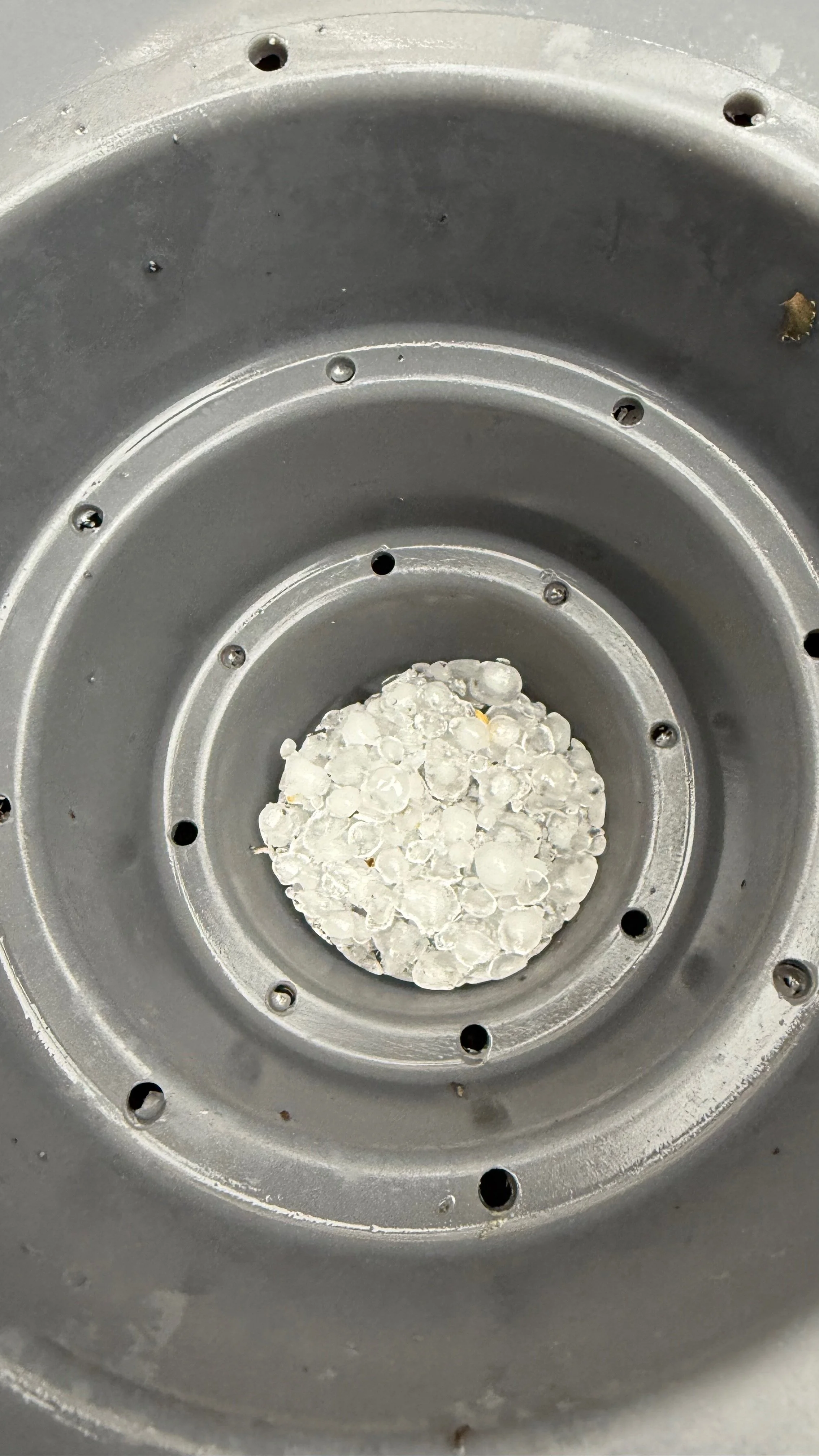
The TruDrop planters have a deep well that when filled with soil interfaces with the water well. Here it’s filled with hail!
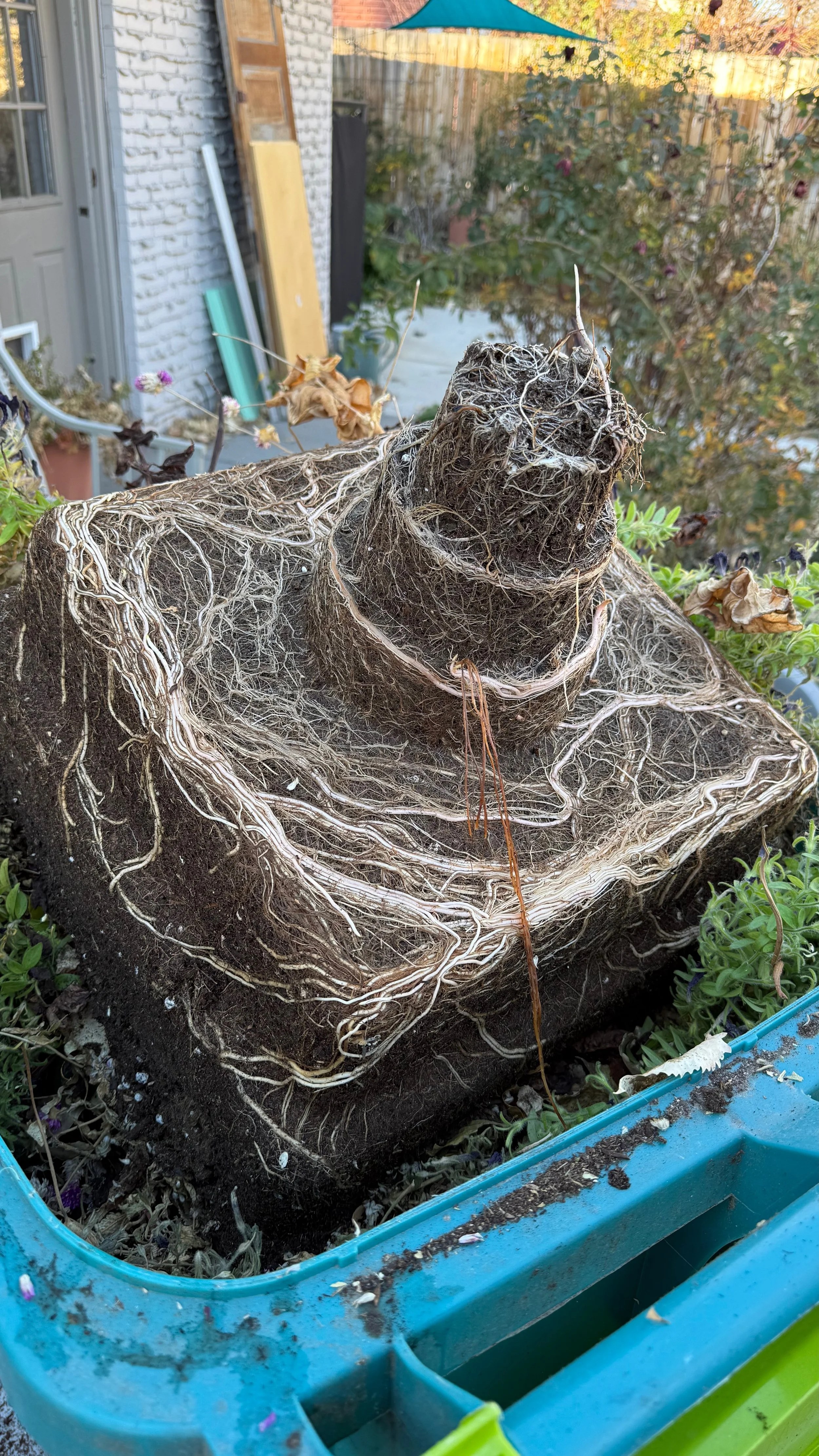
After our first hard freeze I emptied my TruDrop planters, rinsed them, and stowed them for the winter. This is what the roots looked like when I pulled them out! Wow!
My Favorite Self-Watering Planter Solutions
Crescent Garden's TruDrop Planters
Crescent Garden's TruDrop series is designed to meet the needs of gardeners in dry climates. These planters feature a built-in self-watering system that ensures plants receive consistent moisture while conserving water.
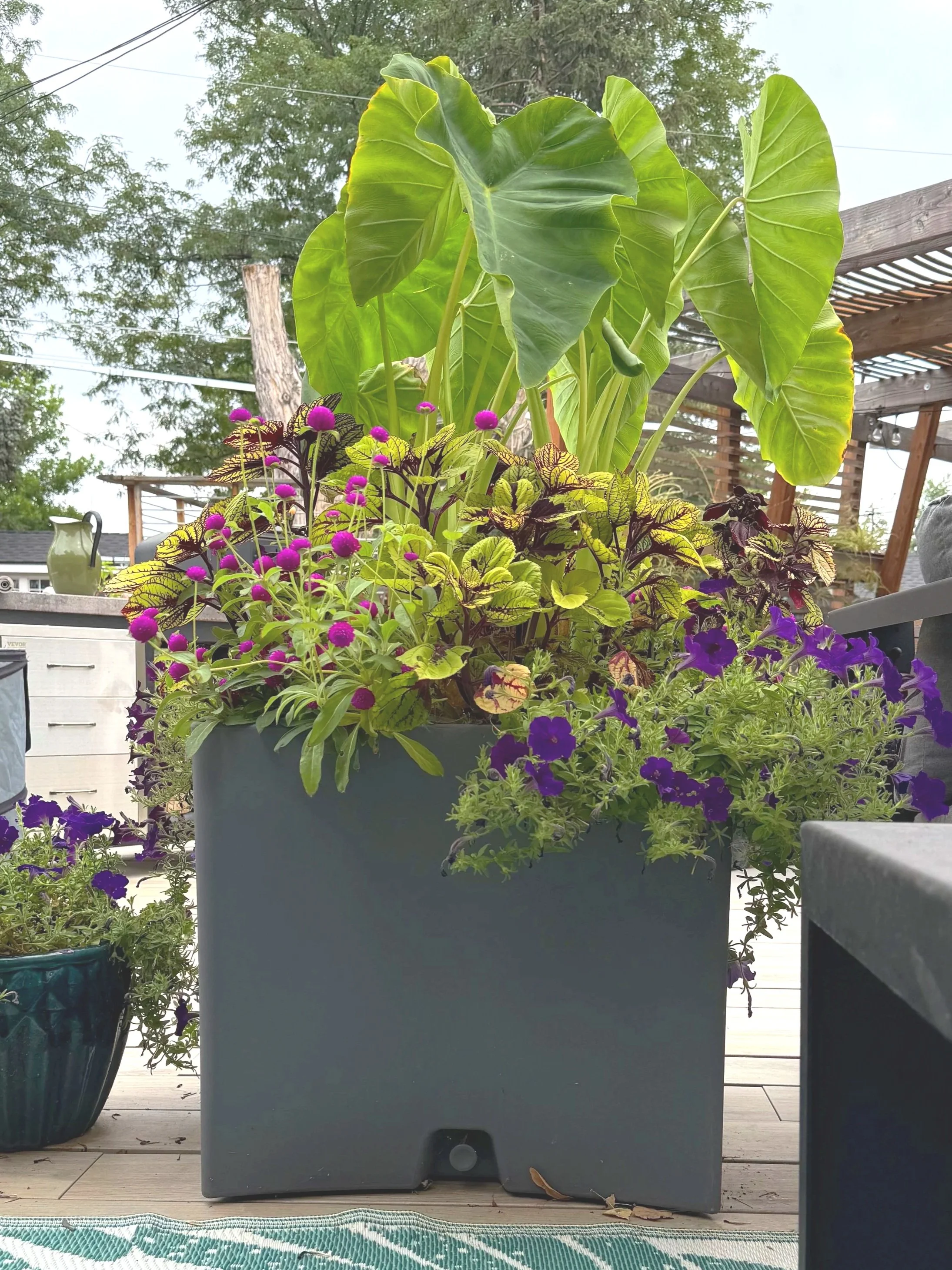
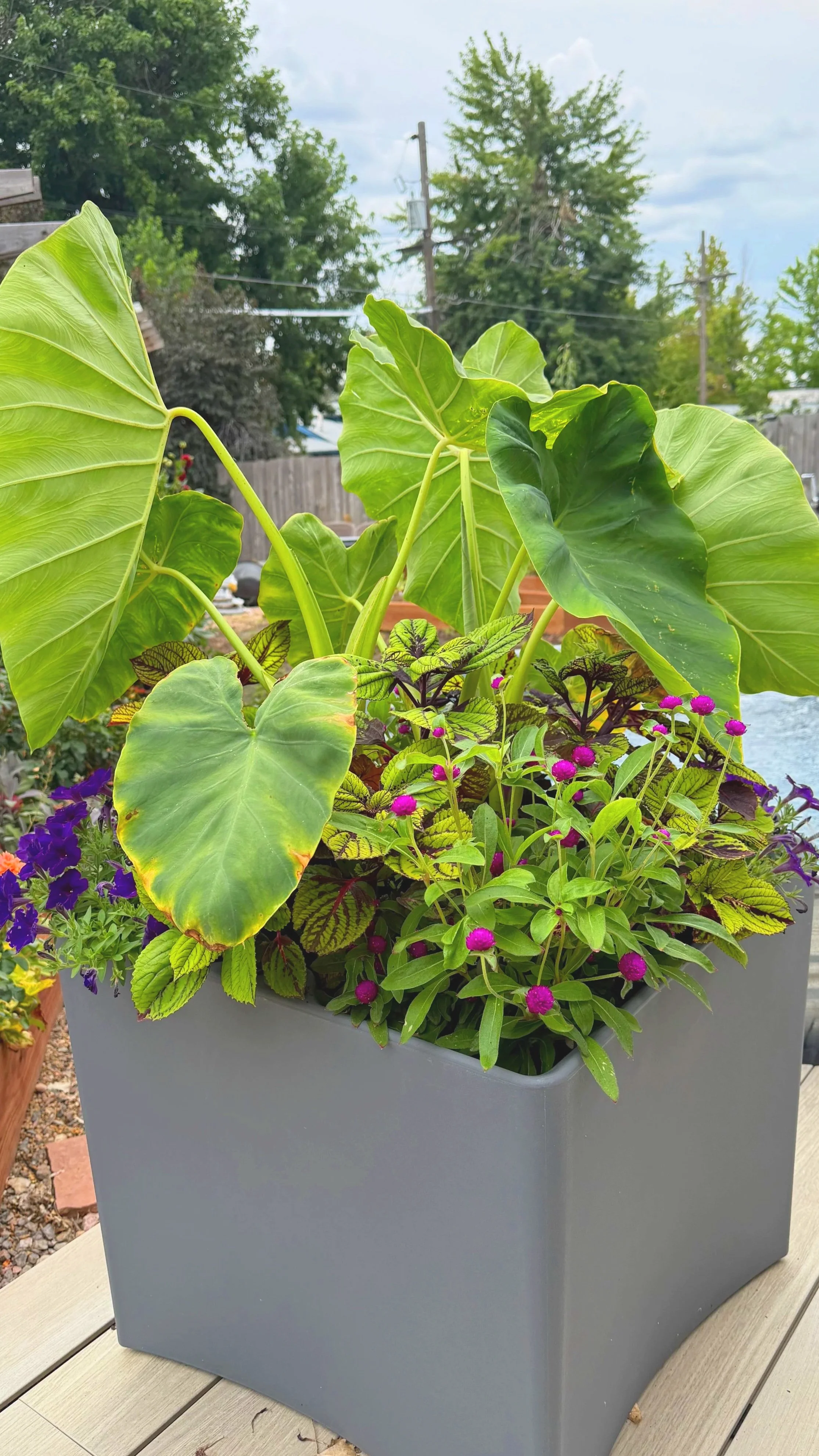
All of that sounds lovely, but do they actually work? Yes, they do! Better than any self-watering planter I have ever used. I have several of their large Pinch planters on my deck. I planted them up with THIRSTY plants – Elephant Ears, Coleus, and Gomphrena. I only had to fill them every 3-4 weeks all summer long – even in the worst of the summer. It was amazing!
My Favorite Features
of TruDrop Planters:
TruDrop One Technology: An integrated self-watering system that allows plants to go weeks without watering.
Easy-to-Read Water Level Indicator: Helps gardeners monitor water levels and refill the reservoir as needed.
Double-Walled Construction: Provides insulation to protect roots from extreme temperatures.Food-Safe and Environmentally Friendly: Made from 100% recyclable materials, these planters are both safe for growing edibles and eco-friendly.
Durability: Resistant to chipping, cracking, and fading, ensuring long-lasting use.
Can you use TruDrop Planters inside? Most definitely. I just haven't. But they are beautiful enough to be used anywhere. And my Pinch planters have castors which make them incredibly easy to move around – inside and out.
I have tried many, many different kinds of self-watering planters. So many of them were, frankly, a waste of money. Crescent Gardens planters are the real deal!
Pleat Pots Planted Out
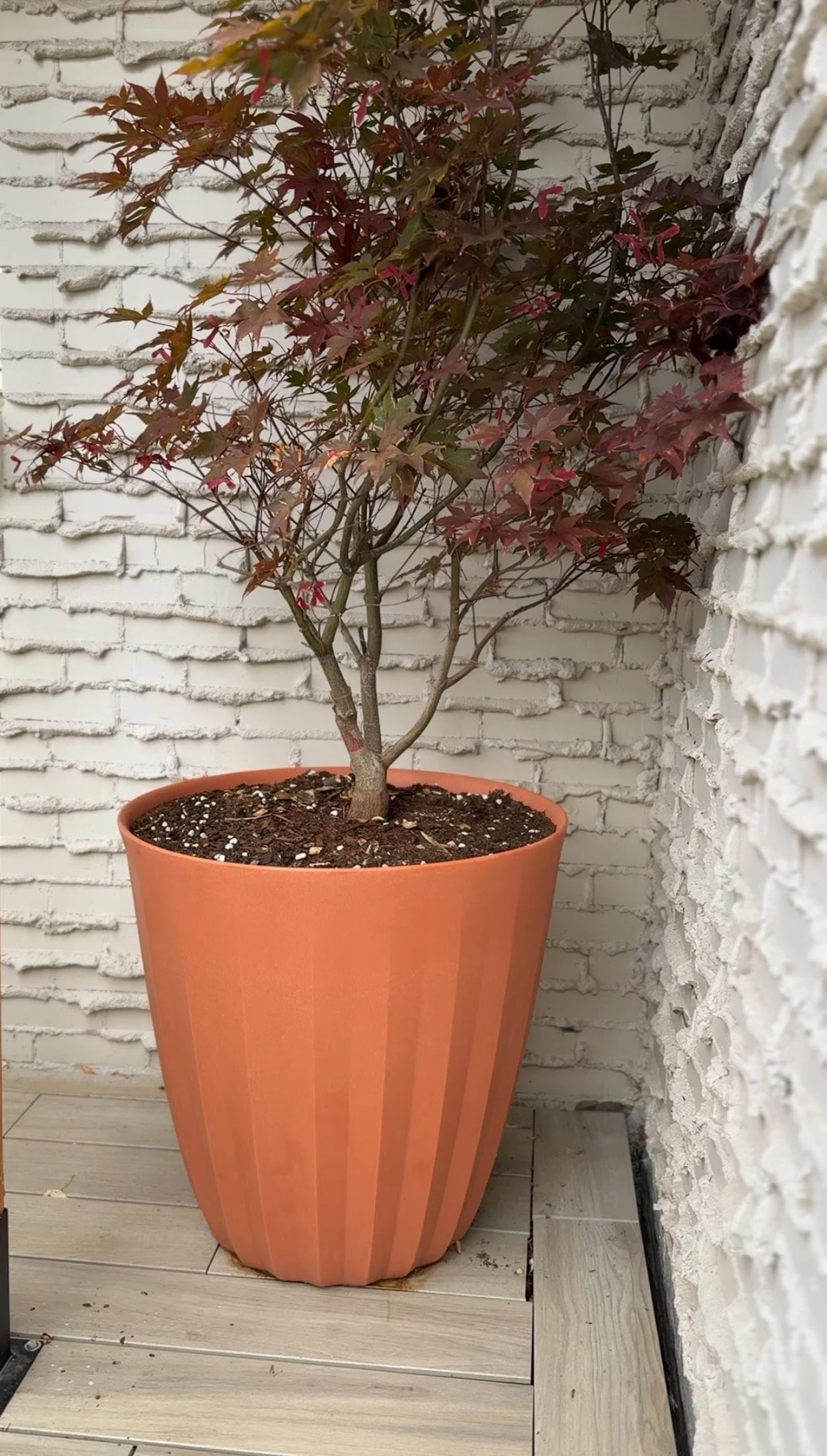
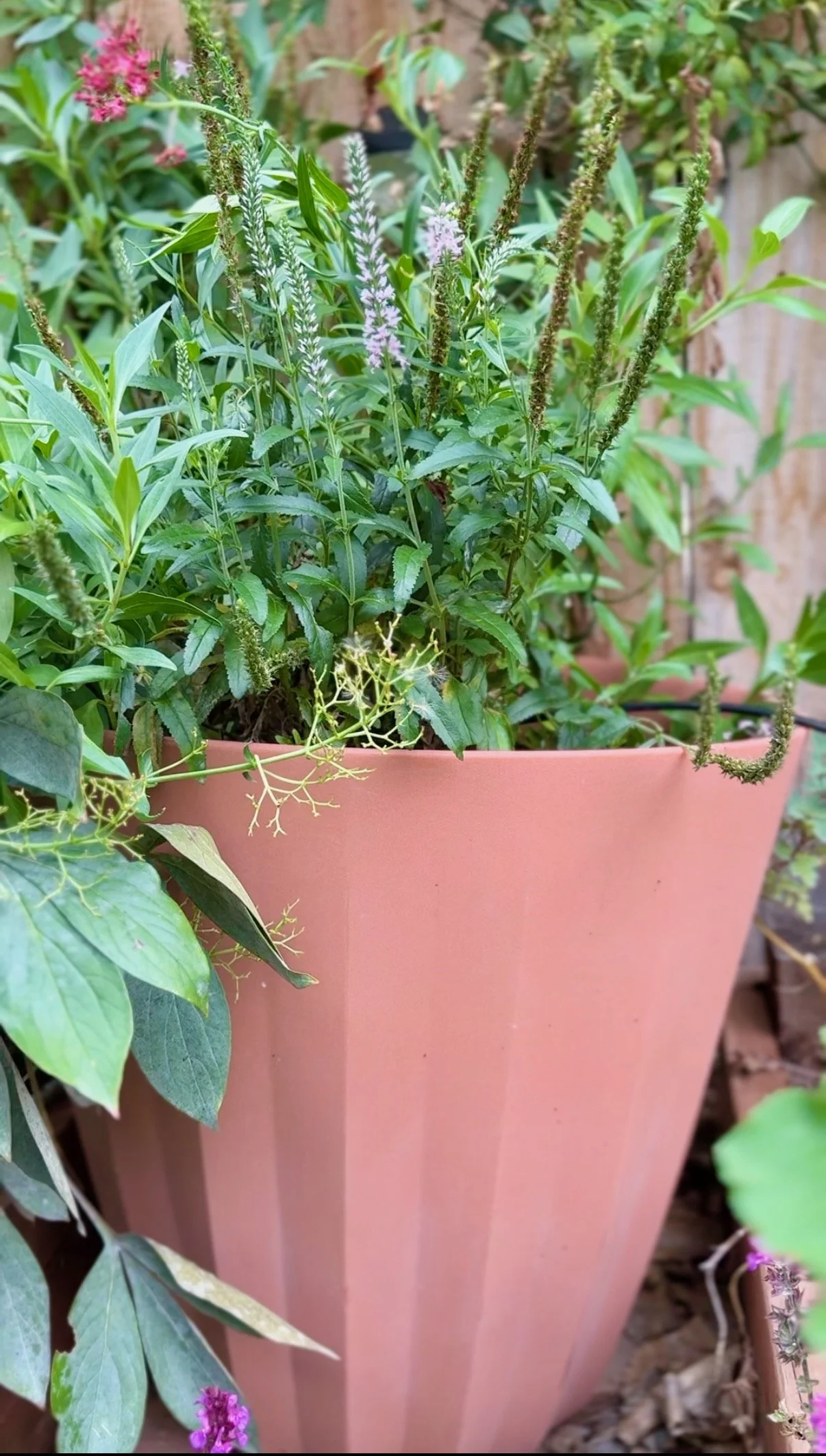
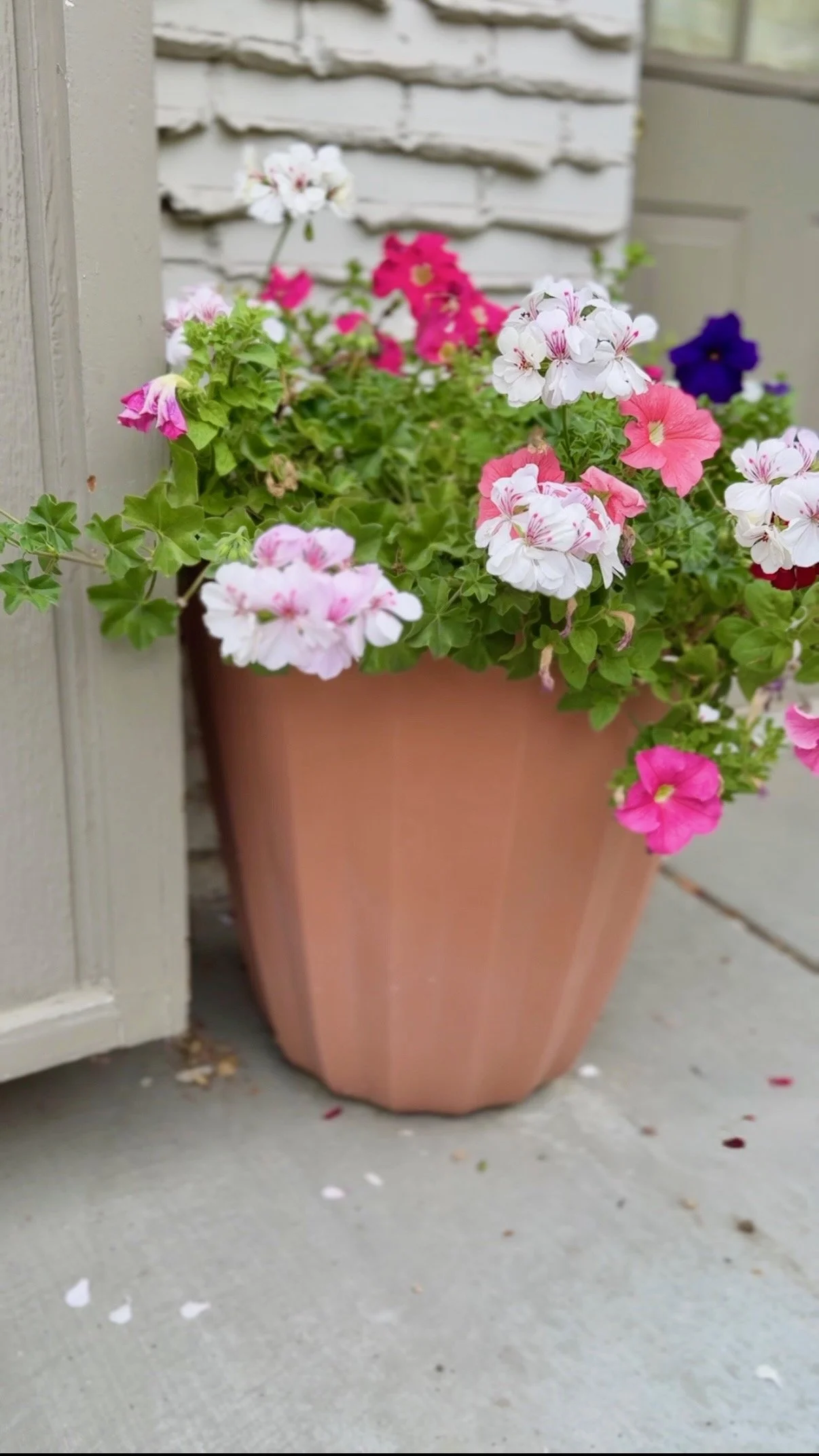
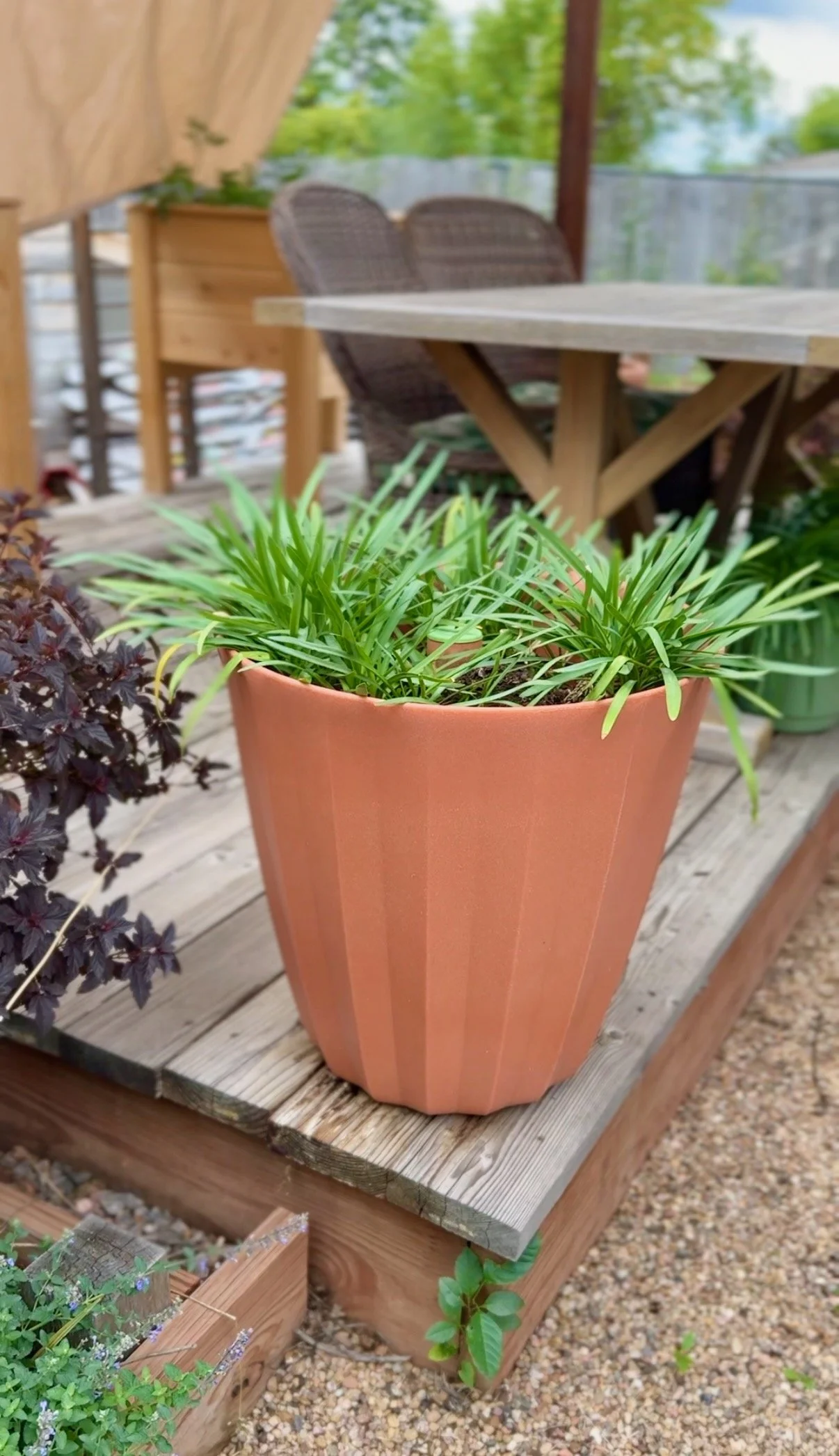
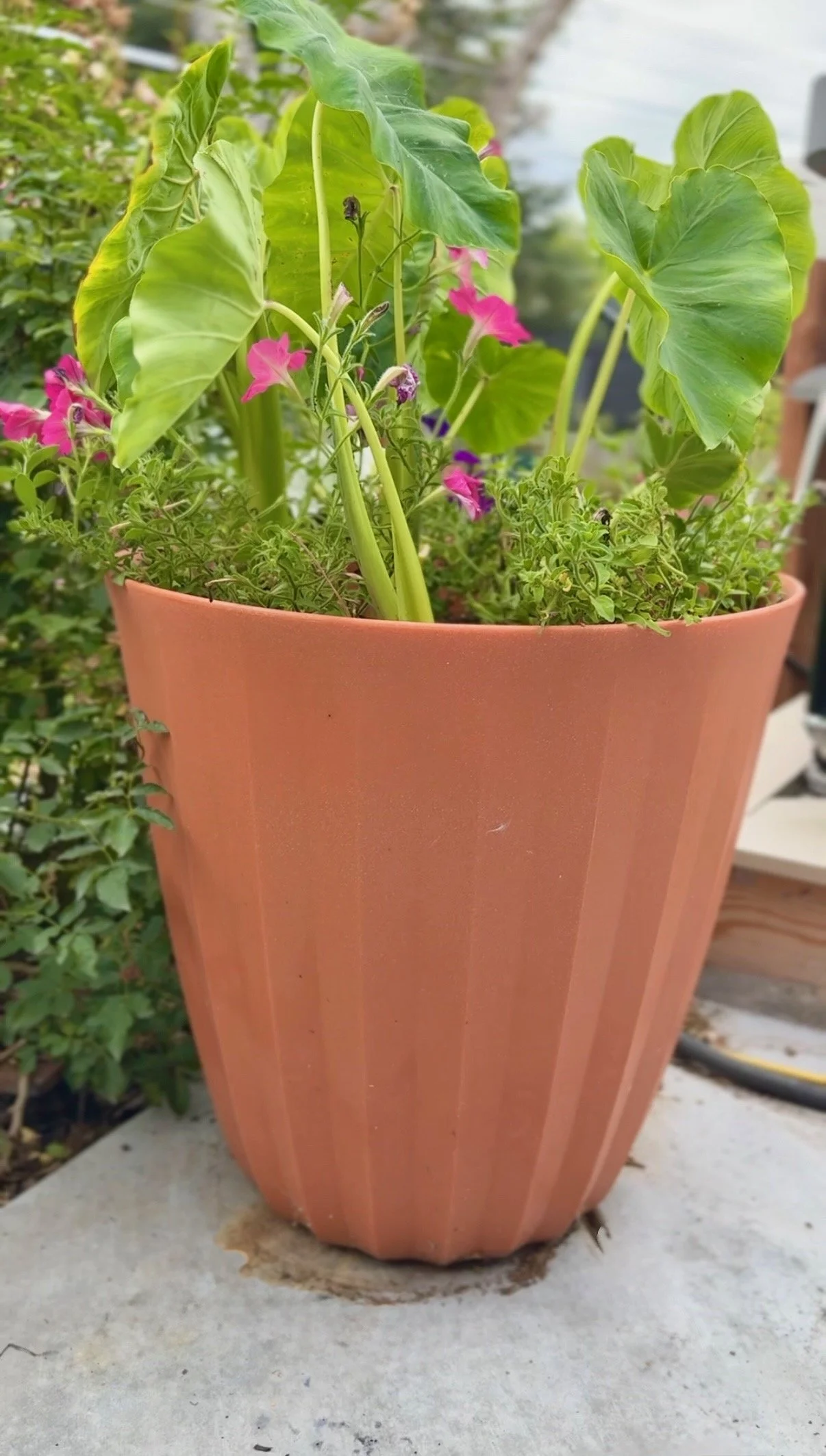
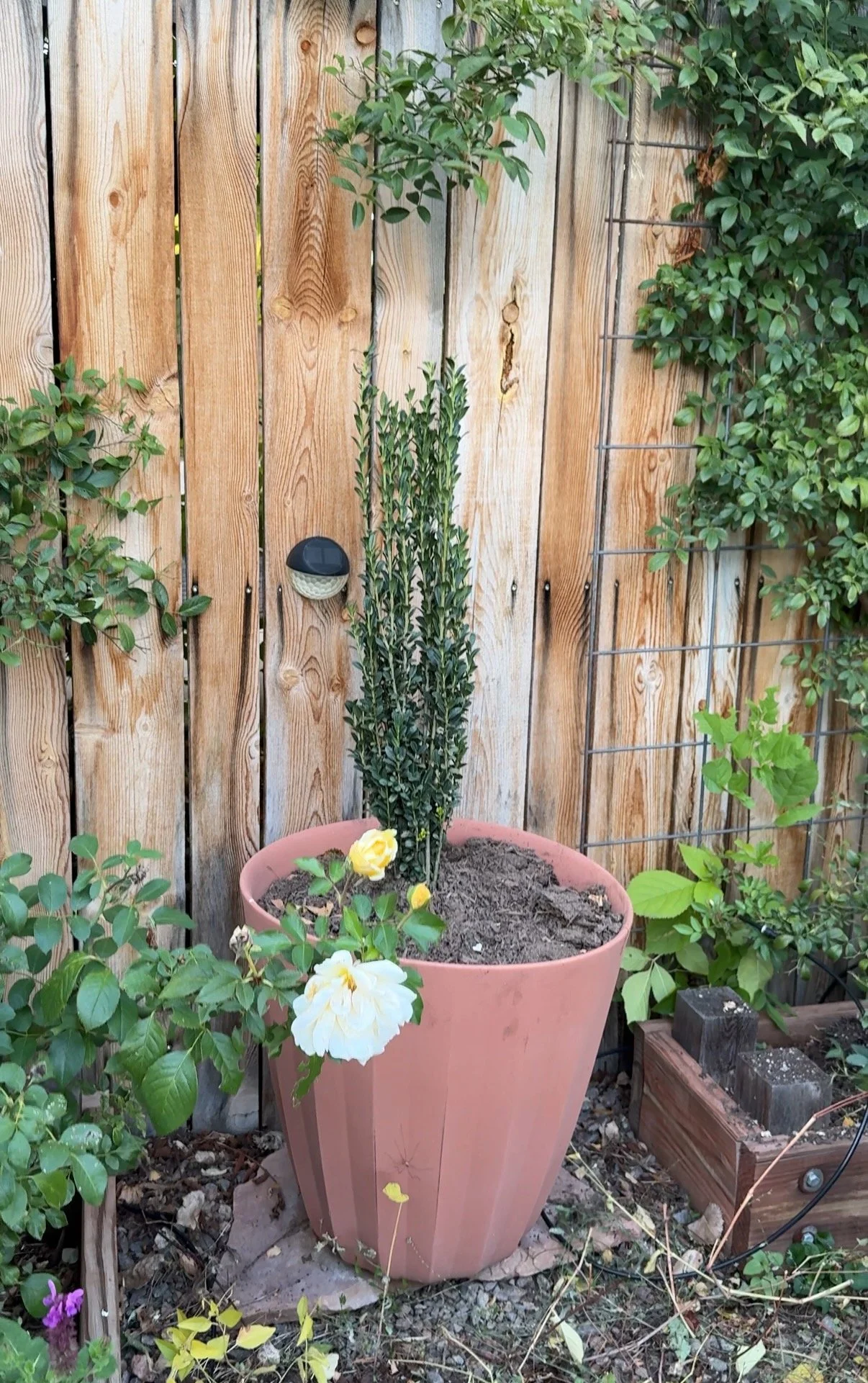
One of my go-to pots in my garden is also from Crescent Garden, and while the Pleat Pots aren’t self-watering, they are the workhorse of my garden. I have collected many of them over the years. They stay outside all winter and haven’t cracked. They have a great volume for water-retention. And they come in a range of sizes. I have several sizes, and they are all planted out in different ways. I absolutely love them!
Best Plants for Self-Watering Planters
Self-watering planters create a consistent moisture environment that keeps roots hydrated without overwatering. But not every plant thrives in these conditions — some love steady moisture, while others prefer to dry out between drinks. Here are some great options to get you started:
Herbs That Love Consistency
Basil – Thrives with steady moisture and sunshine; perfect for kitchen windowsills.
Parsley – Grows lush and green when it never dries out completely.
Mint – Loves damp soil and will quickly fill out a self-watering container.
Leafy Greens
Lettuce & Spinach – Grow fast and stay tender when the soil stays evenly moist.
Swiss Chard – Handles both warm and cool weather, making it ideal for longer growing seasons.
Compact Vegetables
Cherry Tomatoes – Perfect for larger self-watering planters; consistent watering prevents cracking.
Peppers – Steady moisture encourages strong root systems and abundant fruit.
Houseplants That Thrive on Stability
Fiddleleaf Fig – Loves evenly moist soil and will reward you with frequent blooms.
Spider Plant – Tolerates occasional dryness but flourishes with consistent hydration.
Monstera – Thrives on regular moisture, but hates being too wet.
Flowers for Continuous Color
Begonias – Bloom beautifully when soil stays moist but not soggy.
Impatiens – Ideal for shady spots and self-watering containers.
Geraniums – Enjoy steady water with good drainage; perfect for balconies or patios.
Pro Tip: Avoid succulents and cacti — they prefer dry conditions and may suffer root rot in self-watering planters.
at the close…
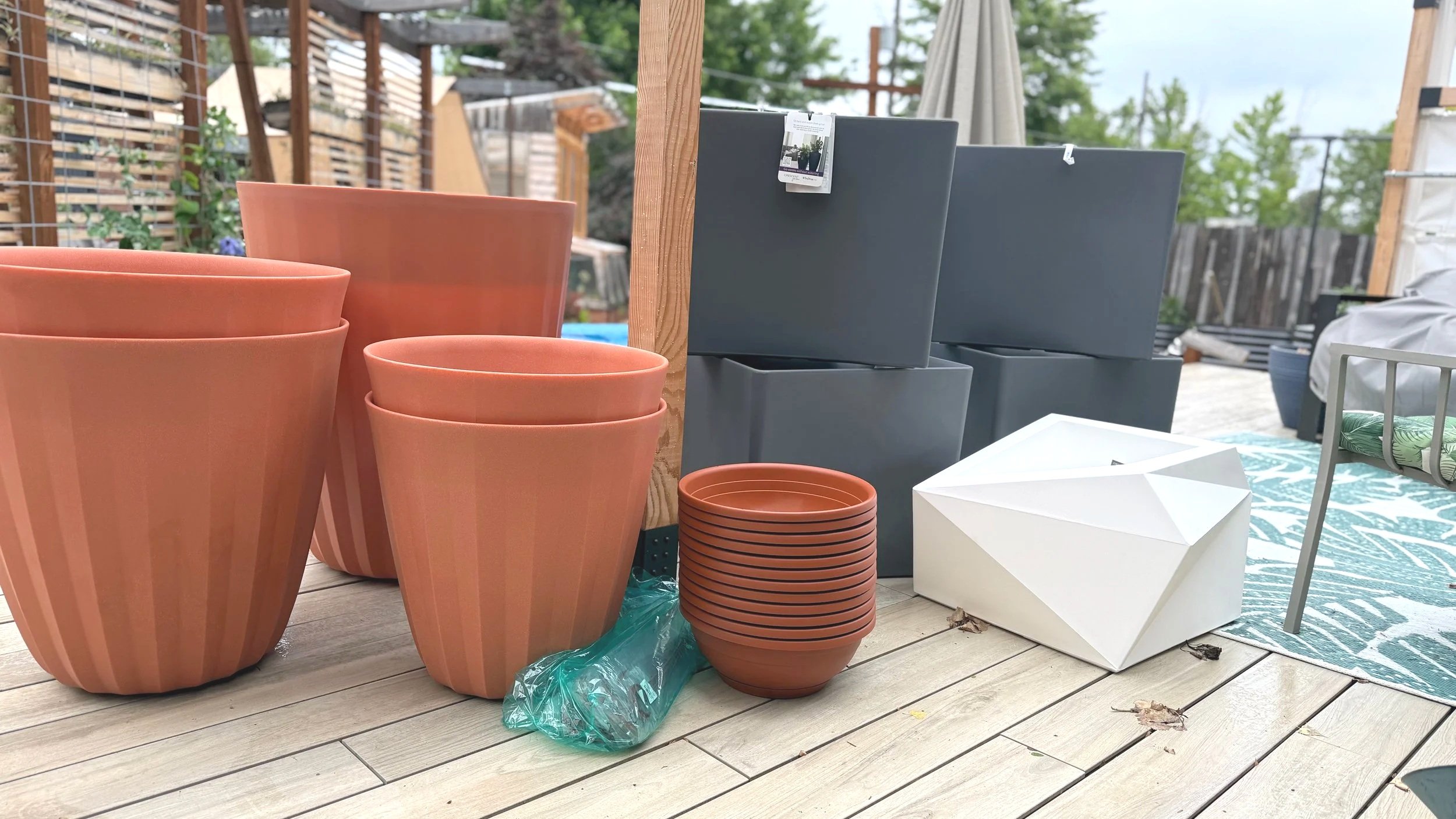
An assortment of my pots from Crescent Garden for the season
Keeping your plants healthy often depends on good watering practices. And self-watering containers make that so much easier. There's nothing worse than watching a plant suffer! Or wondering if your plants will be ok while you are away on a trip. I can't afford to keep every plant in a self-watering planter (I wish I could!). But as I build my collection, I'm so thankful for the great solutions I have discovered along the way.
Happy Gardening!
Angela
Subscribe now so you never miss a thing!