

Keeping Christmas Trees Fresh

How to Keep a Real Christmas Tree Fresh Longer: Science-Backed Tips That Actually Work
I love having a real Christmas tree in my house. Nothing beats the scent, the texture, and the atmosphere of a real Christmas tree. That is unless it dries out too fast. The good news? Keeping your real Christmas tree fresher, greener, and safer for longer isn’t magic; it’s botany.
Understanding how trees work—how they move water, how they manage stress, and how they protect themselves—allows us to care for our holiday trees so that they last longer, and you won't be faced with taking down your tree too soon.
And by too soon, I mean on Christmas Eve! When I was a teenager, we lived in Dallas – not a place known for Christmas tree farms. All of those real trees are trucked in from places like Oregon and North Carolina which means they are cut weeks or even months before we showed up at the lot to choose our tree. Usually we used an artificial tree, but for some reason (perhaps we didn't have our artificial tree yet), my mom, my sister, and I went to buy a real tree that year. We put it up. We decorated it. And we watered it diligently. But by Christmas Eve, it was dry and crispy and dropping needles everywhere.
So while my mom was at work on Christmas Eve, my sister and I undecorated our Christmas tree and put all of the ornaments away.
No real tree for us that year! But Santa came anyway. Phew!
Had we known a few things about how evergreens live and how to keep our tree healthy, we might have been able to prolong the life of our Christmas tree. So let me save you from our sad, sad fate! Knowing what I know now about trees, here are some science-based tips to help your real Christmas tree last longer and stay vibrant all season long.
Ok. Let's get started!

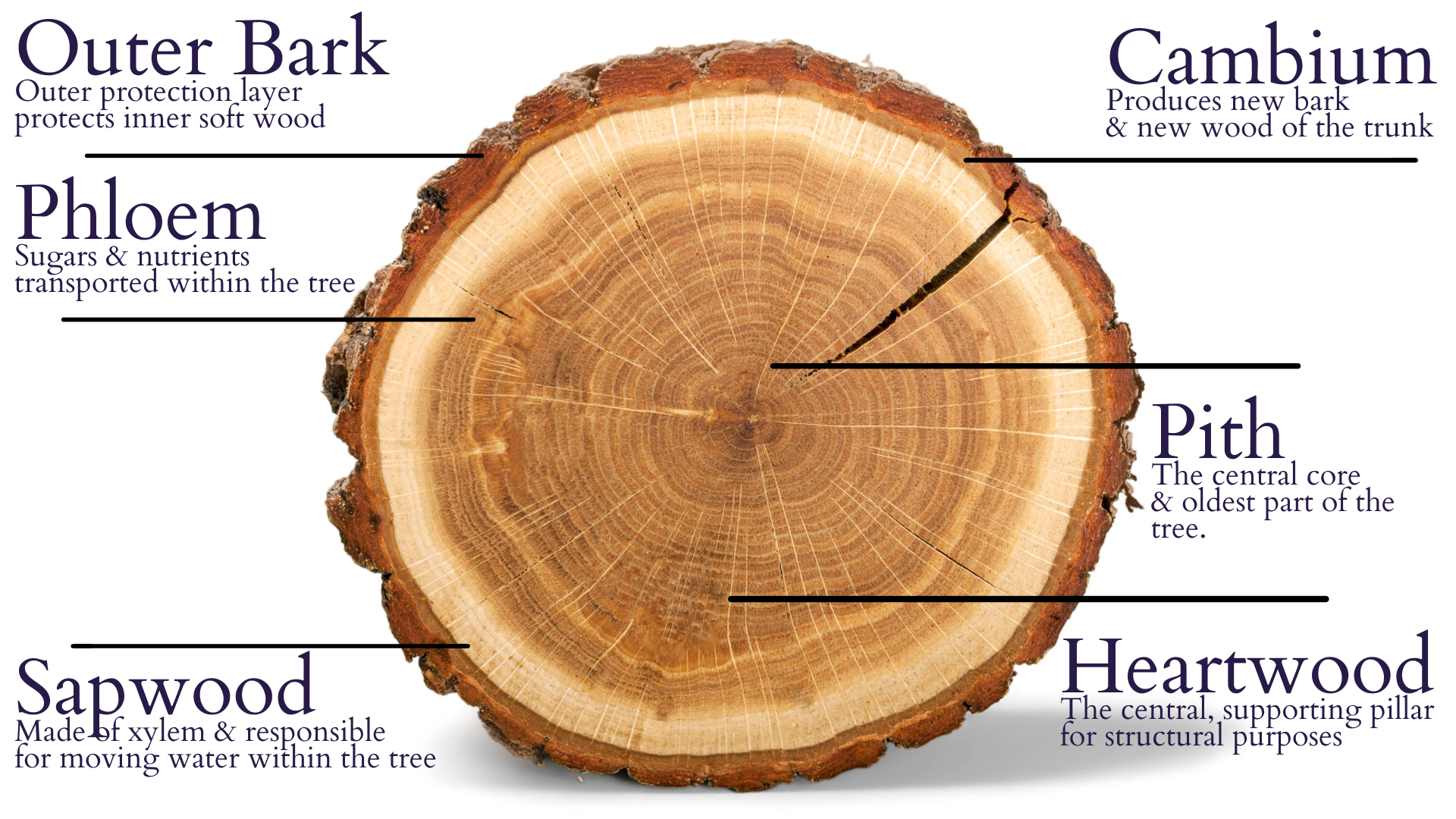
A diagram of the parts of a tree trunk
How Evergreen Trees Work:
A Simple Look Inside the Tree You Bring Home
First, it's important to understand HOW trees work! Afterall, your Christmas tree is alive when you bring it home, and keeping it as healthy as possible prolongs its life inside your home.
Evergreen trees – like all trees sold as Christmas trees – are built for survival, which is part of why they hold up so beautifully during the holidays. Their needles aren’t just tiny leaves—they’re tough and water-saving, wrapped in a waxy coating that keeps moisture from escaping too fast while allowing the tree to release oxygen, one of the byproducts of photosynthesis.
Inside each needle and branch runs a network of microscopic tubes called xylem and phloem. Think of them as the tree’s built-in plumbing system: xylem pulls water upward from the roots, and phloem moves sugars and other nutrients around – even down to the roots when the tree has them. Even after a Christmas tree is cut, much of this system is still functional which is why a tree can keep drinking and stay green for weeks indoors.
If you were to look inside the trunk, you’d see that all the action happens in the sapwood, the lighter-colored outer layer of the trunk just under the bark. This is where the xylem tubes sit—tiny straws that move water from the base of the tree up into the branches. The outer bark simply protects everything inside. When you make a fresh cut on the bottom of your tree, you’re basically opening those straws back up so water can flow freely again. If resin hardens over the cut or the stand runs dry, those pathways can clog and the tree can’t rehydrate.
Understanding this little bit of tree anatomy helps explain why consistent watering, cooler temperatures, and a fresh cut make such a big difference in keeping your Christmas tree lush, soft, and fragrant all season long.
Why Real Christmas Trees Dry Out
(The Science in 30 Seconds)
After a tree is cut, it loses access to its root system, but the trunk can still draw water upward through structures called xylem. Once the tree can’t transport water effectively, needles begin to dry out, branches begin to droop, and browning begins.
The overall goal? Keep the xylem open as long as possible, and keep water flowing.
Tips for Keeping Your Christmas Tree Fresh for Longer

1. Make a Fresh Cut Just Before Putting the Tree in Water
This is the most important science-backed step.
When a tree is cut, resin quickly begins sealing the wound. If more than a few hours pass, that resin blocks the xylem—meaning the tree can’t drink.
Science Tip
Cut 1-2 inches off the bottom of the trunk to reopen the water pathways.
Place the tree in WARM water within 15 minutes.
If you need to leave your tree outside for a while, just put the trunk in a bucket of water. You might consider making another fresh cut just before taking it inside, too.

2. Spray Your Tree off with a Hose
Your tree may have traveled a long distance and may be dusty and dirty. Bringing that dust and dirt inside isn't great for your air quality. It also can be hard on your tree as that dust and dirt can clog the stomata (microscopic openings) on the needles that allow for carbon dioxide intake and release of oxygen. They also assist in drawing water up from the roots.
What to Do
If it is warm enough outside, set your tree up in a bucket of water. Then spray it off well with a hose and let it dry outside. Maybe even overnight.
This doesn't work, obviously, if it is too cold. But if you can do it, it's another great step!

3. Immediately Give It Plenty of WARM Water
Real trees are thirsty—especially in the first 24–48 hours.
Why It Works
When the xylem opens after a fresh cut, the tree pulls water upward to rehydrate its tissues. If the reservoir runs dry, air enters the tubes and permanently blocks water movement.
How Much Water?
Aim for 1 quart of water per inch of trunk diameter per day.
A 4-inch trunk = 1 gallon/day at minimum.
Why WARM Water? And How Warm?
Warm water will help keep resin from sealing over the cut as quickly. But don't use boiling water! Just use water that's as warm from the tap as you can get.


Items that Help Keep Your Tree Fresh
We spend good money on our trees! Here are a few things I have found that can help keep them fresher longer.
Krinner Christmas Tree Stand
I invested in this tree stand almost 10 years ago, and it was worth every penny. It has a HUGE water reservoir which ensures that my tree is always well-watered. But the weight of the water plus the weight of the stand also ensures that my tree isn't tippy. It feels very secure. AND the design of the stand makes it so easy to get the tree in straight and to clamp it down. I have the XXL Deluxe which I chose because we live in such an arid part of the country, so the extra water capacity is fabulous. When I think about that Christmas Eve that we had to take down our tree, I am certain that our stand with its tiny reservoir was part of the problem!
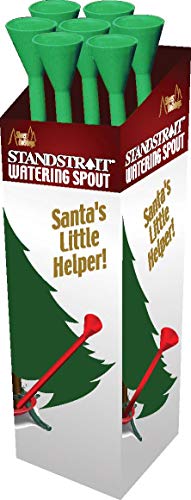
Christmas Tree Watering Spout
This handy gadget makes watering your tree so easy! And here's a tip: once you have your tree in the stand but before you start decorating, feed it through the branches in an inconspicuous but accessible spot, and insert the funnel into the stand. You can even secure it in place with zip ties. That way the spout is always in the right place which makes watering even easier!

4. Skip Additives—Plain Water Is Best
Research from tree farms and universities consistently shows:
Sugar
Aspirin
Bleach
Soda
Commercial “tree preservatives”
…DO NOT outperform plain tap water.
Why?
Trees don’t “eat” sugar or aspirin or any of these other additives; their metabolism isn’t functioning like a live rooted plant. What they need is hydration, not nutrients.
Stick to warm, clean, fresh water only.
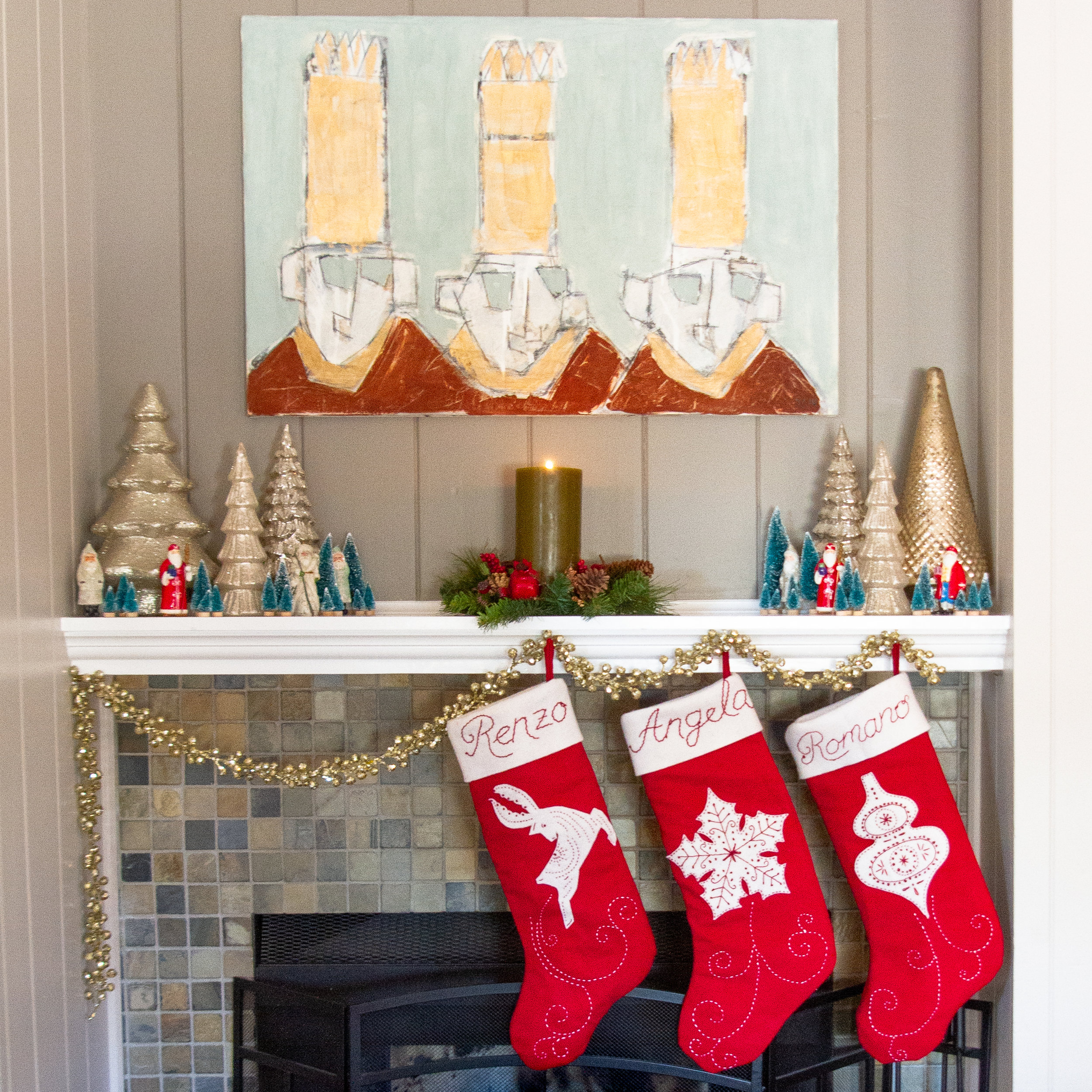
5. Keep Your Tree Away from Heat Sources
Heat speeds up water loss through evaporation and increases needle drop.
Avoid placing your tree near:
Fireplaces
Radiators
Heat vents
Space heaters
Sun-soaked windows
Scientific Insight
Warm air increases transpiration—the process through which trees lose moisture through their needles. Less moisture = faster drying.
Even dropping the room temperature at night or when you leave the house helps the tree last longer.

6. Use LED Lights Instead of Incandescent Bulbs
Old-style Christmas lights produce heat, warming the branches and accelerating water loss.
LEDs stay cool and reduce the drying effect—helping your tree stay supple and green.
How Long Should a Fresh Christmas Tree Last?
With good care and steady hydration, most trees last 4–5 weeks indoors. That really depends, however, on the conditions in your home, how long trees sit in storage, and how warm it is in your home. Trees kept in cooler rooms – like on a porch or in an unheated sunroom – can stay fresh even longer.
7. Check the Water Level Twice a Day for the First Week
The tree can drink a surprising amount early on. If the water drops below the trunk’s base, the exposed part can reseal with resin.
If that happens?
The tree may stop drinking entirely.
Keep the reservoir topped off at all times.
Quick Tip: set an alarm on your phone to remind you to top off the tree twice per day!
8. Consider a Tree Species Known for Longevity
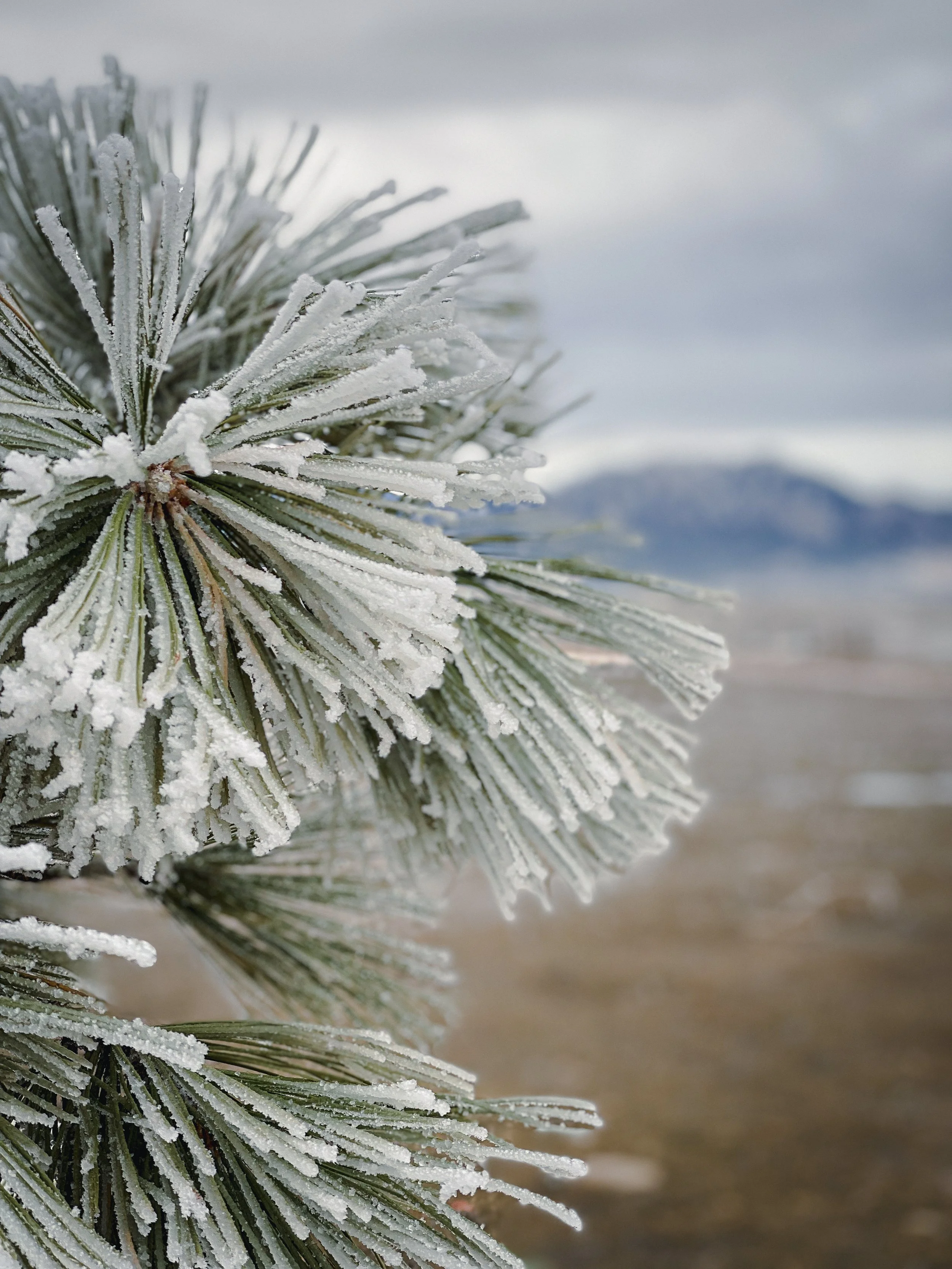
Some trees naturally retain moisture better thanks to needle structure and resin content.
Long-lasting species:
Fraser fir – superior needle retention
Noble fir – sturdy, slower to dry
Nordmann fir – soft needles, excellent hydration
Douglas fir – aromatic and long-lasting
If longevity is your priority, selecting the right species pays off.

9. Cut the Tree Yourself
If you live in an area with Christmas tree farms or forest land, you might consider cutting your own tree. Here in Colorado, you can apply for a permit to cut a tree in designated areas, for example. If you get a permit, cut your tree, and put it up within a day, your tree will last much longer than one shipped in from another part of the country.
Just be sure to inspect your tree carefully before you put it up! When we lived in Minnesota, we cut our own trees at a local Christmas tree farm. One year our gorgeous tree's trunk was coated in ice which we didn't realize until the next morning when the floor was soaking wet. So inspect carefully before bringing your tree inside!
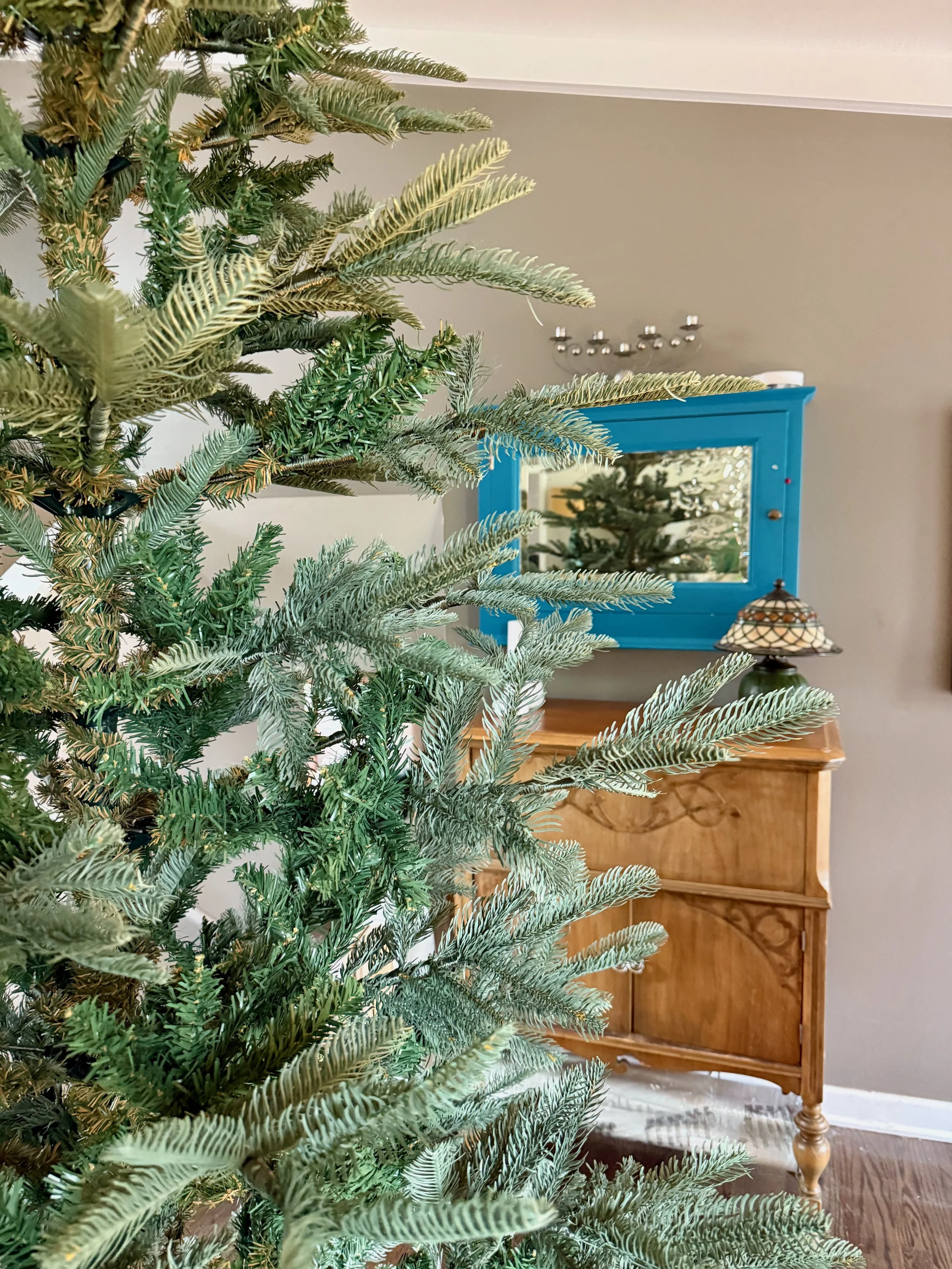
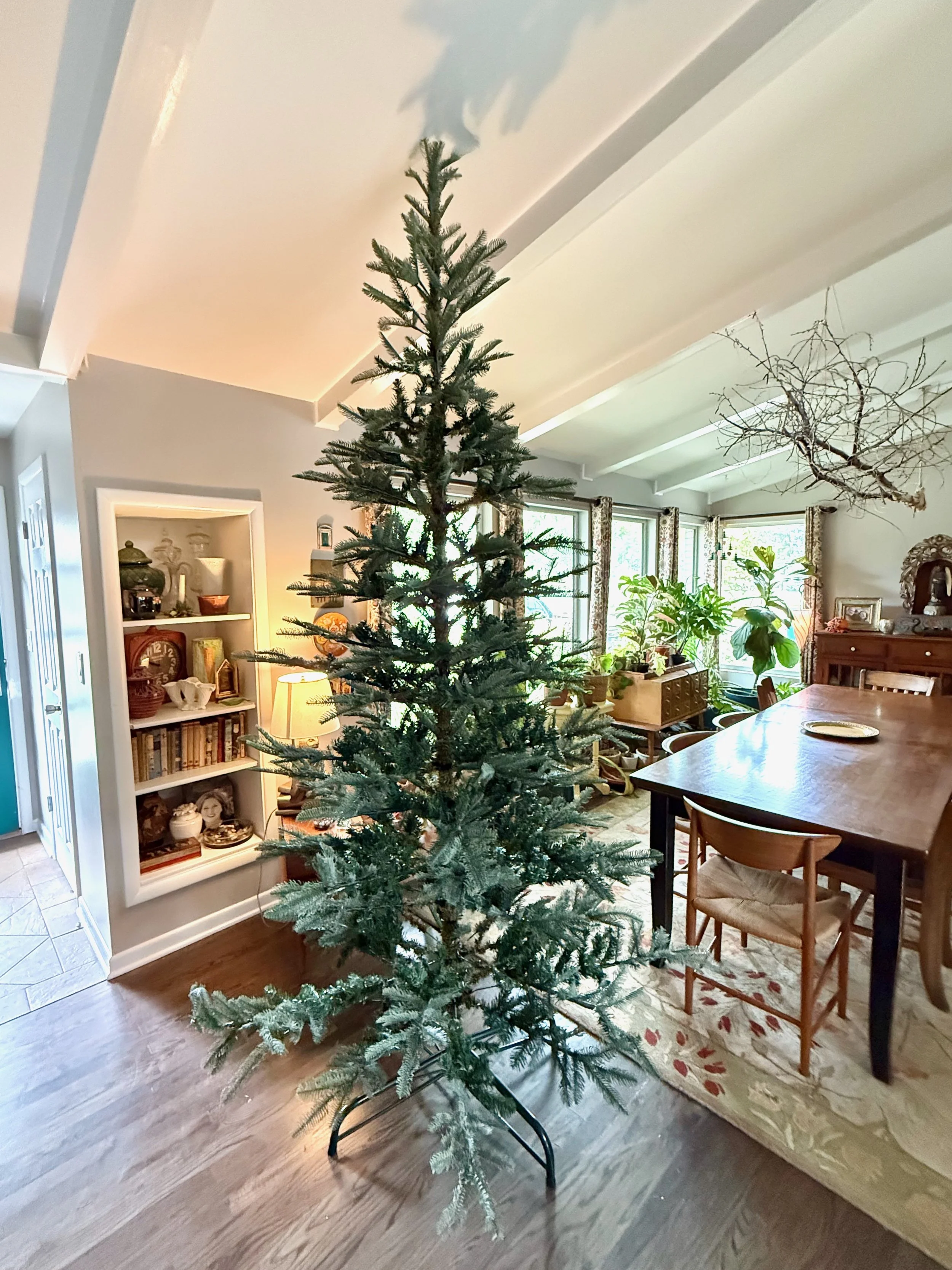
Considering an artificial tree?
Here’s my guide to choosing an artificial tree ethically and with the environment in mind.
10. Don’t Strip Bark or Drill Holes
Common myths include drilling holes into the trunk or shaving bark. Both actually reduce water uptake.
Why?
Water is absorbed through the outer layers of the trunk (sapwood), not the inner heartwood. Damaging the bark reduces the tree’s ability to hydrate.
Leave the trunk alone except for the fresh cut.
11. Keep the Tree Stand Reservoir Clean
Dirty water encourages bacterial growth that clogs the xylem.
If you notice slime, cloudiness, or odor:
Remove the icky water with a pump or a siphon
Clean the stand with hot water and a few drops of bleach
Refill with fresh, warm water
This restores good flow through the trunk.
12. Lower Tree Stress by Reducing Airflow
Christmas trees lose moisture faster in areas with:
Constant drafts
Ceiling fans
HVAC vents
Reducing airflow around the tree slows transpiration and improves needle retention.
at the close…
Freshness Starts With Understanding How Trees Work
Real Christmas trees stay fresh longest when you support their natural water-transport system. Focus on hydration, avoid heat, skip the gimmicks, and your tree will reward you with weeks of beautiful, fragrant greenery.
And when you finally take your Christmas tree down, don't put it in the trash! Compost your tree so that its nutrients return to the earth and begin the cycle all over again.
Merry Christmas!
Angela
Subscribe now so you never miss a thing!