

How to KonMari a Child’s Room
Decluttering Toys, Books, and Clothes so your Kid’s Room Sparks Joy

The stuff of childhood can, frankly, be overwhelming. And children aren’t always great at keeping their rooms neat. Frankly, play is messy business, so a child’s room or playroom can quickly become a daunting mess — even for the grownups in the house. One of the biggest challenges in managing a family’s home and keeping it tidy can be keeping the kids stuff — clothes, toys, books, and supplies — under control.
Enter Marie Kondo and the KonMari Method.
I love the KonMari Method in great part because it has given our family a shared vocabulary for tidying up. And each summer before Bambino’s birthday we make a date to KonMari his room and his toys. Now he knows to expect it, he knows how to do it, and he knows that it brings satisfaction and joy in the end — but it wasn’t always that way.
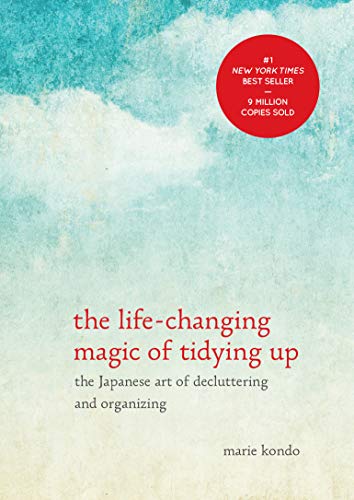
We first used the KonMari Method when we lived in Los Angeles. We had just moved to LA, and while unpacking the house I broke my foot. Couch-bound, I stumbled upon Marie Kondo’s first book, The Life Changing Magic of Tidying Up. I spent the next few months rolling around the house on an office chair and folding and sorting as I went. It was amazing!
We have done our entire house twice — once in LA and then again once we moved to Colorado. And to be clear: Kondo’s method is intended to be used on an entire house or apartment. However, I have also found that using aspects of the method on a single room is a fabulous way to do a refresher. I did that as I worked on my Workroom for the One Room Challenge, and we do it annually for Bambino’s room, too.
Children grow and change and evolve so quickly — and they have a tendency to collect stuff along the way. So a smaller version of the KonMari Method is perfect for doing a quick tuneup each year.
The KonMari Method calls for systematically collecting, evaluating, and making a decision about every item in your home — or in this case, your child’s room. Kondo recommends tackling it in this order:
Clothing
Books and papers
Komono (miscellany which would include toys)
Mementos
When taking on a child’s belongings for a tune-up, I recommend following the same order.
Clothes: collect all of their clothing, out of the closets and dressers and bins.
Books and Papers: this includes a child’s artwork and schoolwork, their books and other paper goods
Komono: this includes toys, dress up clothes, and stuffed animals
Mementos: sentimental items for both you and your child.
Having done this several times, I have a few tips for success as you KonMari your kids room and belongings. I hope these help!
Dedicate Time to use the KonMari Method

Do it Once Per year
We have made doing a KonMari tune-up a yearly practice, and I usually take on Bambino’s belongings after school lets out at the beginning of the summer. Once kids have done something once or twice, they expect it in the pattern of the year which makes it easier to get their buy-in.
Involve your kids
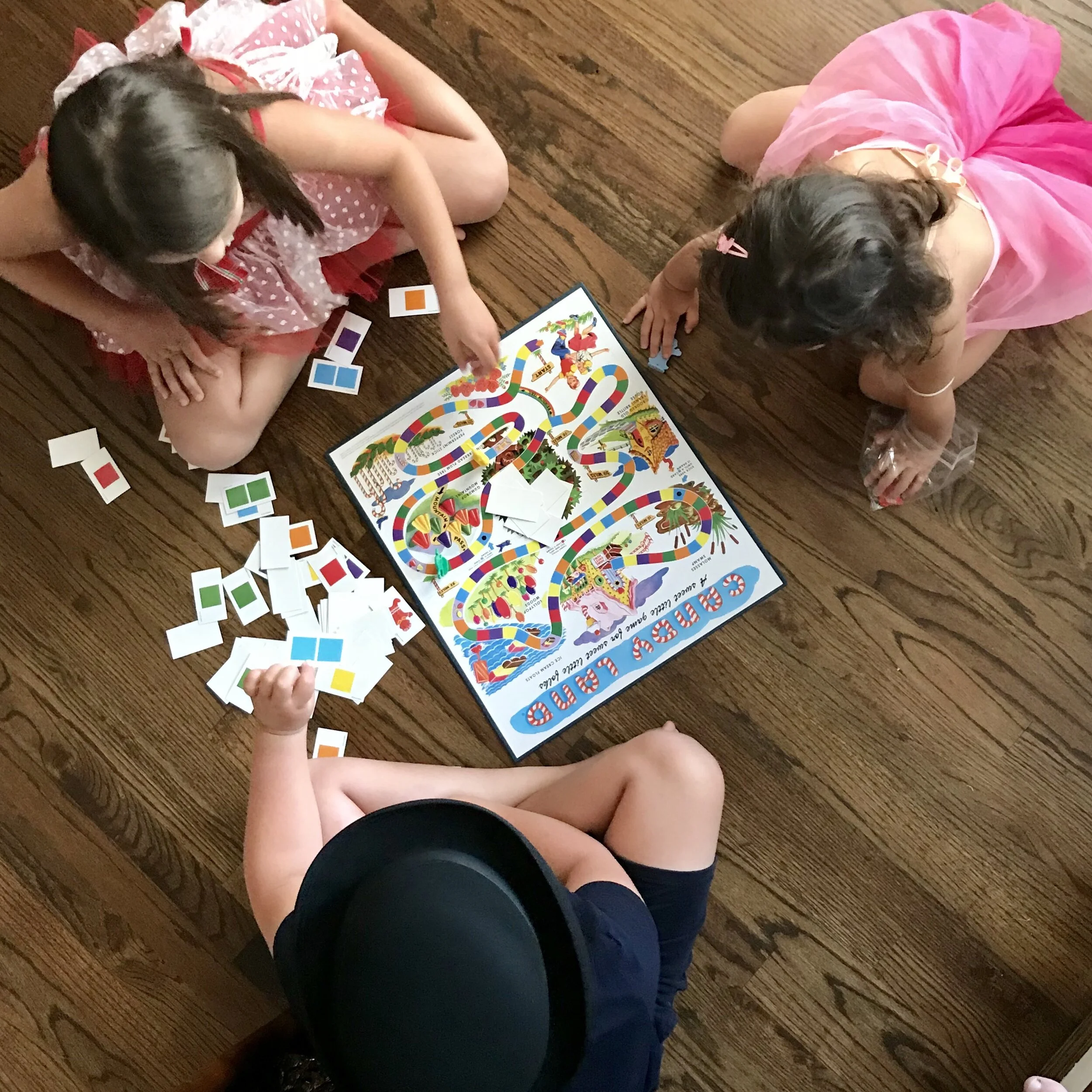
Even the littlest kids can be involved in making choices. While it is tempting to do it all while they are at school, kids should be involved in the process. You are teaching them an important skill and modeling for their adult lives.
Don’t do it all at once
This kind of work can be emotional for many people. Take a break. Set out time every day for a few days instead of expecting to accomplish it all at once.
How to KonMari Toys

Recycle Anything Broken
If it is broken or missing pieces, it’s time to repair it or recycle. This can make some choices much easier.
Work Kind by Kind
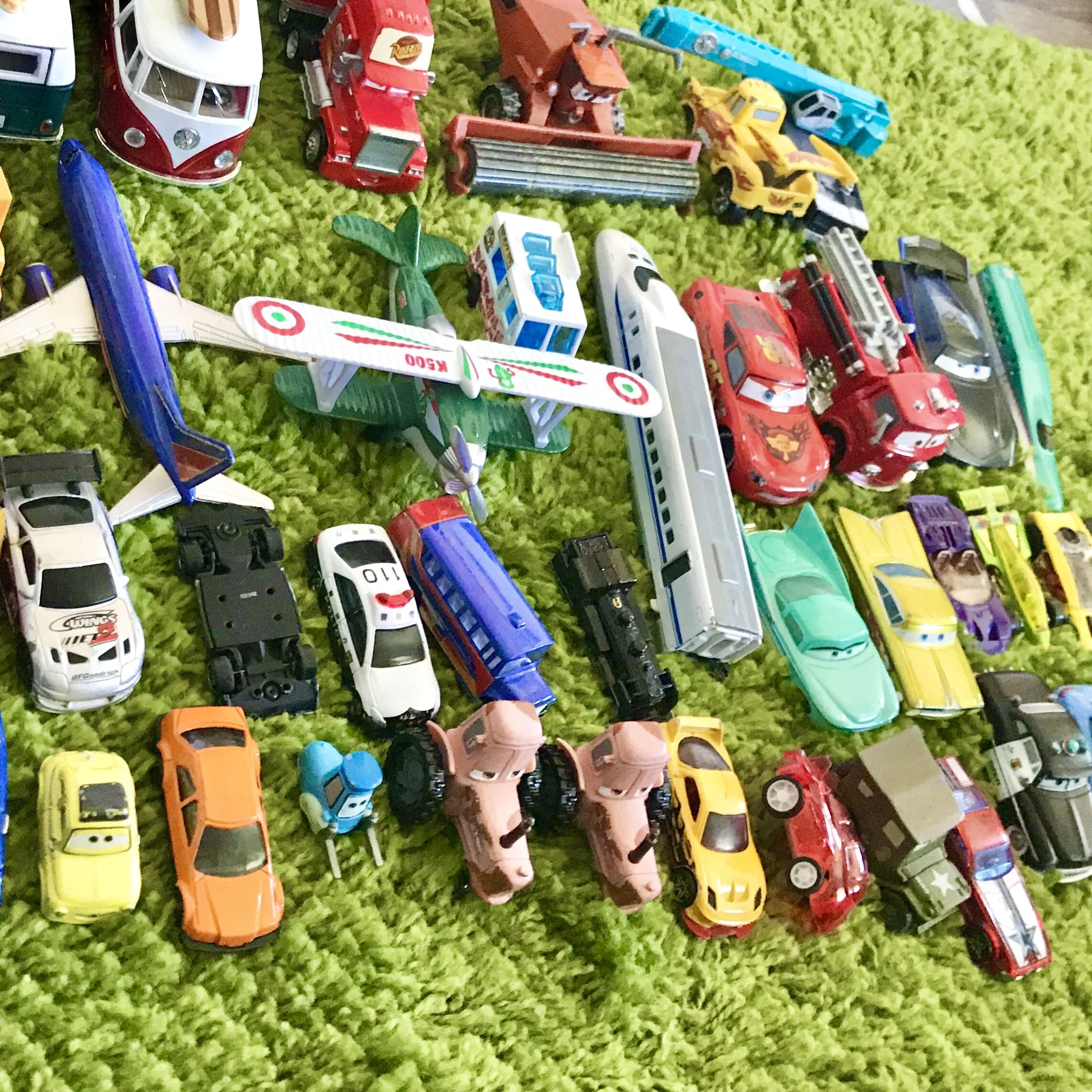
One of the central points of the KonMari Method is collecting everything together in one place: all of the toy cars, the Legos, the dolls, the stuffed animals. Even if they aren’t stored in the same room, put them all together into a pile. Then start to make decisions about what to keep.

Ask: Does it spark Joy?
I love Marie Kondo’s essential question! Ask your child to hold each item in their hands, and then say, “Does it spark joy?” They are intuitive enough to say “yes” or “no” after a little practice. Sometimes it is easier for them to make decisions than for the adults!

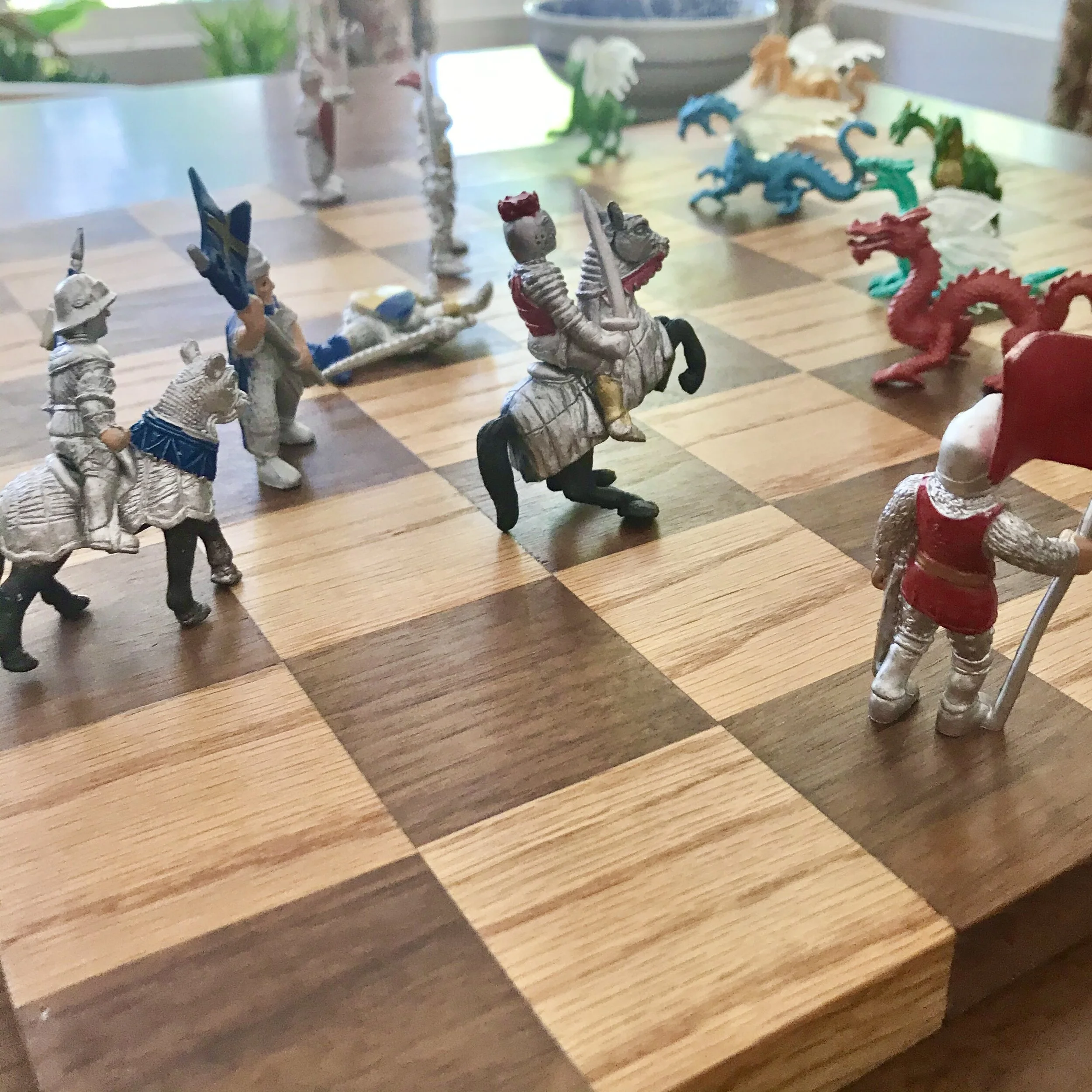
Choose 3 to Keep
If you have too many of a like item, rather than asking a child which ones to get rid of, ask them to choose three to keep. Making a positive choice instead of a negative choice can be much easier — for everyone.
Thank each Item
Another of Kondo’s brilliant ideas is thanking the items which will be recycled, donated, or sold. This is really effective for kids. “Thank you for inspiring such fun play time!” This is part of letting go and can be really great for kids.
Let your Storage Dictate How much you Keep
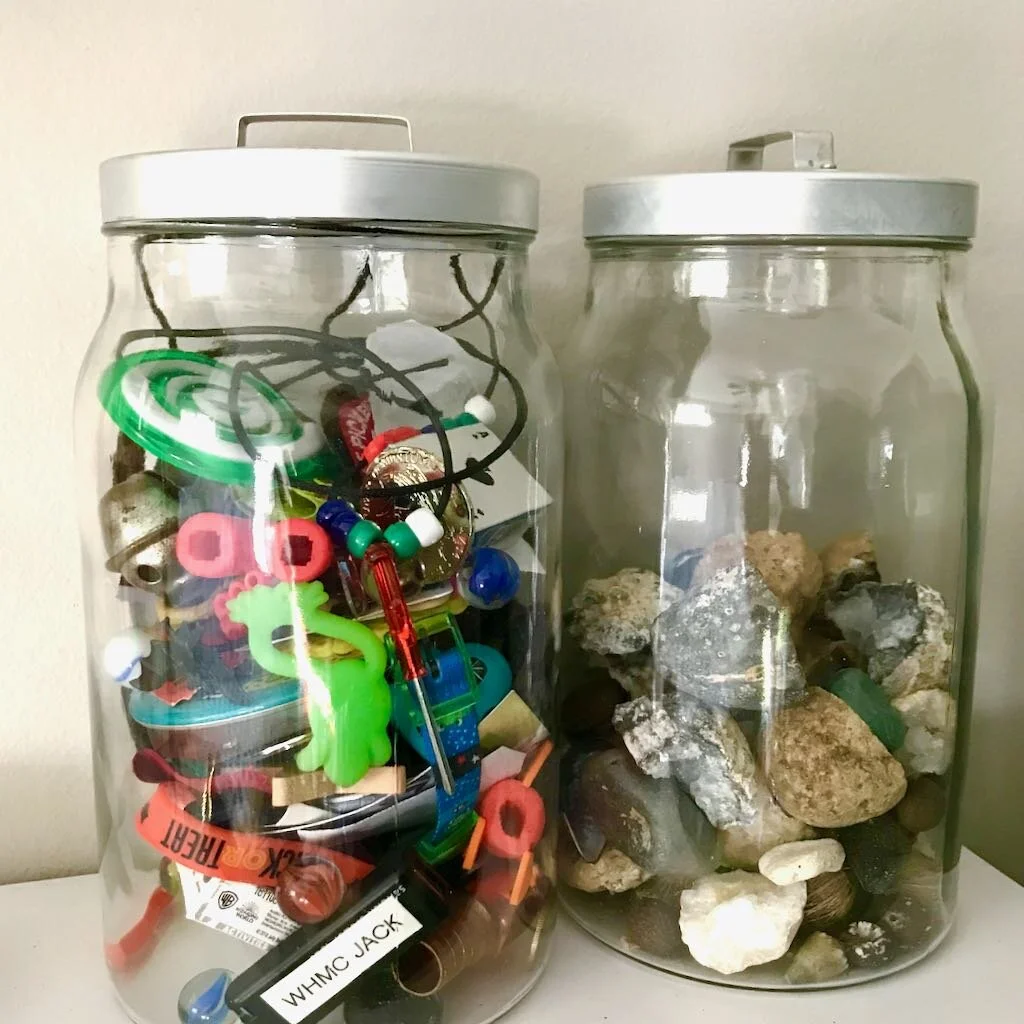
The KonMari method is not about new storage bins or a different place to keep things. Use the storage solutions you already have to set boundaries. If it doesn’t fit, then perhaps you have too many.
How to KonMari Kids’ Clothing
I go through Bambino’s clothes twice per year — once in the fall and once in the spring. We try on everything and evaluate whether it should be kept or find a new owner.
Group Like Items Together
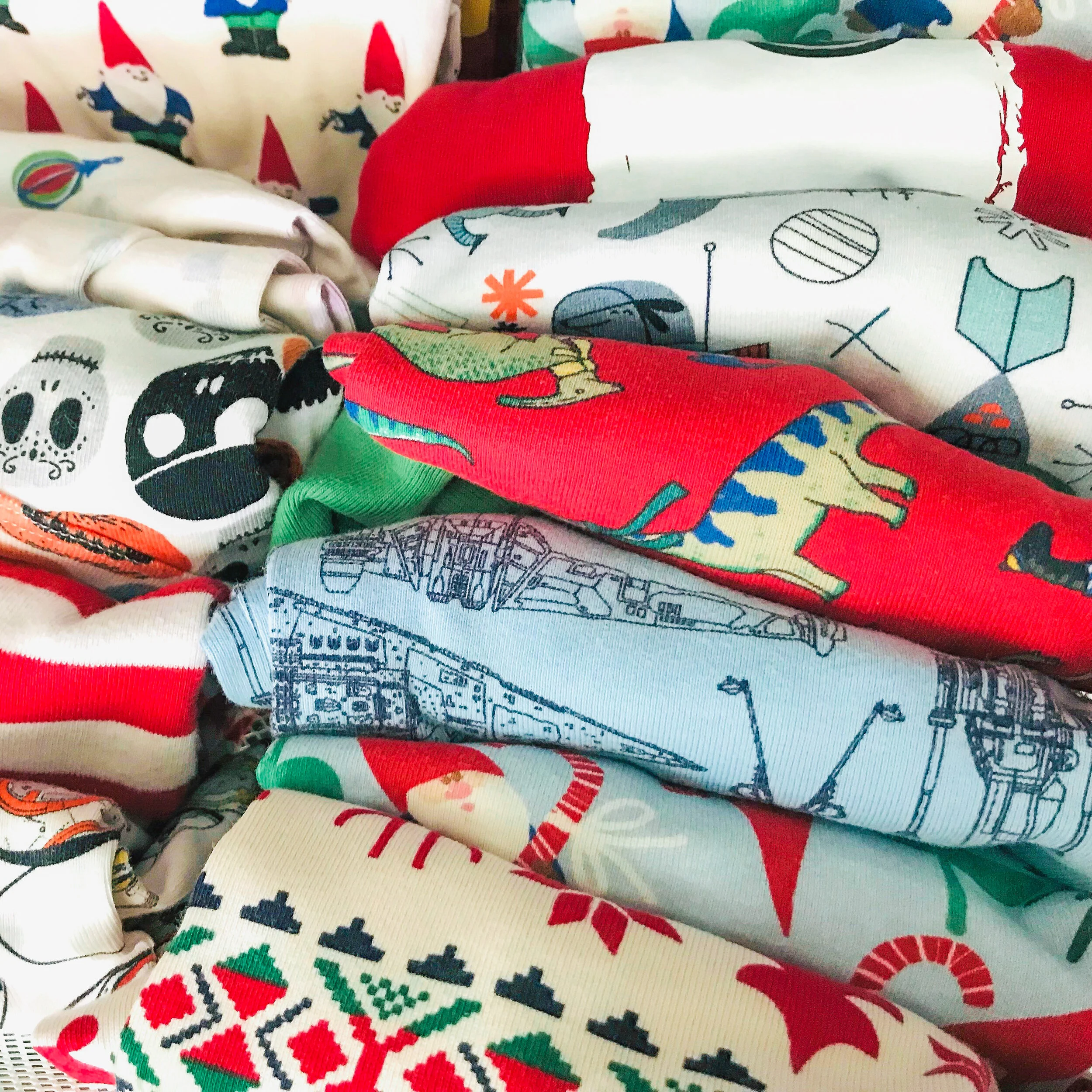
As with toys, pull all of the clothes together on the bed or on the floor. Then sort them by type: pajamas, pants, shirts, dresses, underwear.
Donate or Sell
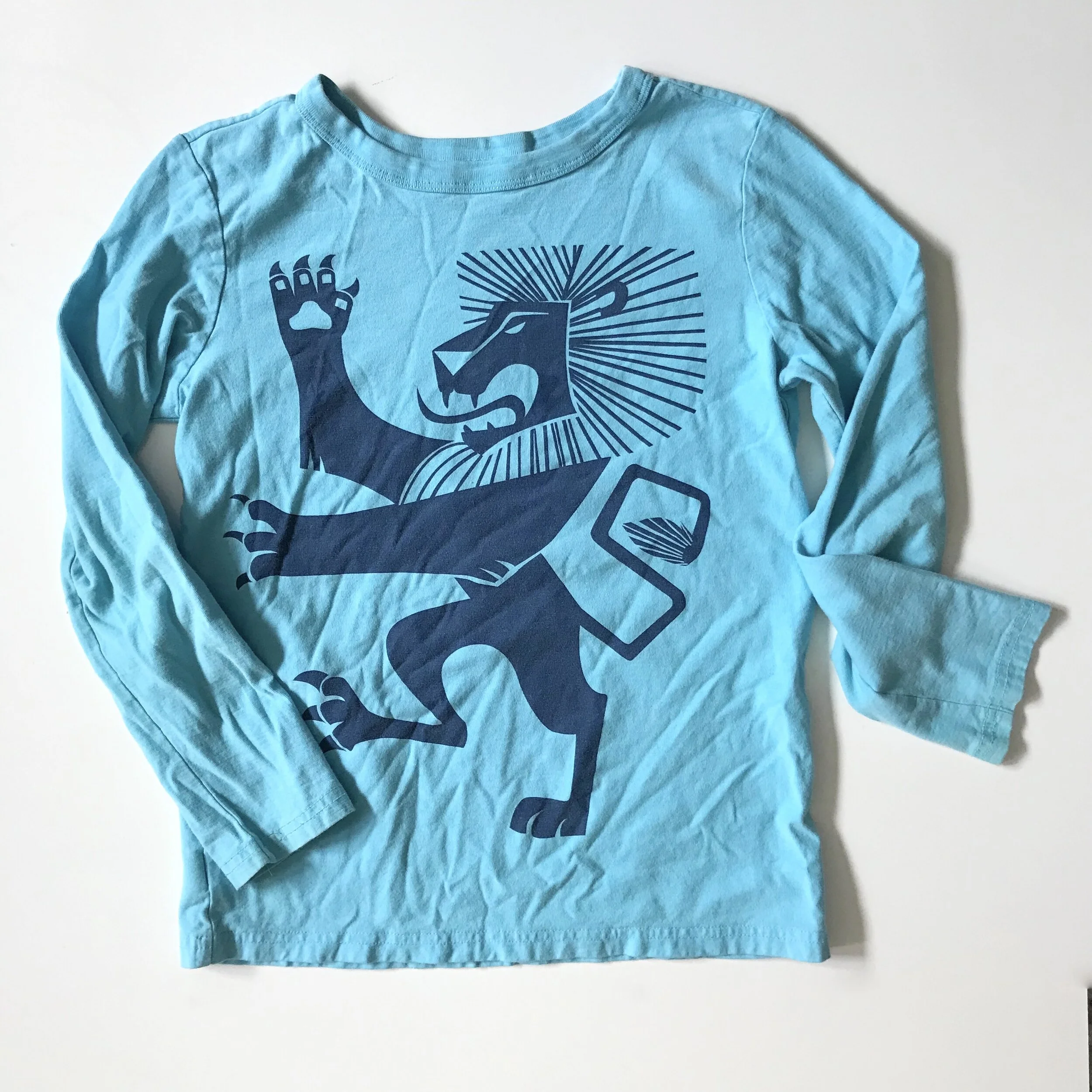
Ask yourself, “Does this spark joy?” and also, “Does this still fit?” Children grow so quickly, and there’s no point in keeping clothes that are too small in the drawer or closet.
Once a decision is made, consider donating or selling items that are still in decent shape. I sell most of Bambino’s clothing — and often buy second-hand, too. This is such a good way to reduce your environmental footprint, and it is more economical as well.

Organize Hand-me-Downs by Size
If you have multiple children, only keep clothes that are in good shape to be handed down. Store them sorted by size and in labeled boxes or bins so they are easy to find and pull out for the next child.
I started selling Bambino’s clothes online after it became clear that we were not going to have another child. I have figured out some simple and easy ways to keep it all organized. For some people, selling their children’s clothing even becomes a career! For me, it is another way to be more environmentally friendly as well as budget-conscious.
I have collected a bunch of tips to help you get started if selling your kids’ clothing is something you want to do, too.
More KonMari Tips

Model with Your Own Stuff
Kids watch what we do. They will be more receptive to decluttering and parting with their outgrown belongings if they see that you do it, too.
We keep a bin in the mudroom for donations year round as well. This way everyone can decide, “Does this spark joy?” all year long.

Use Storage Containers you Already Have
Perhaps the biggest lesson I have learned from Marie Kondo is to use the storage containers I have. Shoeboxes and tin cans have become favorites. Frankly, it is shocking how many containers we recycle which can be repurposed around the house. Rather than buying something new, use what you have first.

Let Kids Help Donate
Be sure to take your kids along when you donate the discarded items. This helps reinforce the importance of good stewardship of our resources — what we can’t use, someone else can.

Give them some of the Proceeds
When I sell Bambino’s toys, I give him some of the proceeds. It’s important for children to learn to manage money, and it is also a positive reinforcement for the tough decisions they sometimes must make in the KonMari process.
I hope you enjoy your KonMari journey, however it unfolds. The Life-Changing Magic of Tidying Up has truly transformed our lives, and I hope you find what you are looking for as well. Here are a few more links to inspire you along the way!