

Field Trip:
Garden Design Ideas from the Philadelphia Flower Show
Looking for garden inspiration? Here are creative design ideas from the 2026 Philadelphia Flower Show that we gardeners can adapt for our own yards.
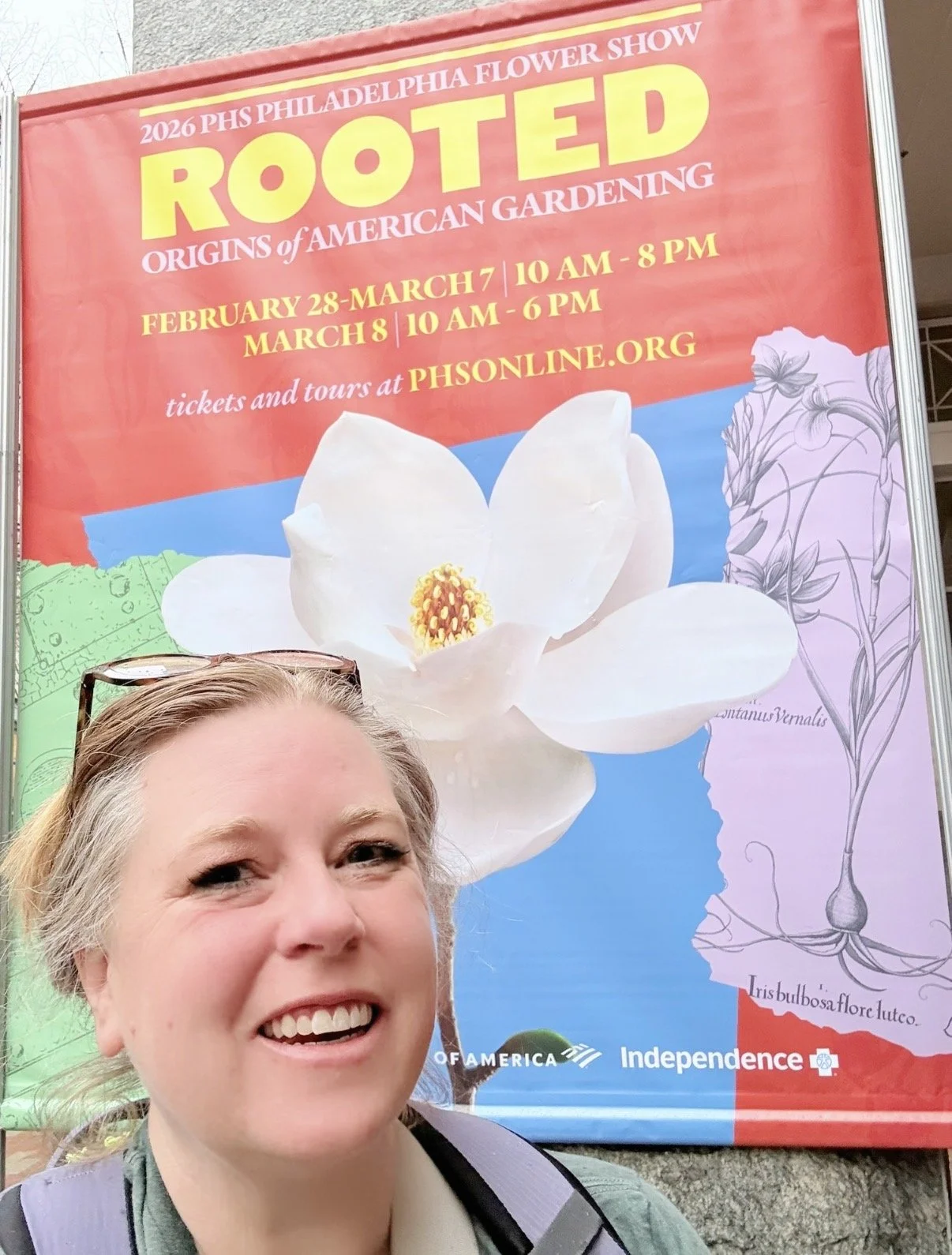
Have you ever walked in from the cold into a warm room and been overcome by the scents of roses, hyacinth,freesia, peonies – all in a wave of floriferous glory? Like the most glorious perfumes all wafting together in a wall of fragrance – powerful and yet pleasant. Stepping in from the chill outside into the Pennsylvania Convention Center last week, a cloud of floral perfume greeted me long before I even showed my ticket for the press preview of the Philadelphia Flower Show.
Hilariously, across the hall of the same convention center, an annual meeting of allergists enjoyed the same fragrant air – and probably could have done a brisk walk-in business. Achoo!
But I had taken my allergy meds and was prepared for the day ahead – or so I thought.
I've been to flower shows before. Just last summer I attended the Chelsea Flower Show, the Grande Dame of them all. But the Philadelphia Flower Show claims to be "the nation’s largest and longest-running horticultural event" with roots running back to 1829. That's 197 years of flower shows! So in honor of our nation's 250th birthday, it seemed a good year to visit Philadelphia's crowning jewel. And it did not disappoint!
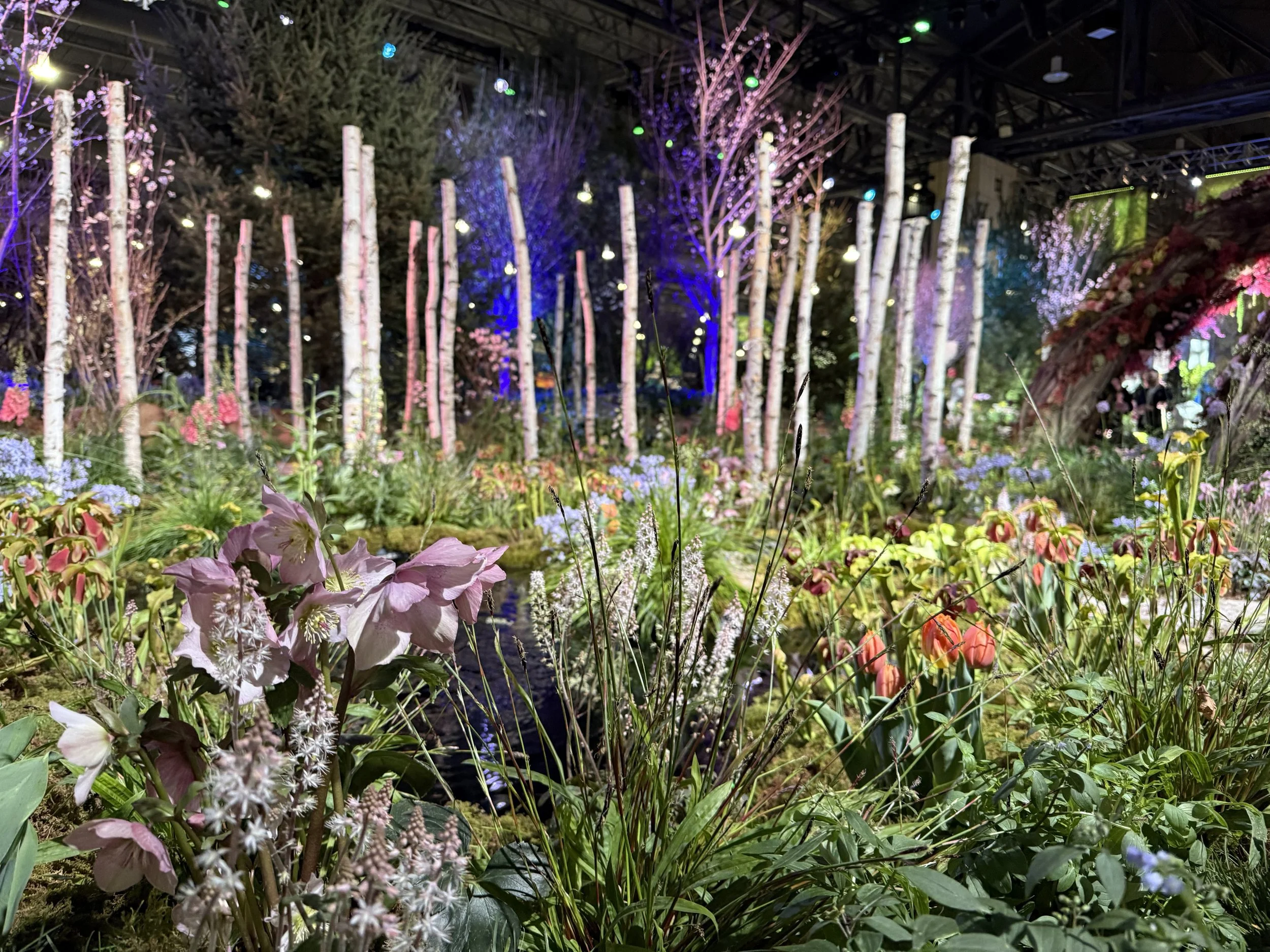
a spring fantasy woodland at the entrance
Rooted: Origins of American Gardening
This year's theme – Rooted: Origins of American Gardening – was particularly poignant. As gardeners it’s critical that we acknowledge that the history of American gardening is deeply intertwined with injustice, racism, slavery, and genocide. From the earliest days of colonization the American garden has been tangled with our history of oppression and genocide of the Native Peoples of this continent. Likewise, it's impossible to extract the American garden from our history of enslavement. And our agricultural and gardening present depends on the work of migrants.
Indeed, the history of the American garden is a gordian knot, and most of the flower show entries skirted the thornier parts of our history in favor of beautiful fantasy.
But amidst the fantasy floral arrangements, two displays took on our history.
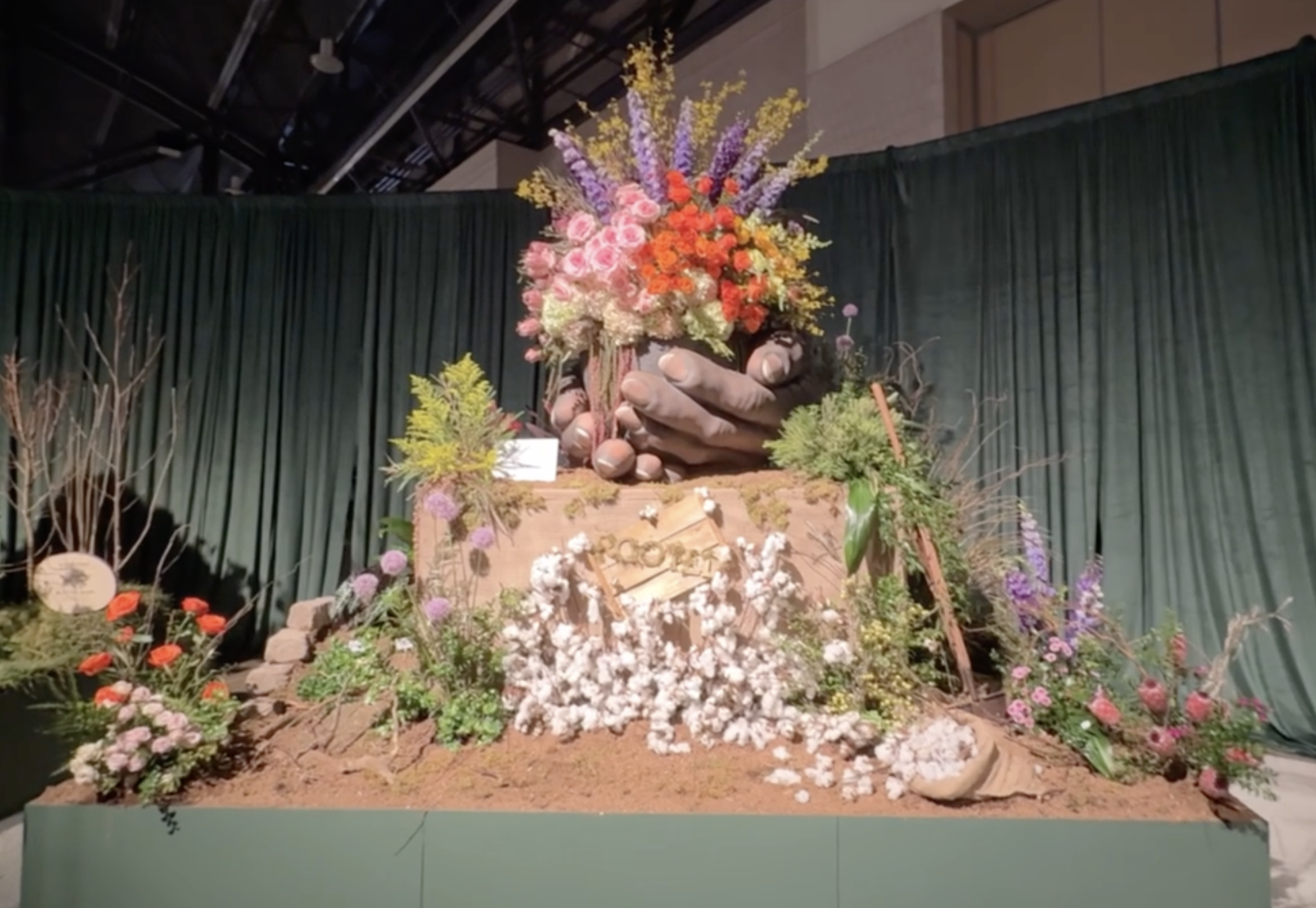
This display by florist Tissarose is a testament to the role of African Americans in agriculture and horticulture. Featuring cotton – a commercial crop the cultivation of which relied on enslaved labor – as well as a rainbow of blooms supported by beautiful, black hands – the entire display is an homage to the florist's ancestors.
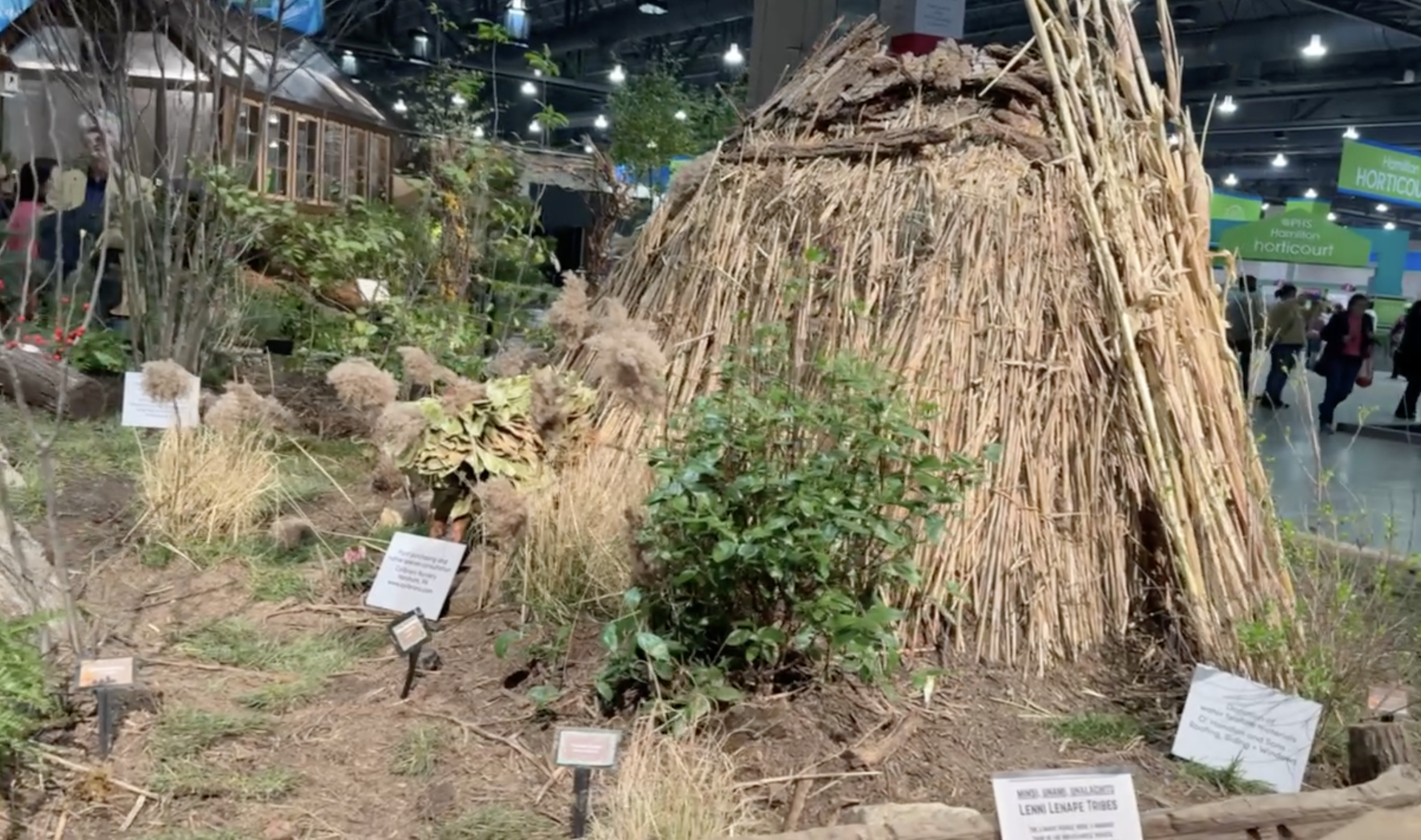
And WB Saul High School of Agricultural Sciences explored the role of the Lenni Lenape peoples, the “original stewards of this place.” Featuring a traditional Lenni Lenape dwelling sited along a bubbling creek surrounded by native regional plants, this garden acts as a living plant list for local gardeners. In their description, the students wrote: "What has been uprooted in the Philadelphia region needs to be replanted, and so we will."
Both are thought-provoking and powerful moments for reverence and reflection.
Flower Show Highlights and Your Gardening Questions Answered
When I go to a show like this I find it is very helpful to have a focus – otherwise I get a little overwhelmed and don't know where to even look! So I asked you all: what gardening problems or questions do you have that I can look for solutions? And you delivered! You asked so many great questions, and I scoured the show for your answers.
So before we get into it, here's a distillation of the whole huge show in 45 seconds… an impossible task, to be sure!
Planting in Multiples
One reader asked: is planting in multiples only for perennials/small or mid perennials or for trees/shrubs, too? She is referring to my number one rule of gardening: Plant in Threes. Rather than planting just one of a particular plant, choose at least three. Three of one plant is better than one each of three. It gives pollinators and other wildlife that like that plant, more options. And the answer is: Yes! This applies to trees and shrubs, too!
Check out this great show garden that illustrates how trees and shrubs can be planted to achieve a thicket habitat.
Want to know more about planting in multiples? Read on here:
Dense Planting for Weed Control
One of my favorite show gardens was designed by Kelly D. Norris of Iowa. His garden evokes an abandoned yard left to its own devices – with a beautiful result! And unlike many show gardens, he planted everything very, very densely which is the most effective means of weed control. Check it out!
Want to know more about wildlife gardening and dense planting? Check out my Wildlife Gardening Guide. And Amelanchier was one of our Plants of the Week last season. Read more about it here!
Raised Bed Idea
Another reader was on the hunt for good raised beds, and I saw this technique in use on a show garden. I can tell you from first-hand experience that this works beautifully for wildlife, too. I have a wide range of insects and mice living in mine – and probably more creatures I don't even know about!
Looking for more raised bed ideas? Check out my Raised Bed Gardening Guide!
Dead Wood in the Garden
The Men's Gardening Club of Philadelphia created another great display with dead wood a it's heart. There aren't many people in North America who talk about stumperies – and that is a mistake! Stumperies are an invitation for wildlife, and can be absolutely gorgeous, too.
Interested in the how and why of leaving dead wood in your garden? I have you covered here:
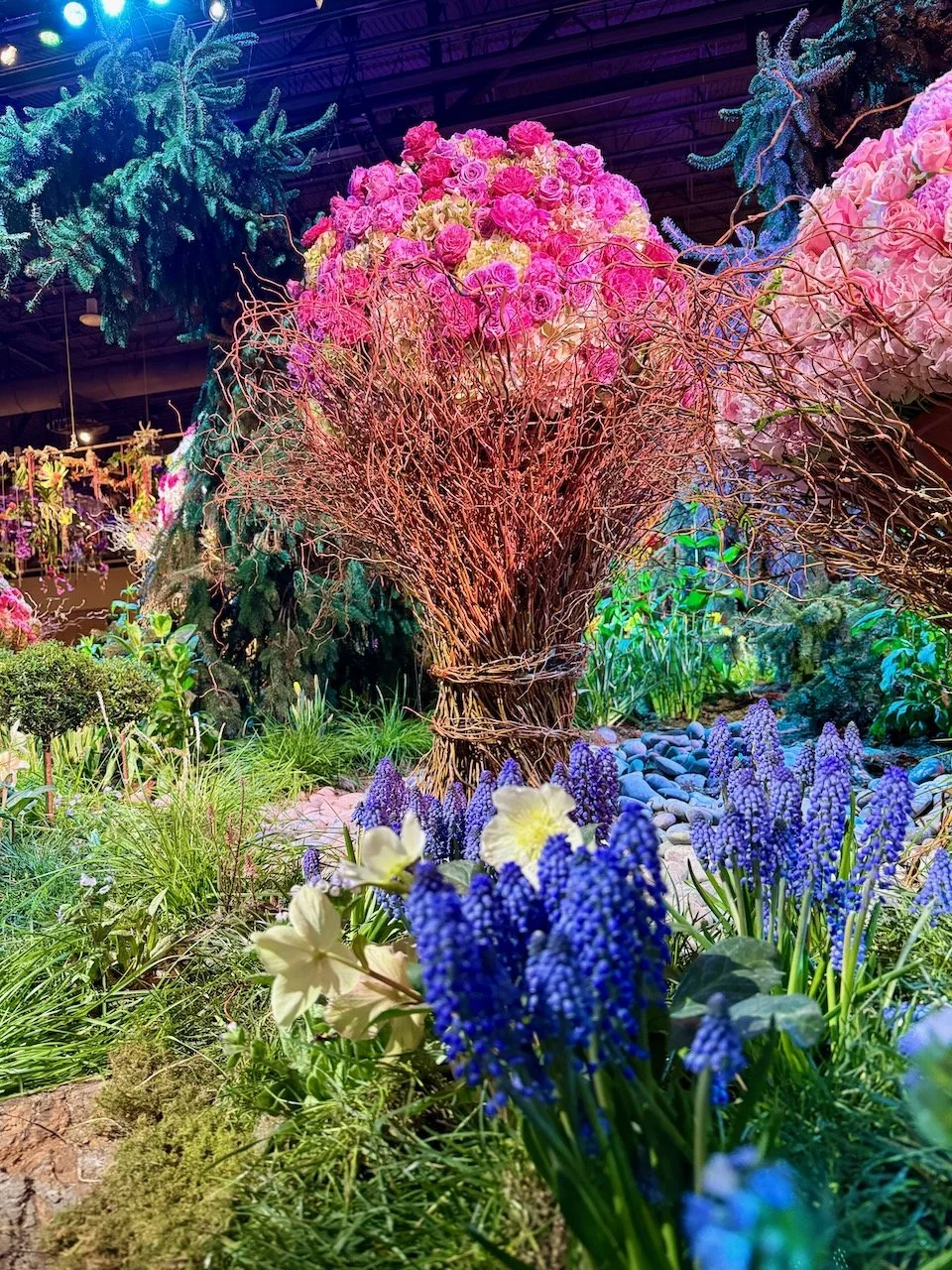
If you are planning a wedding in the near future, these ice cream cone-topiaries of roses and hydrangeas were absolutely gorgeous! And they were huge! I think they would be stunning on a much smaller scale – maybe on a table – too.
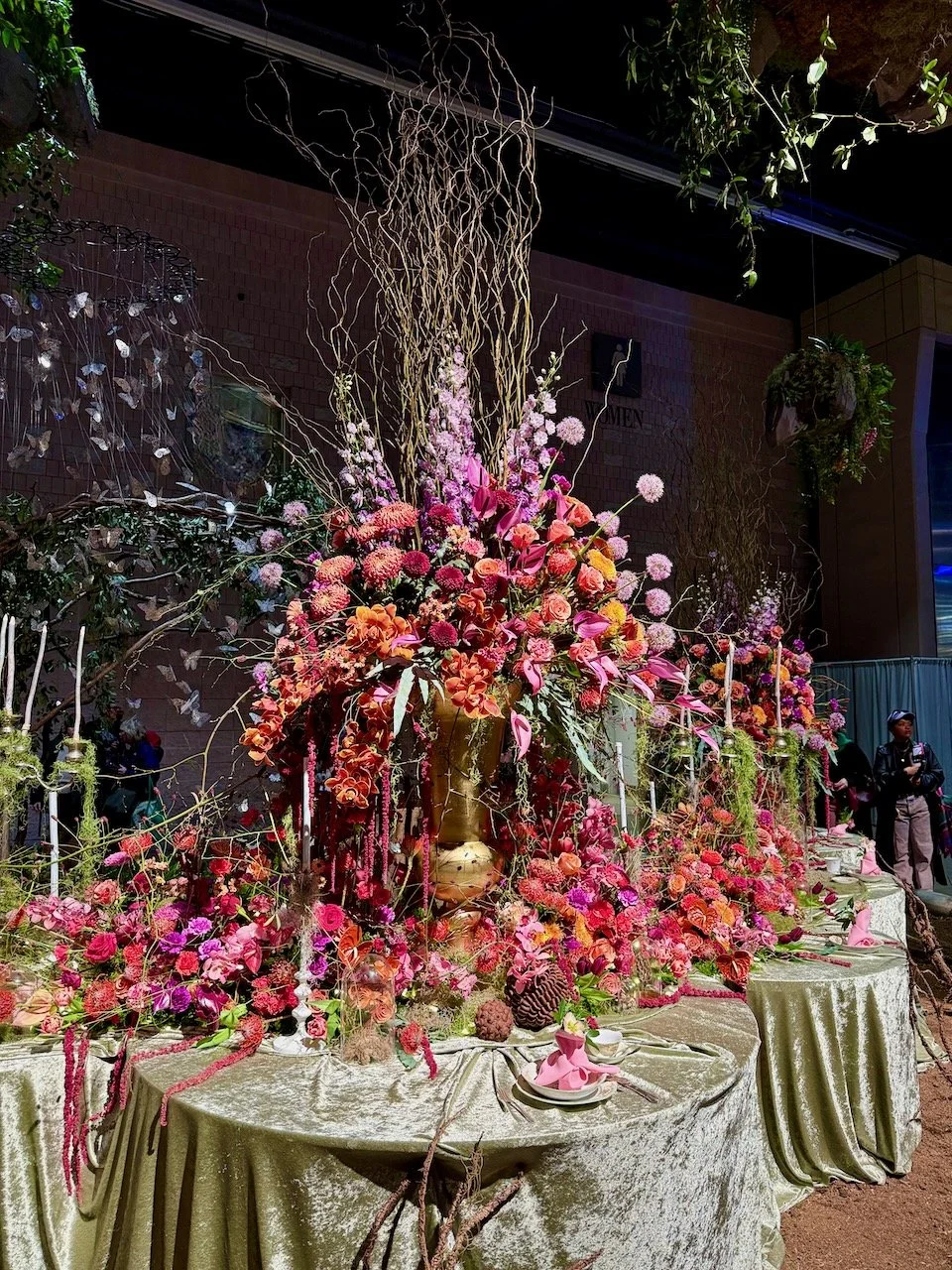
Speaking of tables, this tablescape was quite stunning – if rather impractical for, you know, conversation. But it was beautiful!
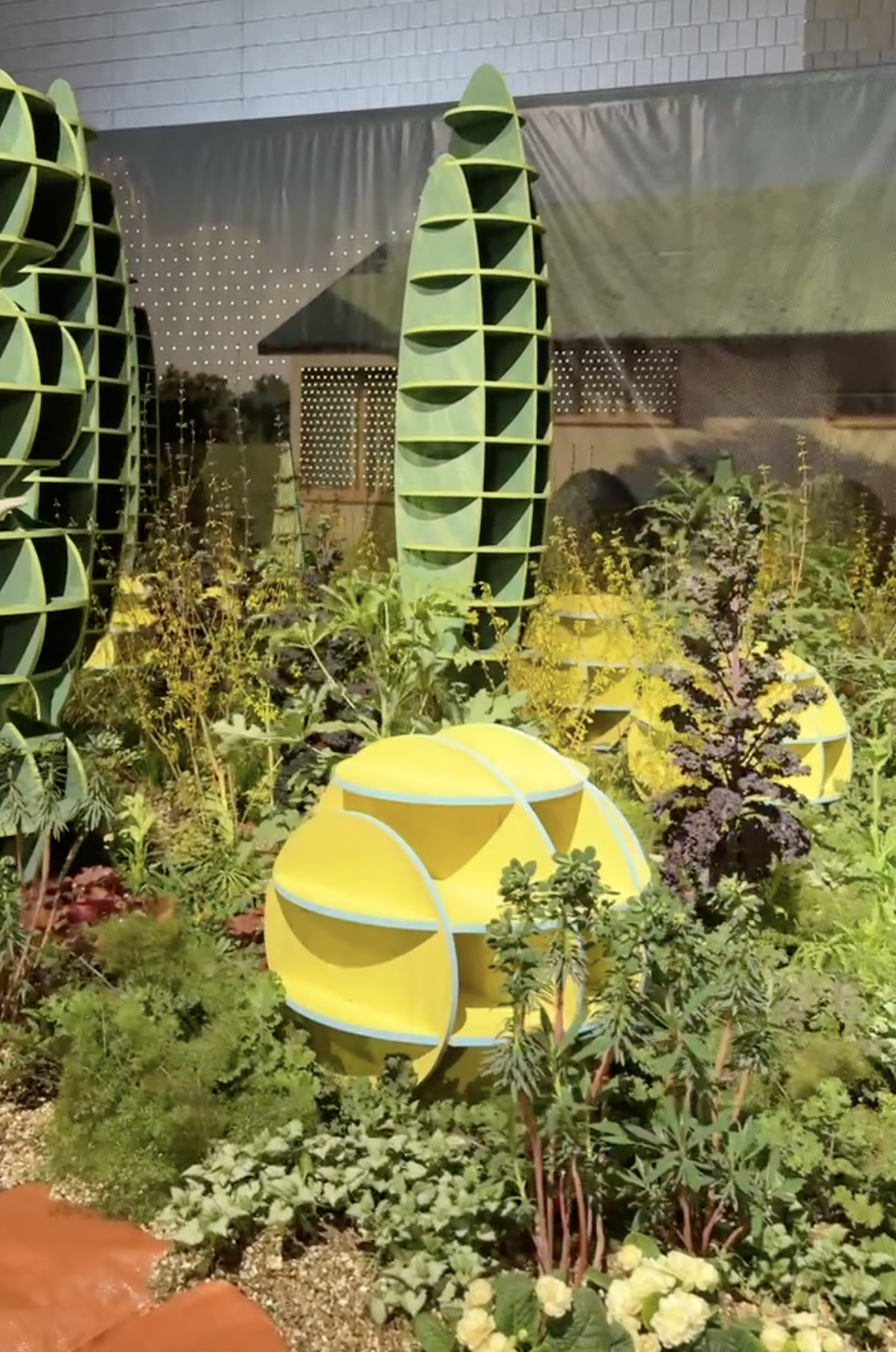
And I don't know about you, but I can see these sculptural shrubs in a Palm Springs garden. They would not be hard to make. Here I think they were painted plywood, but made of something more durable, they would be a pop of color and infusion of fun.
For Team Veggie, there were two veggie gardens planted out by local high schools which offered a peek at spring abundance in this season of brown and grey. The high school gardening game was strong at the flower show, actually!
How to Deal with Reflected Heat
Stephanie had a great question about reflected heat from vinyl fences. And this is a real problem! Vinyl fencing – and vinyl siding, too – will reflect heat which can be rough for vegetation. But Kelly D. Norris' show garden offered a potential solution – a deep bank of grasses.
Native grasses have several advantages that can make them a buffer against heat:
Height: choose something tall that will shade the vinyl siding
Speed of Growth: grasses tend to grow quickly which will help them provide that shade before the heat of summer
Shade: grasses will shade the soil and keep it cooler for other plants to grow
Deep Roots: most grass roots run very deep which anchors them in place and also gives them higher drought tolerance
The grass featured in this part of Norris' show garden is Andropogon virginicus | Broomsedge – a native North American grass once grown for making brooms. Additionally, Norris' garden included Carex woodii | Wood's Sedge and Deschampsia flexuosa | Wood Hair Grass – both also native to North America.
Planting After Drought
For those of you in the Mountain West, you know where this question comes from. We have had an extremely dry winter this year, and many people are wondering if we should be planting at all. I say, "Yes, but you need an irrigation plan."
Be sure you are focused on native plants, but even native and drought-tolerant plants need water to get established. So make sure you have a good watering plan. We don't know that this dry winter will mean a dry spring and summer – but it may. And many would say: "Don't irrigate!" But plants cool the soil. They cool our environments. And they feed our wildlife. So planting native plants is an investment in our entire ecosystem. Don't just abandon it all this year!

Watering Solutions
That wasn't the only question about water and irrigation solutions, either! When it comes to watering, there are lots of questions about what to do, what to use, and how to be most efficient. And while I scoured the Marketplace at the show for solutions, there just weren't any represented.
So I will refer you to four I like:
Ollas: this is the most efficient and easiest solution for many parts of my garden, and I have a full guide including different types and a DIY solution which you’ll find here: Waterwise Gardening Guide
Self-Watering Planters: if you’re like me and like to have potted plants in your outdoor living area, self-watering planters are the most efficient and easiest way to keep your plants alive all summer. These are my favorites!
Oto: an Oto is like a 3D-water-printer sort of. It’s a programmable device that you connect to a hose. You program it to water your plants and control it from an app. I have several, and I water a good chunk of my garden with Otos. They are not the most efficient, but they are effective – especially if you run them at night. Buy one here!
Hoselink: if you are a hose and sprinkler-dependent waterer like me, a Hoselink hose reel is the way to go. They are durable, dependable, and tidy. And they make watering much simpler
Obviously, planting native and drought-tolerant plants is the best watering solution. However, getting those plants established requires water. They won't thrive in dry soil right away. So having a watering plan is important for getting your garden established.

Sustainable Solutions and Low Water Plants
This stemmed from a great question – a gardener looking for sustainable gardening solutions, a reduction of plastic in the garden, and low-water plants. And again, I came up rather short-handed at the Philadelphia Flower Show. It simply wasn't an emphasis for any of the show gardens or the merchants at the Marketplace.
However, you should know about the Gold Medal Plants Database! Each year the Pennsylvania Horticultural Society asks local plantspeople about new and established species and varieties looking for what is performing beautifully in area gardens. Their list is specific to the Mid-Atlantic states, but I found a few varieties I'll be trying in my own garden this year.
I will also recommend Kelly D. Norris' plant list for his show garden. It was the only plant list I could find, and it includes lots of beauties which would be right at home in your gardens as well. The list includes options for replacing or amending your lawn, grasses, trees, shrubs, and ornamentals as well as vines. It's a great resource!
And stick around! These are questions with which I grapple all the time. I will always bring my best solutions to you!
at the close…
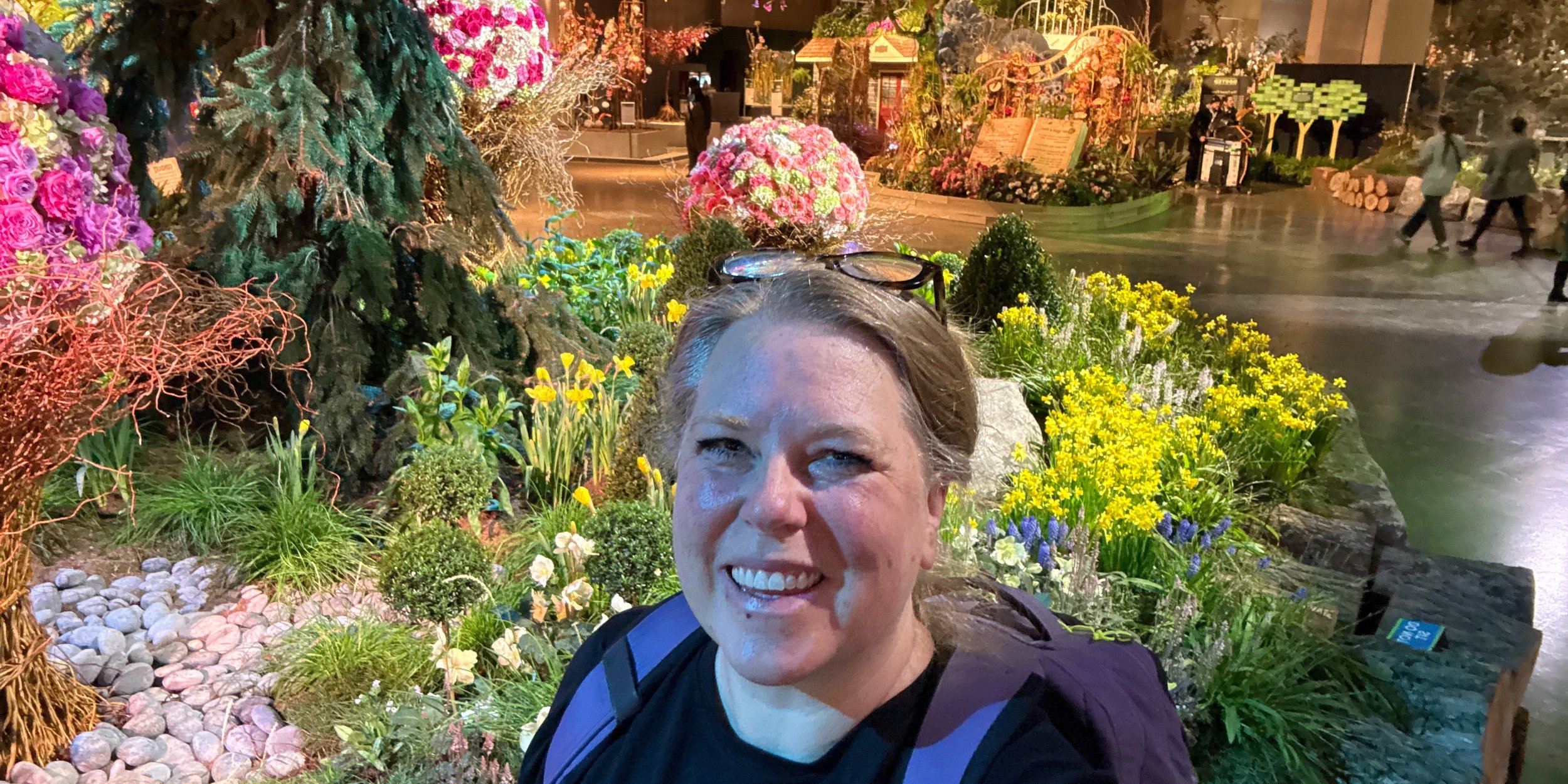
Part of my mission with Wild Revival Gardening is to bring you new ideas and different thinking about plants and gardening – to help us all bring beauty and abundance into the world, but also to make that process a little easier. And those were the lenses I wore last week at the Philadelphia Flower Show as I made my way through the crowds admiring plants and displays and show gardens alike.
I hope these ideas are helpful, and as always — send me your gardening questions! I will answer them!
Happy Gardening!
Angela
Subscribe now so you never miss a thing!