

Plant This!
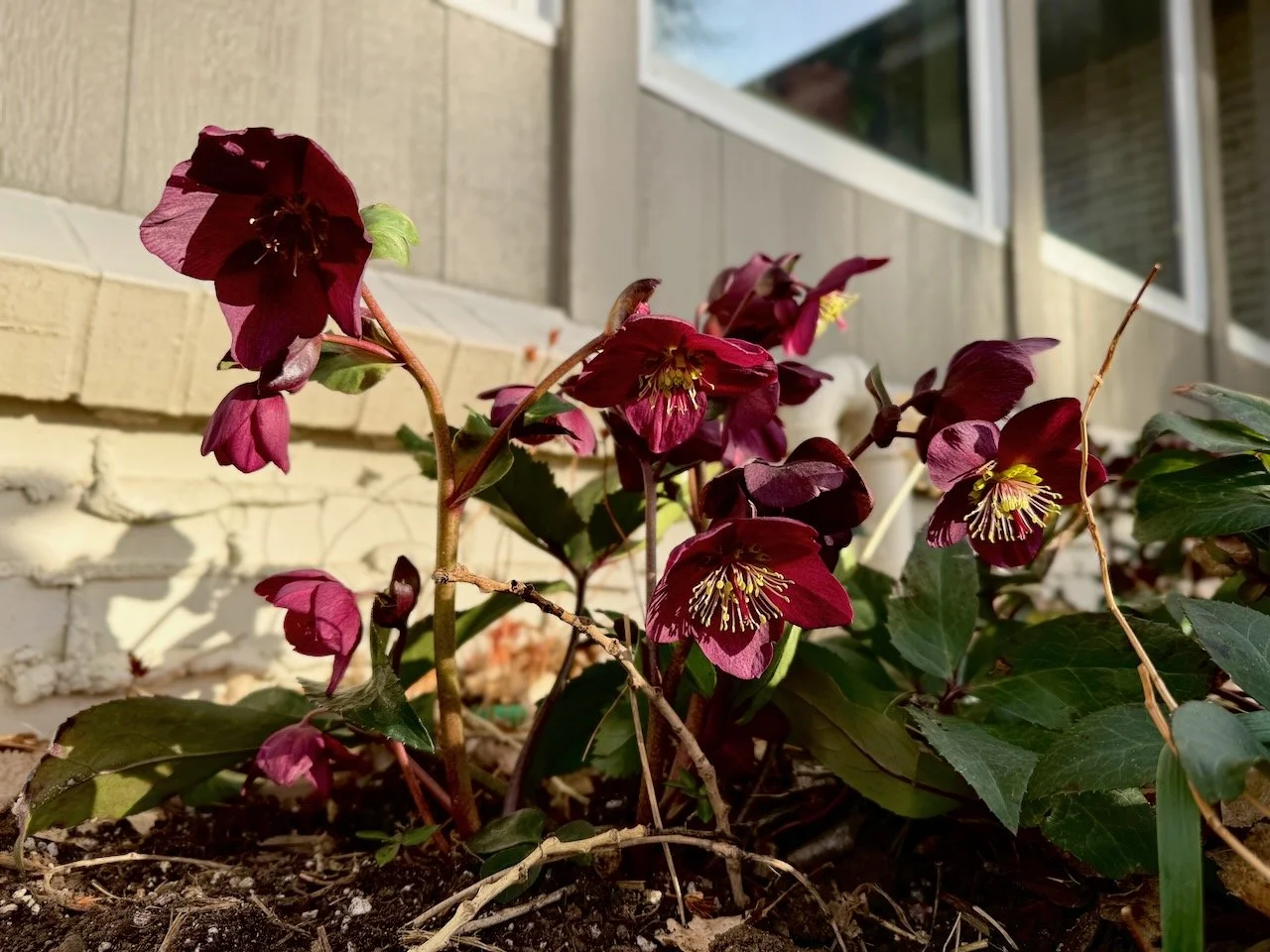
Hellebores
Growing Hellebores: a Gardener's Love Letter
Every garden has a moment when it feels suspended between seasons.
The snow hasn’t quite melted. The soil still carries winter’s chill. When I walk outside in late February or early March, I’m usually searching for any sign that the garden is waking up again.
Most of the time, it’s still brown stems and quiet beds. And snow drifts.
And then, almost overnight, something changes. Beneath last year’s leaves, a bloom appears from Helleborus orientalis.
The flowers tilt downward, as if they’d rather not make a scene. But once you notice them, you realize they’ve been working quietly through the coldest part of the year.
I didn’t expect them to become one of my favorite cut flowers – blooming as they do in early spring. But when we are starved for color and cheer, a vase full of Hellebores brightens any room without resorting to flowers flown in from Central America. And while they aren’t dramatic like dahlias or cheerful like zinnias, over time they’ve become one of the plants I look forward to most —both for their beauty and for how effortlessly they fit into a thoughtful garden.
For gardeners who love cut flowers, shade gardening, and sustainable growing, Hellebores are one of the most rewarding perennials you can plant.
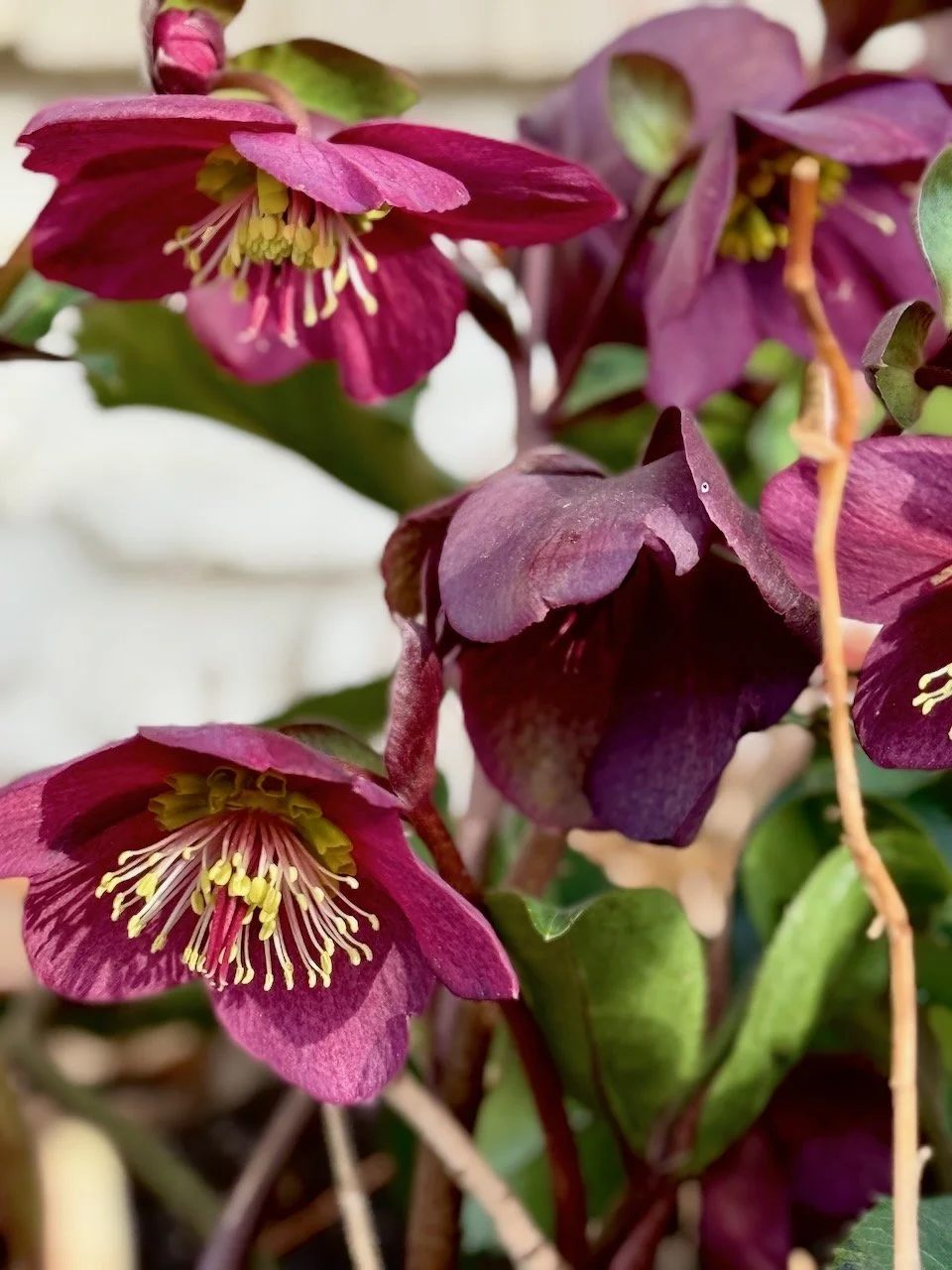
What is Helleborus orientalis?
Despite the common names Lenten Rose, Helleborus orientalis is not a rose at all. It belongs to the buttercup family and to the genus Helleborus, a group of woodland perennials native to Europe and parts of western Asia.
This particular species originates in Greece and Turkey, where it grows along woodland edges, hillsides, and in forest clearings.
In the garden, Hellebores form handsome clumps of leathery evergreen leaves. In late winter or very early spring—sometimes even pushing through snow—the plants send up thick stems topped with nodding flowers.
Those flowers come in a surprising range of colors:
creamy white
soft green
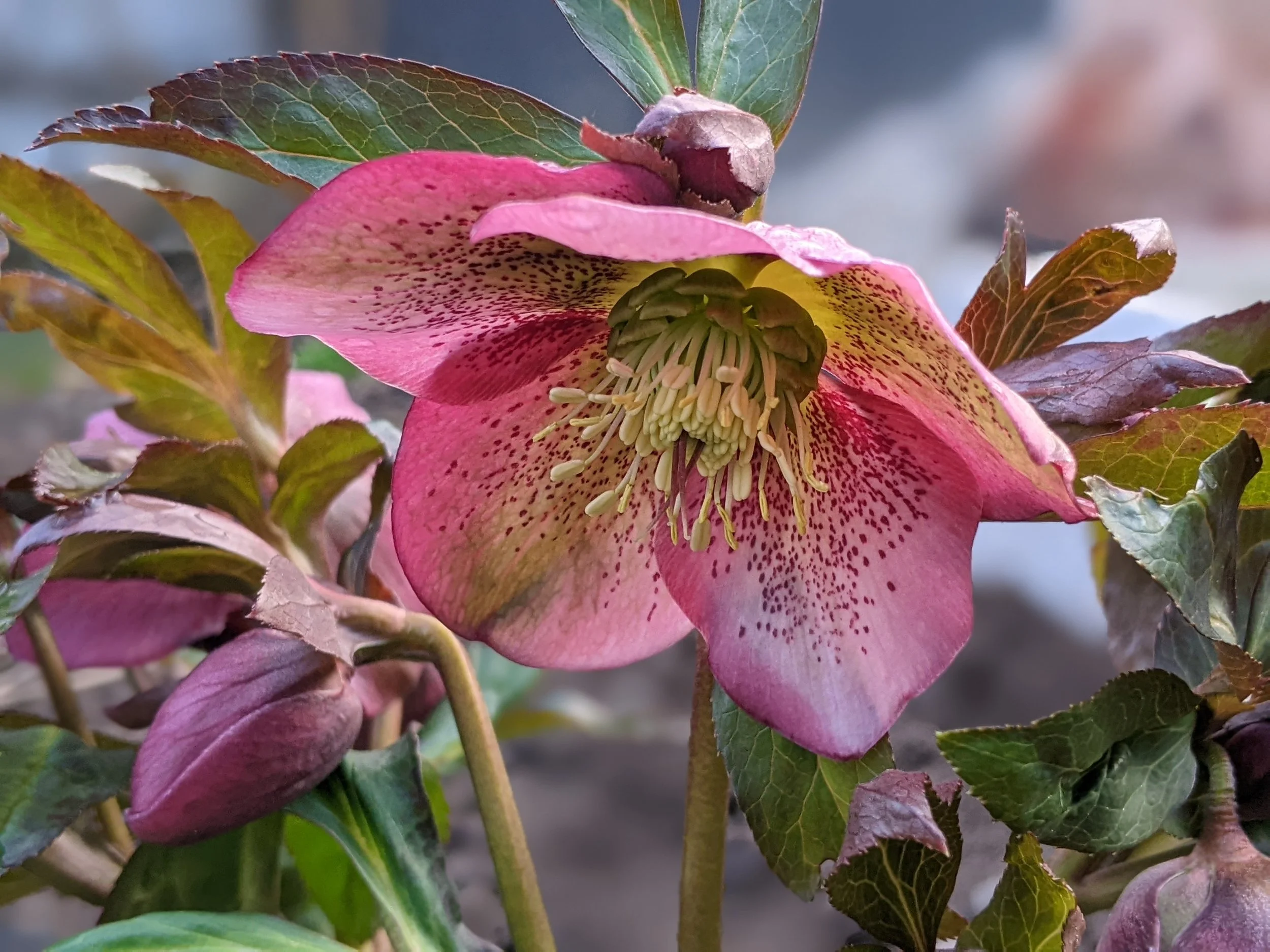
dusty pink
plum and burgundy
near black
Modern breeding has expanded the Hellebore palette. They’re the kind of flower you admire up close, where the subtle patterns and textures really reveal themselves.
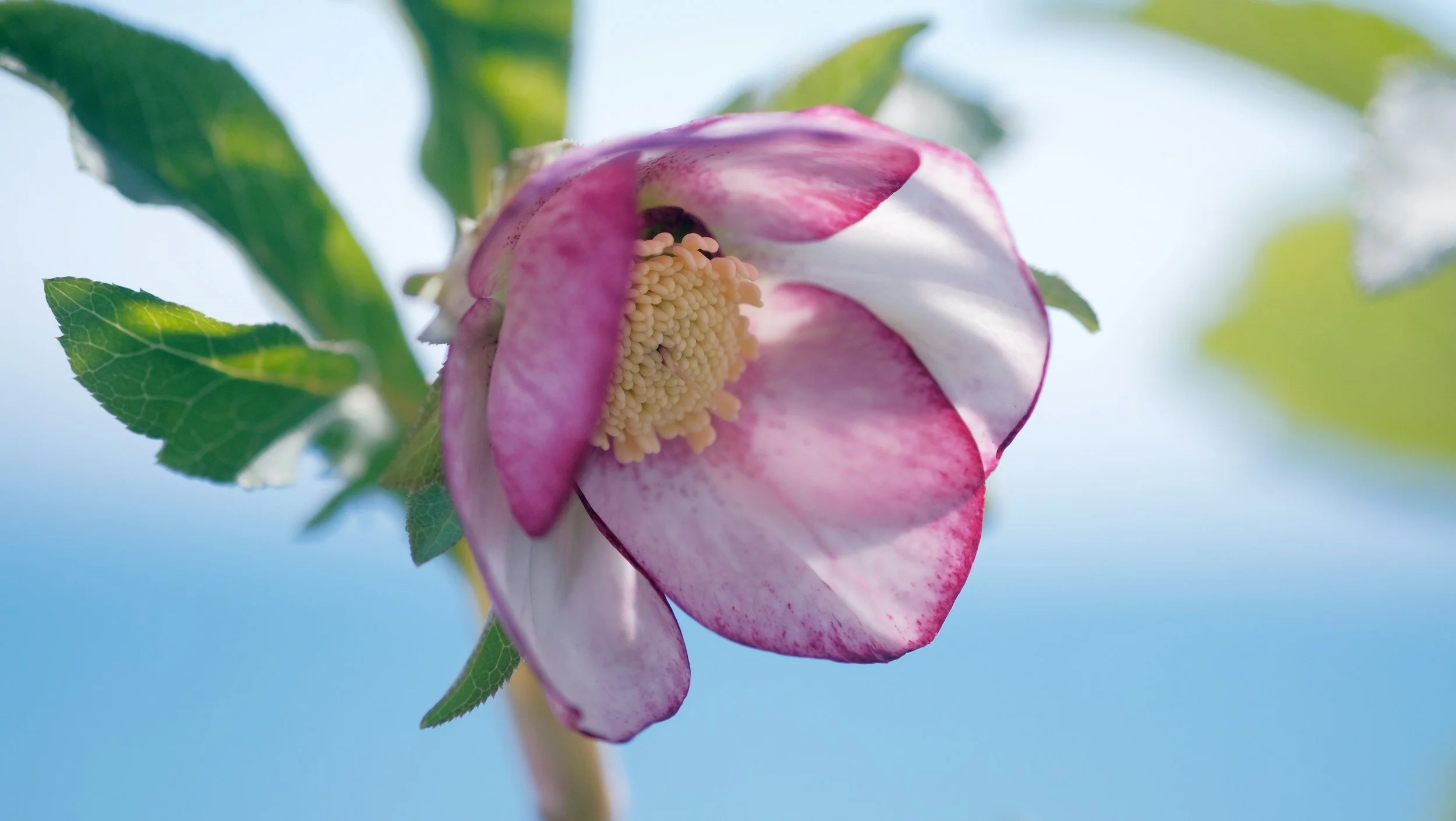
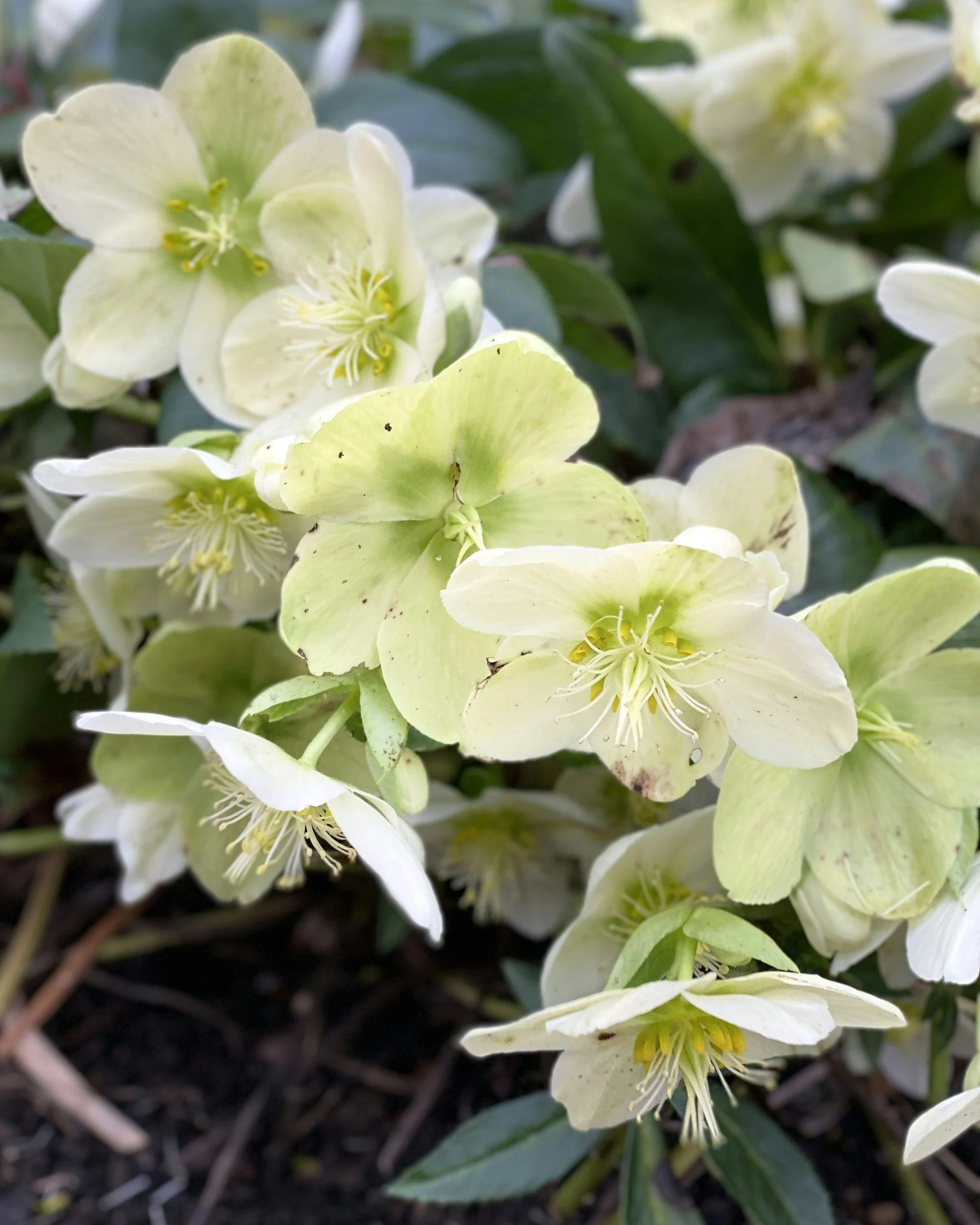
What Is Helleborus niger?
Helleborus niger, often called the Christmas Rose, is one of the earliest-blooming hellebores and a beloved perennial for winter and very early spring gardens. Despite its common name, it isn’t a rose at all—it belongs to the buttercup family. The plant produces elegant white flowers, often with a hint of pink as they age, above glossy evergreen foliage. In milder climates it can bloom in mid-winter, while in colder regions it typically flowers in late winter to very early spring.
Gardeners prize Helleborus niger for its ability to bring light to shady areas of the garden when little else is in bloom. It grows best in part shade to full shade with well-drained soil and makes a beautiful addition to woodland gardens, borders, or shaded beds.
Helleborus niger vs. Helleborus orientalis:
What’s the Difference?
Both plants are lumped together as Hellebores, and for most gardeners the difference comes down to bloom time and flower varieties. Helleborus niger blooms earlier, often in late winter (December-February in the Northern Hemisphere), and is known for its classic white flowers. Helleborus orientalis, on the other hand, blooms slightly later—around late winter to early spring (February - April in the Northern Hemisphere)—and comes in a wide range of colors including pink, purple, cream, speckled, and even near-black.
Both Hellebores prefer shady garden settings and similar growing conditions, and both are typically planted in early spring or in autumn when the soil is workable and temperatures are mild. Fall planting is often ideal because it allows the roots to establish over winter, but spring planting works well, too—especially if you’re adding hellebores to the garden when you first see them blooming at nurseries.
I buy mine in the spring when they are blooming so I can be sure I have the color combinations I desire.
Interested in more information on the history of and process of Hellebore cultivation? Check out this article from Edmonds & Howard, commercial plant growers in Great Britain.
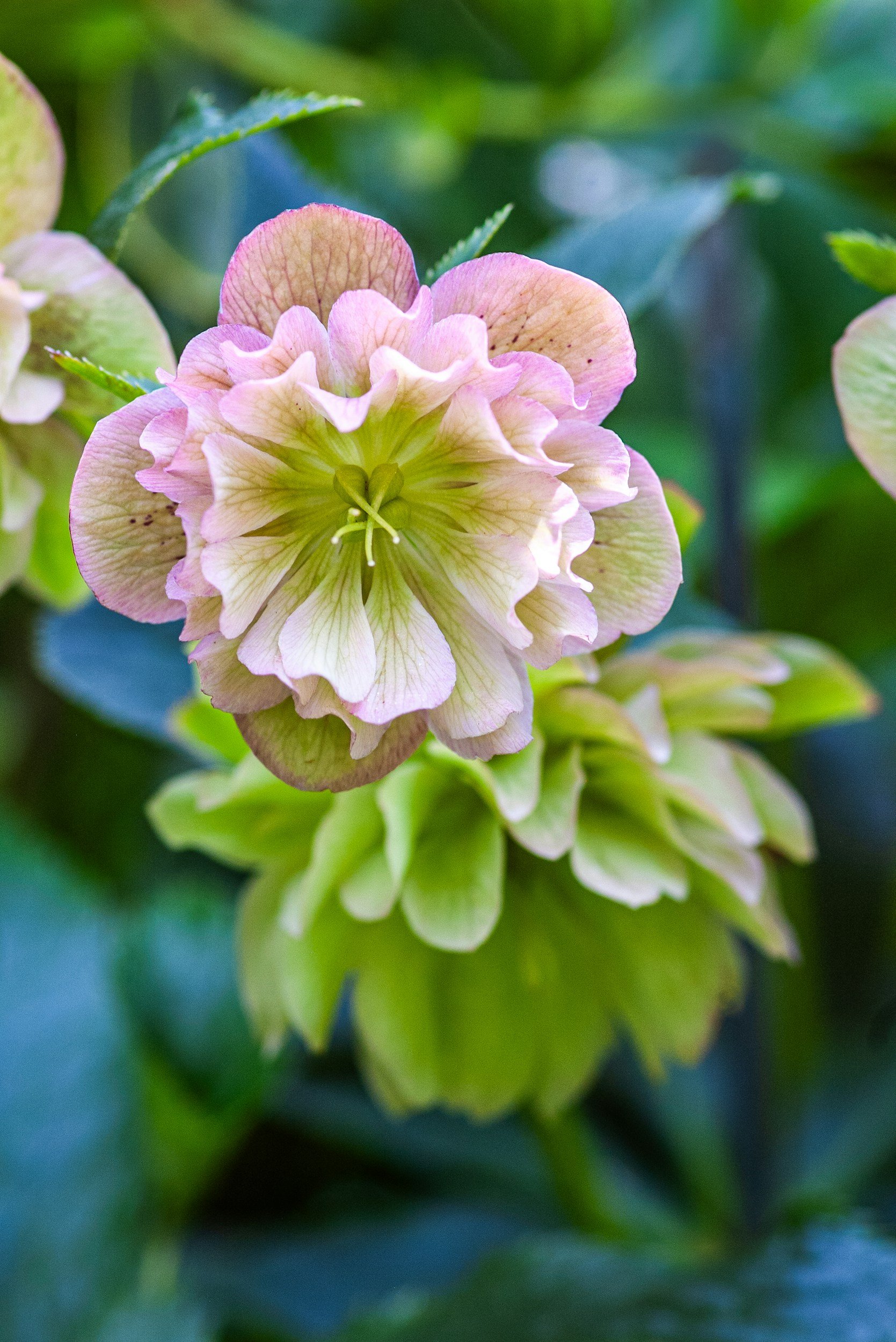
A Plant With Ancient and Unusual History
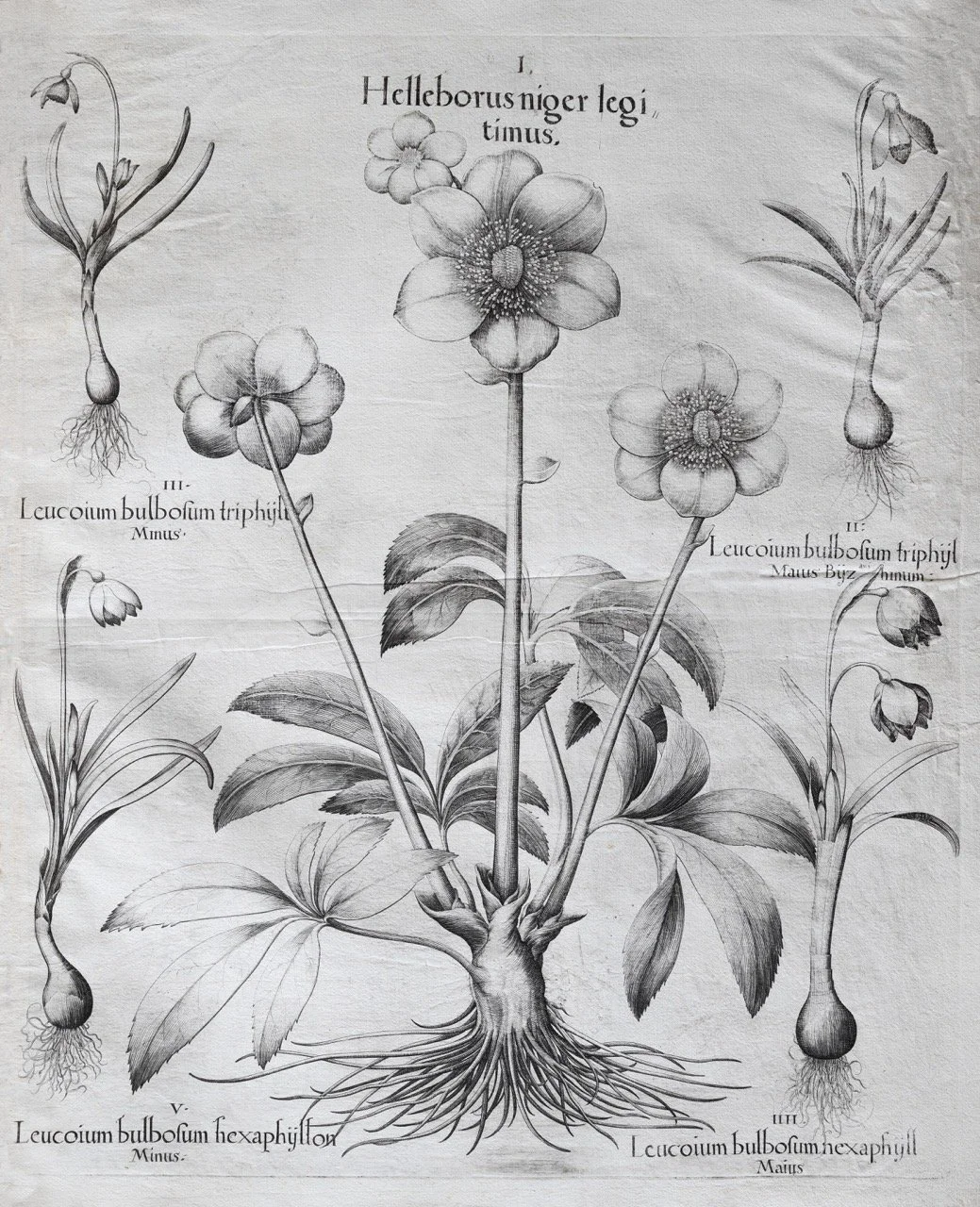
Hellebores have been known to humans for thousands of years, and their history is surprisingly dramatic.
Ancient Greek physicians—including those in the tradition of Hippocrates—used Hellebore as a medicinal plant. It was prescribed for a wide range of ailments, from digestive complaints to mental illness. One myth even credits Hellebore with curing madness.
Not all historical uses were so benevolent.
During the Siege of Kirrha in ancient Greece (585 BCE), invading forces reportedly poisoned the city’s water supply with Hellebore. The resulting illness weakened the defenders enough for the attackers to win.
These stories highlight an important fact: Hellebores are toxic plants. All parts contain compounds that can cause illness if ingested. Prolonged contact with parts of the plants can cause irritation, so wear gloves and long sleeves if you'll be working with them for a long time.
Fortunately, this toxicity is also why deer and rabbits tend to leave them alone—a small blessing for gardeners.
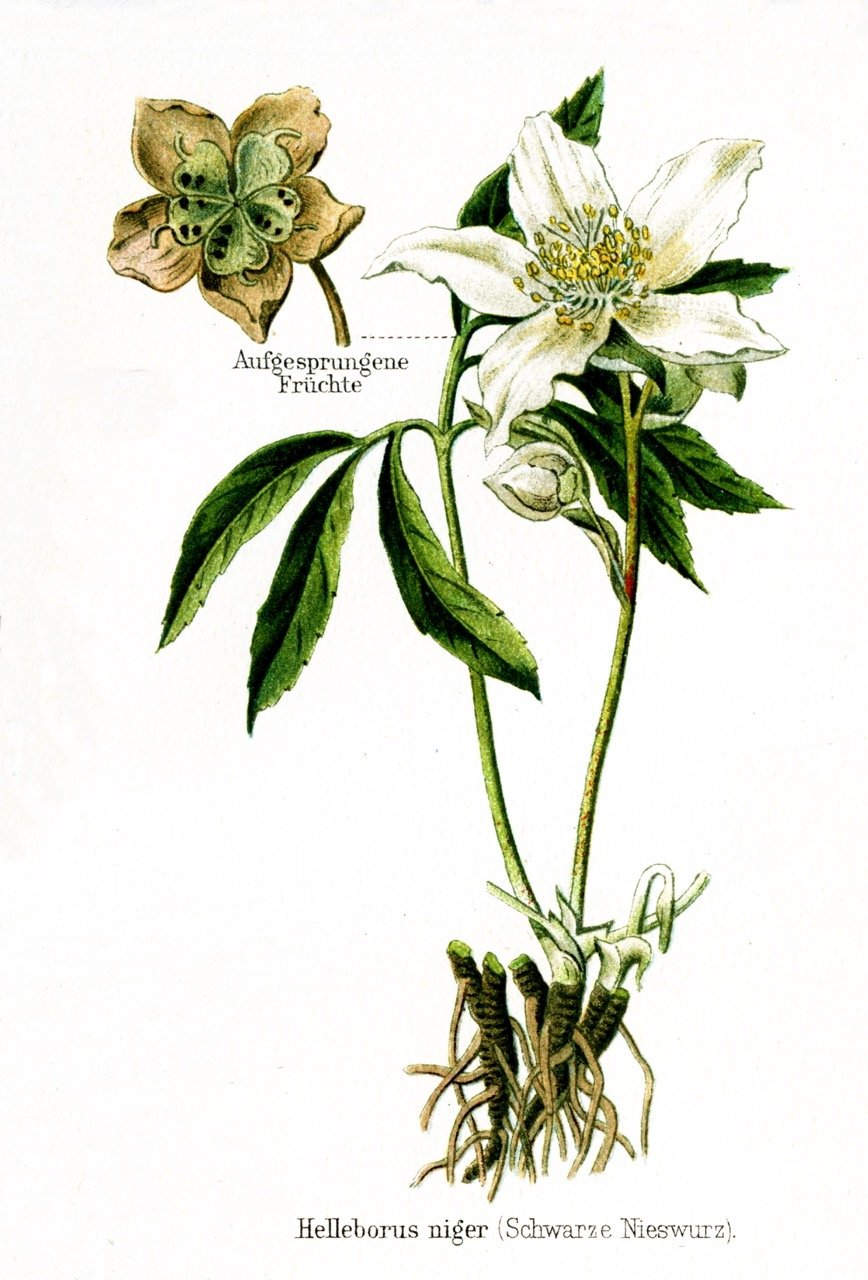
The Modern Renaissance of Hellebores
Although Hellebores have ancient roots, the extraordinary diversity available today is the result of relatively recent breeding.
In the nineteenth century, German gardeners began selecting and hybridizing Helleborus orientalis, gradually expanding its color range.
Later, British plantswoman Helen Ballard played a major role in reviving interest in Hellebores during the 1960s. Her work helped popularize the plant among gardeners and collectors.
Thanks to decades of breeding, today’s Hellebores come in an astonishing variety of forms:
near-black flowers
apricot and yellow tones
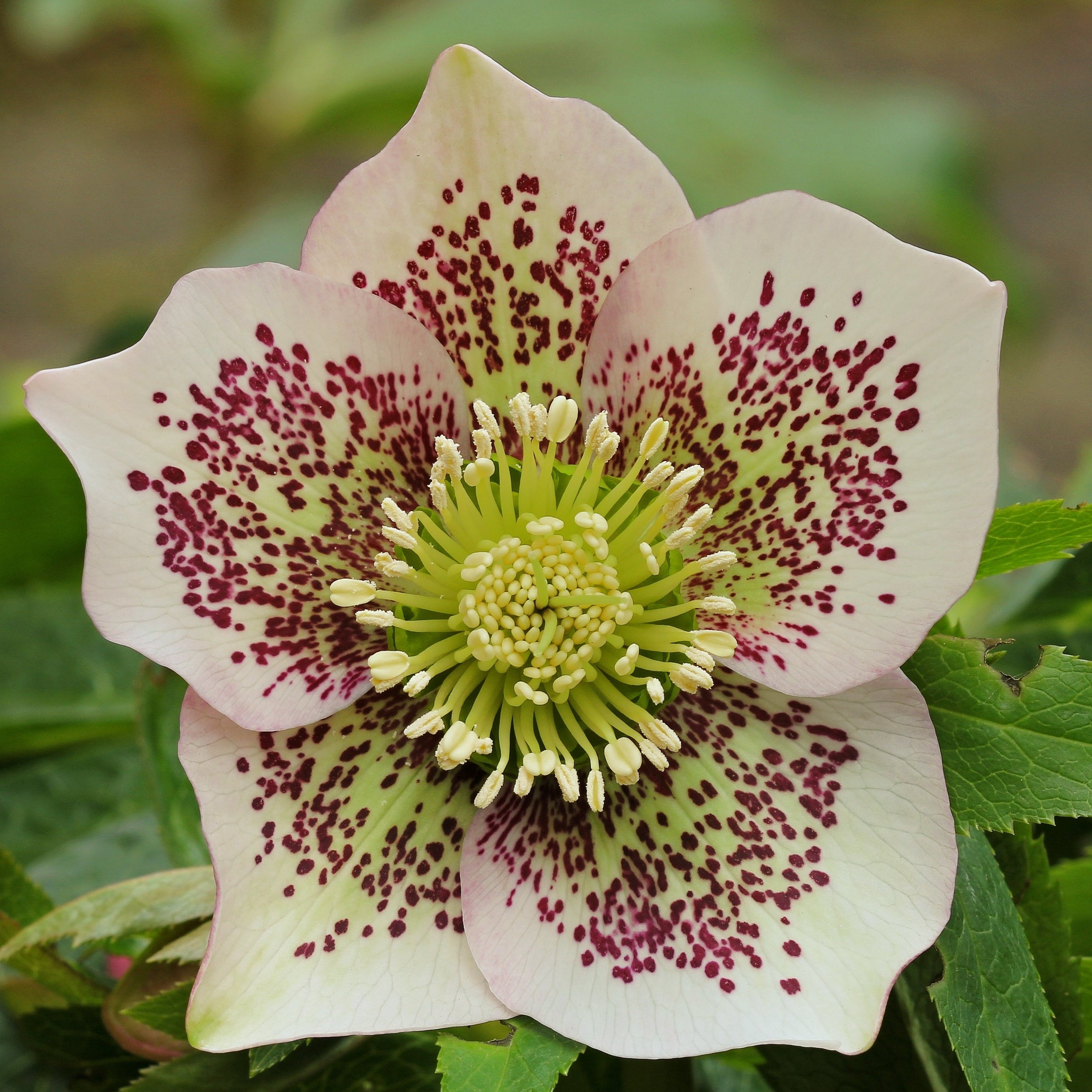
heavily spotted petals
dramatic double blooms
Yet despite all this refinement, the plants themselves remain tough, resilient, and surprisingly easy to grow.
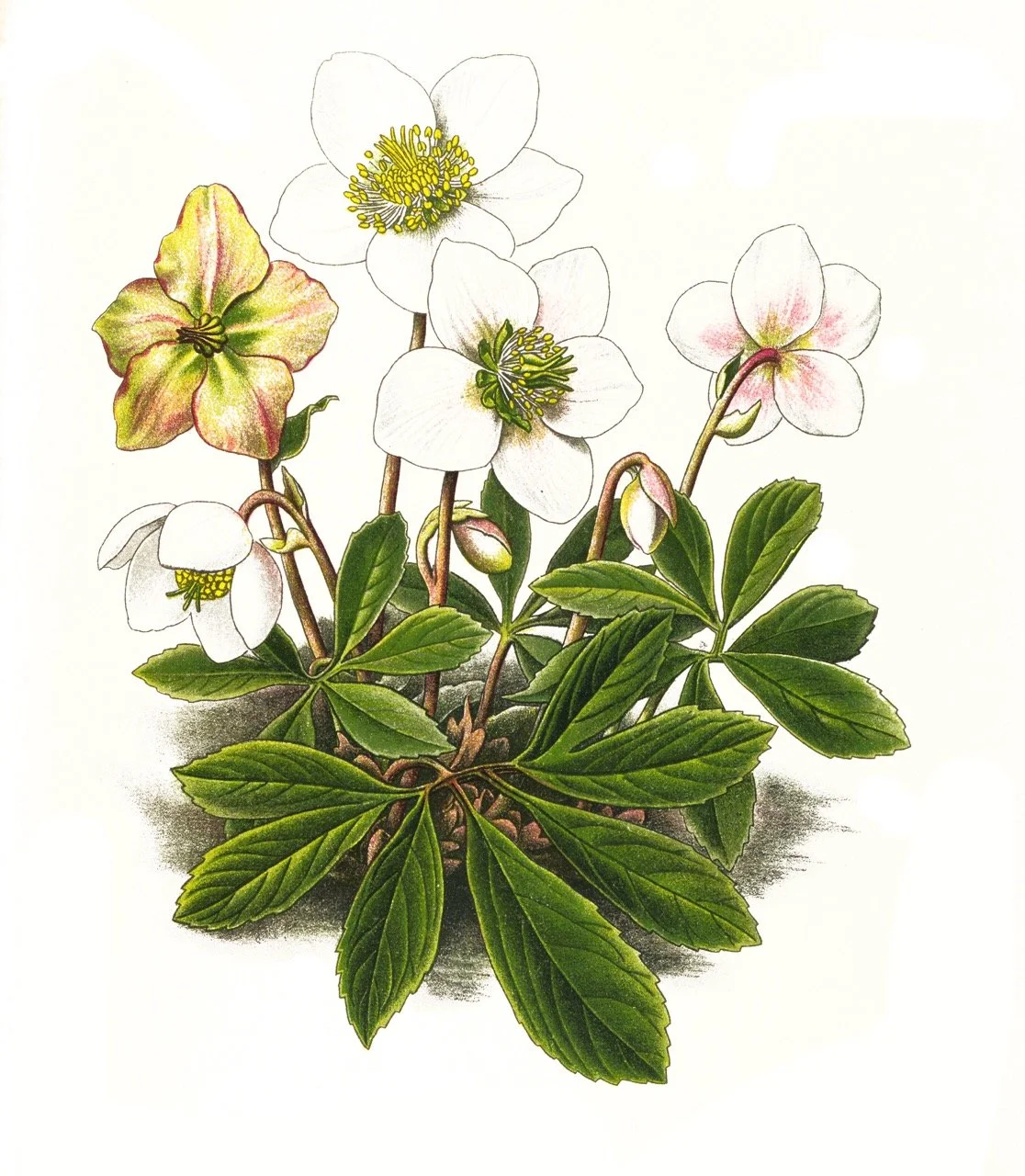
Why Gardeners Call Them
Christmas and Lenten Roses
In many climates, Helleborus orientalis flower during Lent, the Christian season that leads up to Easter. That timing gave the plant a special place in traditional European gardens. However, Helleborus niger bloom near Christmas in some climates — thus they are often called the Christmas Rose.
As for the Christmas Rose moniker: there is a lovely piece of folklore associated with the flower.
According to legend, a young shepherd girl who had followed the Magi to the stable found that she had no gift to offer the infant Jesus. As she wept, an angel appeared causing a Helleborus niger to bloom in the snow so she could present it as an offering to the baby in the manger. Read more here.
This story captures something true about Hellebores: they bloom when the world still feels cold and empty.
Plant of the Week:
Helleborus orientalis & Helleborus niger
Common names: Lenten Rose and Christmas Rose
Light: Partial shade to full shade
Soil: Rich, well-drained soil with organic matter
Hardiness: USDA zones 4–9
Bloom time: Late winter to early spring
Best use: Shade gardens, woodland plantings, early cut flowers

Why Gardeners Love Hellebores
There are plenty of flowers that shine in summer. Hellebores are different—they bring life to the garden when almost nothing else is blooming. For me, they’re one of the most satisfying plants to grow because they combine beauty with resilience.
Here’s what makes them special:
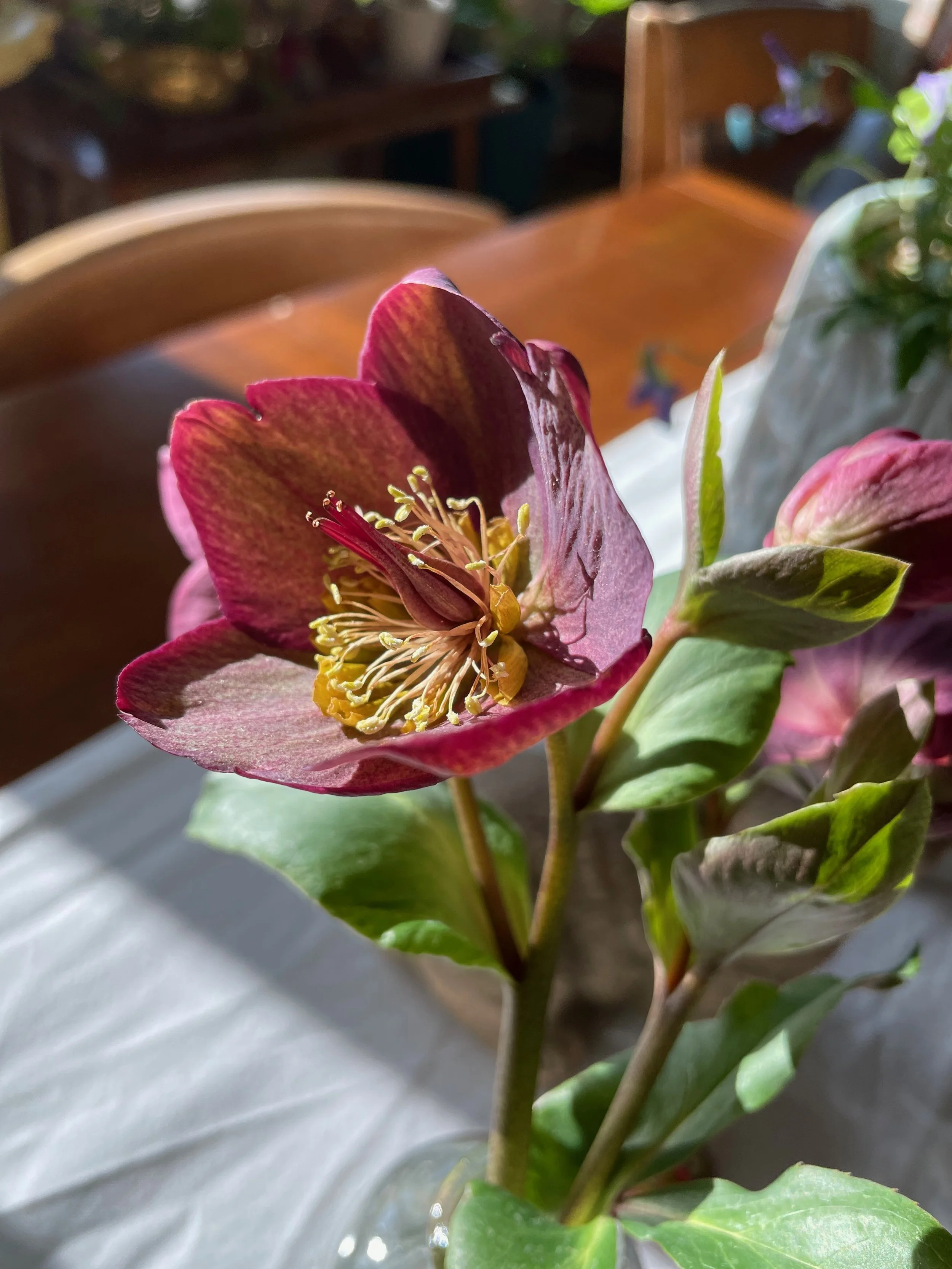
Early Flowers for Pollinators
Late winter is a difficult time for insects. Hellebores can provide pollen and nectar when bees are just beginning to emerge.
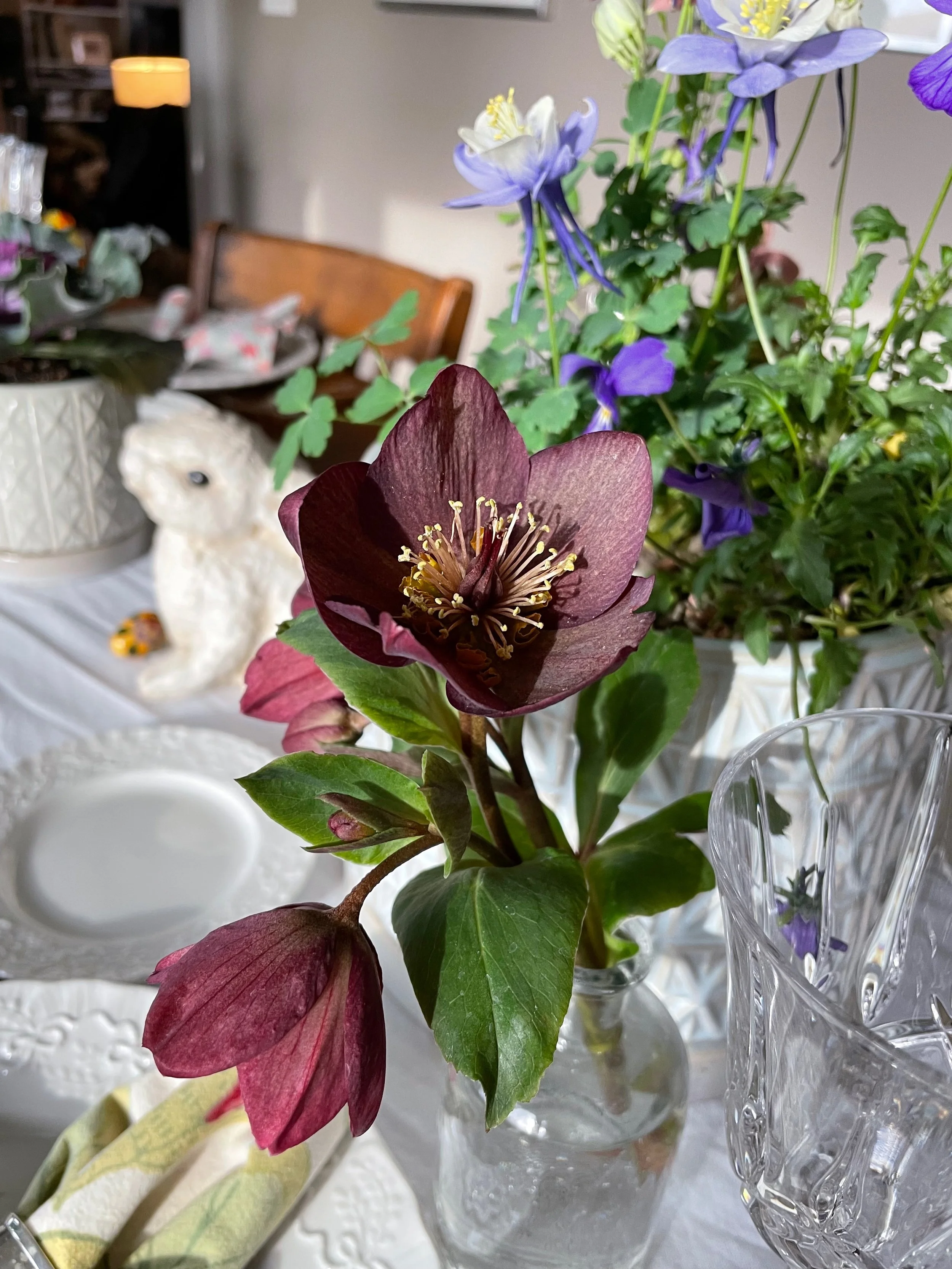
Long-Lived Plants
A healthy Hellebore can thrive for decades. Once established, it becomes a permanent part of the garden.
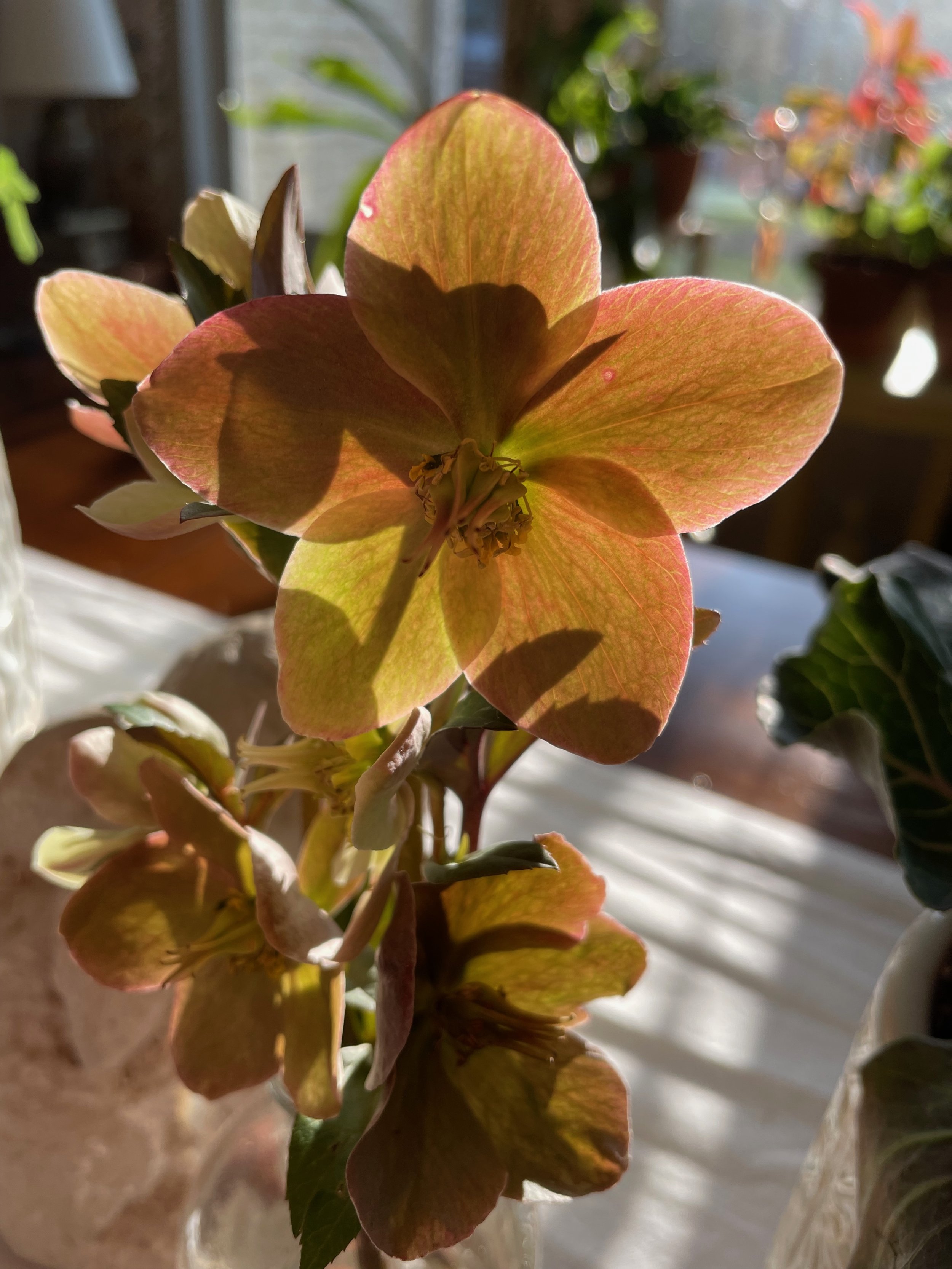
Low-Maintenance Flowers
They rarely need fertilizer, pesticides, or heavy watering.
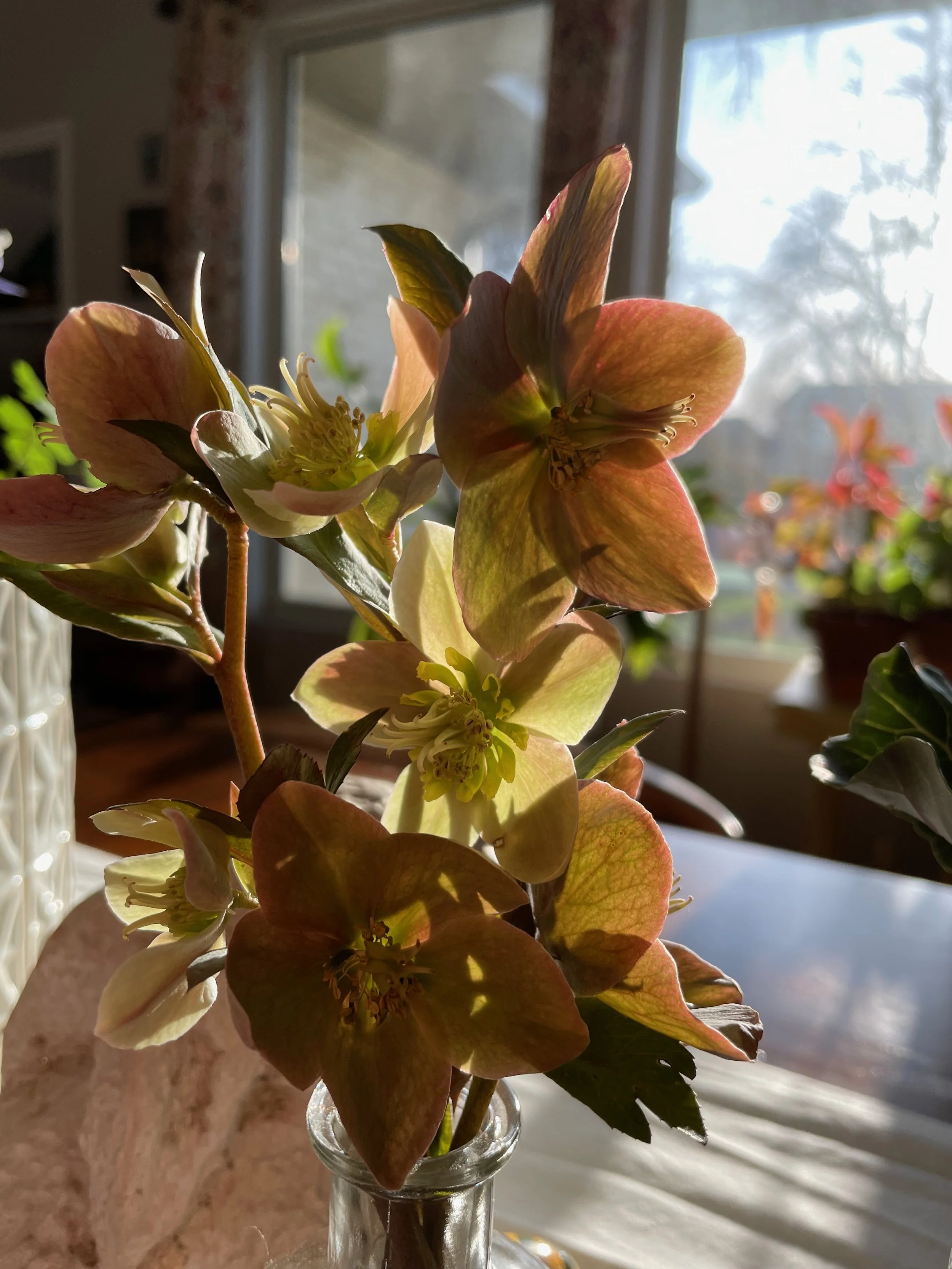
Shade Garden Super Star
Many cut flower gardens focus on sun-loving plants, but Hellebores transform shady spaces into productive growing areas.
Planting Hellebores in my Woodland Garden Bed
I planted some new Hellebores in my Woodland Garden bed. Check it out!
How to Grow Hellebores
To grow Hellebores, plant it in partial shade with rich, well-drained soil. Keep the soil consistently moist during establishment, mulch with compost each year, and cut back old foliage in late winter to encourage healthy blooms.
Light Requirements
Hellebores prefer partial shade to full shade. They perform especially well under deciduous trees, where they receive winter sunlight and summer protection.
Personally, I have one place where Hellebores thrive – shaded by a tree and tucked under the eaves of our house.
Soil Conditions
Hellebores thrive in rich, humus-filled soil.
To recreate their natural woodland environment:
add compost annually
allow leaf litter to decompose
avoid compacted soil
Good drainage is essential.
Water Needs
New plants should receive consistent moisture. Mature plants are relatively drought-tolerant but still appreciate spring moisture while flowering.
Mine are planted near my front hose, and every time I run the hose for something, I give them a little supplemental water. They are very happy as a result!
Hardiness Zones
Hellebores grows well in:
USDA zones 4–9
This makes them suitable for much of North America. However, not all varieties have the same cold tolerances, so check before buying.
Practical Tips for Growing Healthy Hellebores
After growing Hellebores for several seasons, I’ve discovered a few simple practices that keep them looking their best.
Cut back old foliage in late winter
Before the flower stalks emerge, I remove last year’s leaves. This improves air circulation and allows the blooms to take center stage.
Feed the soil with compost
Instead of using synthetic fertilizers, I add a thin layer of compost or leaf mold each autumn. This mirrors the way woodland plants receive nutrients in nature.
Let seedlings grow
Hellebores often self-sow. The seedlings don’t always resemble the parent plant, which means you may discover completely new color combinations appearing in your garden.
Be patient with young plants
Hellebores can take a year or two to settle in before flowering heavily. Once they do, though, they become remarkably reliable. Mine really didn't flower for the first two years they were planted, but now they knock my socks off!
Avoid transplanting
Hellebores dislike being moved. When planting them, try to choose a location where they can remain undisturbed.
Growing Hellebores for Cut Flowers
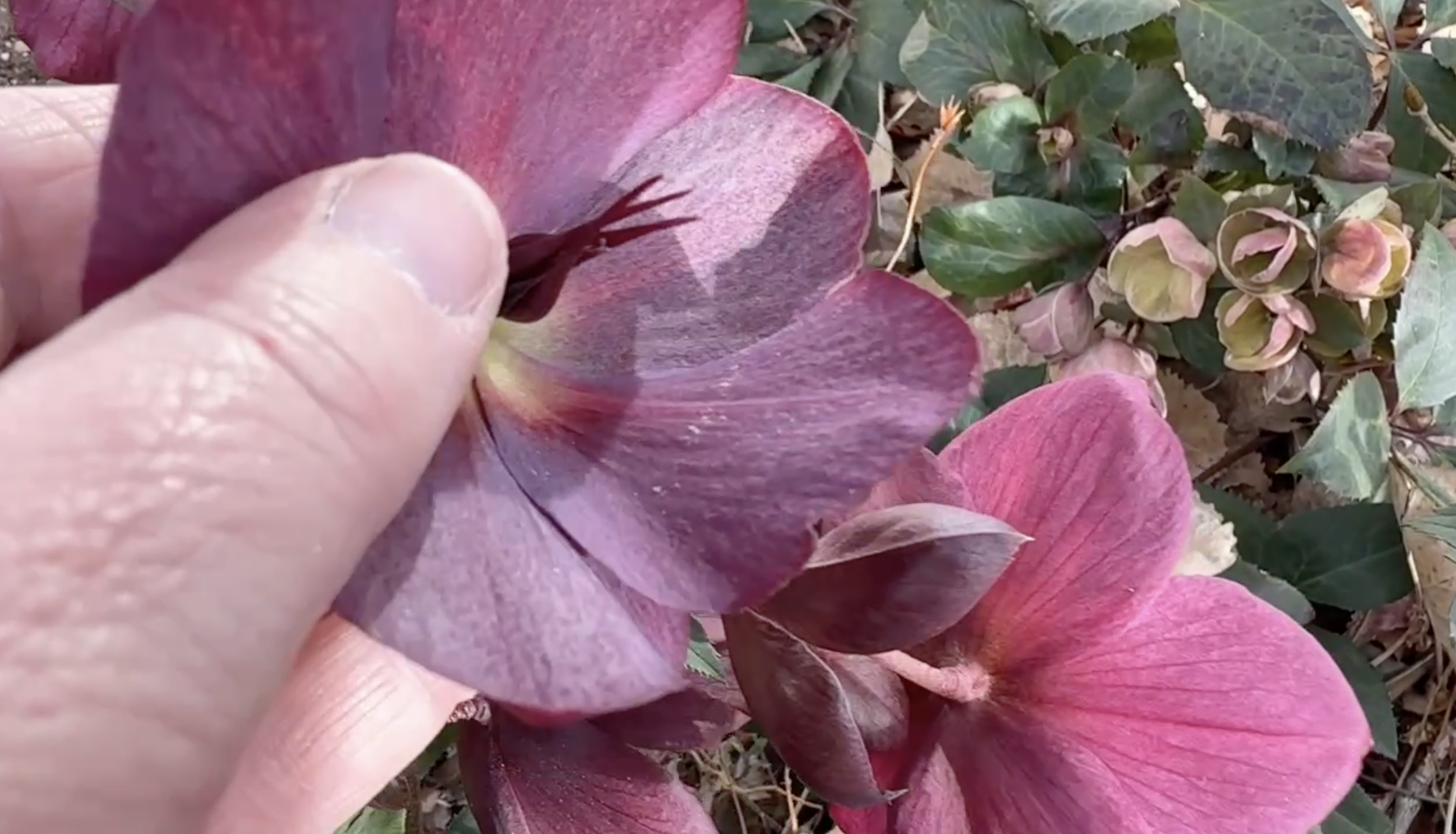
One of the best-kept secrets about Hellebores is that they make wonderful cut flowers—if you harvest them at the right time.
When I first tried cutting them, I was disappointed. The flowers wilted quickly. Eventually I learned the key: maturity.
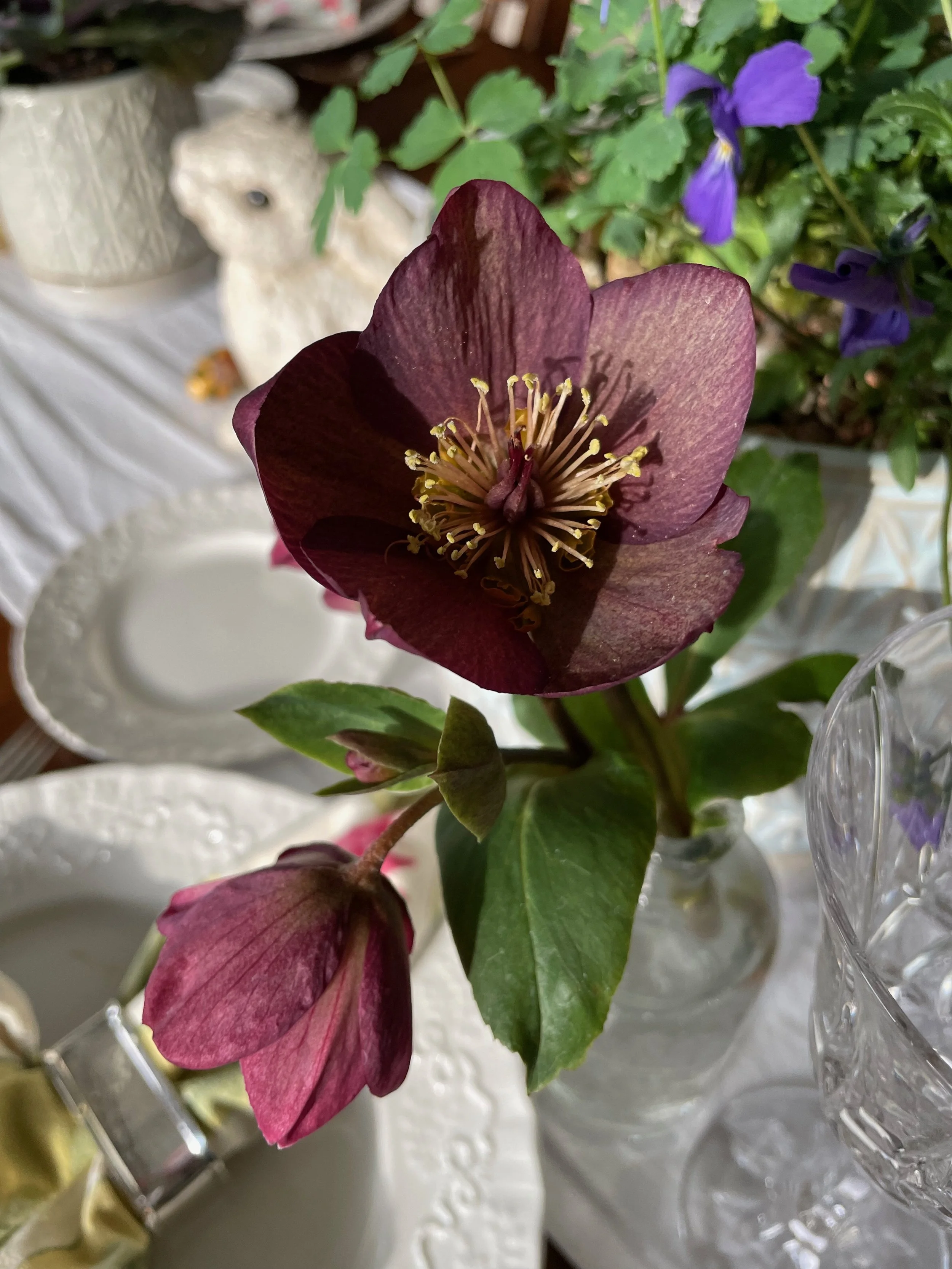
Young Hellebore flowers are mostly water and collapse quickly in a vase. But once the blooms mature and begin forming seed pods, the sepals thicken and become much more durable.
At that stage, they can last beautifully in arrangements.
Tips for cutting Hellebores
Wait for mature blooms.
If the flower feels firm and the center is developing seeds, it’s ready to harvest.Cut deeply into the plant.
Long stems make arranging much easier.Condition the stems.
Some gardeners dip the cut ends briefly in hot water or flame to extend vase life.
For more guidance on cutting Hellebores for bouquets, I highly recommend this post by florist Ellen Frost. And she has a bonus tip which is brilliant!
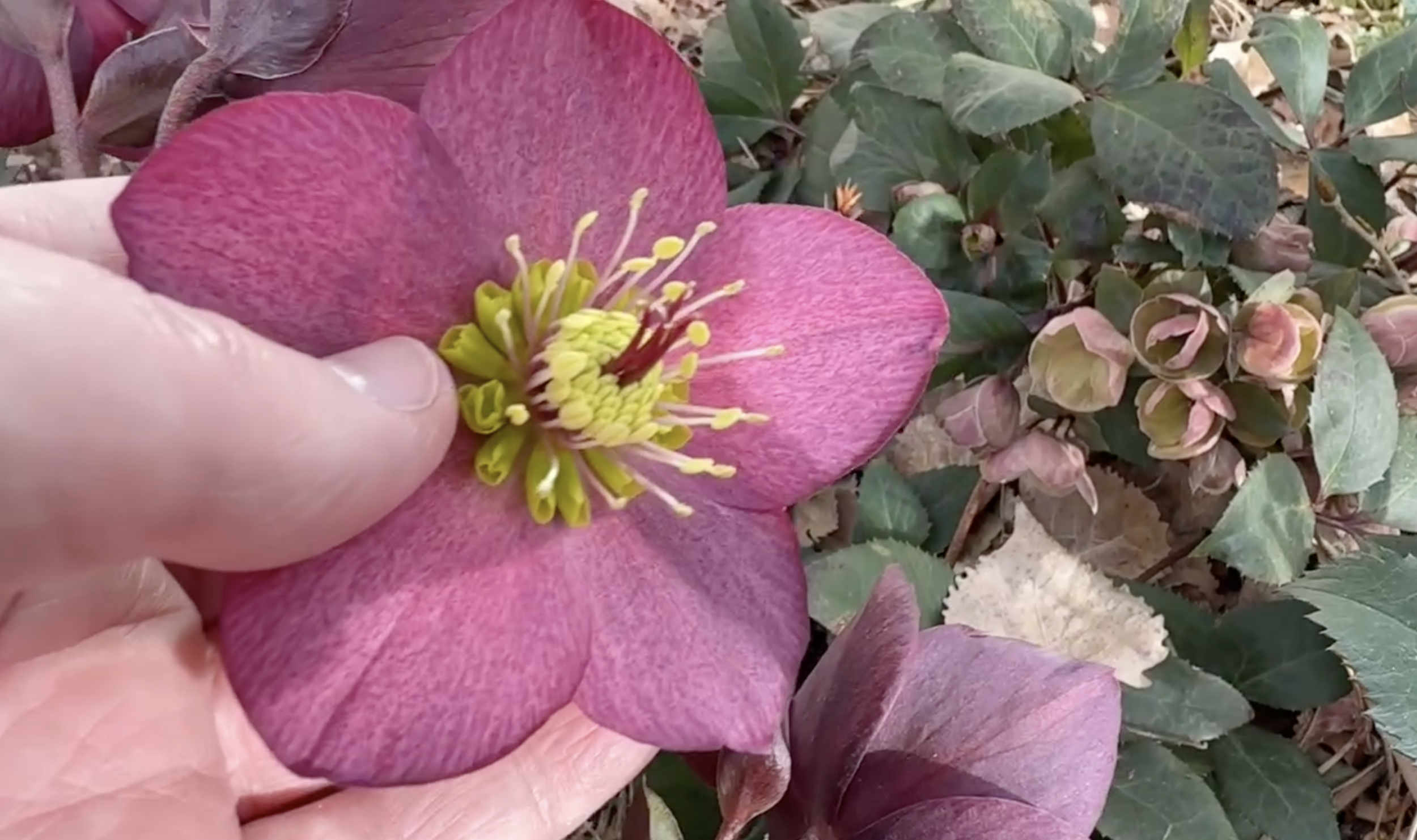
NOT ready to cut yet!
Ready to cut!
at the close…
Hellebores aren't flashy plants. They don’t demand attention. In fact, you could almost overlook them if you weren’t paying attention.
But that’s exactly what I love about them!
They bloom when the garden looks lifeless. They thrive in shady corners where other flowers struggle. And they ask very little from me as a gardener in return.
Every spring, when I see those first nodding blooms pushing through the leaf litter, I’m reminded that the garden doesn’t need constant intervention to be beautiful. Sometimes the best thing we can do is plant wisely, nurture the soil, and let nature do the rest.
Hellebores are patient plants. And every year they quietly remind me that spring is already on its way.
Happy Gardening!
Angela
Subscribe now so you never miss a thing!