

Lavender in the Garden
Varieties for an Italian-Inspired Look
I know many people associate Lavender with Provence and France – and rightly so. The fields of commercially-grown Lavender photographed over and over again in Provence are stunning. But for me, Lavender is quintessentially Italian. There are places in Italy that echo Provence’s heat and sunshine where Lavender is also grown commercially. And as a Mediterranean herb, Lavender is equally at home in Italian gardens large and small.
But even that is not the Italy I see when I smell Lavender. You know how they say that smell may be more powerful than sight when evoking memories? Well, that’s true for me with Lavender, to be sure. It pulls me to a place and time to which I would happily return any day…
This post is sponsored by High Country Gardens, but all opinions are my own.
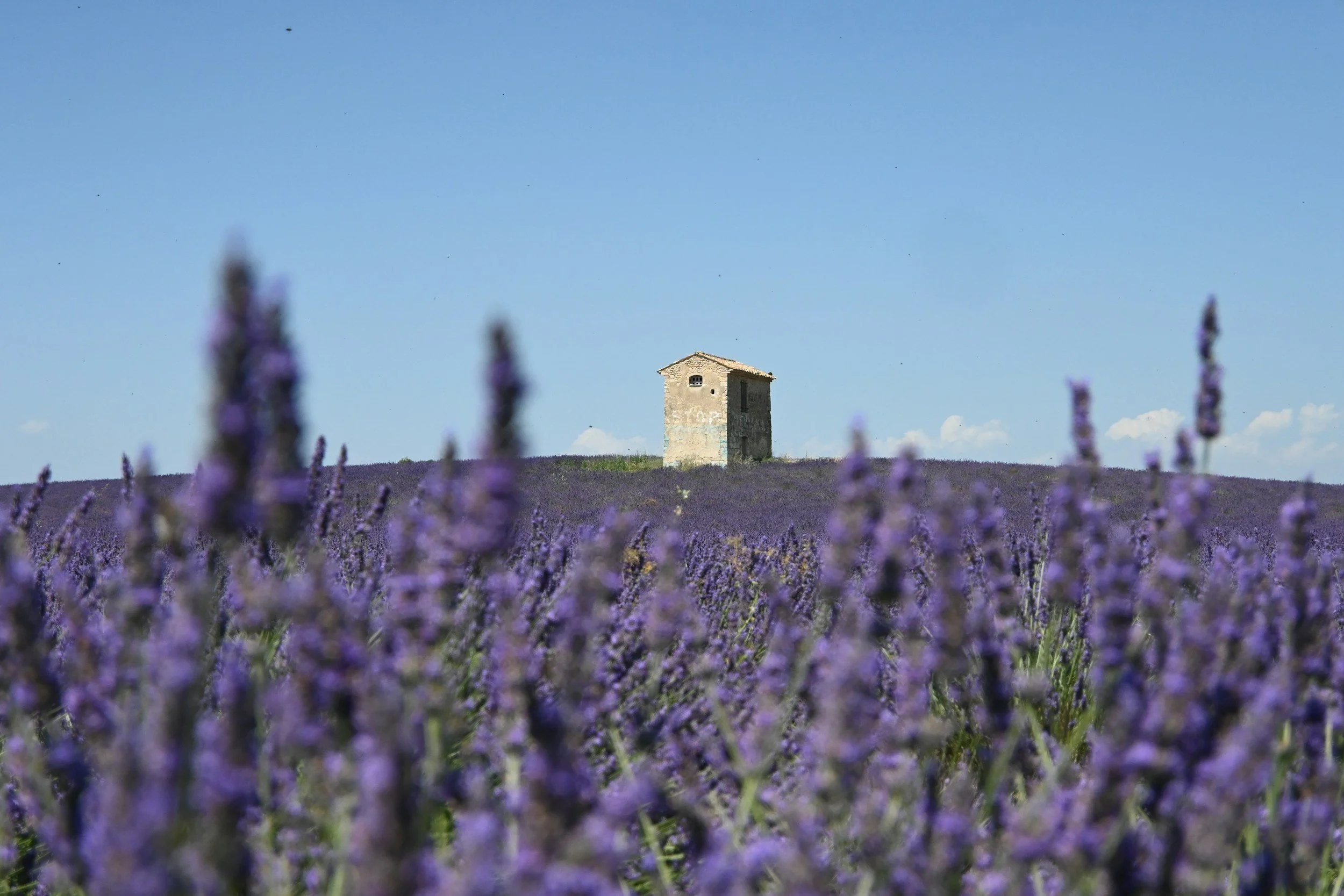
Photo: Emma Hong via Unsplash
In my pre-motherhood days, I traveled to Italy several times per year – often taking groups of travelers interested in learning about Italian Renaissance Art. One year, our beloved New Years Crew (a group of friends who spend New Years together each year) spent two glorious weeks in Italy. One day we visited several wineries outside of Florence. It was a magical day for so many reasons. Best friends. Delicious food. Great wine. Life-changing conversations. Genuine magic.
It was the first week of January. So the weather was chilly, and the countryside was decidedly wintry. No snow, but not green. Honestly, it felt autumnal. As we traveled from winery to salumeria to charming village, I was struck by the beauty – even in winter – of the vineyards and the olive orchards in the Tuscan countryside.
Tuscany is, of course, celebrated for its rural beauty and has been for centuries. It is romanticized by authors and movie makers – great works and schlock alike. And while it wasn’t my first trip to Tuscany, there was something about that day, and the magic that was being spun, that became a core memory.
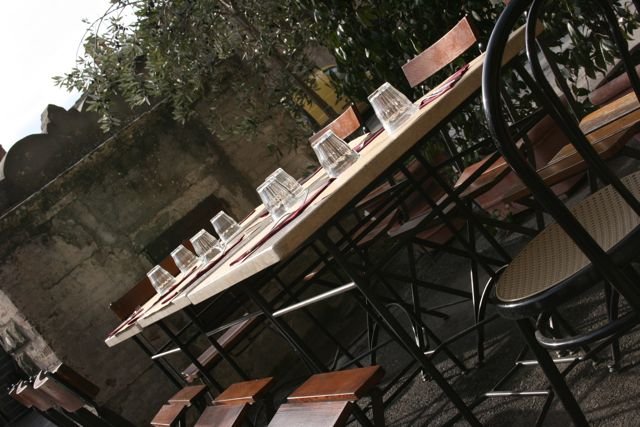
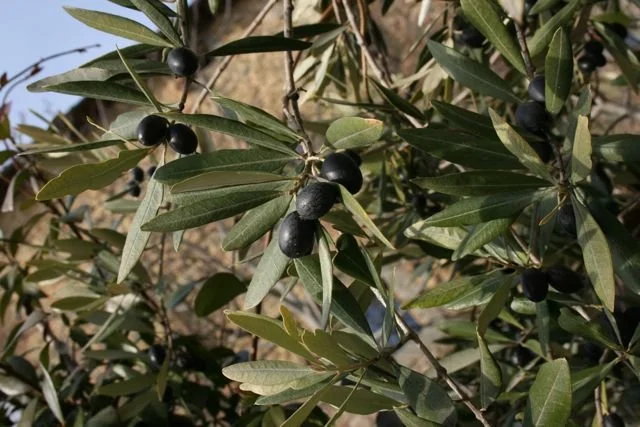
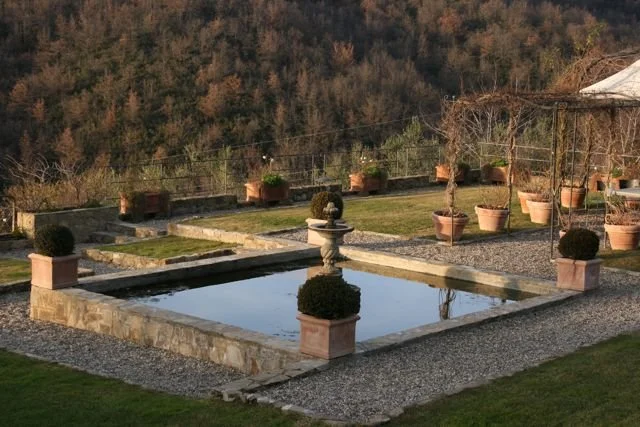
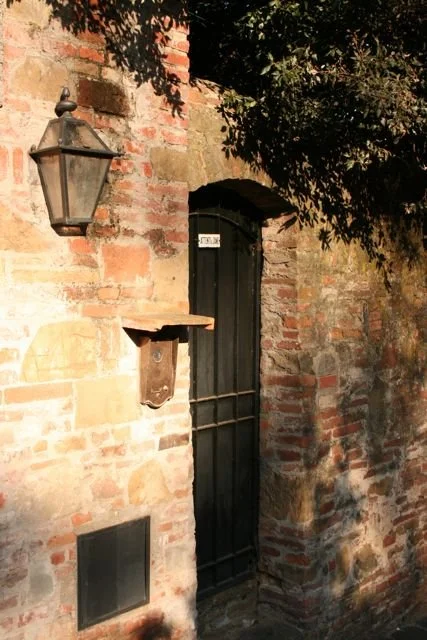
While it wasn’t cold. It certainly wasn’t warm, and Tuscany gets freezes and snow in the winter. But despite this, one of the plants that I noted over and over again was lavender. Even in winter, the plants still held a whiff of their fragrance – and a promise of summer to come.
The next day I made my way to Florence’s historic Santa Maria Novella district for a visit to the church and to Profumo-Farmaceutica di Santa Maria Novella. For more than 800 years, the convent and monastery here have been growing plants and creating healing remedies, perfumes, and skin care products from their medicinal gardens. I have spent many an hour wandering their shop, sampling the scents and emerging refreshed.
That day I bought some fancy lavender soaps – a reminder of our Tuscan countryside adventures. Each time I washed with that soap, savoring it until the bar was just a sliver, I stepped back across space and time – to my friends, to those gardens, and to Florence. It’s a smell I will forever associate with that wonderful trip. The gardens that we strolled, the gravel courtyards, charming, ancient, and tradition bound – – they are the touchstones to which I return over and over.
Gardening Memories
My garden is a sentimental place, and a lot of the plants that I include remind me of places and people that are important to me. And, to be honest, there aren’t very many plants that I associate with Italy that can be grown here in Colorado. Our climate is much more harsh with much wider temperature variations than the regions of Italy where I have spent time and invested relationships – Rome, Florence, Venice being the most important places to me.
When I lived in California, I had lots of Italian influences in my garden. Olive and fig trees, citrus trees, cyclamen in the winter, and geraniums of the summer. They all transported me to this country that I love so much.
But that has been more elusive here in Colorado. And I’m always trying to bring a little more Italy to my Colorado garden.
The first summer that I lived here in Colorado, I visited a local garden center and was shocked to see an entire table full of lavender. I had grown lavender in California, but I never thought that there would be a lavender that would thrive here in Colorado. I remember talking with one of the people working at the garden center and asking: would lavender survive here over the winter? To his credit, the guy at the garden center expressed his own doubts. He said: “it’s one of those plants that I don’t think we should be selling. I don’t think it will last.”
So I didn’t buy lavender that day. Instead I went home and did some reading.
And I was delighted to find that yes: if you choose the right variety, lavender is a great choice for Colorado gardens. And there are many of us who can grow lavender in our own gardens if we choose the right variety.
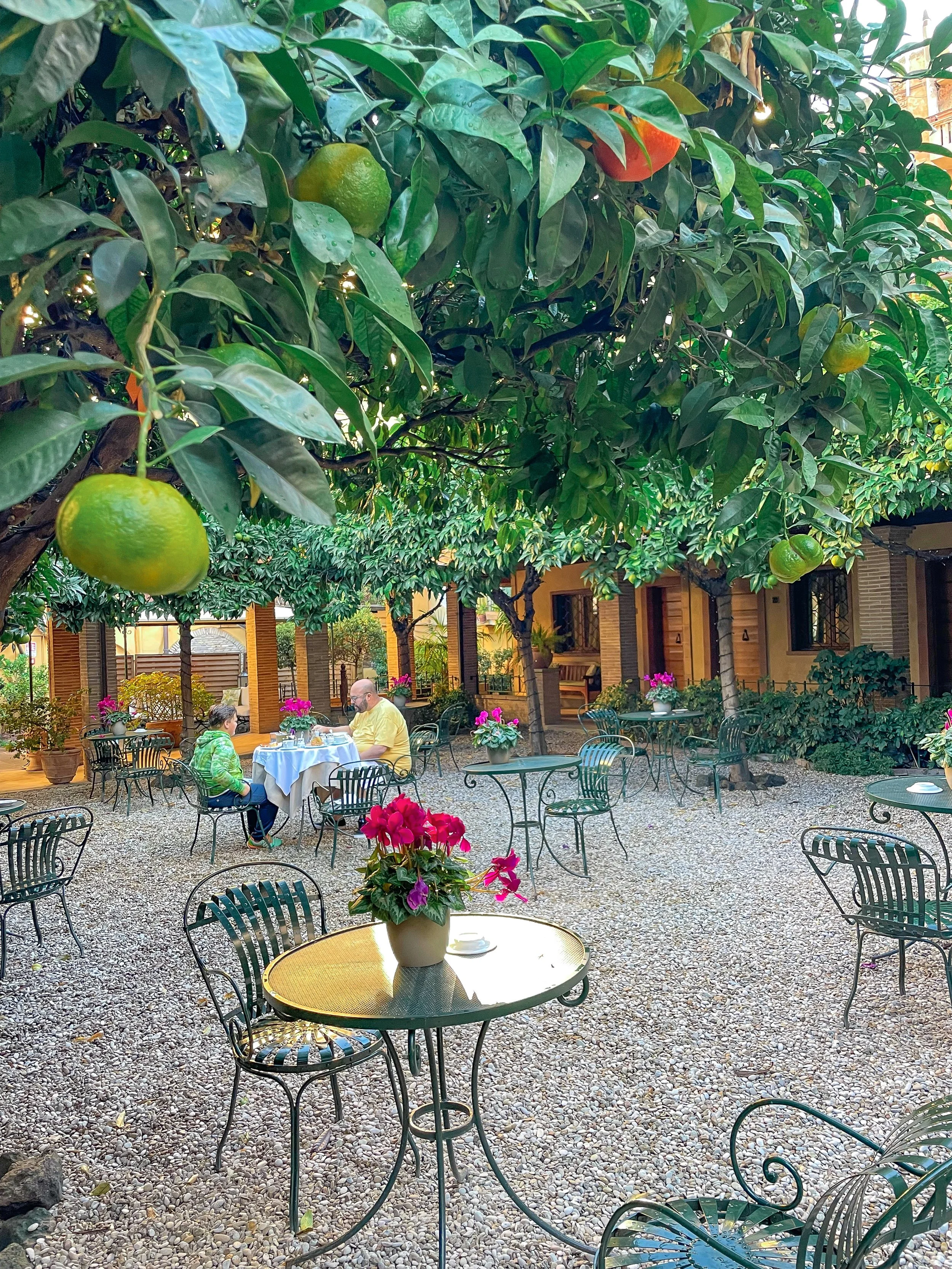
I will confess that this courtyard in Rome is one of my favorite gardens ever. It is simplicity and restraint at its best. But it is one of the most pleasant places to spend a morning that I can think of.
Types of Lavender
Lavender is part of the Lamiacea family – the mint family which gives us so many wonderful, fragrant plants that are also durable and drought-tolerant. Commonly we refer to Lavender as one plant group. But there are actually several distinct types.
English Lavender | Lavendula angustifolia: excellent for drying flowers, using in cooking, and for extracting oils. English lavenders are the most cold-hardy varieties as well. In many parts of North America, English Lavenders are your best bet. Ironically, the fields of Lavender in Provence are fields of English Lavender varieties. The same is true in Italy.
USDA Hardiness Zones: 5-9
Winter Temperatures: -20°F to -10°F
French Lavender | Lavendula dentata: generally not used in cooking, but is very fragrant in the garden. Plants tend to be larger, but less cold-hardy. French Lavender has serrated leaves thus the Latin name dentata – like teeth.
USDA Hardiness Zones: 8-11 (frost-tender)
Winter Temperatures: 20°F
Portuguese Lavender | Lavendula latifolia: incredibly fragrant and tending toward smaller plants, Portuguese Lavenders have spiky flowers and tend to thrive in Zones 6-8 where rainfall is limited.
USDA Hardiness Zones: 6-8
Winter Temperatures: 0°F to 10°F
Spanish Lavender | Lavendula stoechas: generally not used in culinary or oil production because its scent is not as pleasant. However, these varieties are early bloomers and often will bloom twice in a year if cut back after the first flush. Spanish Lavenders also range in colors including deep purples and delicate whites.
USDA Hardiness Zones: 8-9 (possibly to Zone 7 with special circumstances)
Winter Temperatures: 10°F to 15°F
Lavandin | Lavendula x intermedia: commonly known as “Hedge Lavender,” it’s a cross between English and Portuguese lavenders with larger plants and flowers. Hardy. More fragrant and showier with the largest plants when fully grown.
USDA Hardiness Zones: 5-9
Winter Temperatures: -10°F to 0°F
Within each type of Lavender there are many different varieties — some are hardier, some are smaller, some are more fragrant. But each has been cultivated for its own unique characteristics which will make it more or less suitable for your own garden.
Varieties of Lavender
in My Wild Revival Garden
Phenomenal Lavender | Lavandin
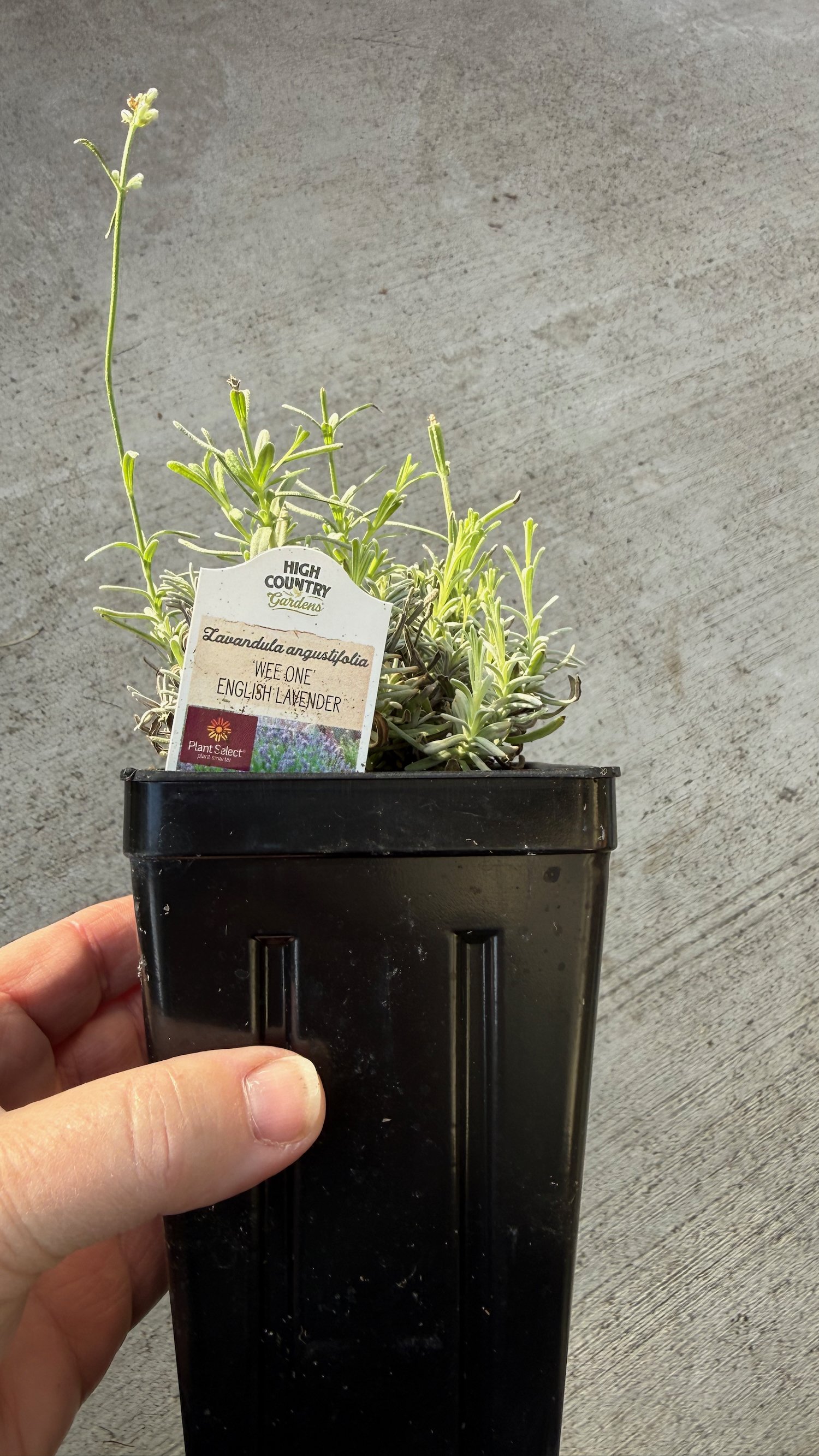
Wee One Dwarf | English Lavander
FlowerKisser® After Midnight | English Lavander
FlowerKisser® Delft Blue & White | English Lavander
Munstead Violet | English Lavender
Pastor’s Pride | English Lavender
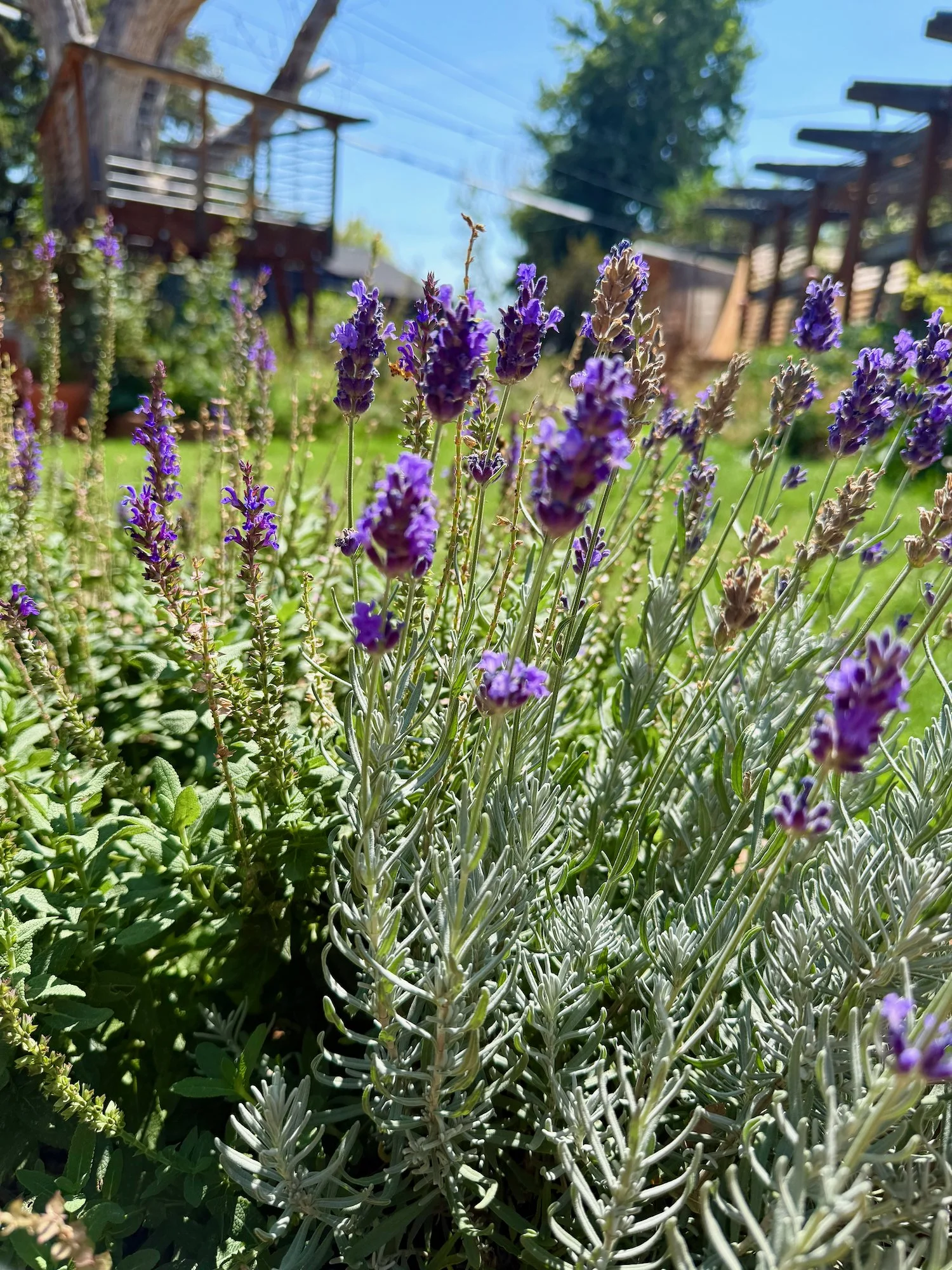
This is Hidcote Blue, an English Lavender that I planted last summer in one of my rose beds together with some salvia. It is coming along quite nicely!
My Lavender-Planting Project
I have Lavenders growing in several parts of my Colorado garden now. I love to plant it with roses. It’s a beautiful combination, and Roses and Lavenders like the same growing conditions. But this new project is different.
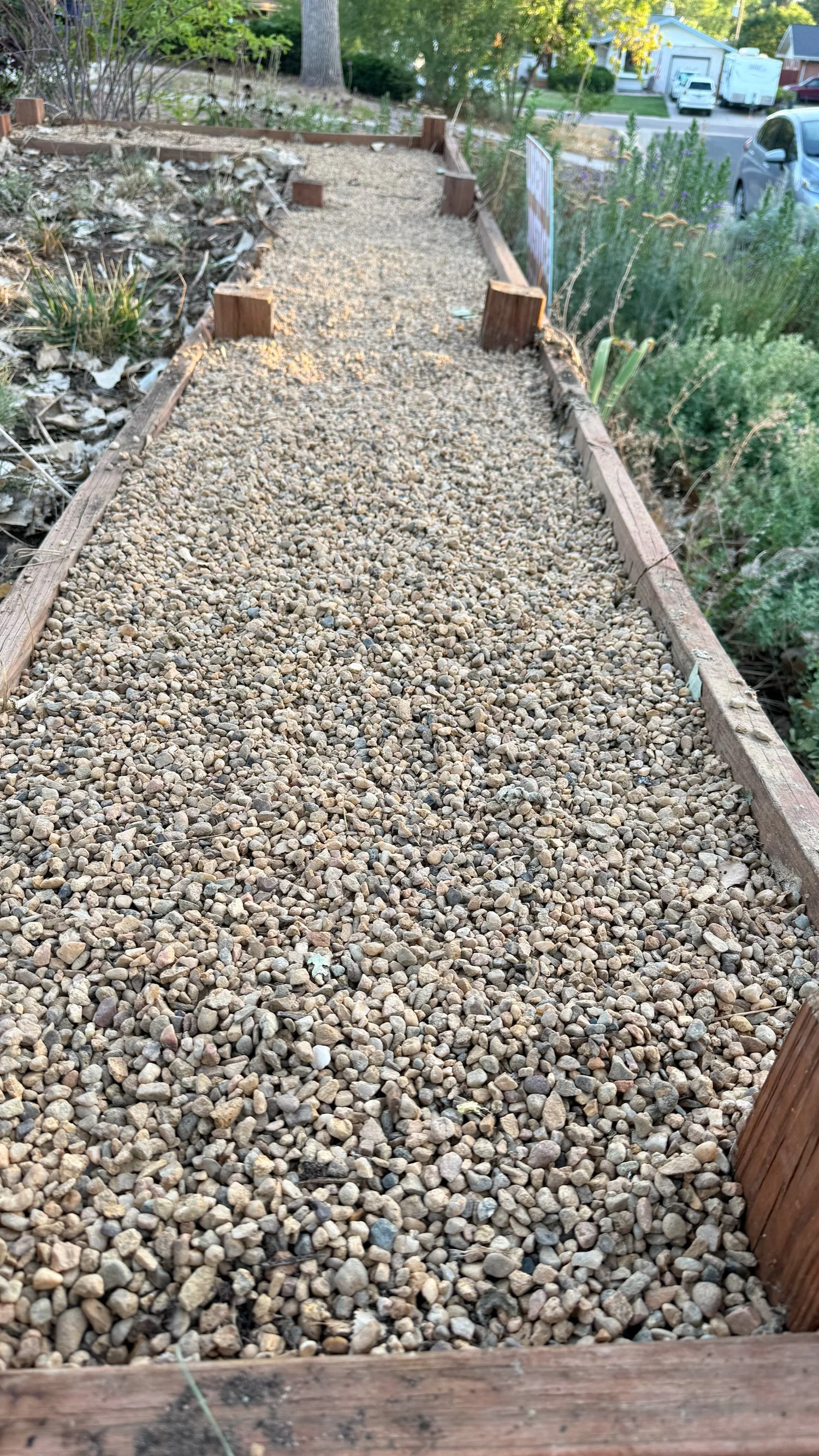
The Wildlife Garden, which is what others might call our front yard, has a raised bed at the top. It serves as a boundary between the wildness of the Wildlife Garden and what was grass until this year when it died. More on that another day.
Anyway, I have struggled with this boundary bed since we created it. Originally, I planted it out with grasses. But almost all of them died in the first winter. Probably gardener error – lack of watering. I also planted some Sedum with the grasses. They have done well, but they aren’t structural enough.
A few years ago I planted some Artemesia ‘Powis Castle.’ If I cut them back every spring, they had the rounded shape I wanted. But I am deathly allergic to them.
So, the Artemesia is out. The remaining grasses and sedum have been relocated. And I have planted out trays of Lavender – Phenomenal Lavender | Lavandula x intermedia Phenomenal, to be exact.
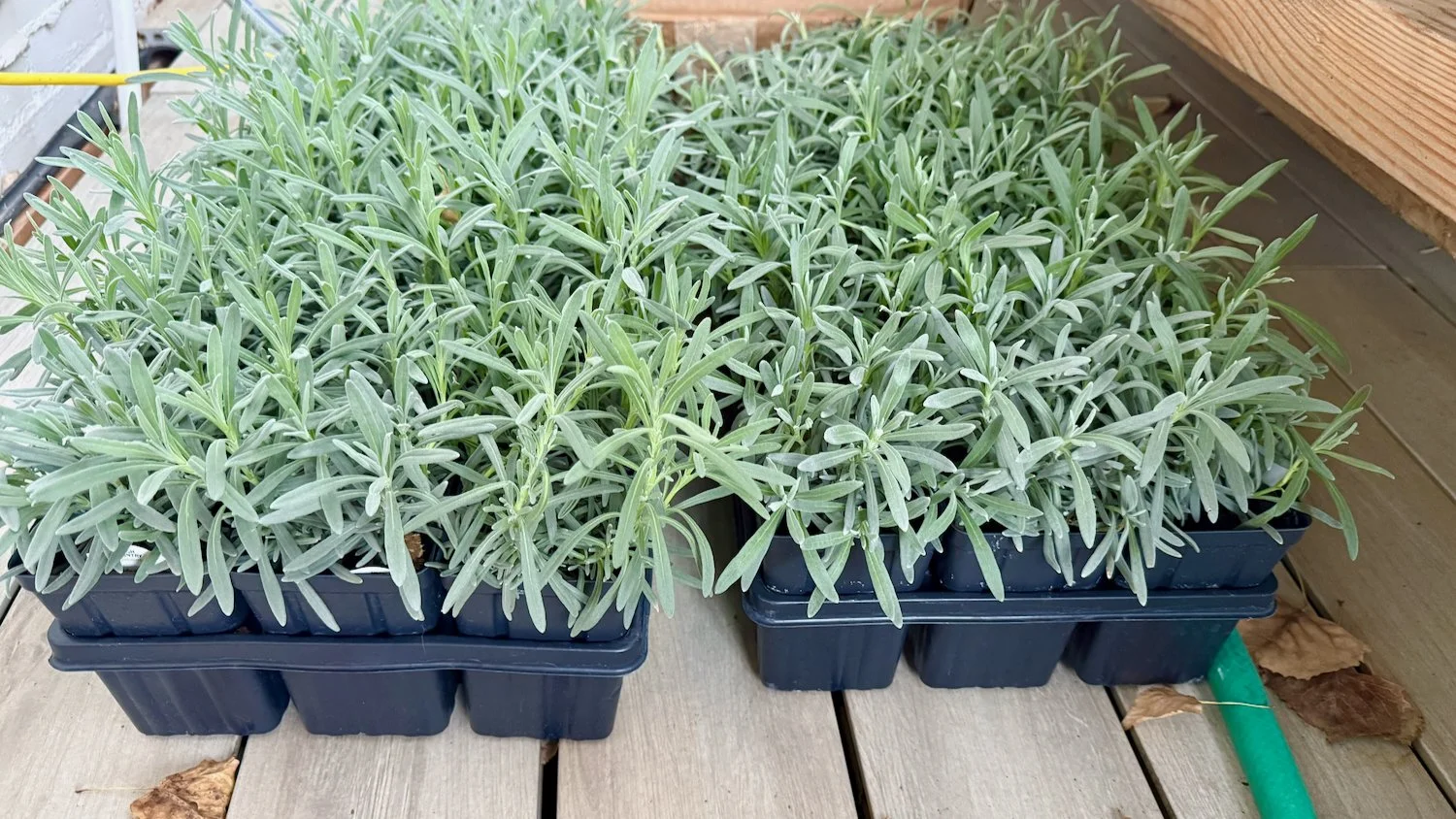
Phenomenal Lavender
I chose Phenomenal Lavender for a few reasons. There are several flower farmers in this area who swear by it. They grow it to harvest flowers and for oil production. But they rave about its durability in Colorado.
I have heard the same about Phenomenal from other growers in other parts of the country. It gets rave reviews all around, frankly! It’s fragrant, adaptable, easy to establish, and reliable.
Worth the Wait
While I am technically Zone 5|6, we know that those zones are only averages. We sometimes get VERY cold – below -20°F – but Phenomenal Lavender has been known to thrive in Zone 4 with the right protections. Amazing!
I am looking for that Tuscan look – a row of Lavender plants in bloom with food for bees and other pollinators.
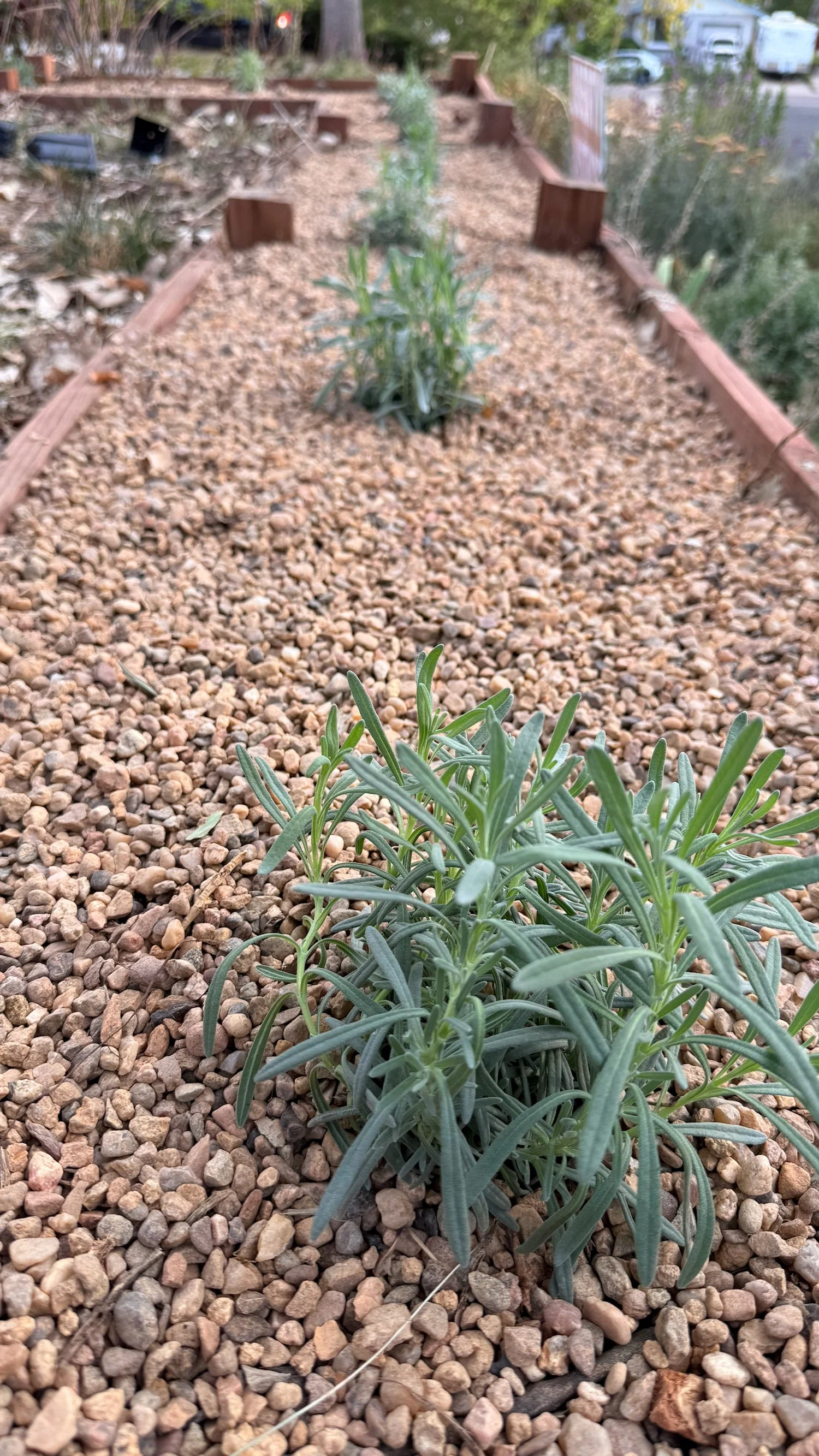
It will take a few years to get to that lush look. Lavender plants take 3-5 years to reach maturity. But I think it will be worth the wait!
Spacing for Lavender
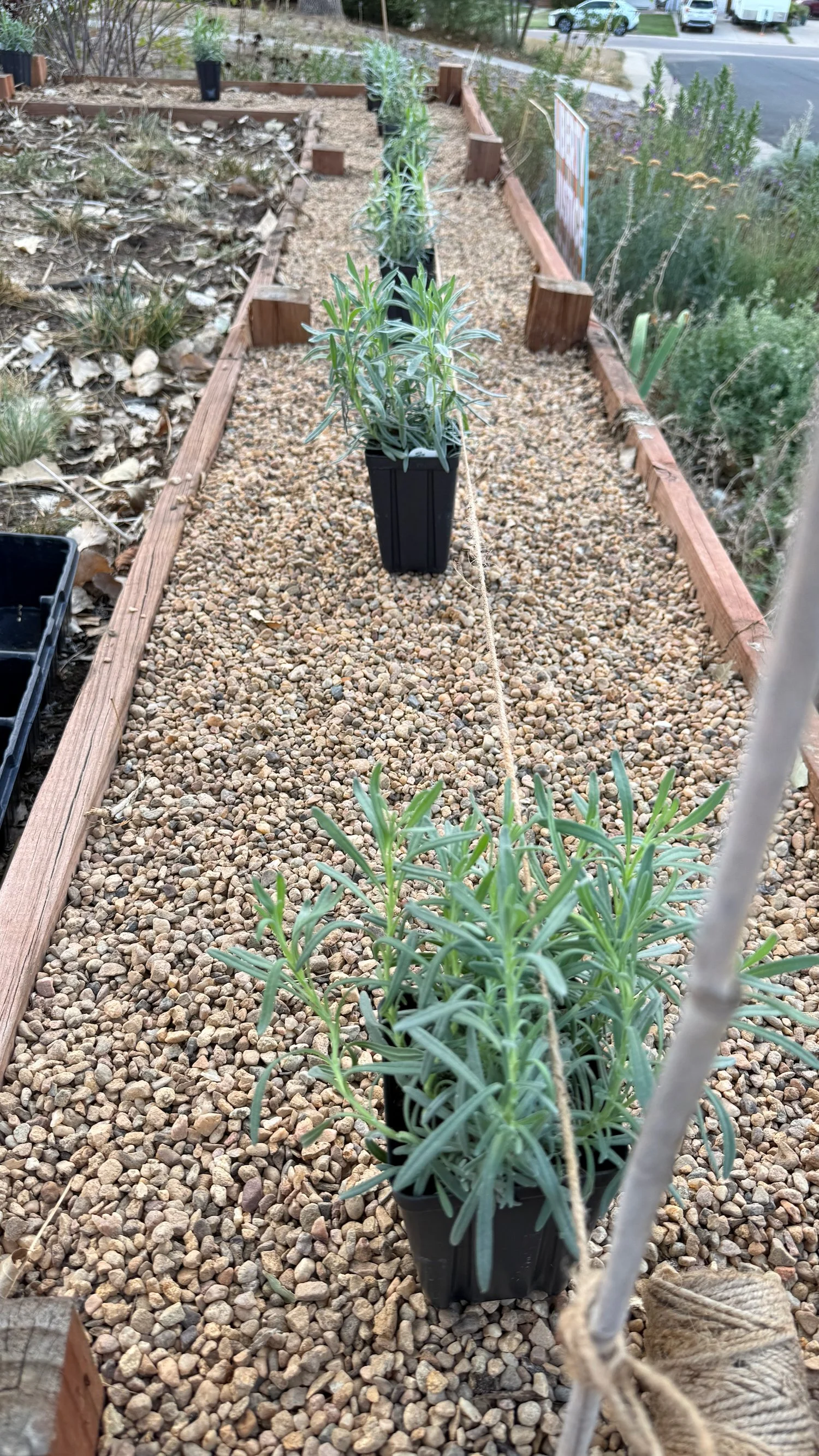
I planted the Phenomenal Lavender out in a straight row with 24” between plants. That’s actually on the tight end. The recommended spacing is 24-36”, but I personally find that my plants here end up on the smaller end – again, it’s those harsh conditions.
They are in full sun, and I will probably need to add some kind of wind protection for the first winter. I’m not sure what that will look like yet.
Lavender for Pollinators
And remember how we talked about planting in multiples to benefit pollinators? Not only have I planted Lavender out into the boundary bed of the Wildlife Garden, but I have also woven some of the same plants into the Wildlife Garden and replaced the Artemesia in the Gravel Garden with Phenomenal Lavender as well.
Lavender Collections
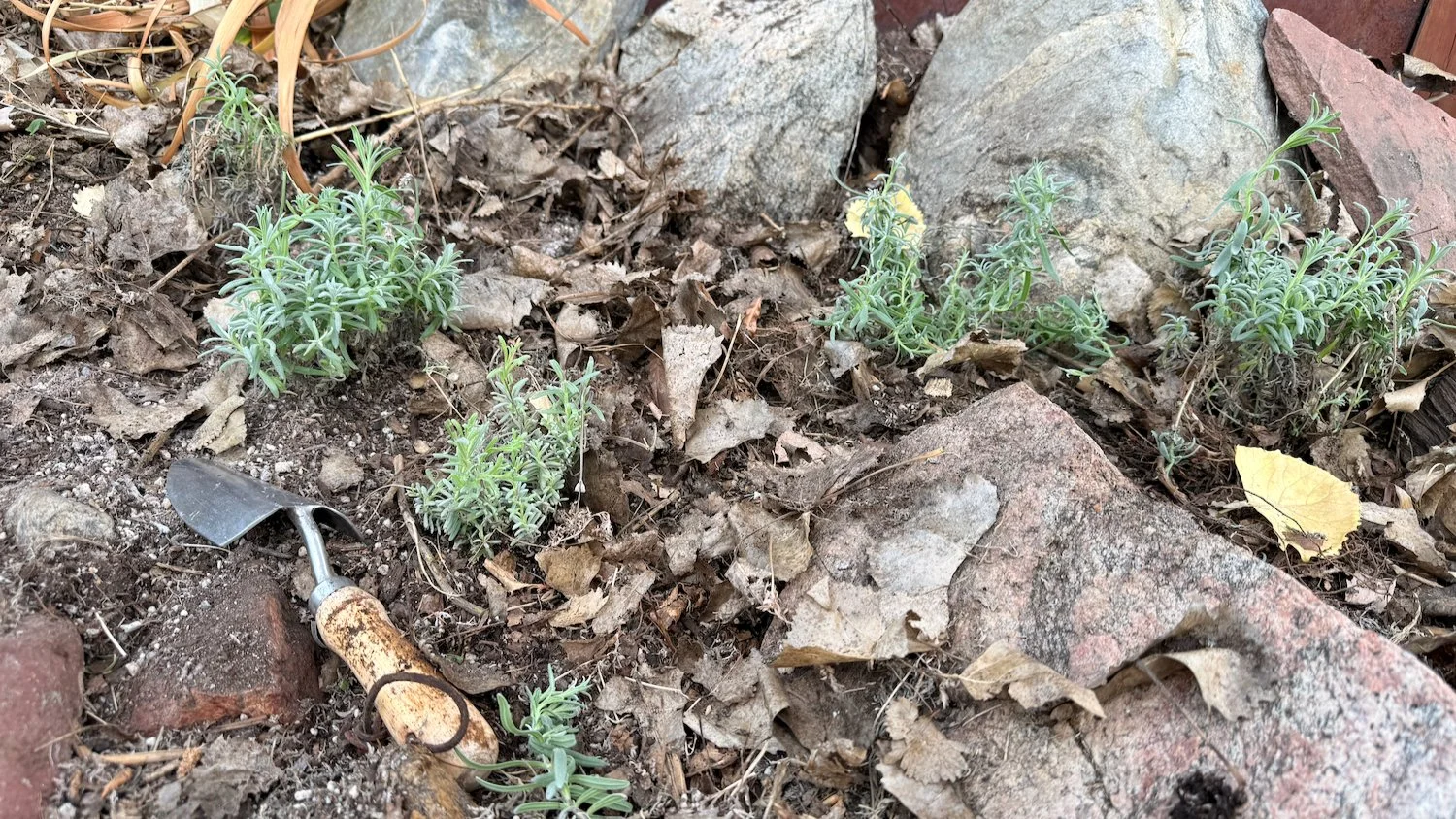
Additionally, High Country Gardens sent me two of their Three Tier Lavender Collections. This collection includes three different lavender varieties at different heights and sizes:
Wee One Dwarf English Lavender: small and compact with true purple blooms
FlowerKisser® After Midnight English Lavender: deep purple blooms on a medium height plant
FlowerKisser® Delft Blue & White English Lavender: light blue and white blooms on a taller plant
These have been planted out into the Wildlife Garden to bring color and blooms to another area where I removed a few Artemesia plants.
Lavender Infusion
In total, High Country Gardens sent me 36 Phenomenal Lavender plants plus two 3-plant collections for 42 plants total. This infusion will create what will be a beautiful blooming path all the way across the front garden and up through the Gravel Garden as well. Not only will this be a beautiful design element, but it will also be a buffet for bees and pollinators, too.
How to Grow Lavender
So, if you are thinking Lavender might be a good choice for your garden, I have some tips. The first: do research on the types of Lavender that thrive in your area. I would start with your local County Extension Office and your local Master Gardeners. Local flower farmers are also a great resource. And High Country Gardens has some fantastic recommendations as well.
Once you have determined which Lavender species will work in your garden, you’ll need to find the right spot for it to thrive. After all, right plant, right place – that’s the key to plant success!
I will say this, too: there is not a Lavender for every garden. I used to garden in Minnesota, and I don’t know how successful it would be there. Minnesota gets too much moisture and too cold. However, perhaps against a West-facing brick or stone wall with lots of sun and a little protection from moisture – that place where your snow melts first or never accumulates. You might be able to get a very hardy variety to do well. It’s worth a try! And you can always grow Lavender in a pot and overwinter it in a heated basement or a garage.
That’s where microclimates can be your biggest friend: if you have a spot that is hotter and drier than the rest of your garden – maybe that’s a place to try some Lavender.
Again, you just have to plant the right varieties. Moisture is the trickiest part. It just doesn’t want lots of rain or wet feet.
Light Requirements
Lavender generally needs 6-8 hours of full sun, so you will want a nice sunny location. Generally, any place that roses will thrive will also support Lavender – and they do grow so beautifully together.
Soil Conditions
Lavender will grow in almost any soil so long as it isn’t soggy. They generally don’t need soil amendments or lots of nutrition. But the soil must have good drainage. If you have heavy, claggy soils, consider a raised bed or even a pot for Lavender.
Water Needs
New plants should receive consistent moisture for the first two years while they get established. But once they are established, they need very little water support. Frankly, it’s far easier to kill Lavender with too much water than with too little.
Hardiness Zones
Lavender generally grows well in: USDA zones 5-10 but this range varies from type to type. So do some research before investing in Lavender for your region.
Practical Tips for Growing Healthy Lavender Plants
Pruning is critical. Lavender plants can get leggy and woody, so be sure you are prepared for an annual pruning once – or even twice per year depending on the variety. Pruning isn’t hard, and it sets the plant up for success the next year, too.
Watering to get them established. “Established” is a tricky stage, but keep your young plants watered well for the first two years before leaving them on their own.
Don’t fertilize. Lavender plants don’t need supplemental fertilizer generally.
Be patient with young plants. Lavender is a woody shrub. It grows pretty slowly, but once it is established, you can expect 10-15 years of beauty from your plants – perhaps even more!
at the close…
I am so excited about this addition to the Wildlife Garden, and I hope it has inspired you to add some Lavender to your garden, too. Follow along on Substack and Instagram to see how it all turns out.
And if you have questions, don't hesitate to ask!
This post originally appeared on my Substack. Subscribe to my Substack, and all of this gardening goodness will appear in your email inbox weekly!
Happy Gardening!
Angela
Subscribe now so you never miss a thing!