

Dog Tuff Grass
Benefits, Planting Guide & Care Tips
When we talk about ditching our lawns for native plants and pollinator gardens, one of the big worries I often hear is: “But what about my dogs? And my kids?” And that’s real and fair: lawns do have a purpose, particularly if you have dogs and/or kids in your life.
A green grassy area is romantic, cooling, and relaxing for some – and a place of busy activity for others. There is a place for lawn – but using lawn strategically as a tool in a design rather than as the default is critical. Grass for the sake of grass is wasteful. But grass with a purpose is another story.
So then the question becomes: what kind of grass should I plant?
Honestly, most grass that is planted in North America does very little ecologically, and it requires a lot of care: mowing, fertilizing, watering, weeding, and more. Foot traffic kills it. So does dog waste. So the whole purpose of having a lawn – a place for dogs and kids – is often the lawn’s demise.
Enter Dog Tuff Grass.
Dog Tuff Grass (Cynodon ‘Dog Tuff’) is a resilient, soft, and water-wise alternative to traditional turf. Originally curated for its incredible durability against pet traffic and drought, this sterile hybrid African Dogtooth grass is fabulous in high-desert and water-conscious landscapes.
How to use a Lawn Strategically
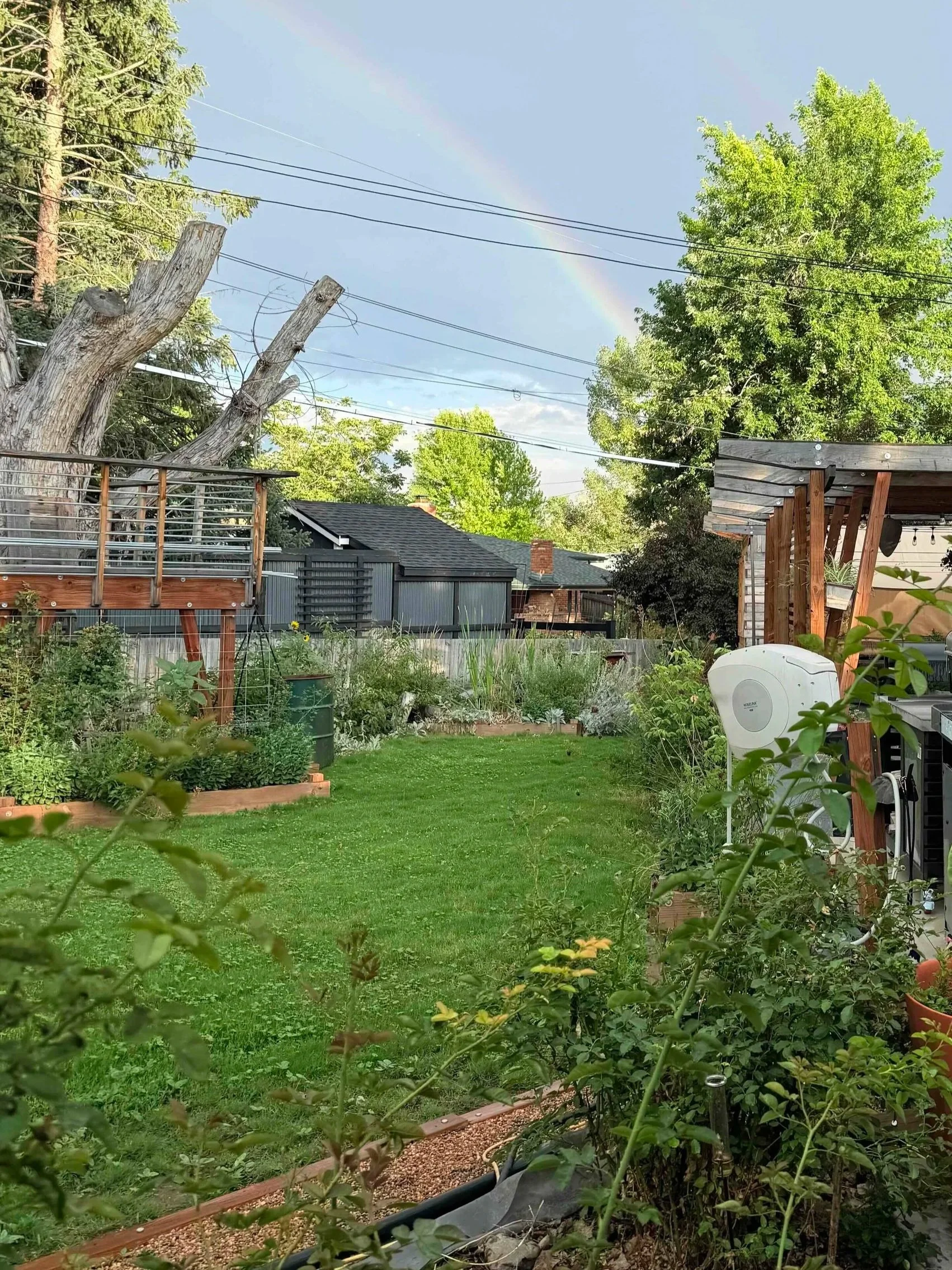
A lawn doesn’t have to dominate a garden to be useful—it needs to be intentional. Instead of treating grass as the default groundcover, think of it as one design element among many. By shrinking the lawn to purposeful areas, you not only reduce maintenance and water use, but also make the green you keep feel more special.
One of the most practical uses for lawn is creating designated zones for activity. Dogs, for example, benefit from a defined space where they can run, roll, and do their business without damaging more delicate plantings. Similarly, a small stretch of grass can serve as a play area for kids or adults – from soccer to catnapping.
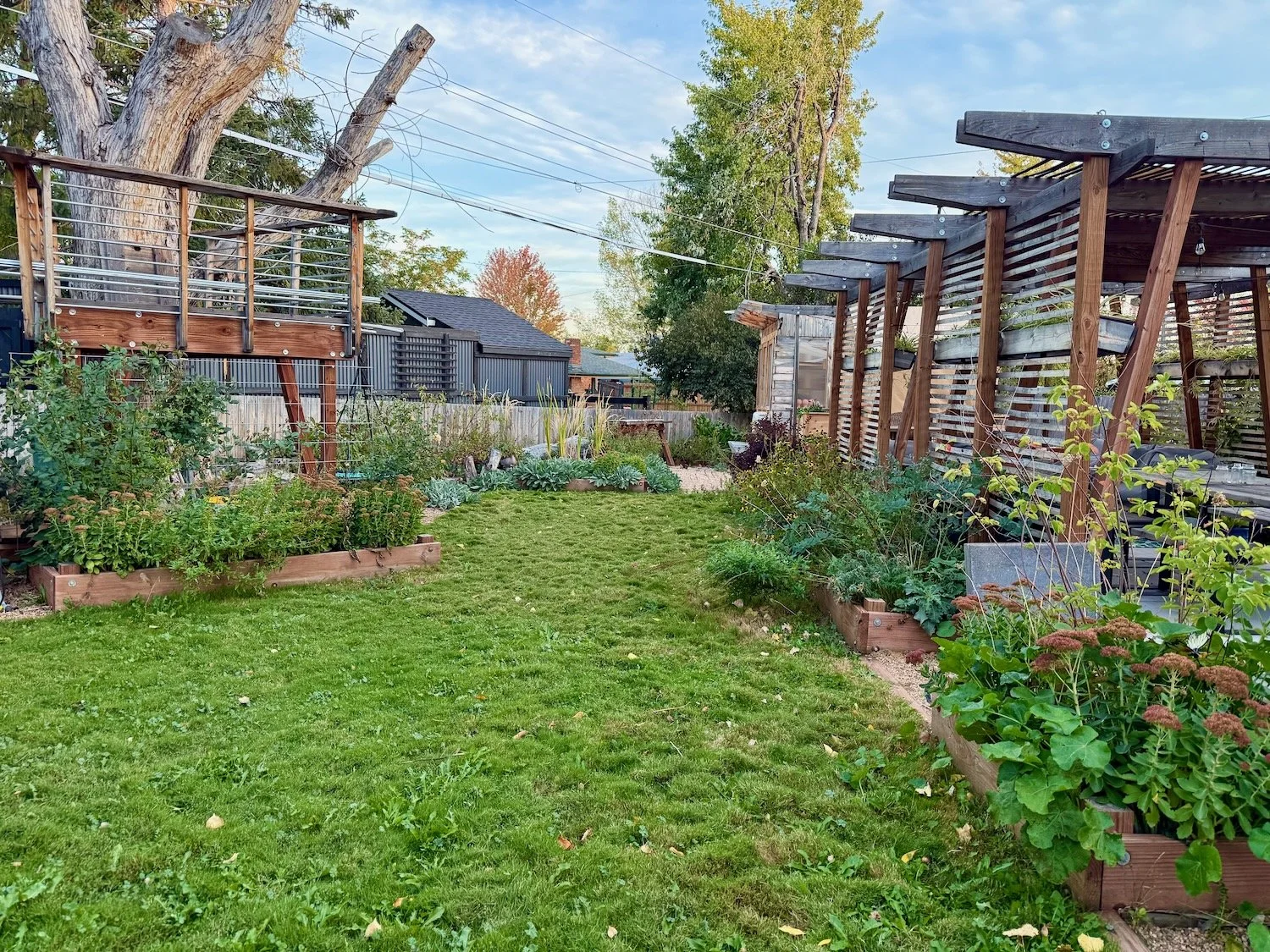
“Lawns should be area rugs, not wall-to-wall carpet.”
Edging these activity zones with low plantings or hardscape helps reinforce their purpose while providing a visual break. This is a very British design trick – lining a lawn whatever size with borders – flower beds filled densely
Lawn can also play an important visual role. In a densely planted garden filled with textures, colors, and movement, the eye needs a place to rest. A simple green expanse provides contrast and balance, allowing more complex plantings to stand out.
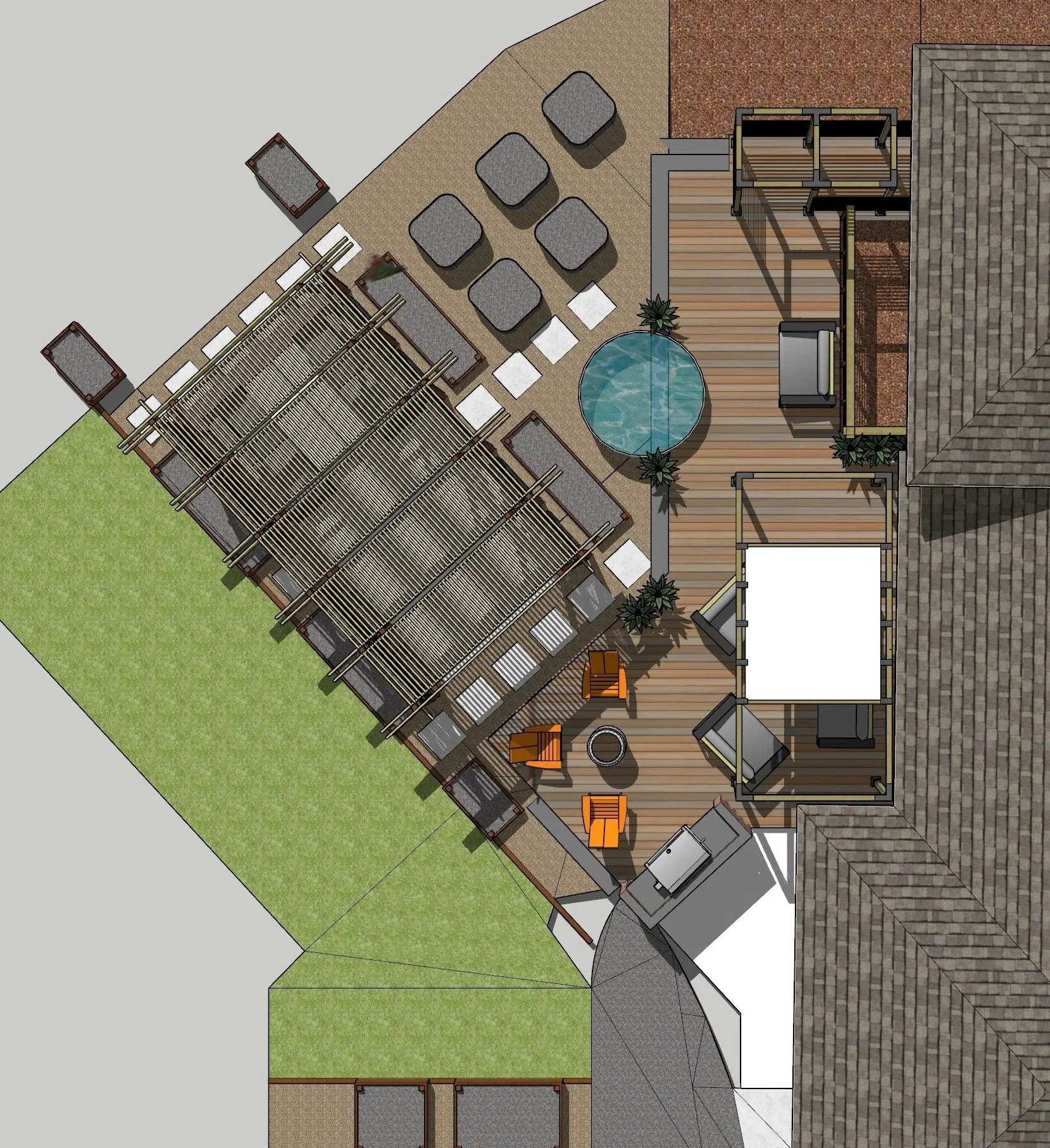
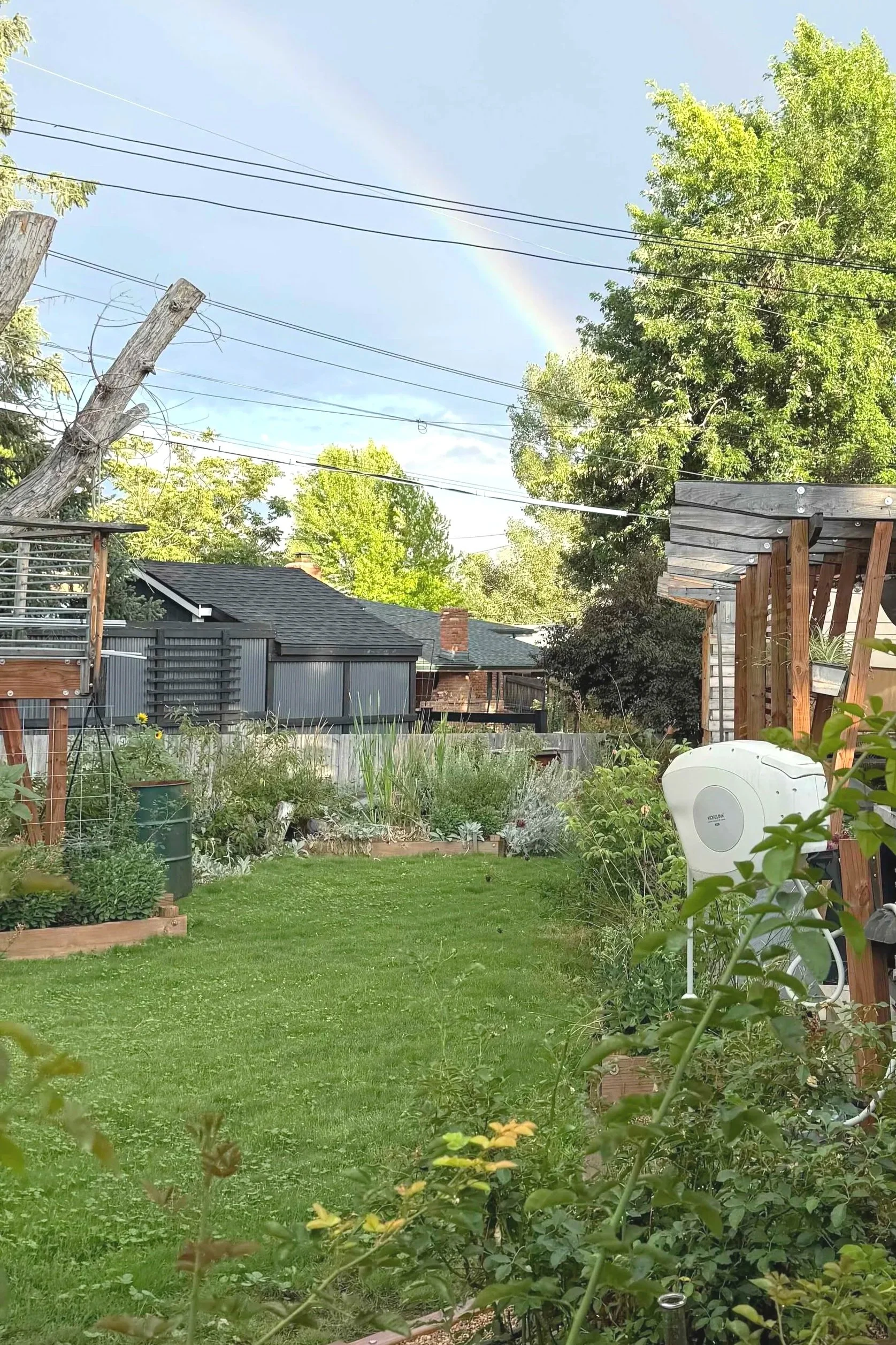
In my own garden, the lawn areas connect central parts of the garden together. But there are just two modest plots of lawn in the back, and an even smaller area in the front. It was important for our family that our dogs have a place to play and do their business, but we also wanted to be able to kick around a soccer ball or lay on the grass and look at the sky.
And the lawn in the front is a visual break from the wildness of the Wildlife Garden – that juxtaposition works so well. With so much happening in the Wildlife Garden, we needed some negative space, highlighting the structure of trees, shrubs, and perennials around it.
In our master plan, then, the lawn areas are clearly and cleanly delineated, but they are small and strategic, too. And I wanted whatever grass we chose to be drought-tolerant and resilient. After all, I still didn’t install that sprinkler system!
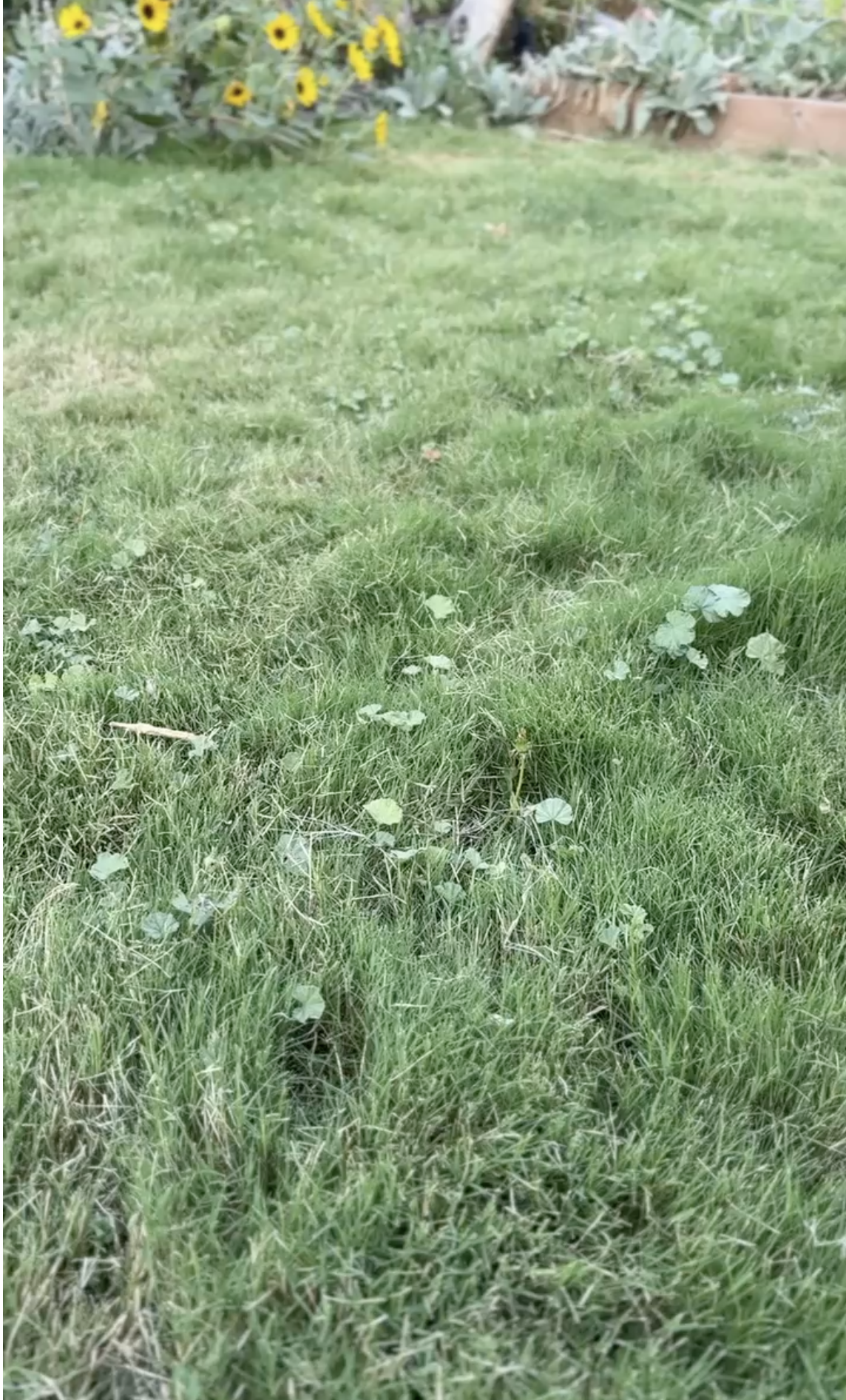
Plant of the Week:
Dog Tuff Grass | Cynodon hybrida
USDA Zones: 5-10
Water: xeric
Light: full sun
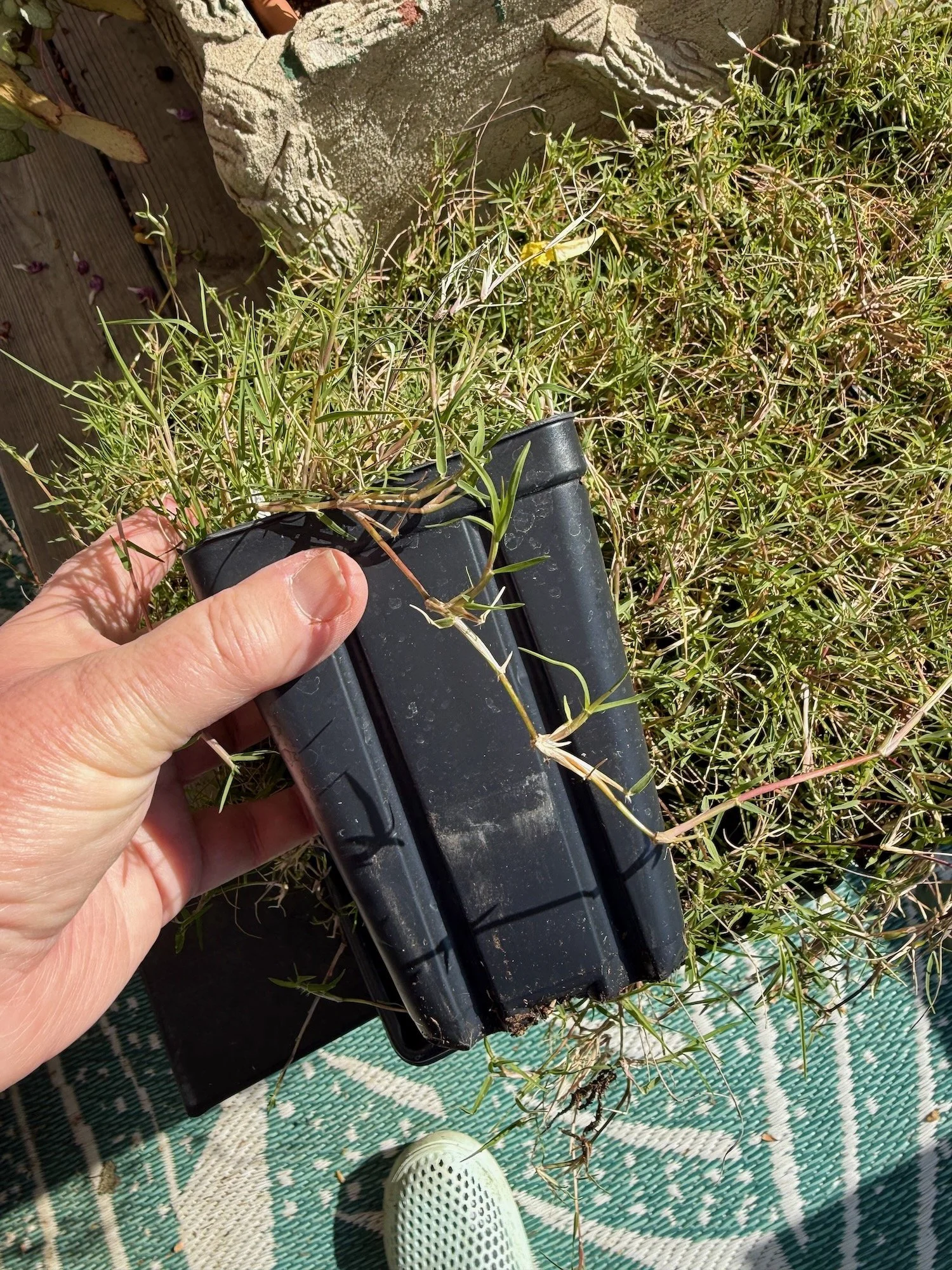
Why Choose Dog Tuff
As I researched drought-tolerant grasses, every grass I considered had a drawback. Some don’t handle foot traffic well. Others turn brown if a dog even looks at the grass. And most need weekly soaking all summer long.
But then there’s Dog Tuff.
Dog Tuff is an African grass which was growing well in a compost pile at a local nursery where they had tried it as a filler for hanging baskets. It failed in the baskets and was thrown out – where it survived and spread, creating a luxurious carpet. Denver plantsman Kelly Grummons started experimenting with it and found that not only did it create a lovely, moss-like carpet, but it also stood up to the wear and tear of his beloved dogs – so it was named Dog Tuff.
Dog Tuff grass (botanically Cynodon hybrida) is a warm-season grass that forms a dense, low-growing turf. It stays soft underfoot – really soft! – while requiring significantly less water than traditional bluegrass lawns. In fact, it can use up to 90% less water once established, while still tolerating heavy foot traffic and pet activity.
It spreads through stolons rather than seed, creating a thick, weed-resistant mat over time.
As a warm-season grass, it greens up later in spring and goes dormant to a straw color in winter—but during peak summer, it delivers a lush, durable lawn with minimal work. This makes it ideal for homeowners like me who want a functional lawn space without the environmental cost of high irrigation and fertilizer use.
I was sold! I just needed to get it planted.
Why I Replaced my Lawn with Dog Tuff
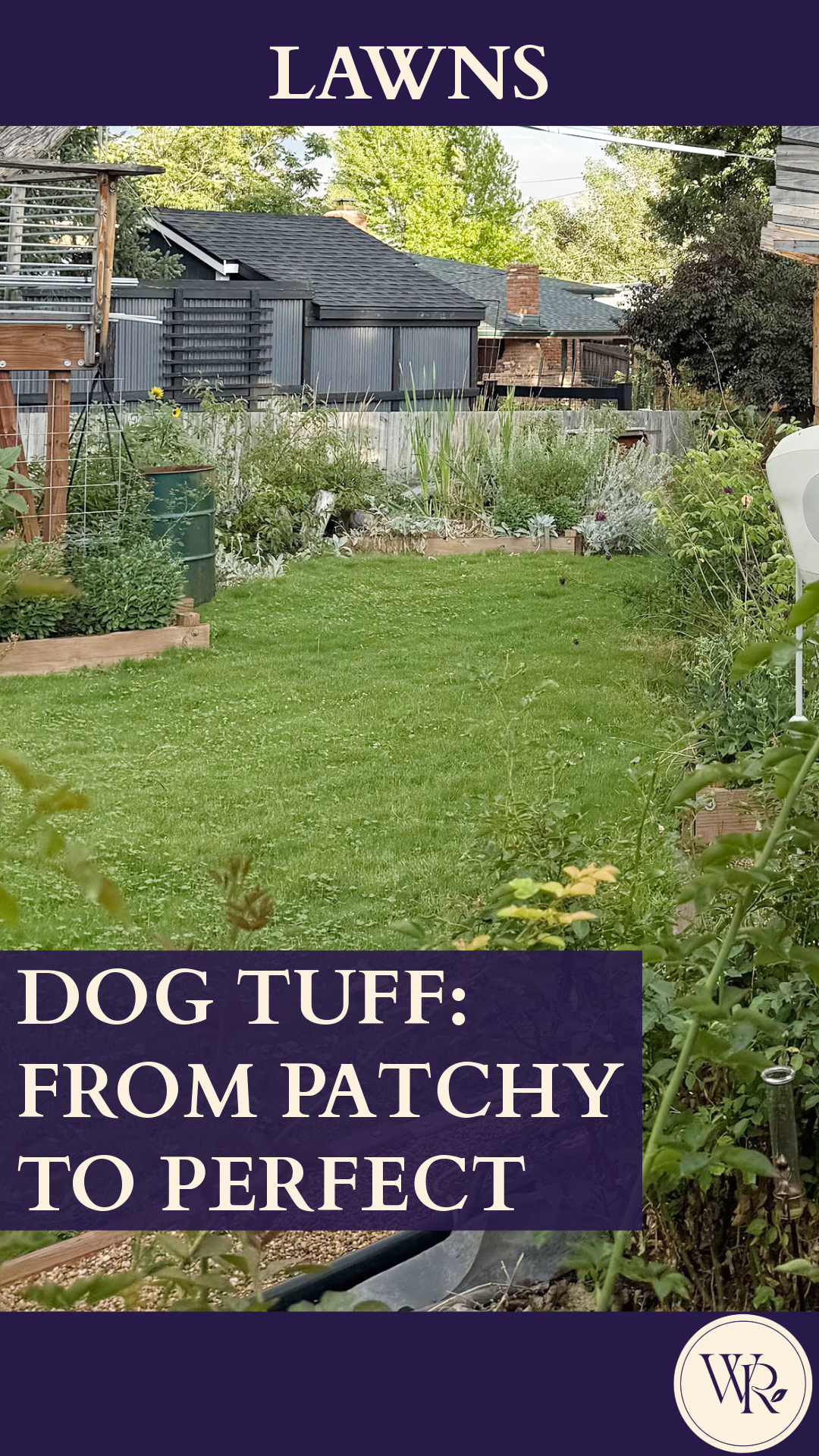
This is a recording of a live event I held on Substack — all about Dog Tuff grass!
Dog Tuff Installation
& Establishment Tips
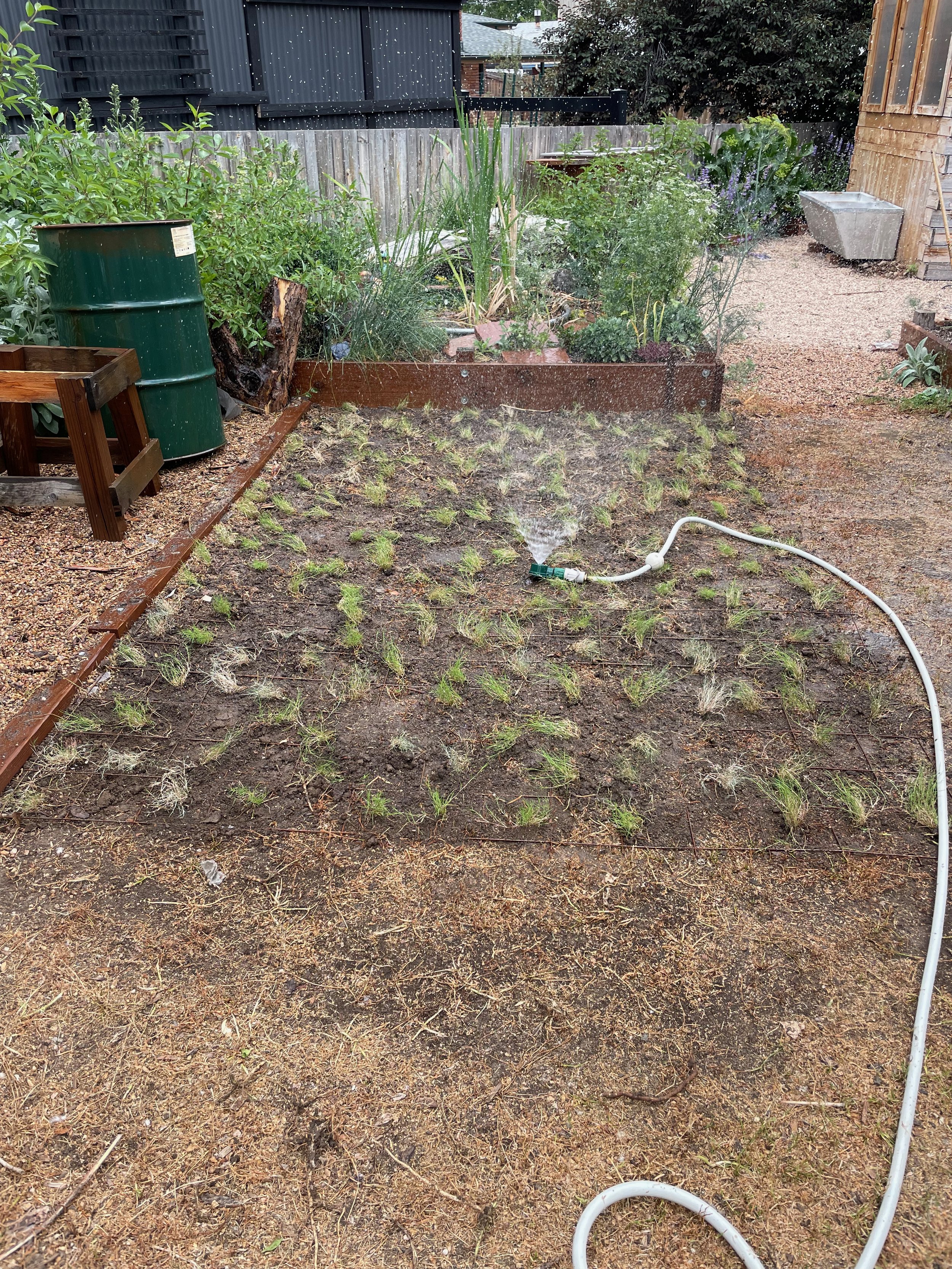
I will be honest: planting Dog Tuff is labor-intensive. It comes in plugs and 5” pots, so every plant has to be put in individually.
But don’t let that turn you off!
After planting two different areas in my yard with Dog Tuff, I have some tips!
Success with Dog Tuff starts with proper timing and site preparation. Dog Tuff has a very thorough preparation guide on their website, but here’s a summary:
Timing: Plant in late spring to early summer when soil temperatures are consistently warm. This grass thrives in heat and needs warm soil to root effectively.
Site Prep: Remove all existing weeds and cool-season grasses. Dog Tuf is a spreader, but it won’t effectively outcompete established weeds during its first season. And to be honest: I am still weeding my Dog Tuff two years later. That is partly because I don’t use pre-emergent herbicides, though. If I did, I wouldn’t need to weed as often.
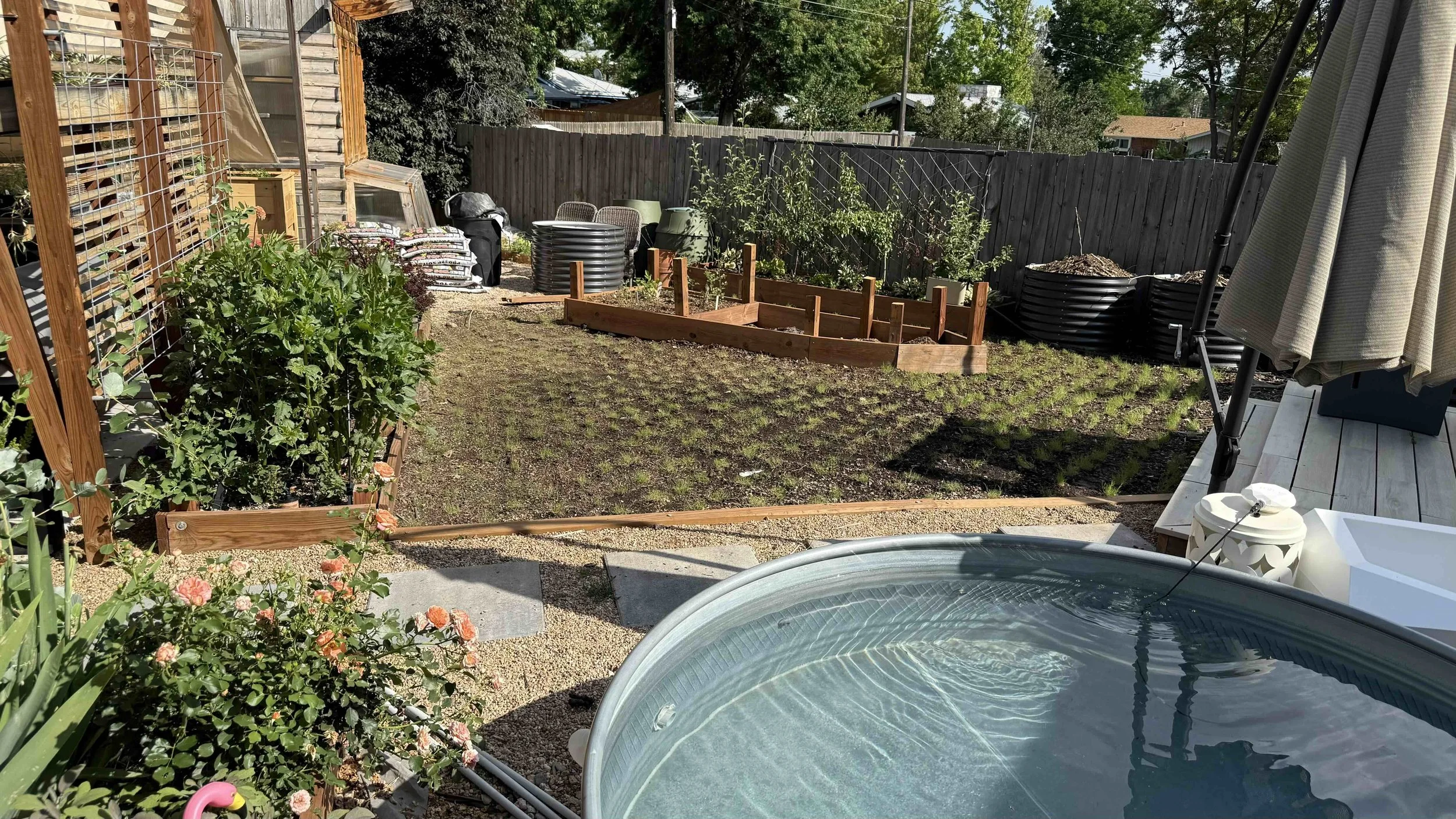
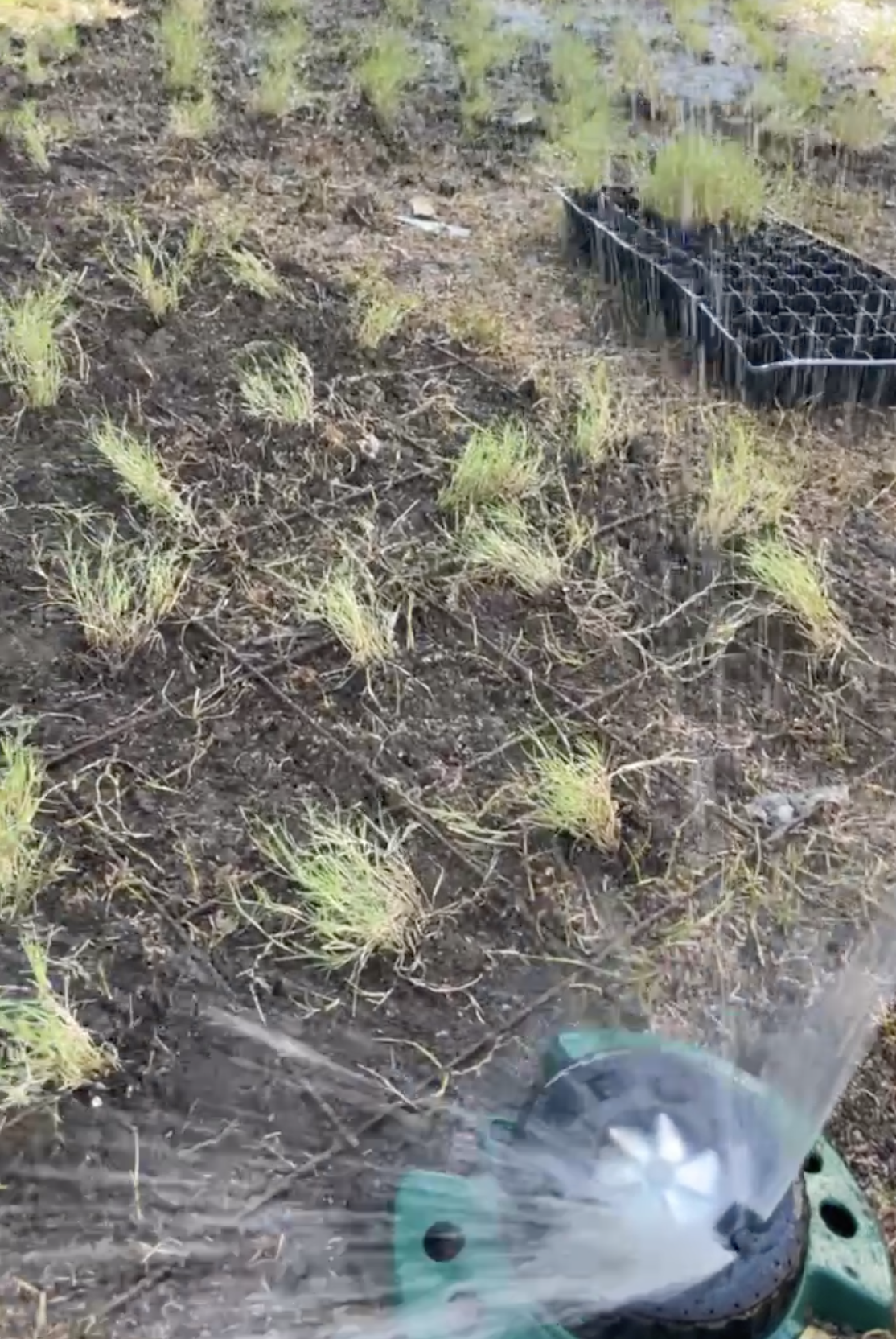
Initial Watering: For the first 3-4 weeks, keep the plugs moist. Do not let the soil dry out completely until you see visible runners (stolons) beginning to spread. And if it is hot, just keep watering. See below.
Mowing: You can leave it unmown for a meadow-like look (reaching about 4 inches tall) or mow it to 1–2 inches for a traditional manicured appearance. I like it unmowed, but we give it a haircut once or twice per summer.
Planting Tips
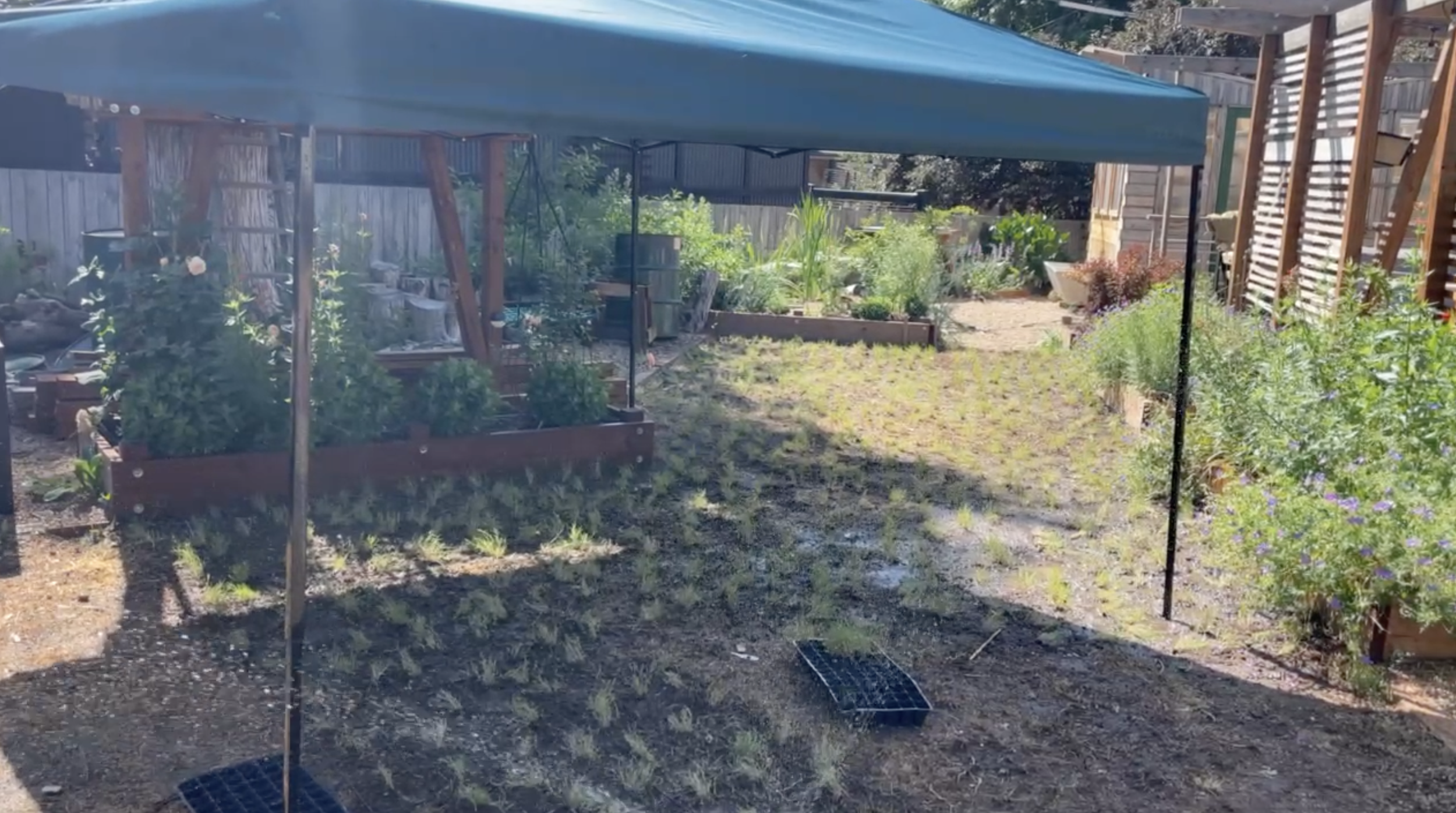
Use a Grid: I bought a 3.5-ft x 7.0-ft Steel Wire Mesh Sheet – used for installing concrete. I used this as a grid to lay out the plugs and keep my spacing even. It made that part so much easier!
Use an Auger: I also used an auger on my drill to make quick work of the holes needed.
Pad your Knees: save your knees and use a kneeling pad if you’ll be planting a lot of Dog Tuff. My son used knee pads which he found helpful, too.
Take Your Time: this is an investment – it is worth taking the time to do it well. I bought a pop-up tent so that I could always work in the shade which helped significantly. And I planted everything out over the course of several days. Just keep your plugs well-watered and in a shady location until you get them into the ground.
Watering Tips
This is not a plant-it-and-forget-it grass! Yes, it will be drought-tolerant, but it needs to stay hydrated until its roots get well-established – which really takes most of a full summer.
Here’s what I did to get it established:
Two weeks before planting: water deeply every other night over night – once the ground is prepared
After planting | Weeks 1-4: water twice per day (morning and evening); skip in case of rain. You want to keep the soil moist to allow the roots to establish.
After planting | Weeks 5-8: water once per day (evening)
After planting | Weeks 9-12 (or to first freeze): water twice per week
Year 2+: water 1-2 times per month
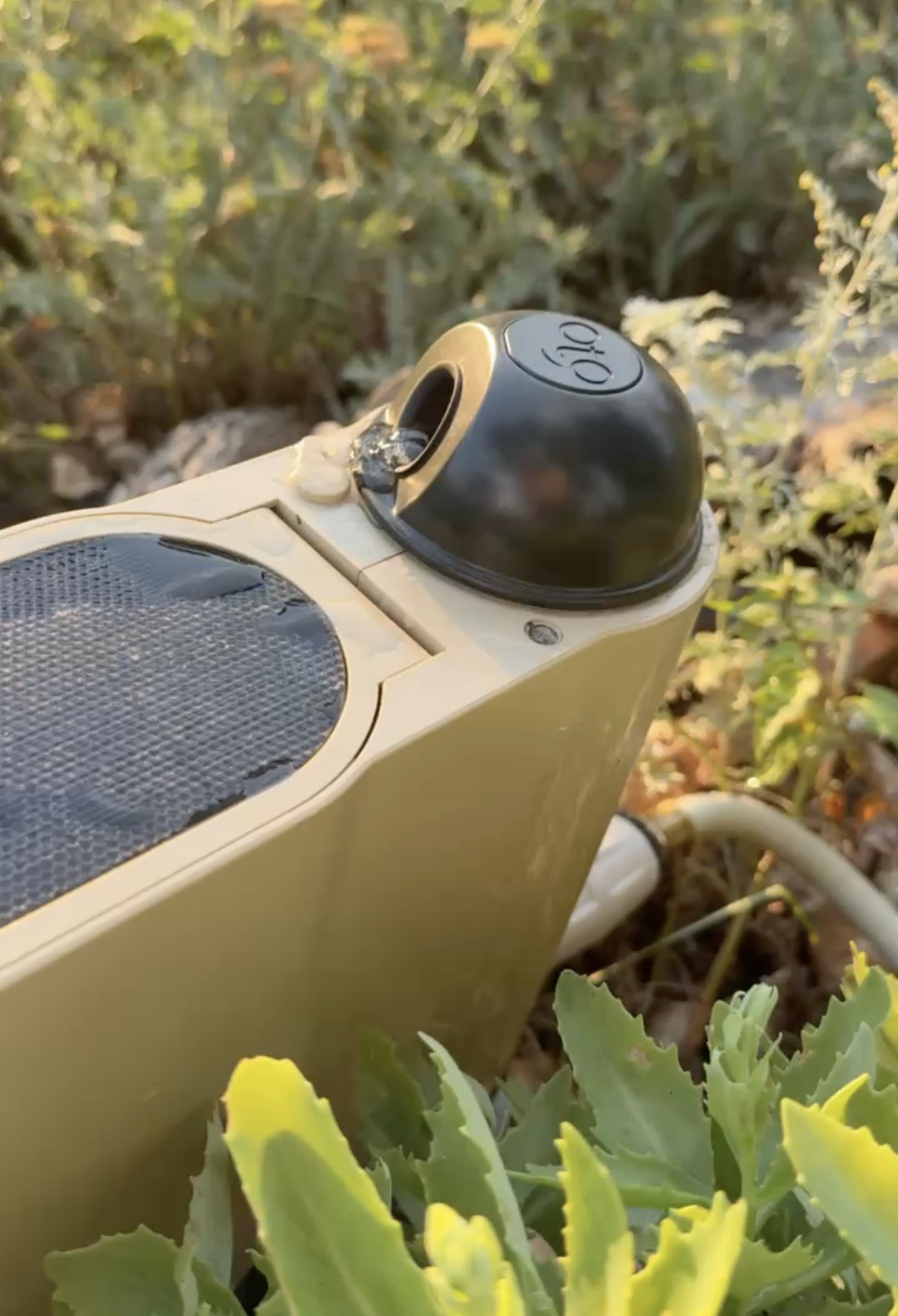
If you are going to invest in Dog Tuff and don’t have a sprinkler system, like me, I highly recommend that you also invest in an Oto sprinkler. The Oto waters like a 3D printer might, and it is programmable and movable. You connect it to a garden hose, set up the program in an app on your phone, and then let it go. It’s amazing!
Then, once your Dog Tuff is established, move it to another part of your garden where you need more watering support.
Should You Overseed with Annual Rye Grass?
I planted out our north lawn in June of 2024 and the south lawn in June of 2025. For both projects I used the 2” plugs.
For the north lawn, I stumbled upon an online note from another homeowner who recommended overseeding with ANNUAL rye grass seed after planting the plugs. This is to reduce weed pressure, primarily. It keeps weeds from germinating between the plugs while the stolons of the grass work their way across the lawn.
I subsequently learned that Dog Tuff no longer recommends this method – primarily because annual rye grass seed is almost always mixed with perennial rye grass seed. The Dog Tuff grass can’t outcompete the perennial rye grass, so you end up having to remove the perennial rye grass in subsequent years.
So, for the south lawn, I did NOT use annual rye grass.
I trust the experts! They have seen thousands of installations, and they know what goes well and what doesn’t. Having said that: the annual rye grass seed I purchased (from High Country Gardens) did not seem to contain any perennial seed. And honestly, it was so nice to have a lawn that wasn’t muddy and looked quite lovely just a few weeks later.
So, I won’t advise you to overseed or not to overseed. But if you decide to take that route, know why it is no longer recommended – and what might happen if you do.
One Plant | Two Sizes
High Country Gardens offers Dog Tuff grass in two different plant sizes.
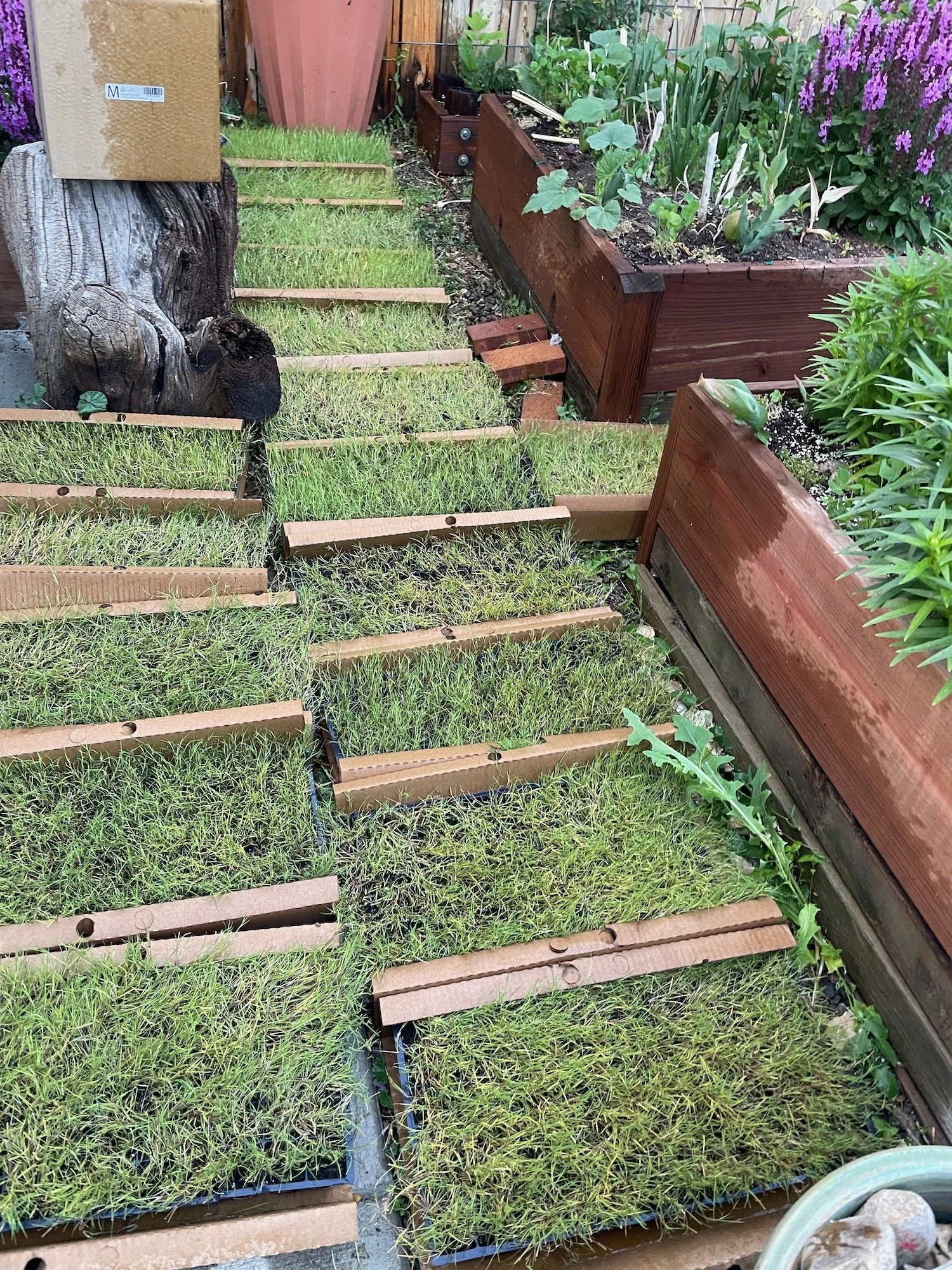
A flat of 70 plugs covers 70 sq. ft. when planted on 1 ft x 1 ft. centers. Plugs are small, young plants that are ready to plant together. They will take a few months to fill in, but generally will fill an area in one growing season if planted at the appropriate intervals.
If you are looking for larger plants to establish spaces even faster, another option is to purchase individual plants in 5” Deep Pots available here. These are also great for filling holes in an established lawn – or just giving Dog Tuff a try in a smaller area.
at the close…
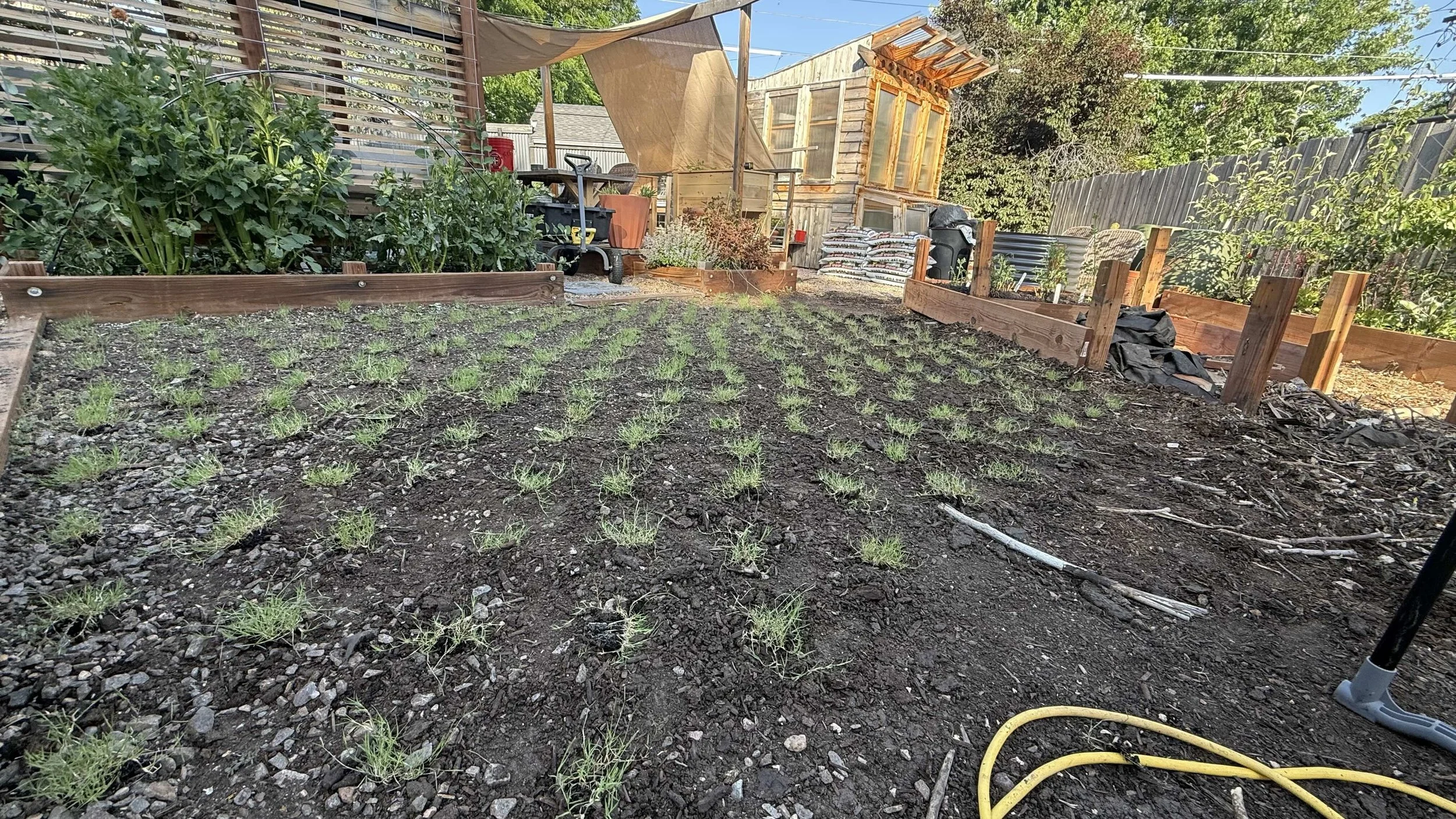
What to Do While You Wait for Dog Tuff to Grow In
Water Regularly (see the schedule above)
Weed Once Per Week
Learn to Knit, Sew, or Speak Italian
Weed a Little More
Take up the Tango
And then enjoy a picnic on your soft and cushy Dog Tuff lawn!
If you have questions, don't hesitate to ask!
This post originally appeared on my Substack. Subscribe to my Substack, and all of this gardening goodness will appear in your email inbox weekly!
Happy Gardening!
Angela
Subscribe now so you never miss a thing!