

How to Build a Water-Saving Garden with Native Plants
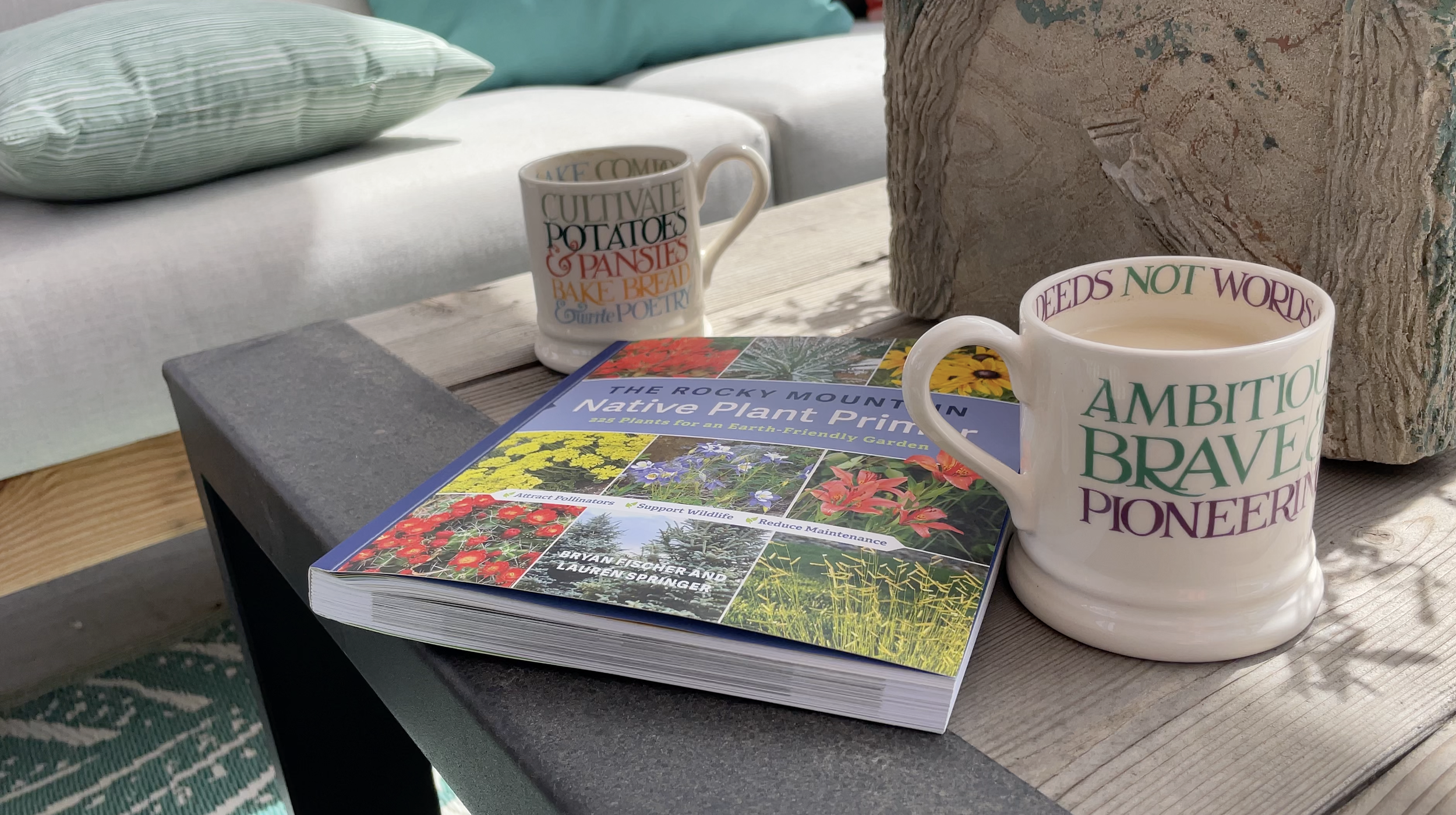
Last week I got to spend a lovely few hours chatting with Bryan Fischer, horticulturalist and proud native plant-nerd. Bryan and fellow-Coloradan, Lauren Springer, just published a FABULOUS new book, The Rocky Mountain Native Plant Primer: 250 Plants for an Earth-friendly Garden.
We didn’t just talk about his book or the Rocky Mountain region. Bryan is a native plants guy, and we hit on lots of tips and ideas that are important for gardeners regardless of their location. And the plants included in this book will work well across this area because they are adapted to hot, dry, cold, and unpredictable conditions.
Now, about my Accidental Podcast…
When we set up this interview, I had cameras and mics and all of the gear. Somewhere in the middle, my camera equipment quit. No idea why. But I still had good audio, so The Accidental Podcast was born!
I hope you’ll sit back and relax and enjoy my conversation with Bryan Fischer about native plants, gardening, and his new book, too.
My Interview
with Bryan Fischer
Nope. There is no video. Just audio. Listen and enjoy!
Q&A with Bryan Fischer | Native Plants and Gardening
I’ve taken a few of the interview questions and Bryan’s answers as a summary for you to peruse.
Angela: Tell us a little bit about how the book is structured and what home gardeners will get out of it.
Bryan Fischer: We wanted to deliver a lot of information succinctly. The “front matter” is a narrative about the region, what a native plant is, and essential concepts like regional soils and design. For the plant profiles, we broke them up by plant type, but also by whether wildflowers are short-lived or long-lived. You need to know the lifespan to design with them. Long-lived perennials are the “bones” of your landscape; short-lived ones are fillers. Each profile outlines where the plant is from in nature and how to use it in your garden.
Angela: Do you garden exclusively with native plants?
Bryan Fischer: I don’t; I like it all. Native plants are a huge part of responsible gardening, but they don’t need to be the whole picture. Non-natives, like early spring bulbs, provide nectar when few natives are active. Having a large percentage of natives is great—I’ve heard 70% thrown around as a tipping point—but any diverse garden is a step forward over a lawn and three shrubs.
Angela: Why is the “lawn and three shrubs” model problematic?
Bryan Fischer: Bluegrass is not from our area. Lawns provide very little habitat and almost no food for natives. Each level of the food chain has less energy as you go up; if your “triangle” of support is only three species, there isn’t much support for the top. In this era of climate change and habitat degradation, you can have a real impact by swapping even 20% of your lawn for a native bed.
Angela: What about people who are scared of insects? Why should they not be afraid?
Bryan Fischer: If plants are the foundation, bugs are the floor for an ecosystem. Only a tiny minority of insects are problematic. Many are beneficial and will handle the pests if you let them. For example, ladybugs handle aphids. Without bugs, we don’t have the rest. Observing cool insects pollinating makes them much less intimidating.
Angela: There is a lot of talk on the Front Range right now about ditching lawns due to drought and water costs. What tips would you give people thinking about doing that this spring?
Bryan Fischer: It’s tricky because we are in a historic drought. If I hadn’t already committed to a project, I might wait a year because it’s hard to get plants established before water restrictions kick in. I am deep-watering my plants now to charge the soil while water is cheaper and available. If you aren’t already committed, I’d say wait and reassess. Bluegrass is actually exceptional at surviving drought by going dormant, which keeps your soil covered. Establishing a new lawn or garden requires daily watering, which might be impossible soon under restrictions.
Angela: I’ve decided to cut out all annuals this year because they need more water. I’m focusing on perennials and deep-watering.
Bryan Fischer: Perennials need a lot of water for the first two years of establishment. But remember, fall is a great time to plant here. Native plants naturally want to grow roots then, temperatures are lower, and you have to water less.
Angela: Where do you like to buy your plants?
Bryan Fischer: It takes time for the market to catch up, but botanical garden sales are a great bet. Denver Botanical Gardens, the Rock Garden Society, and High Plains Environmental Center are excellent. Also, look at seed exchanges. It’s not hard to grow a native from seed if you know its quirks.
Angela: Are you optimistic about the native plant market?
Bryan Fischer: Definitely. The interest is increasing drastically. Some plants will always be hard to grow in a nursery because they want deep taproots, so don’t discredit a “raggedy” looking native in a pot—it might just need real soil to thrive.
Angela: What are three “no-fail” plants for the Front Range?
Bryan Fischer:
1. Scott’s Clematis (Clematis scottii): It’s a mounded perennial, not a vine. It has purple bell-like flowers that bumblebees love and fuzzy seed heads that glow in the light. Very drought tolerant.
2. Bush Morning Glory (Ipomoea leptophylla): It has huge pink flowers and a massive taproot. It loves light, lean soil and is very drought tolerant once established.
3. Butterfly Milkweed (Asclepias tuberosa): Unlike other milkweeds, it doesn’t run. It has bright orange flowers, is a host plant for monarchs, and is very easy to design with. Look for the “clay form” if you have heavy soil (Clay Form at High Country Gardens).
Angela: Is there anything else about the book that gardeners should know?
Bryan Fischer: We packed the plant profiles with growth zones, soil types, and narratives based on personal experience. We also included insect and wildlife interactions and listed companion plants and propagation tips. We wanted it to be a one-stop shop.
Angela: It makes it so user-friendly. Thank you so much for sharing!
at the close…
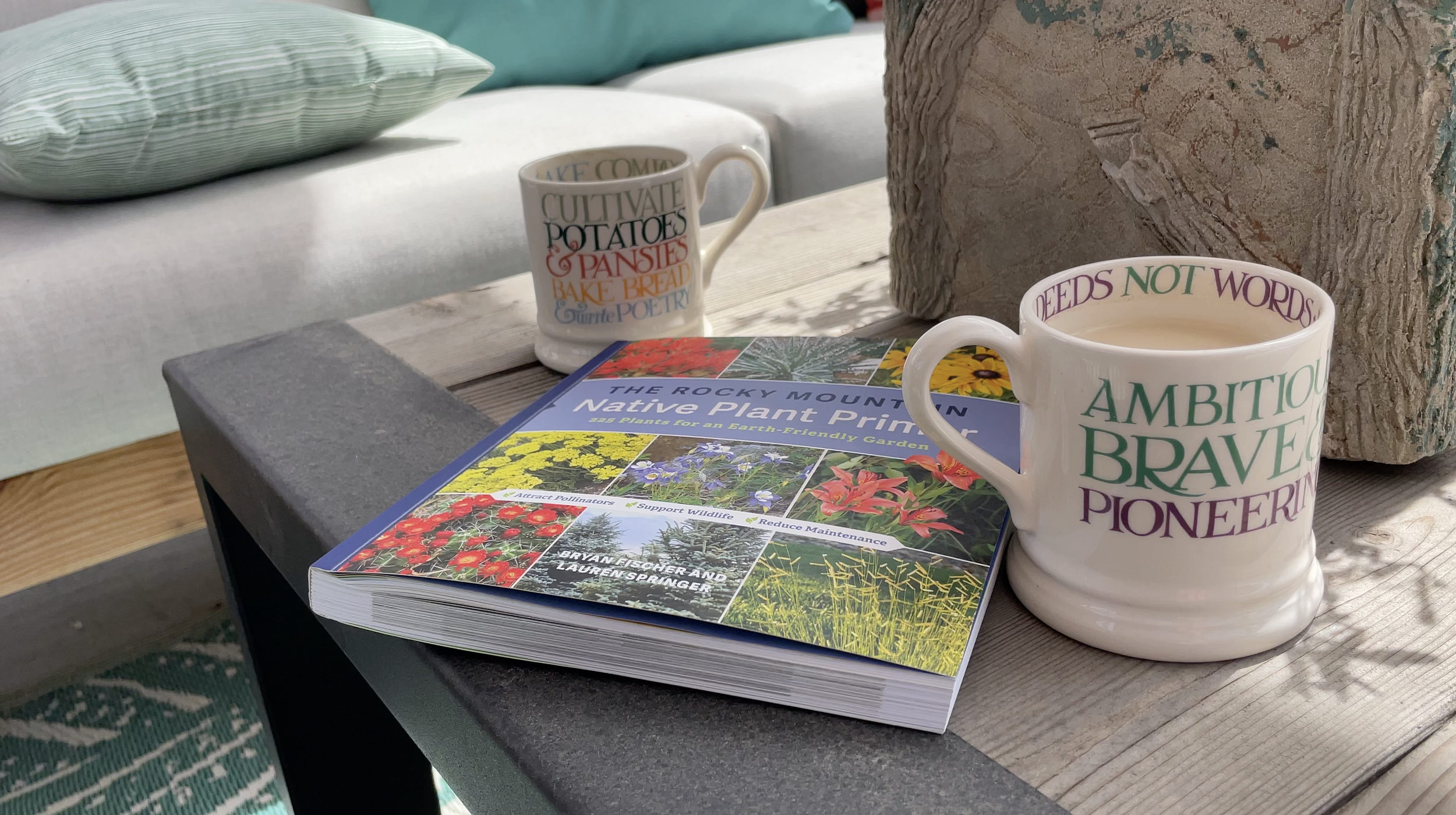
Thanks to Bryan for his time! His book, The Rocky Mountain Native Plant Primer is avaiable now! And on Wednesday, I’ll be sharing a pre-planned garden designed by his co-author, Lauren Springer. It’s amazing!
If you have questions, don't hesitate to ask!
This post originally appeared on my Substack. Subscribe to my Substack, and all of this gardening goodness will appear in your email inbox weekly!
Happy Gardening!
Angela
Subscribe now so you never miss a thing!