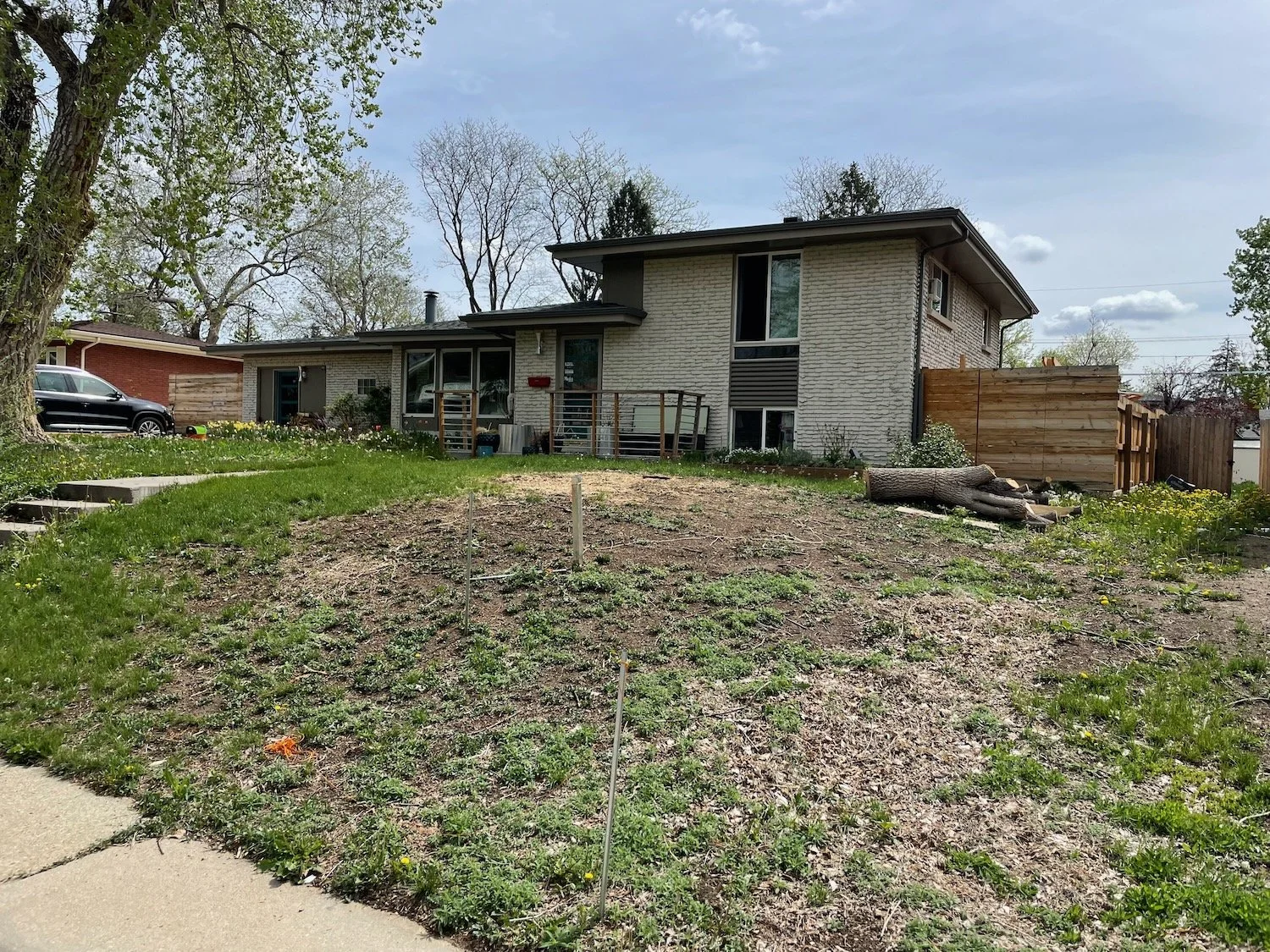
Before
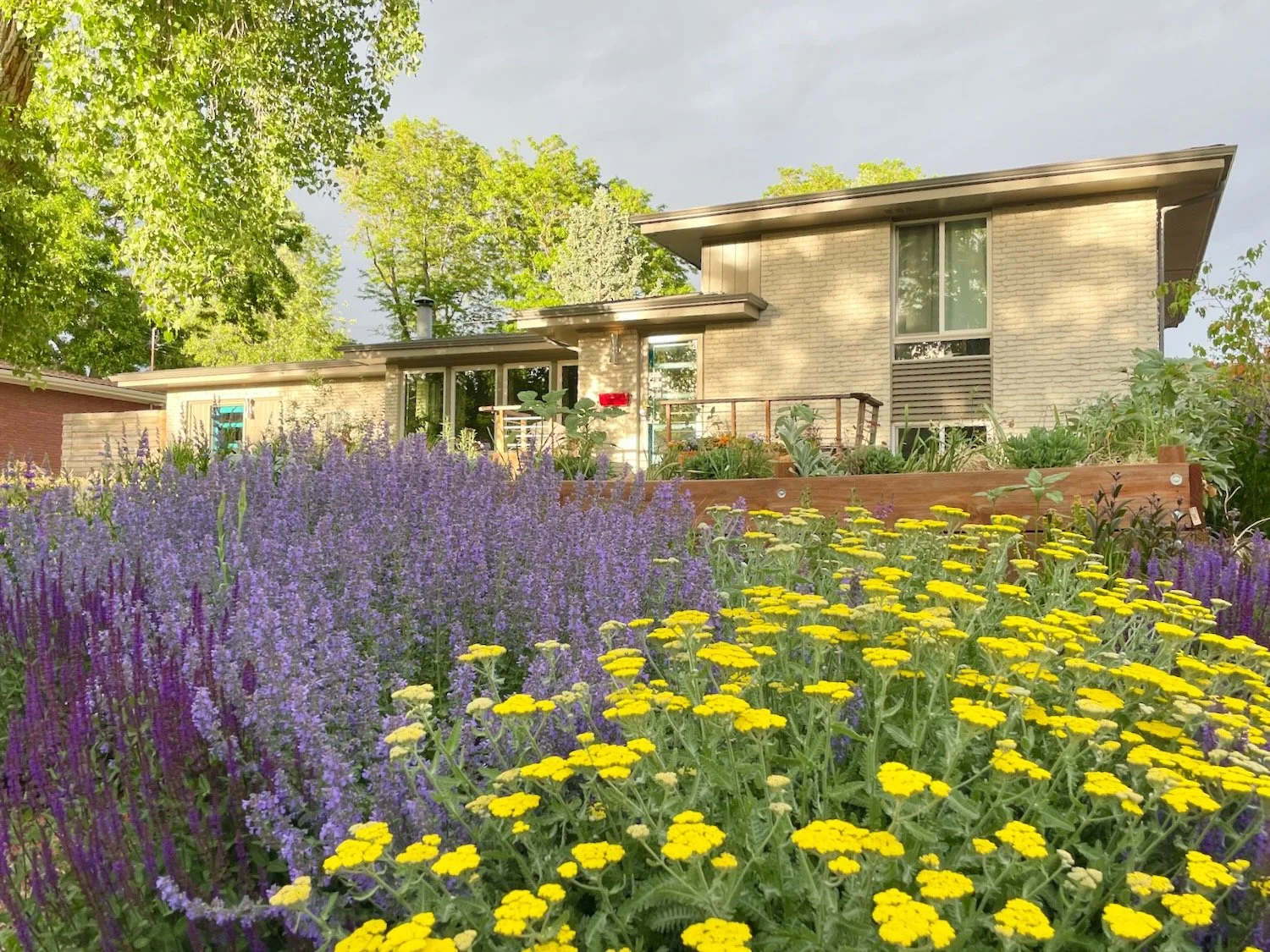
After
Ditch Your Grass
How to Replace Your Lawn with Native Plants
Replacing a traditional turfgrass lawn with native plants is one of the most impactful steps we can take to support biodiversity, to conserve water, and to create a resilient landscape. In this guide, you’ll learn why native landscaping matters, how to transition your yard, and which plants and resources to use.
This Guide includes:
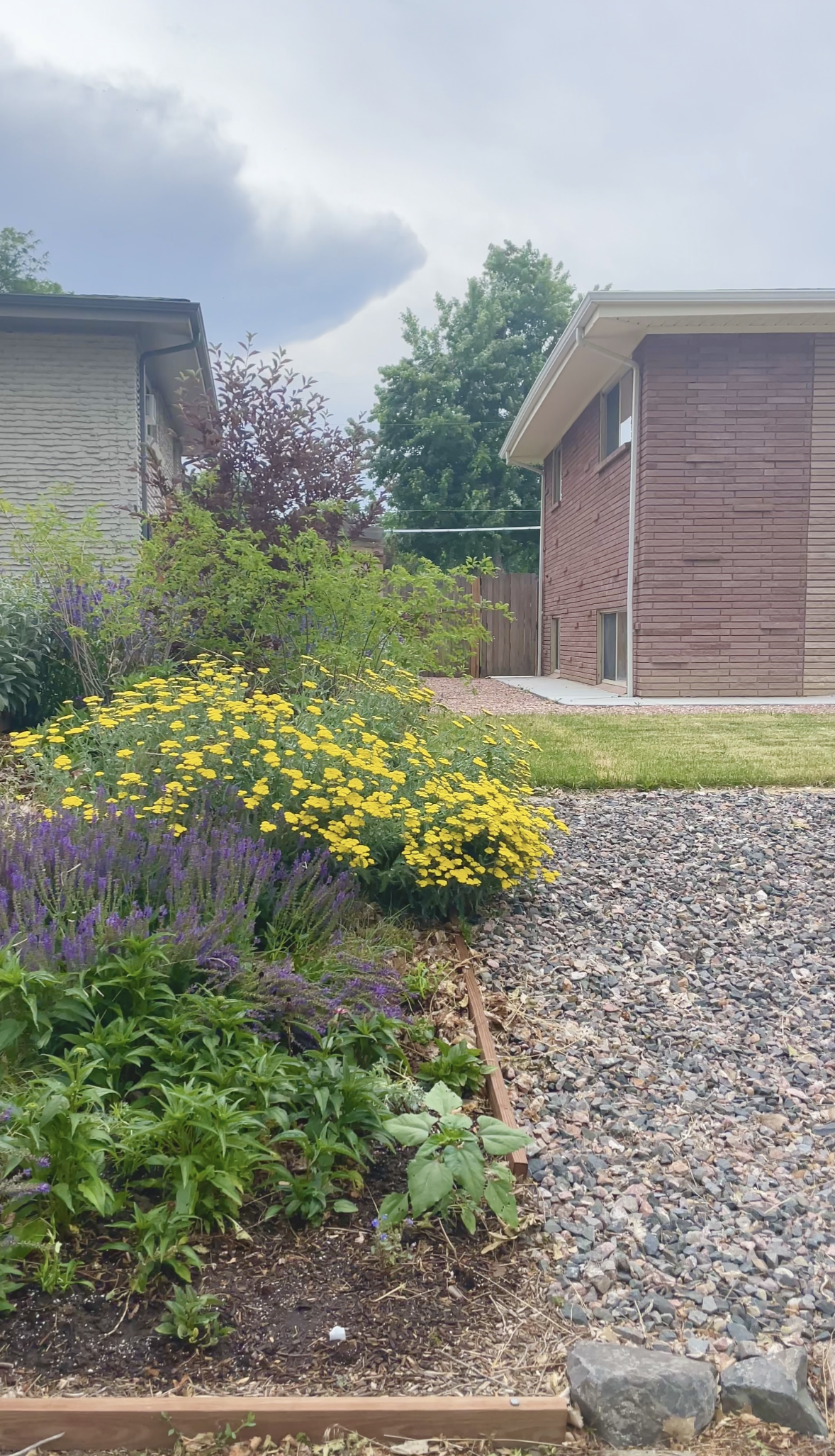
My waterwise garden filled with native North American plants next to my neighbor’s lawn which uses more water and takes more time to maintain.
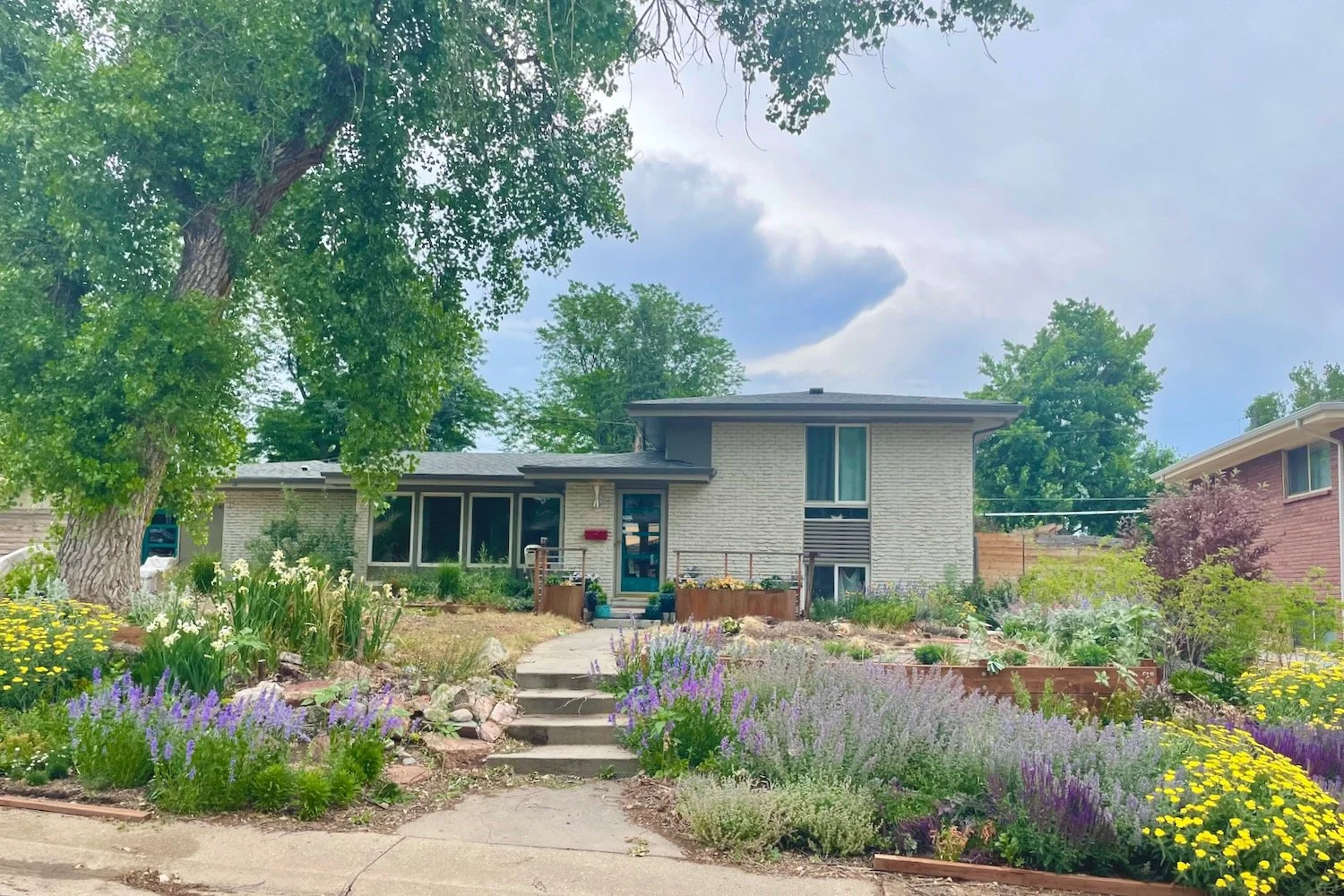
Our home on a sunny June day two years after beginning the replacement process. Not done, but getting there!
We bought our home here in Colorado in the winter. We really didn't know how "the lawn" actually looked.. Well, it turns out it was about 80% weeds – Field Bindweed (Convolvulus arvensis), Canada thistles (Cirsium arvense), and Prostrate Knot Weed (Polygonum aviculare) with a little grass sprinkled in.
With a small child and a dog, I did what most homeowners do: I called for an estimate to have a sprinkler system and sod put in. The estimate for the front and back yard was nearly $20,000. THAT was out of the question.
And I knew I really didn't want to replace these weeds with a monoculture anyway… but I was feeling impatient. And I felt deep shame, to be honest. Our house looked so shabby compared to our neighbors. Even keeping our weeds mowed, which we did, the yard lacked any curb appeal, and it always looked unkempt.
Homeowner shame is real. And culturally we have been conditioned for the last 150 years to appreciate and admire a vast expanse of green lawn – no matter the cost. And to feel shame when we can't achieve perfection.
Indeed, the mowed lawn began as a sign of wealth and excess. It was a statement: "I have so much money that I can employ (or enslave) someone simply to keep this grass neat and tidy with my newly invented machine – the lawn mower."
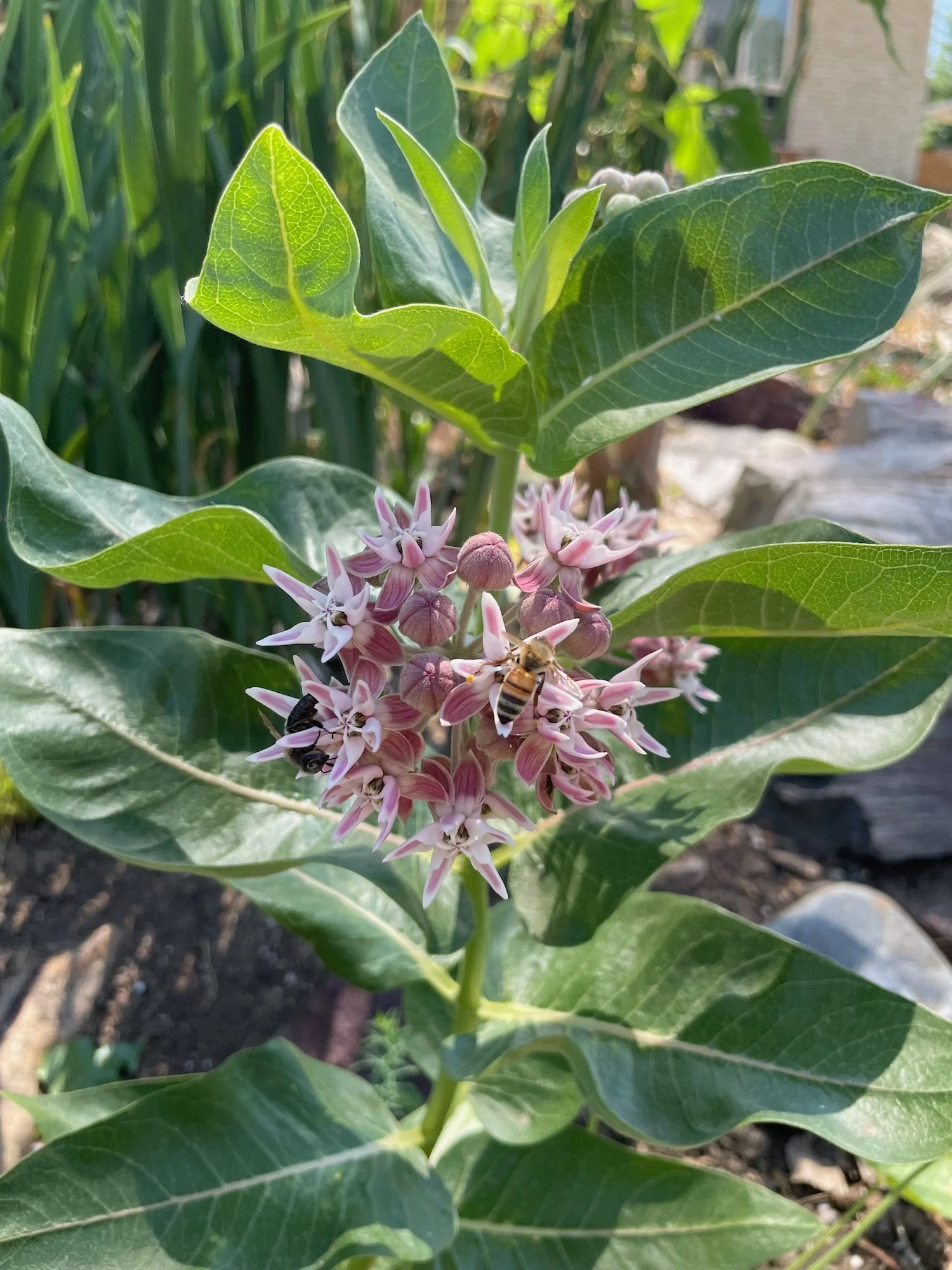
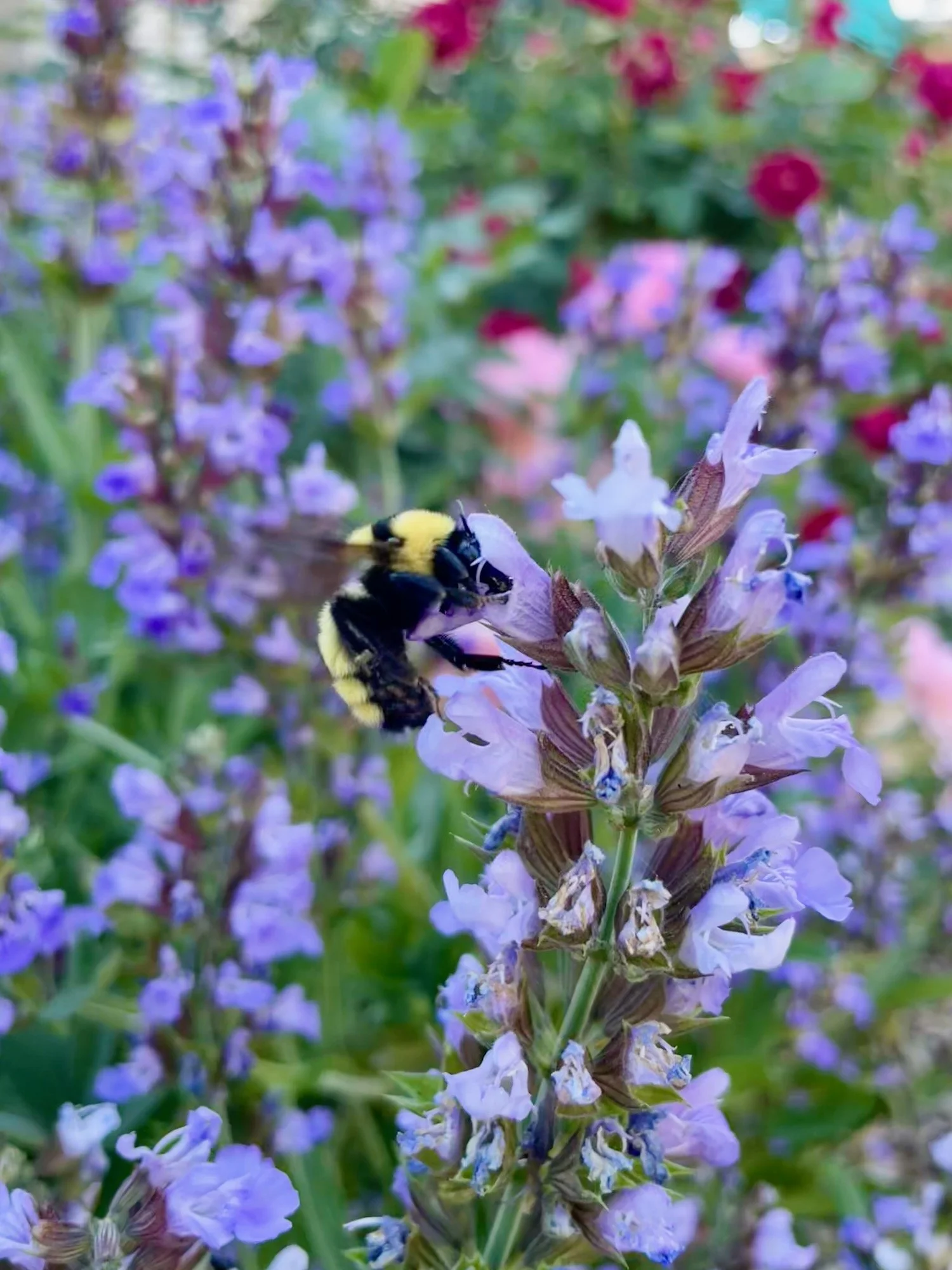
A bee enjoying nectar on a Milkweed plant in my garden
When we think of the American Dream homes of the 1950s – and mine is one of those having been built in 1958 – each came with a green lawn for the man of the house to spend his Saturdays obsessing over. And no matter if your home was in Broomfield, Bakersfield, Boston, or Boca Raton – a green lawn striped and verdant was a sign of prosperity, compliance, and conformity. And if yours wasn't in lock step: well, call in the HOA.
Now, this passion for green expanses was nurtured by chemical companies in post-WWII America and Europe. Once the bombs stopped, chemical companies needed a new market. So bombs became fertilizer, and the GIs who once dropped bombs became lawn-obsessed Ward Cleavers who loyally spread fertilizers and mowed and trimmed.
Television, magazines, newspapers, and movies filled our collective conscience with the idea that manicured and tamed was the ideal, and the lawn was cemented as the ideal state.
Lawns come at a cost, however. They require time. They require money. They require water. But more importantly, they exact a cost environmentally.
As we rethink the lawn, the next questions become: how do I replace my lawn? And with what?
Well, I've been there. I never put in that $20,000 turf grass/sprinkler system combo. Instead, I have filled this yard with a garden – largely planted out with native plants. And honestly, there was very little guidance for this when I started out.
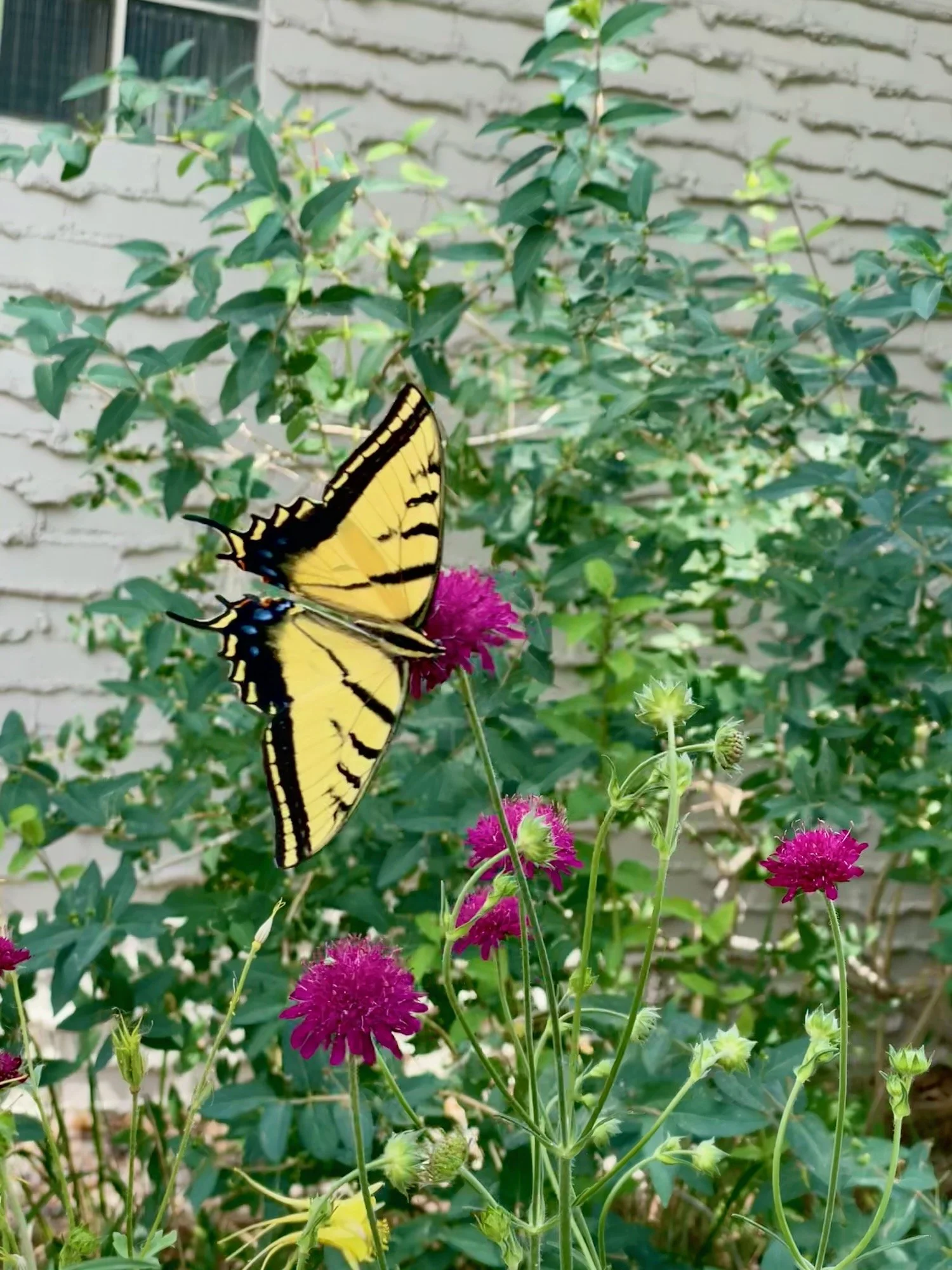
A Swallow Tail butterfly sipping nectar in a garden bed
This guide is filled with the resources to help you do the same – all of the resources I wish I had had!
Replacing a traditional turfgrass lawn with native plants is one of the most impactful steps we can take to support biodiversity, to conserve water, and to create a resilient landscape. In this guide, you’ll learn why native landscaping matters, how to transition your yard, and which plants and resources to use.
Ok. Let's get started!
The Complete Guide to Replacing Your Lawn with Native Plants