

4 Lessons from Longwood Gardens
Garden Design Ideas from Longwood Gardens for Your Own Backyard
I have a confession to make: I don’t often visit the beautiful gardens near my house. Life just gets busy. Traffic is horrid. And I just don’t often make the trip. That’s something I’m working on! But when I’m traveling, that is another story! And last week when I was at the Age of Stewardship Symposium, I met up with my BFF for a day at her favorite haunt, Longwood Gardens near Philadelphia.
It had been more than a decade since I was last at Longwood – far too long. And as we wandered the gardens talking about our kids, our careers, and the craziness of our lives, I was also looking for garden inspiration. Afterall, these big, historic gardens are crammed full of ideas from gardeners and garden designers who get to work on a huge scale.
My takeaway after a day at Longwood is simple: this is a place that uses ordinary plants in extraordinary ways.
What do I mean by “ordinary plants”? I would say that most of these plants are easy to grow from seed or from cuttings. They root and grow quickly or have high germination rates. These are plants that, for the most part, are available at your garden center or houseplant area. They are also relatively inexpensive. Lots of bedding plants, for example.
What do I mean by “extraordinary ways”? Well, let’s take a look…
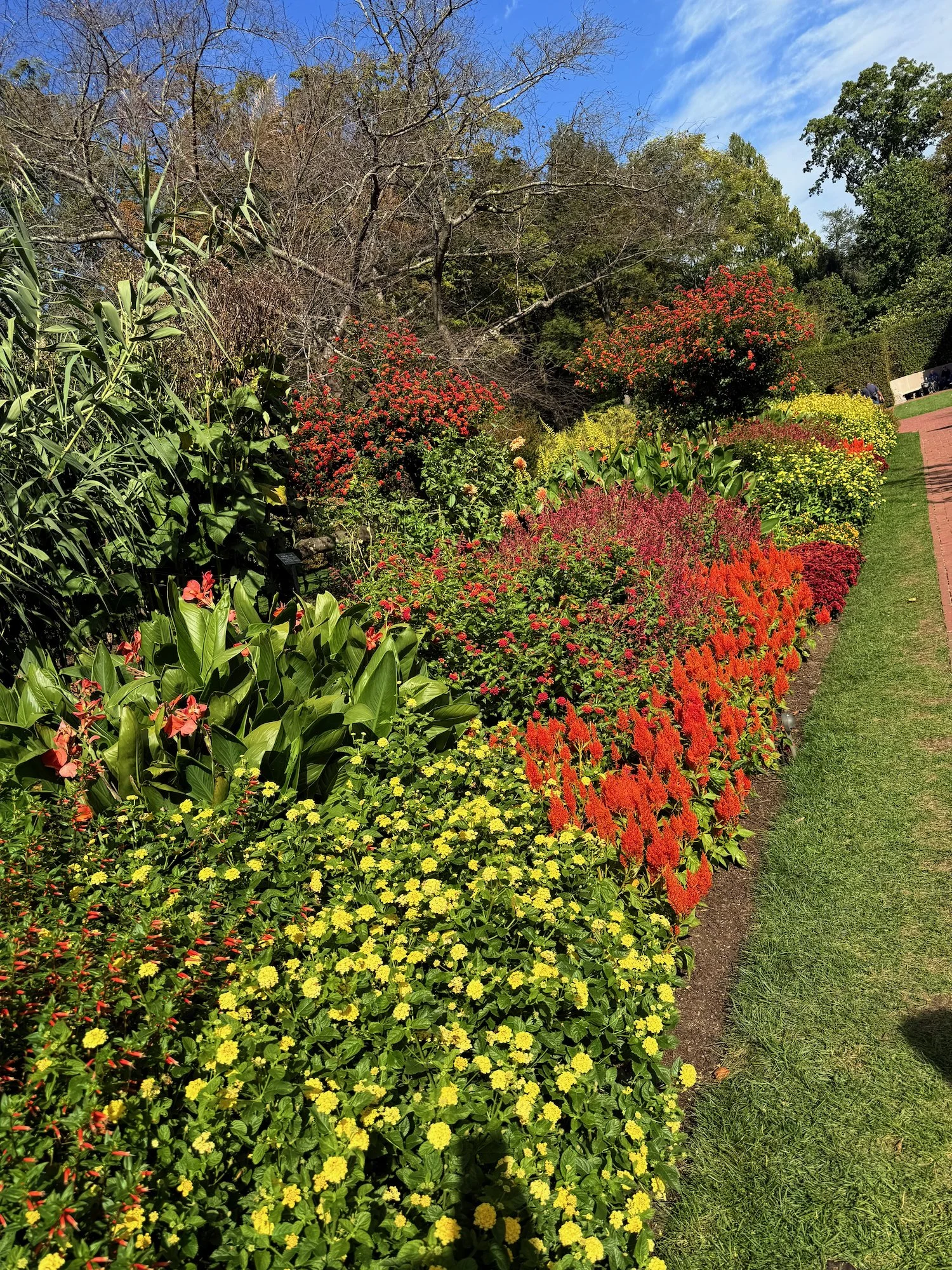
The Red and Yellow section of the Flower Garden Walk. Stunning! And the planting uses the same principles discussed below.
Cramscaping: Planting in Abundance
The Flower Garden Walk was the first garden established at Longwood back when Pierre duPont began building his fabled estate. At 600 feet long, this brick path is flanked by deep beds planted out in an array of colors. The labor and resources poured into these beds is, frankly, astonishing. They are changed out seasonally and are planted out with annuals. So several times per year the beds are emptied and planted out with a new scheme.
However extravagant the plantings may be, the plan is actually relatively simple. The sections are arranged in “rainbow order” starting with Purples. The backs of the beds feature perennial trees and shrubs which make for a visual backstop to the plantings. I would imagine they are also in place all year round and their foliage changes with the seasons.
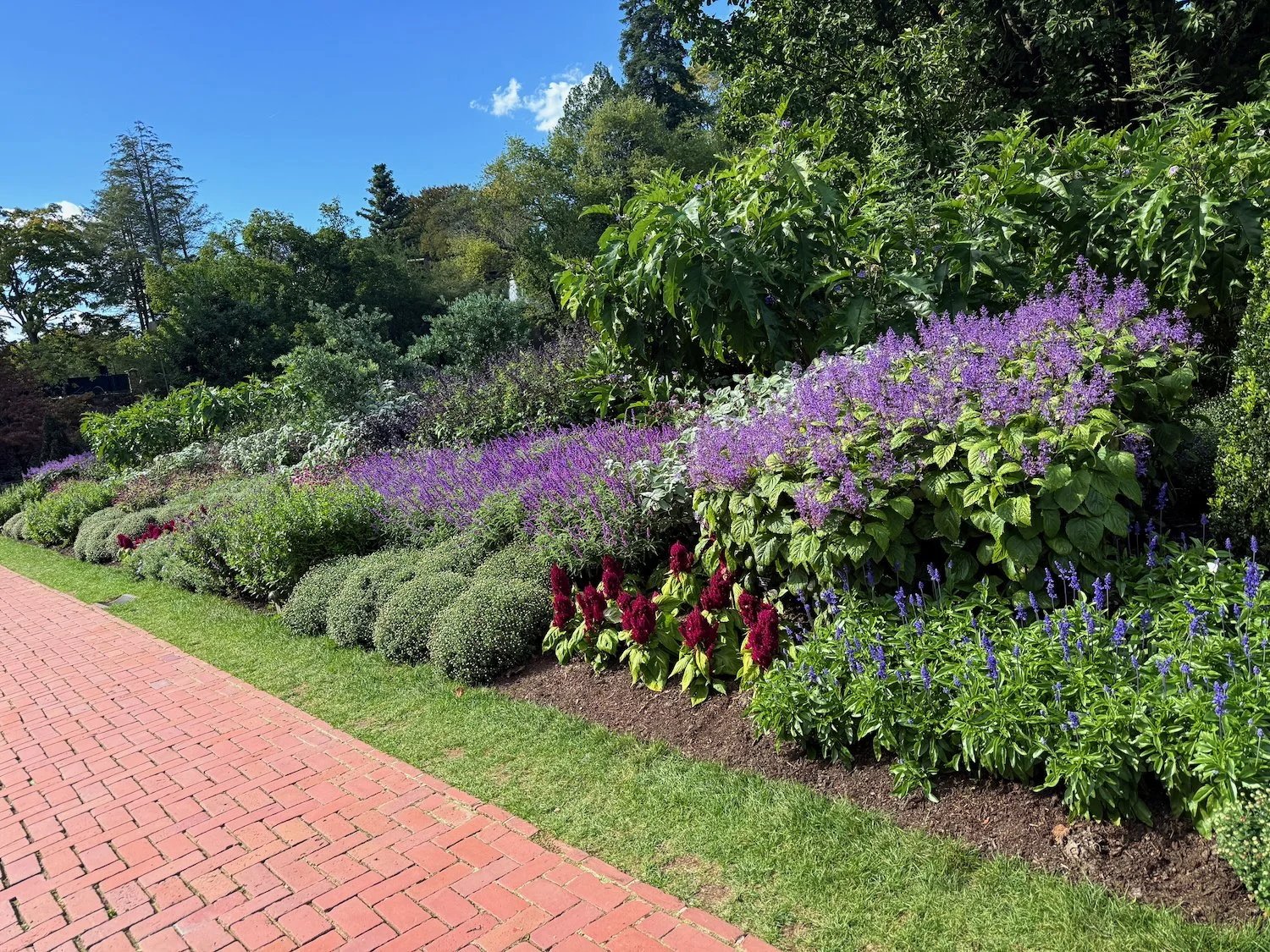
The purple scheme of The Flower Garden Walk
But the planting beds in front are bursting with color and texture. They have achieved this with lots of plants you will recognize from your garden center:
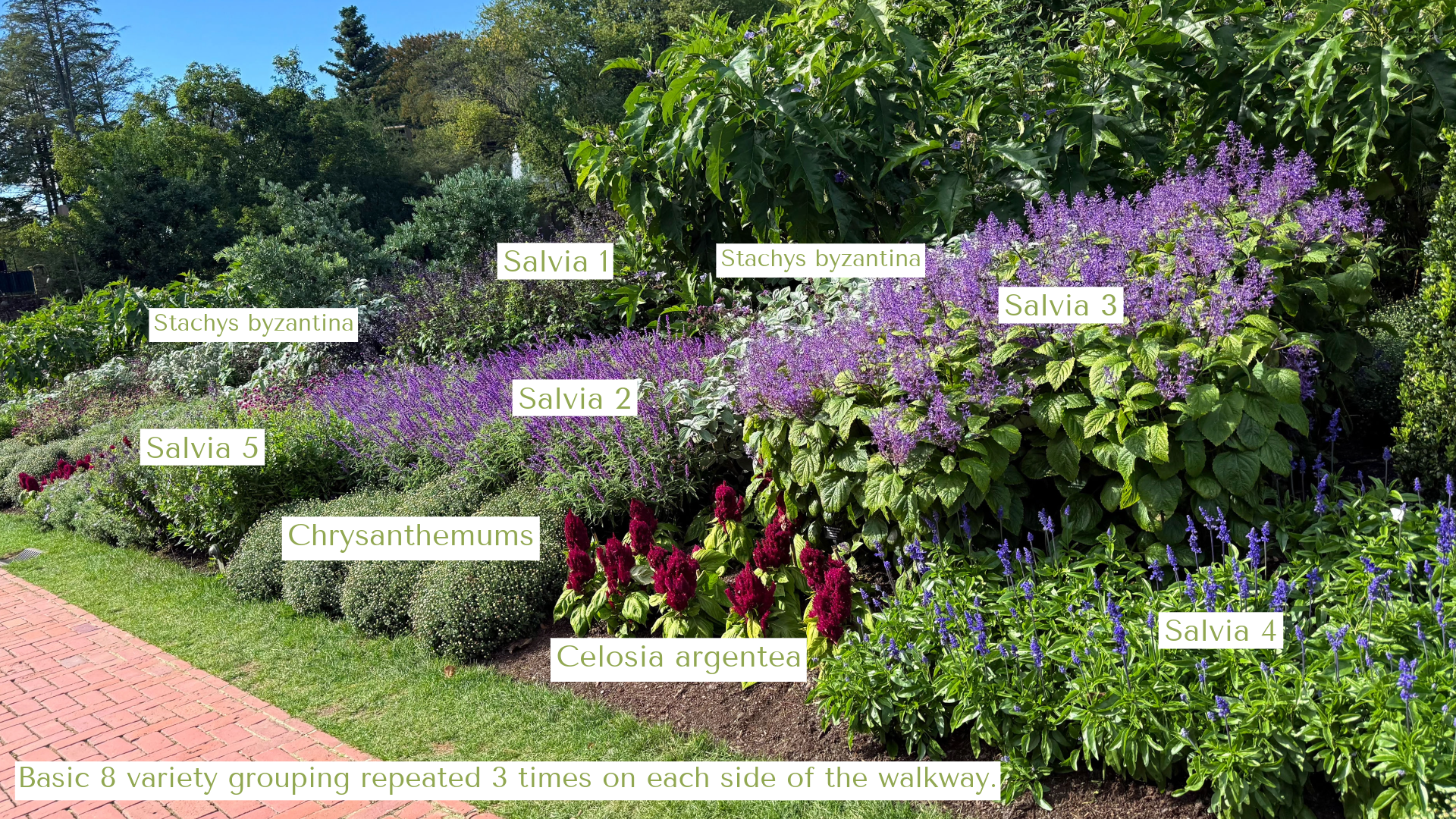
When you take it apart, though, its a very simple planting scheme. It’s the volume and scale that makes it so impressive.
The basic grouping includes:
5 varieties of Salvia at three different heights (1 low, 3 medium, and one tall Salvia)
Stachys byzantina in two swathes
1 swathe of Chrysanthemums
1 clump of Celosia
That 8 variety planting scheme is repeated three times on each side of the walkway. All of the plants bloom in some hue of purple or purpley blue. The biggest trick here: there are LOTS of each plant: 12 Celosia per bunch, 9 Chrysanthemums, at least 24 of Salvia 4.
By my estimate each of these groupings is about 150-200 plants — and that’s repeated six times just for the purple/blue beds.
Idea for Our Gardens: Repetition & Plant Spacing
This would be cost-prohibitive for our own gardens. And we would need a staff of gardeners to do the growing and all of that changing out. But the magic isn’t in the plant choices. It’s in the design and repetition.
If you have a large flower bed to fill, look at that simple equation: 8 varieties total.
5 varieties of one plant type — Salvias, in this case
1 low-growing variety repeated in 2 swathes
1 swathe of something rounded
1 clump of something spiky
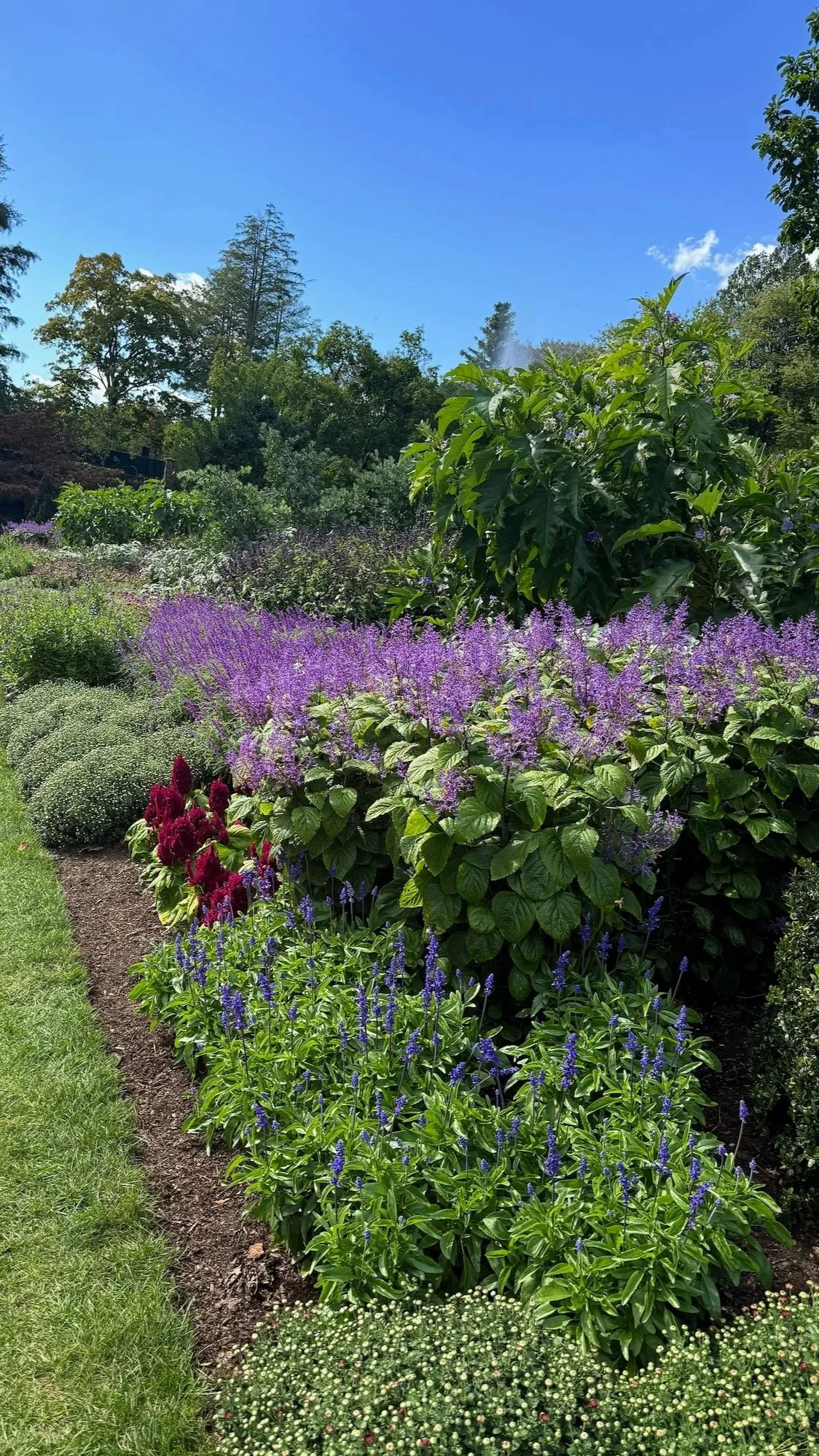
Choosing mostly native perennials, this might look like:
5 different native Salvia varieties
1 Geum triflorum in two swathes
1 swathe of Phenomenal Lavender
1 clump of Shenandoah Switchgrass
You might have 50 plants per bed — rather than 200. But you could take this basic combination and repeat it in multiple places for a similar impact. And if you use perennial native plants, this scheme would last for decades with simple maintenance.
Pollinators would LOVE this combination — and they LOVE repetition. For more about why:
Fantastical Hanging Baskets
In our arid climate, I struggle to keep hanging baskets healthy. They need to be watered multiple times per day during the summer, and I simply don’t have time for that. But I LOVE them. And I was particularly drawn to the hanging baskets at Longwood which are over the top in scale. I mean, they are huge!
But as with the Flower Garden Walk, they aren’t all that difficult if you look carefully.
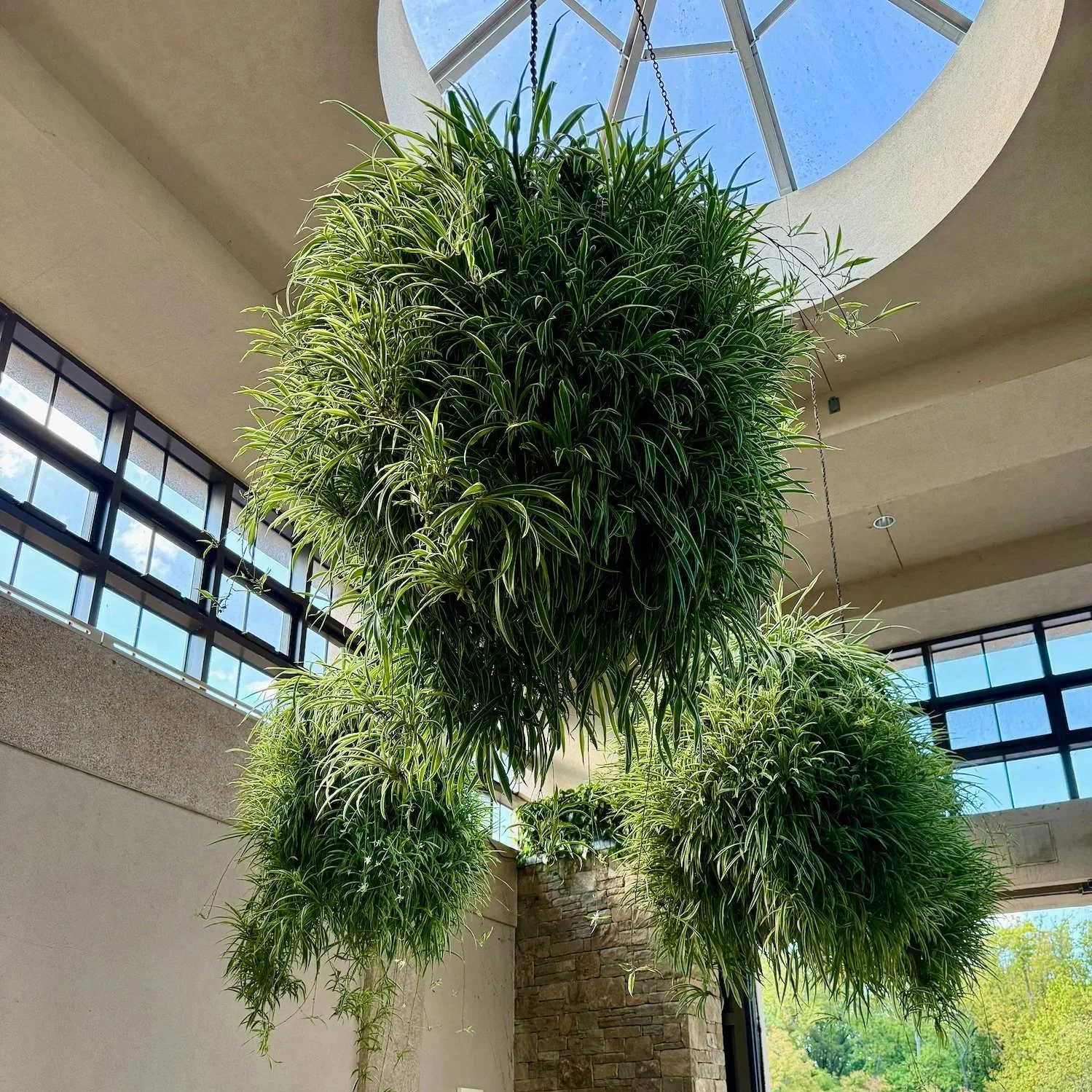
Just a whole lotta happy Spider Plants! So many!
These are just Spider Plants — the cheapest of all houseplants, honestly. They were so full and gorgeous, I couldn’t see the internal structure at all. But every hanging basket had built-in irrigation. And they are clearly well-watered!
I mean look at this ball of Staghorn ferns! It is absolutely ginormous.
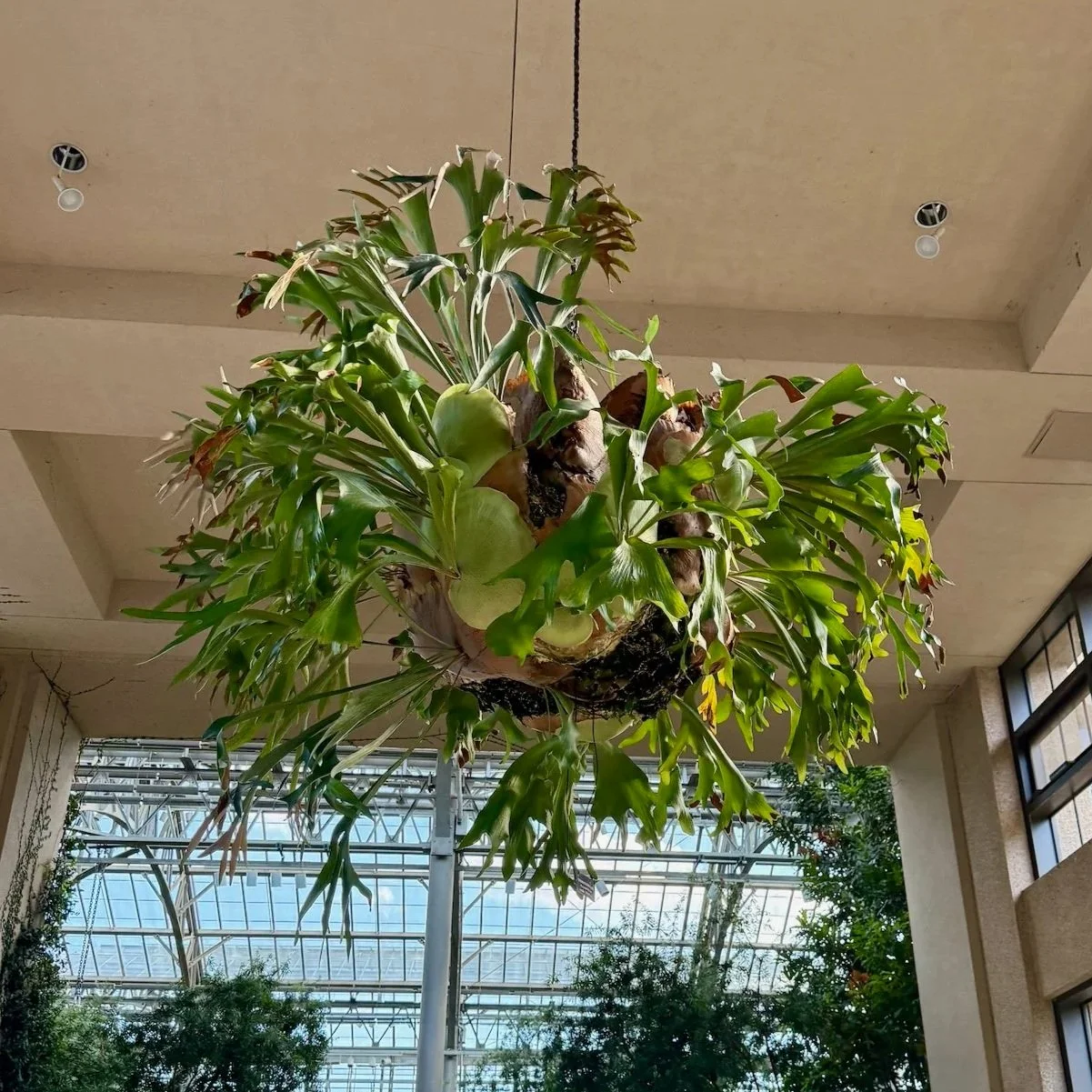
My Staghorn Fern can only dream of this amazingness!
This gives you a sense of the scale of these hanging baskets.
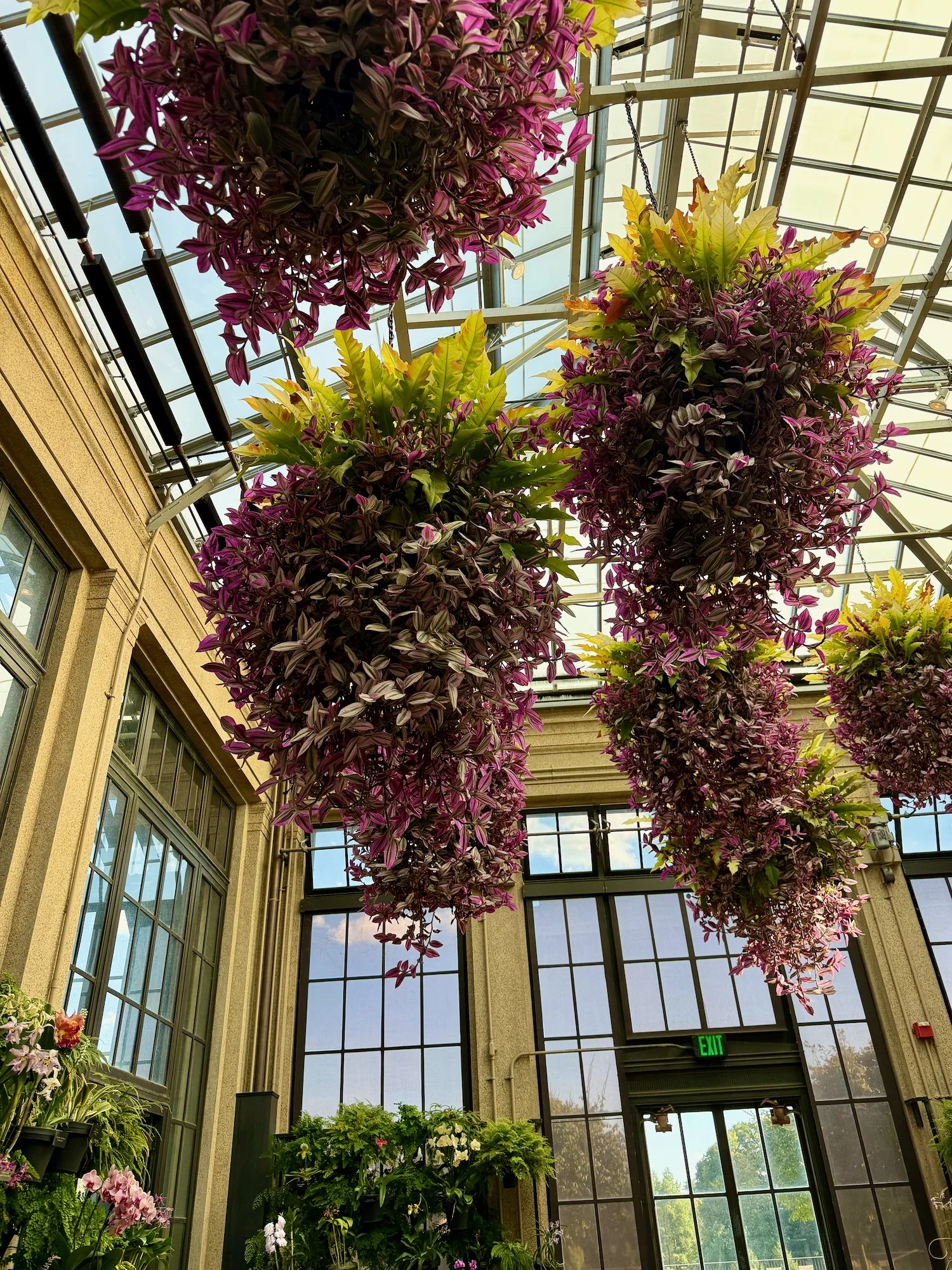
I mean come on! And Tradescantia is such an easy plant to grow. But that purple foliage packs a huge punch.
But the impact is even more dramatic because there are a dozen of these plant chandeliers in this orchid room.
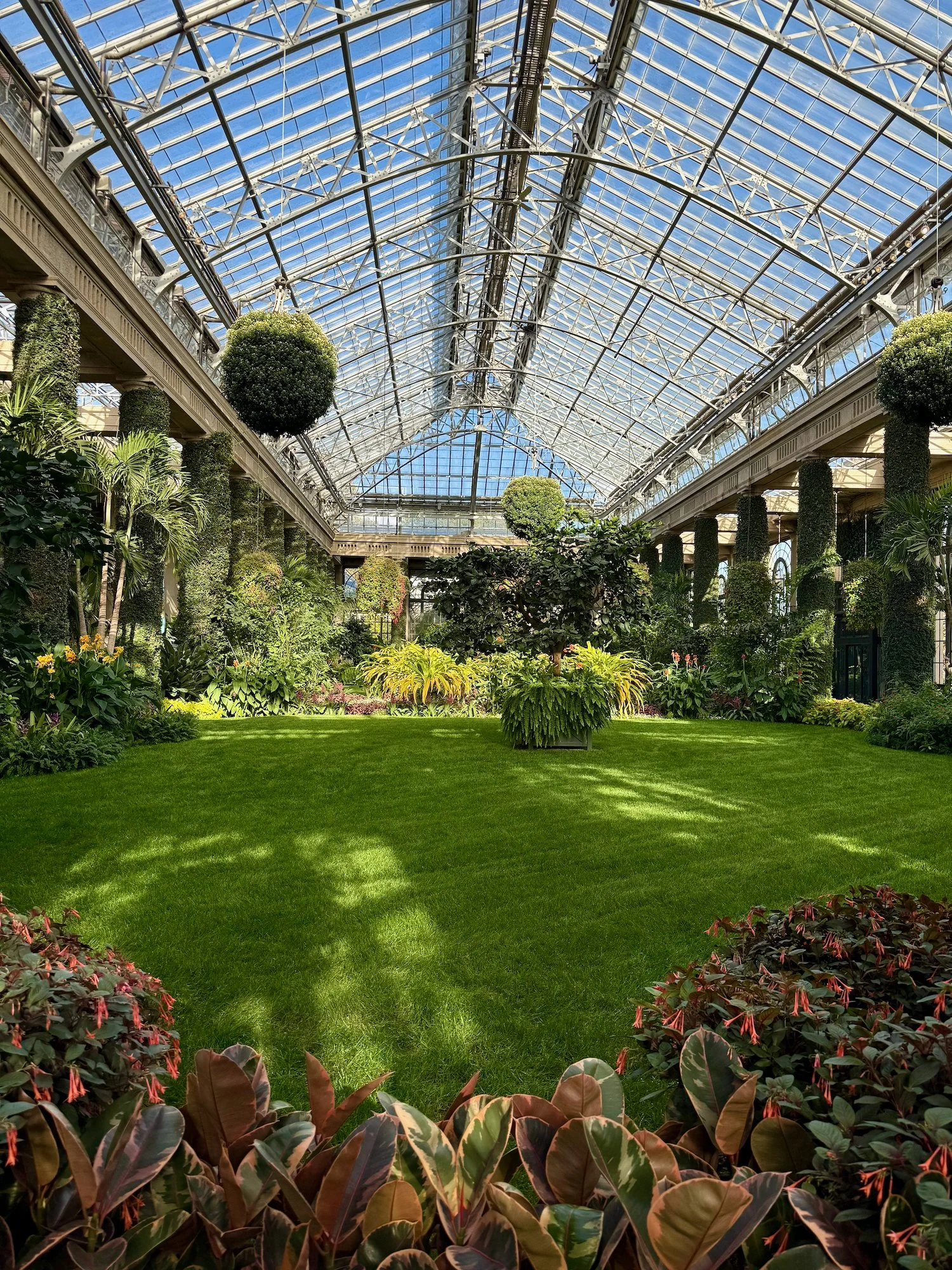
Within this HUGE conservatory, the hanging planters have to be HUGE to be noticed.
But none of these plants are horribly exotic or rare or unidentifiable. They are in our vernacular. They are just used in such unique ways on a massive scale.
Look at these! I think the top is a Philodendron and then planted underneath it is Tradescantia which is just cascading down.
Idea for Our Gardens: Go Big — Even at Home!
I am seriously thinking about how to deploy some hanging baskets at home on a good drip system next year. But now I want to do it on a larger scale. That bigger volume would probably keep them from drying out as quickly. Hmmm… the wheels are spinning!
Lucky for us, Longwood recently made a video about their hanging baskets. The last part of the video includes a peek at how each of their three different shapes of baskets are assembled. Genuinely they are using ordinary plants in extraordinary ways.
Also: I need some of their amazing hanging basket frames!
Don’t Forget the Whimsy!
I know I’m guilty of this: feeling so serious about my garden that I forget to inject a little fun. But the gardeners at Longwood don’t!
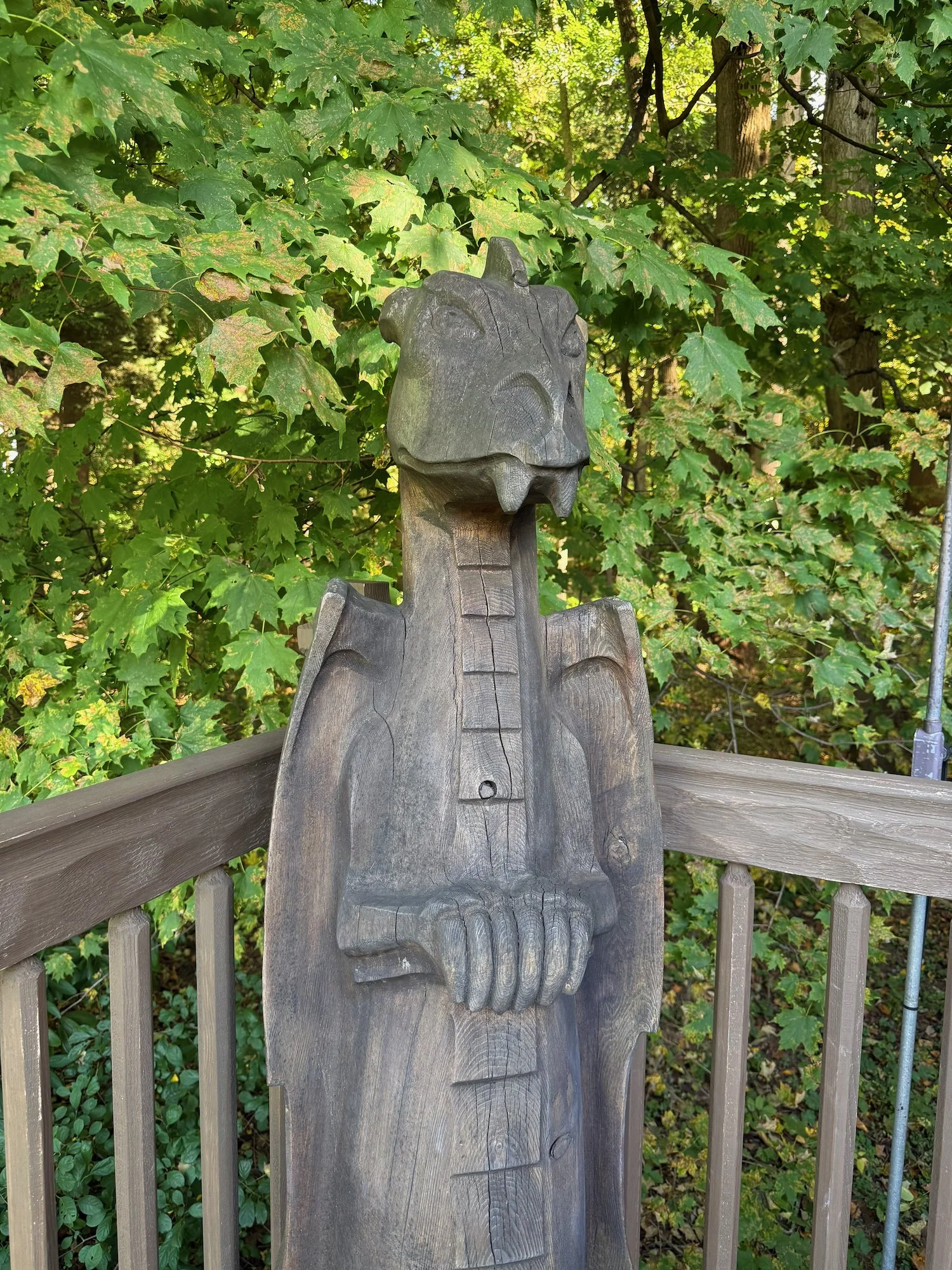
I tried to bring him home with me. But they wouldn’t allow it. Sigh.
One of my favorite discoveries was this Lantana tree! I had never seen a Lantana in tree form before, and let me tell you: if I lived in zones 9-11, I would be planting these everywhere!
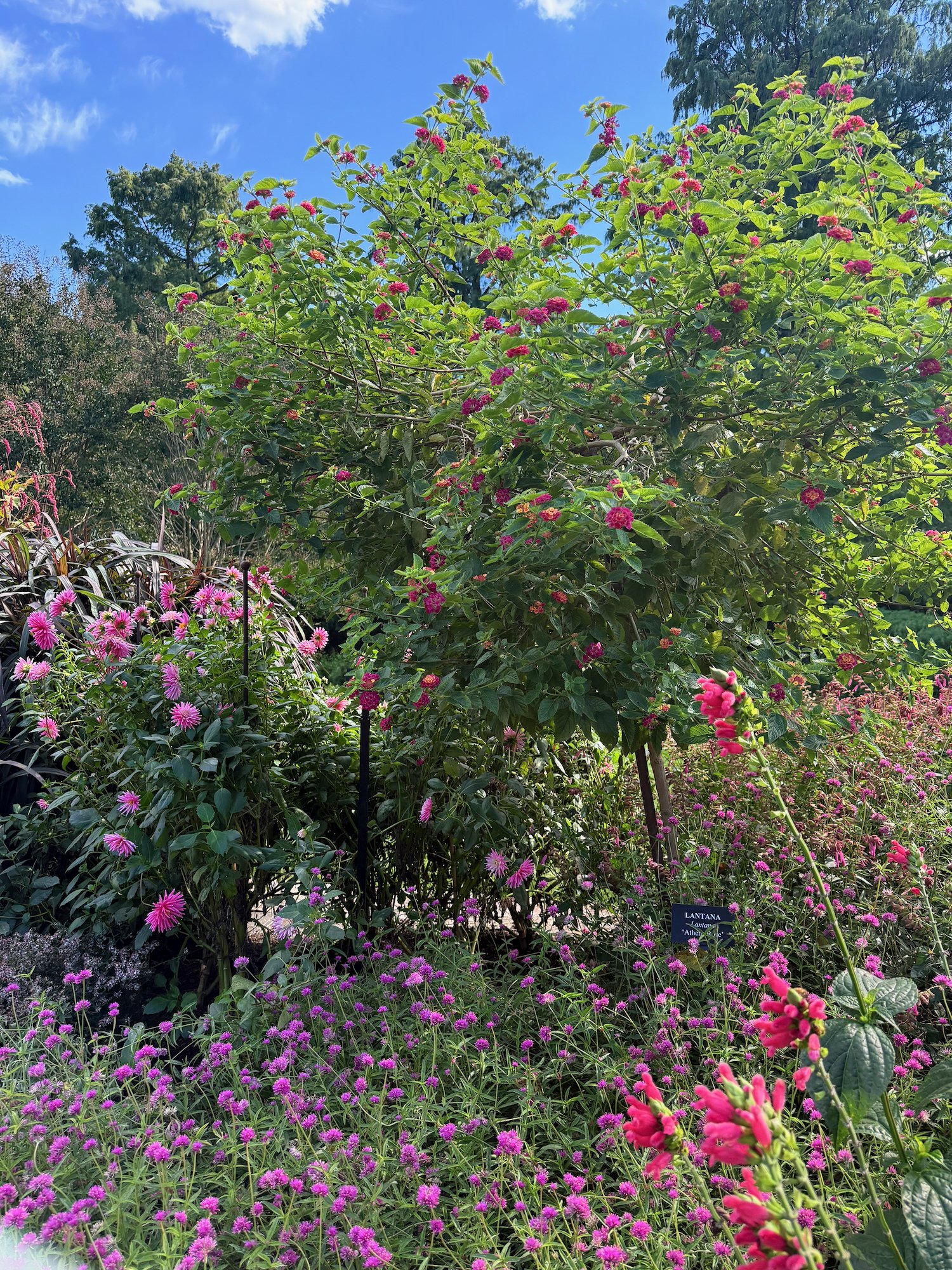
A Lantana tree! I love this so much!
First of all, pollinators love Lantana, and it blooms all summer long. Plus these lollipop shapes are perfect for large containers. So fun! Most Lantana come from Central and South America, but one species, Lantana urticoides, hails from south Texas!
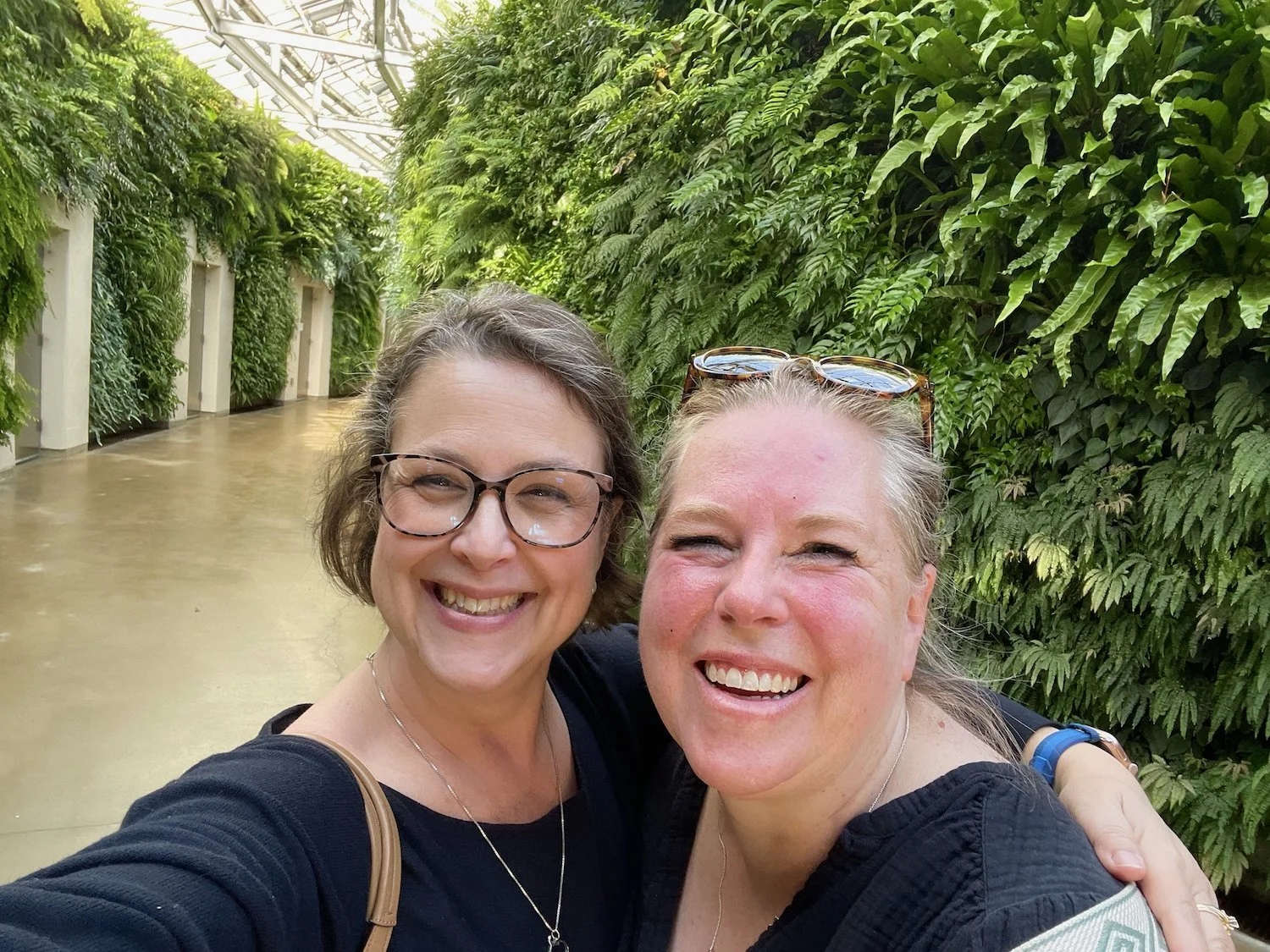
We’ve been BFFs since our first year of college. But I think this is the first toilet room photo we have taken together!
Ok. Another whimsical use of plants: this corridor of bathrooms. Seriously, these are the bathrooms in the glasshouses. But look at this gorgeous fern wall!
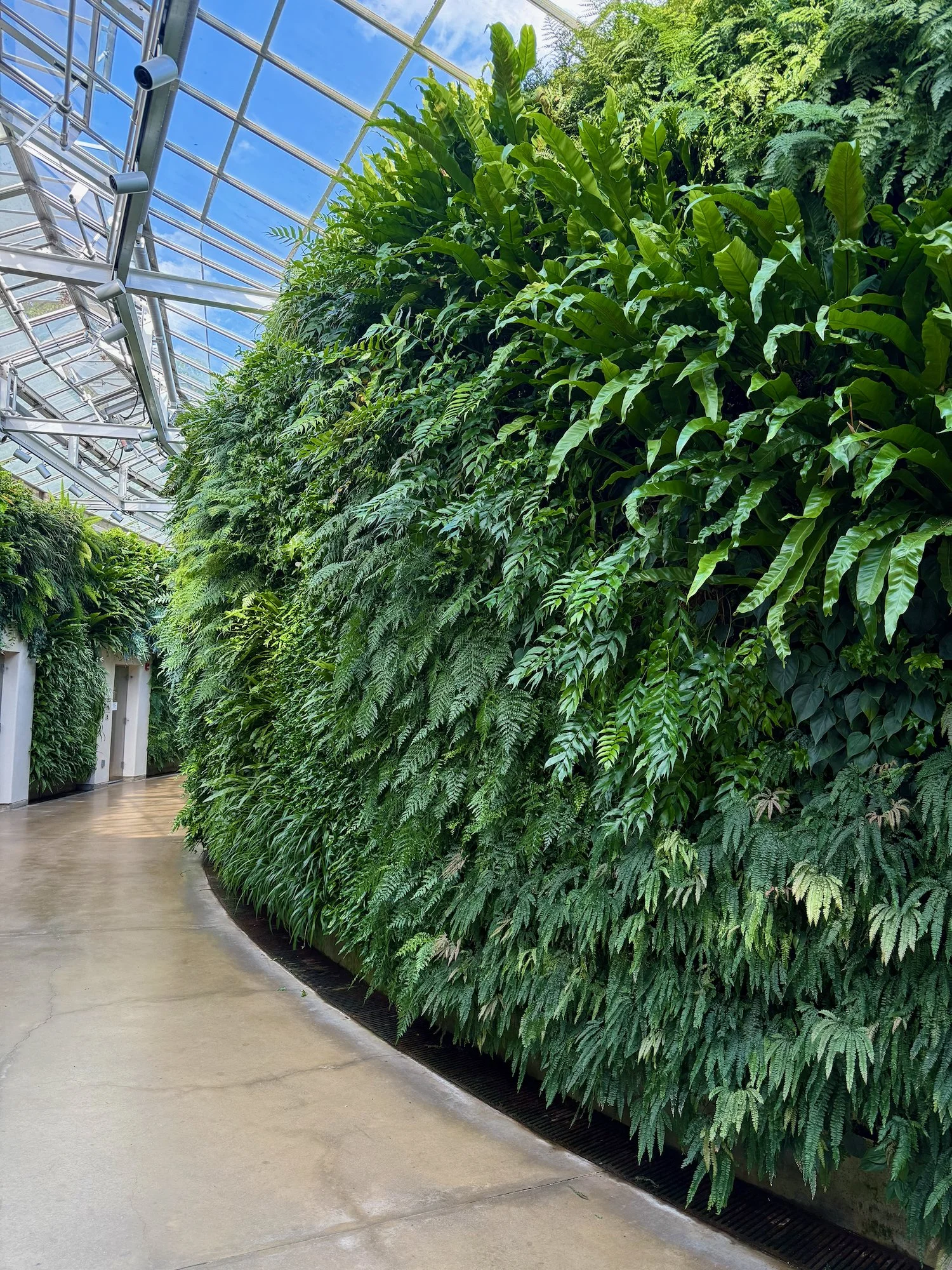
I mean who needs wallpaper?
Honestly, I think I recognized every fern variety — they were all plants you might find in the houseplant section of your favorite garden center including Birds’ Nest and Maiden Hair ferns. But this wall just took my breath away! It’s about volume and repetition — the same tools they use on the Flower Garden Walk.
Just Add Water!
Speaking of whimsy, check out these cute little fountains:
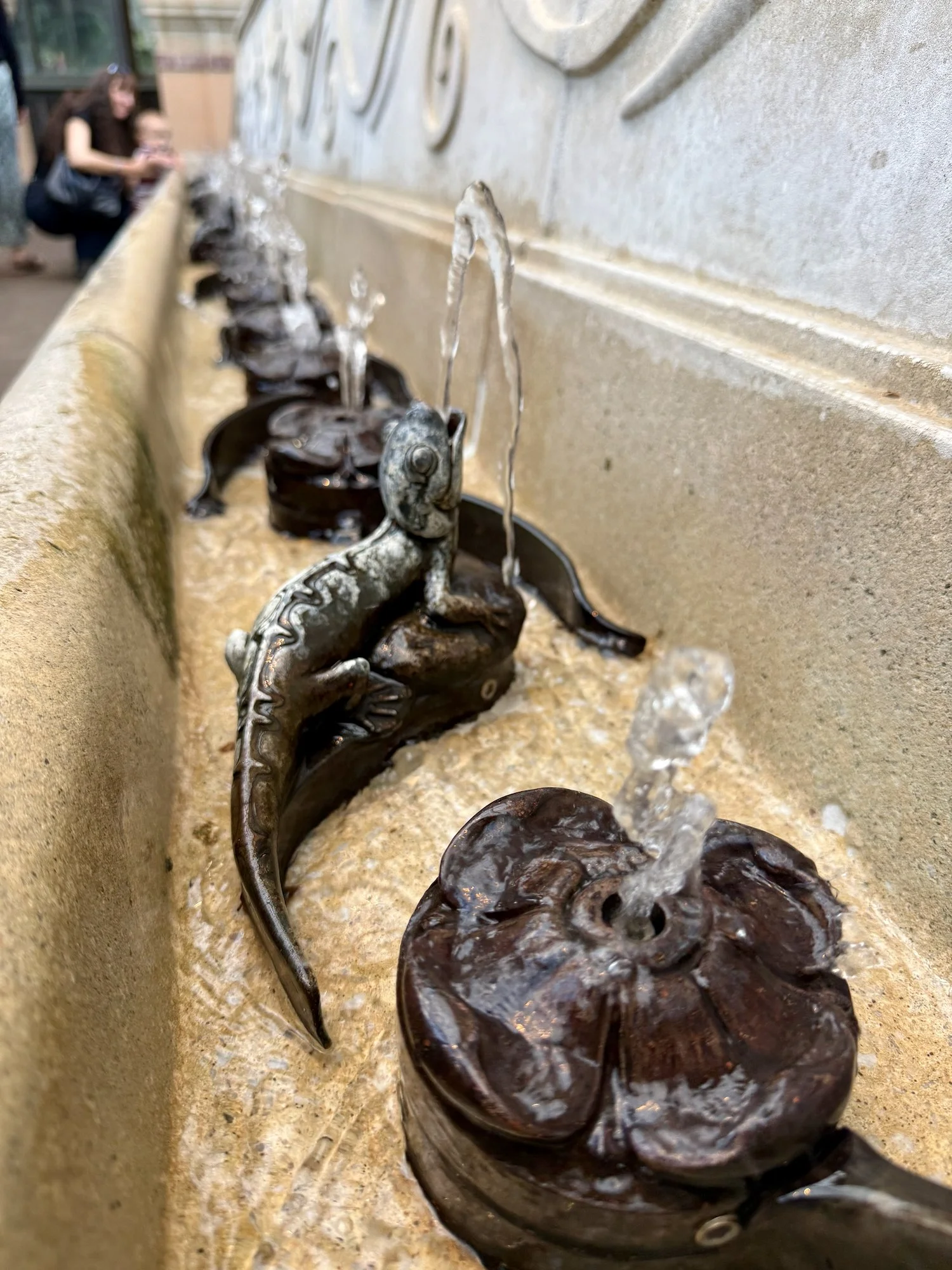
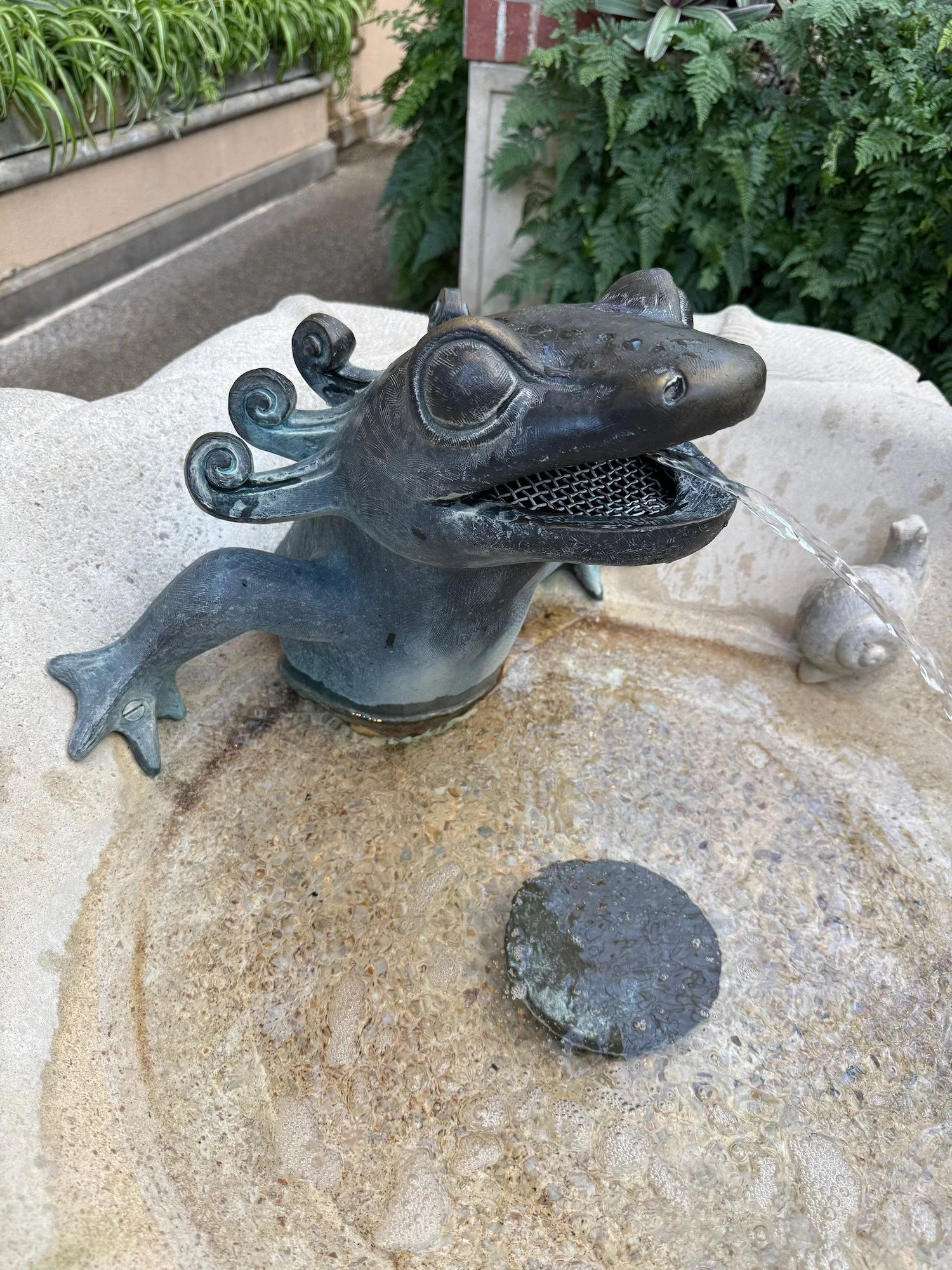
Where can I get some lizzard fountains? I need some!
And if you’ve ever been to gardens in Italy, you’ll feel right at home here:
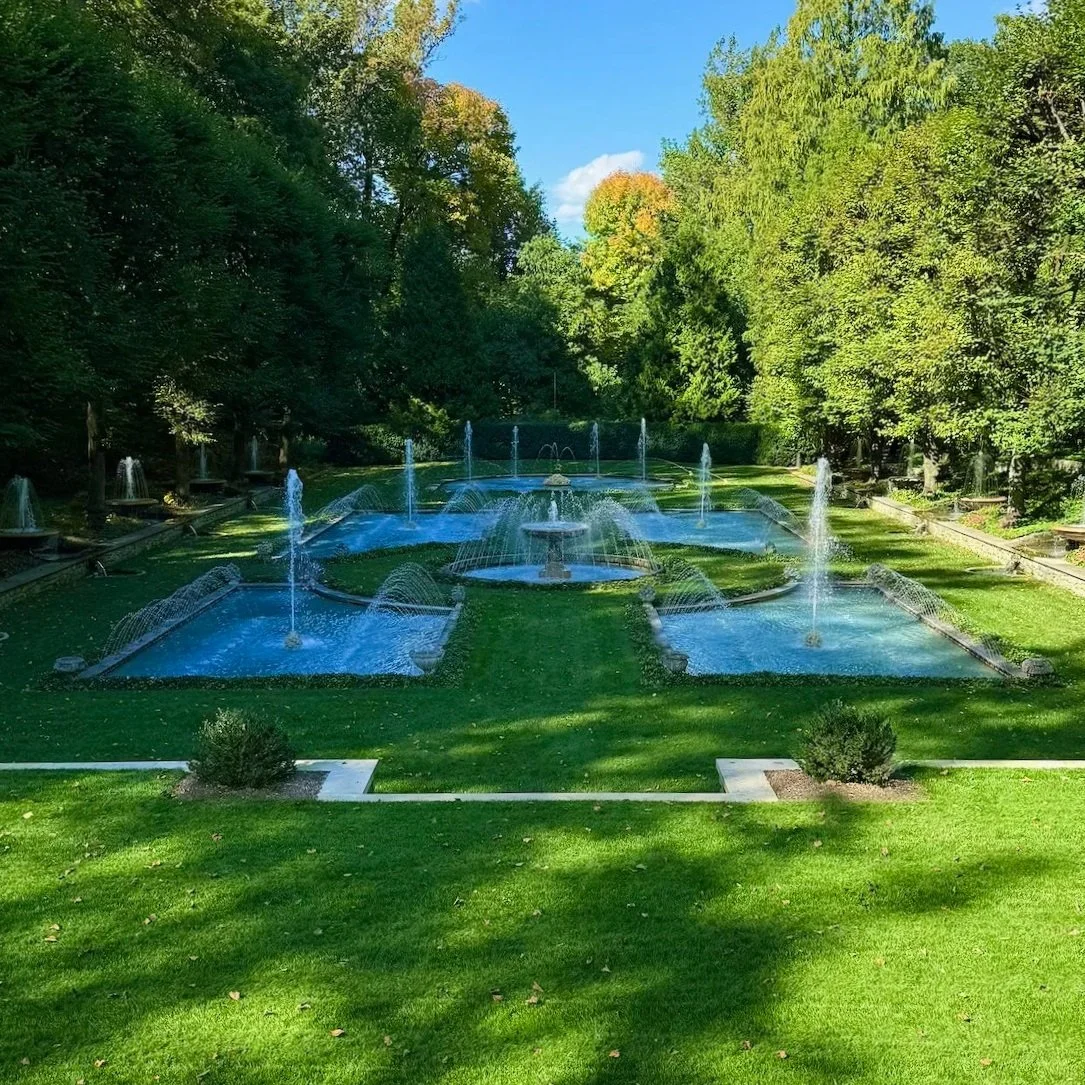
Pretty sure this is just a straight up copy of Villa d’Este in Italy.
And while Longwood is known for its fountain shows with music, lights, and fire (!), I think the lilypad garden was my absolute favorite spot.
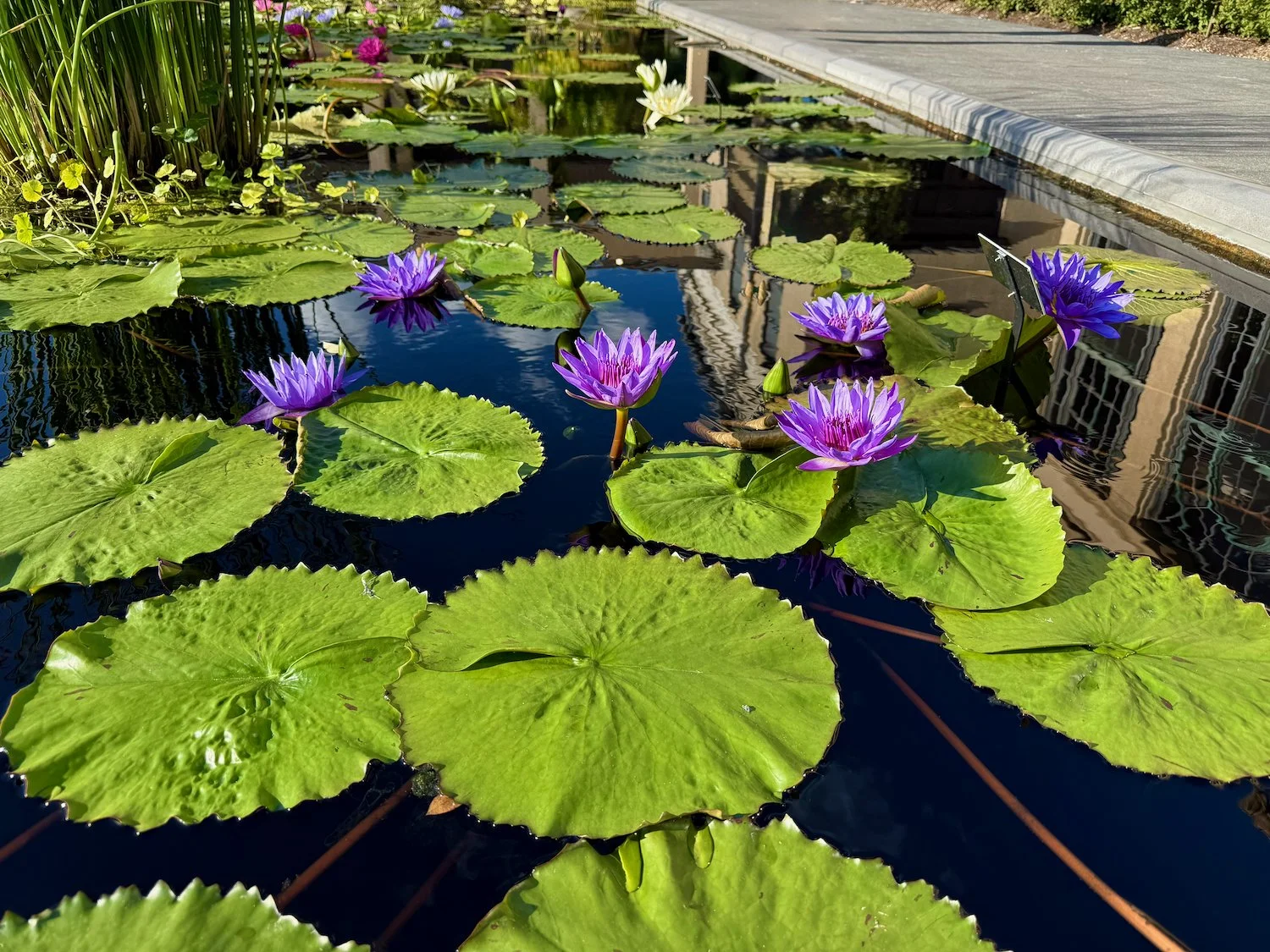
Seriously. Gorgeous. Stunning.
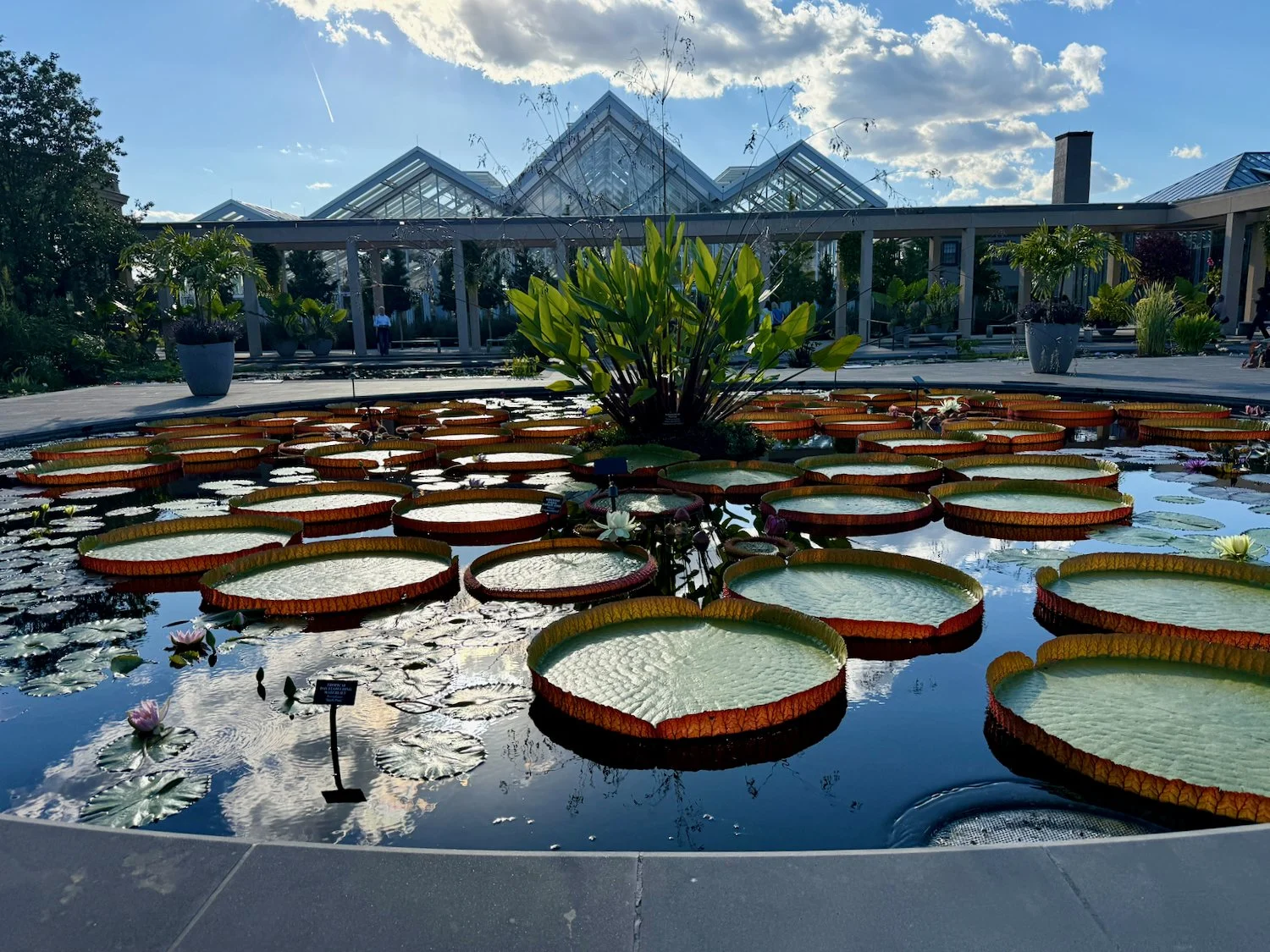
If you haven’t seen the Waterlily Weigh-off , check it out!
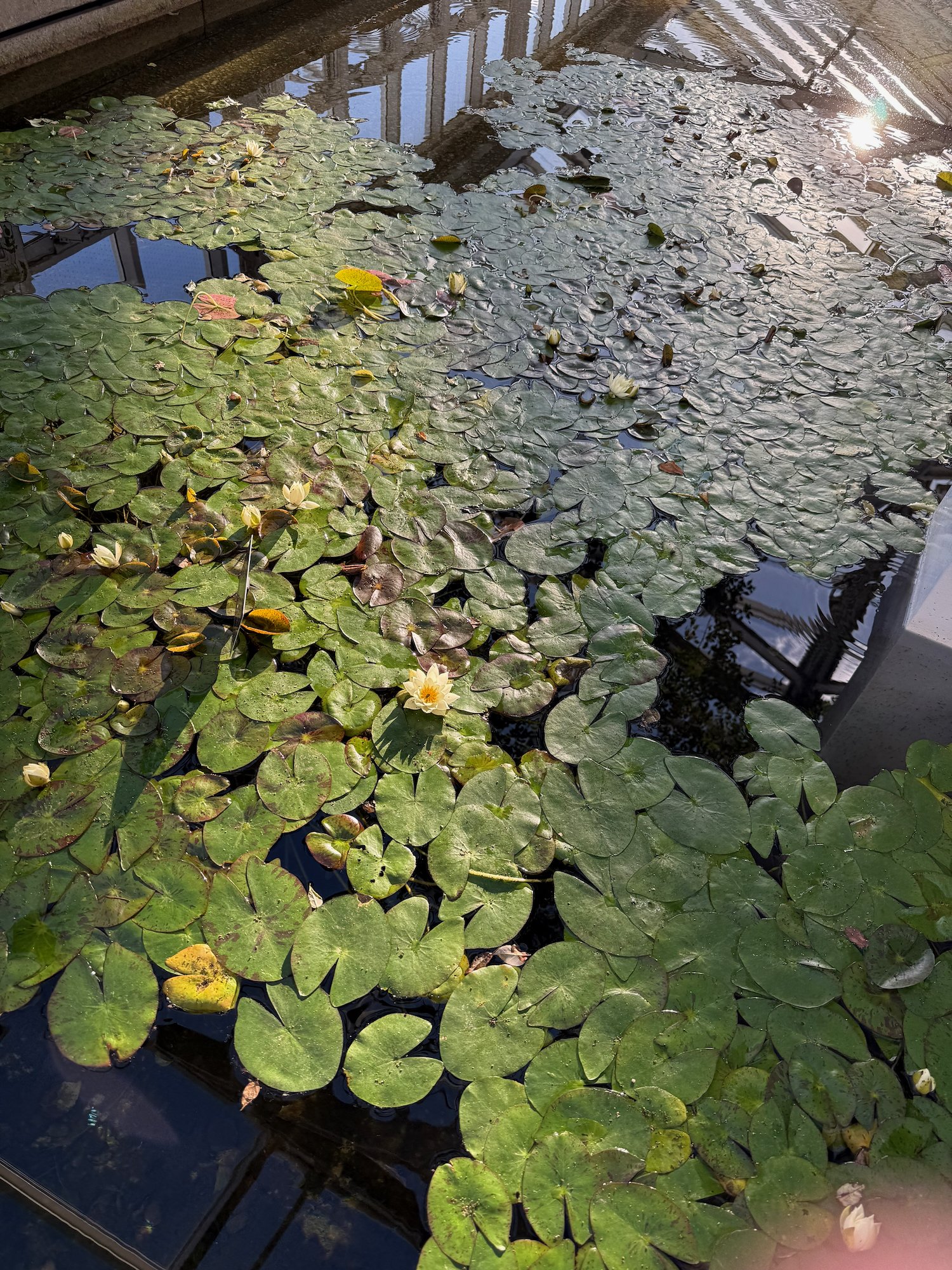
Each pond featured lilypads of different shapes and sizes with blooms in a range of colors. Monet would be inspired!
Idea for Our Gardens: Add a Pond
If you’ve been thinking of adding some water to your garden this year, here’s some inspiration!
This summer I did a whole series about adding ponds to our gardens. It doesn’t have to be a pond as grand as these to make a meaningful difference, either! Check out this guide, and let me know if you have questions!
Using Ordinary Plants in Extraordinary Ways
These last two photographs sum up my thesis: Longwood Gardens excels at using ordinary plants in extraordinary ways.
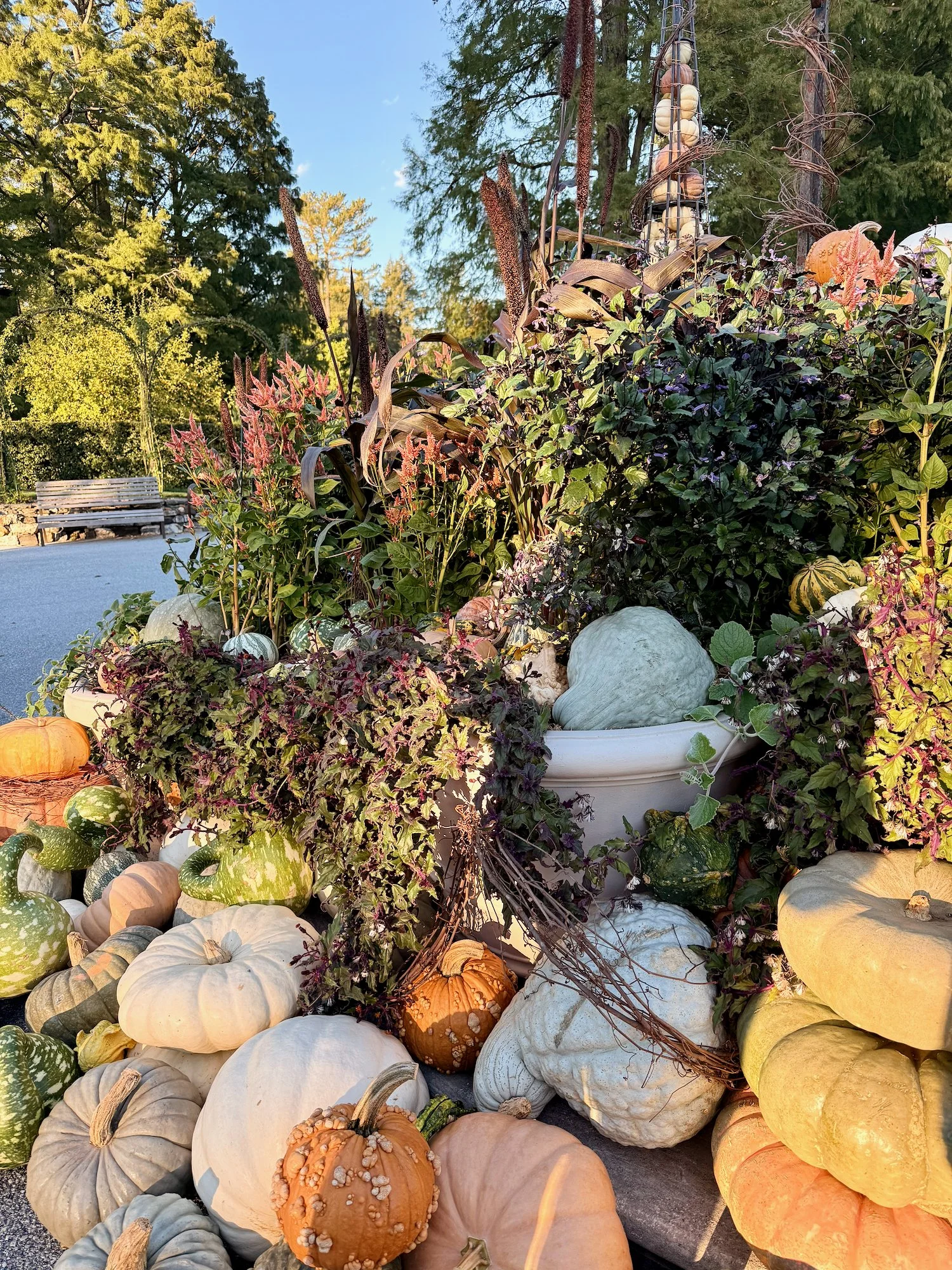
Unlike the Dallas Arboretum which goes crazy with pumpkin displays (oh, we have done so many kid photos there over the years), Longwood’s display is more restrained. I suspect this is because they can get the freeze-thaw cycle in October which turns a pile of beautiful pumpkins to mush overnight.
But they did have one section all decked out in autumnal exuberance, and I am here for it! Ordinary plants in extraordinary ways, you know! Look at those pumpkins and gourds and squashes spilling out of pots.
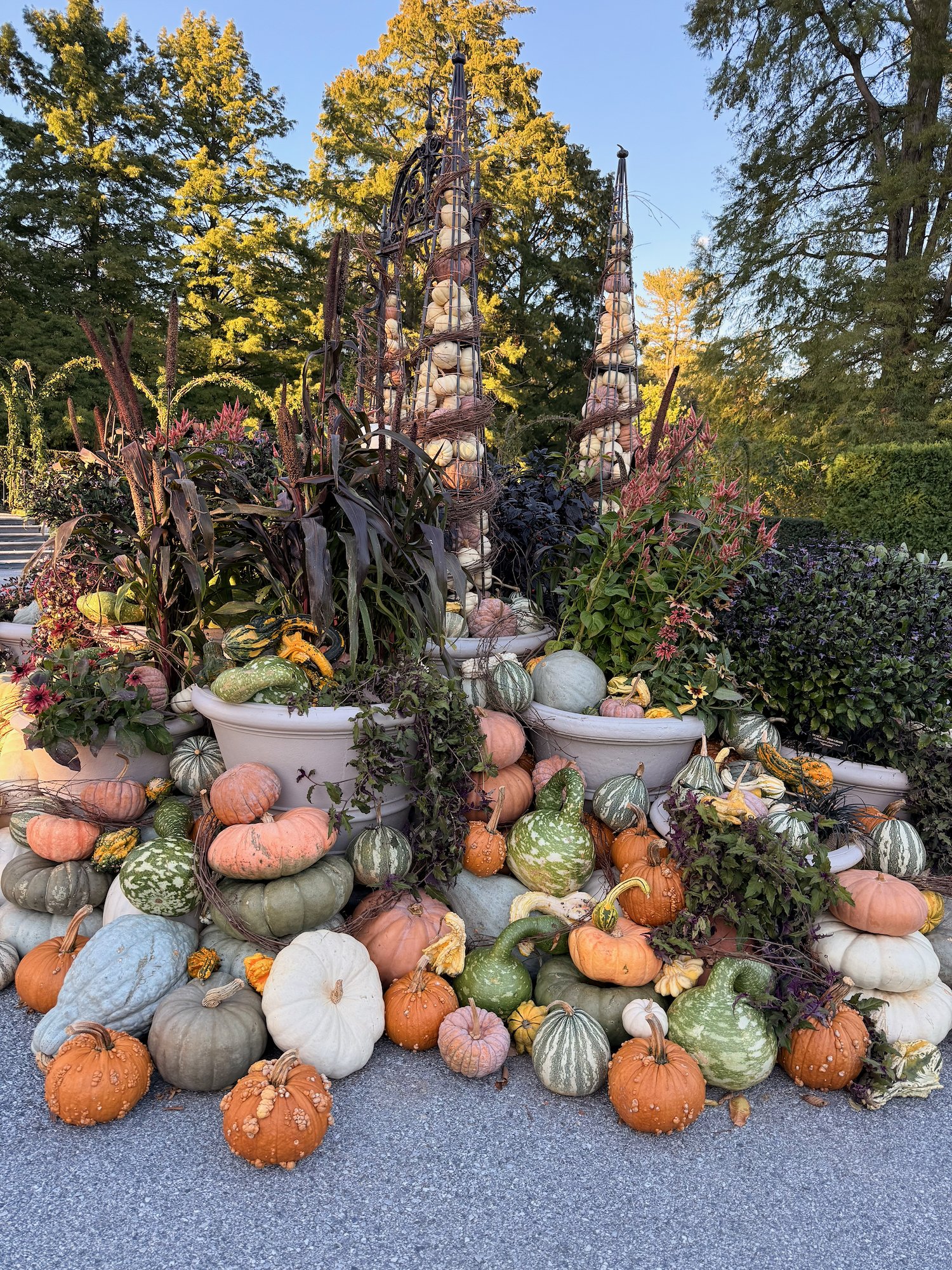
I am always here for a good pumpkin stack!
Those pots are planted out with: Millet and Amaranth, Dahlias, ornamental peppers, and more Salvia. Aside from the Millet and Amaranth which you would need to grow from seed, all of these plants are probably at your local garden center right now!
Four simple, easy-to-find plants that make a beautiful arrangement.
In warmer parts of the world, this would be a perennial planting all year. For me, it would have to be taken apart and put inside for the winter. But the combination is just stunning! And those plants would store well in a greenhouse.
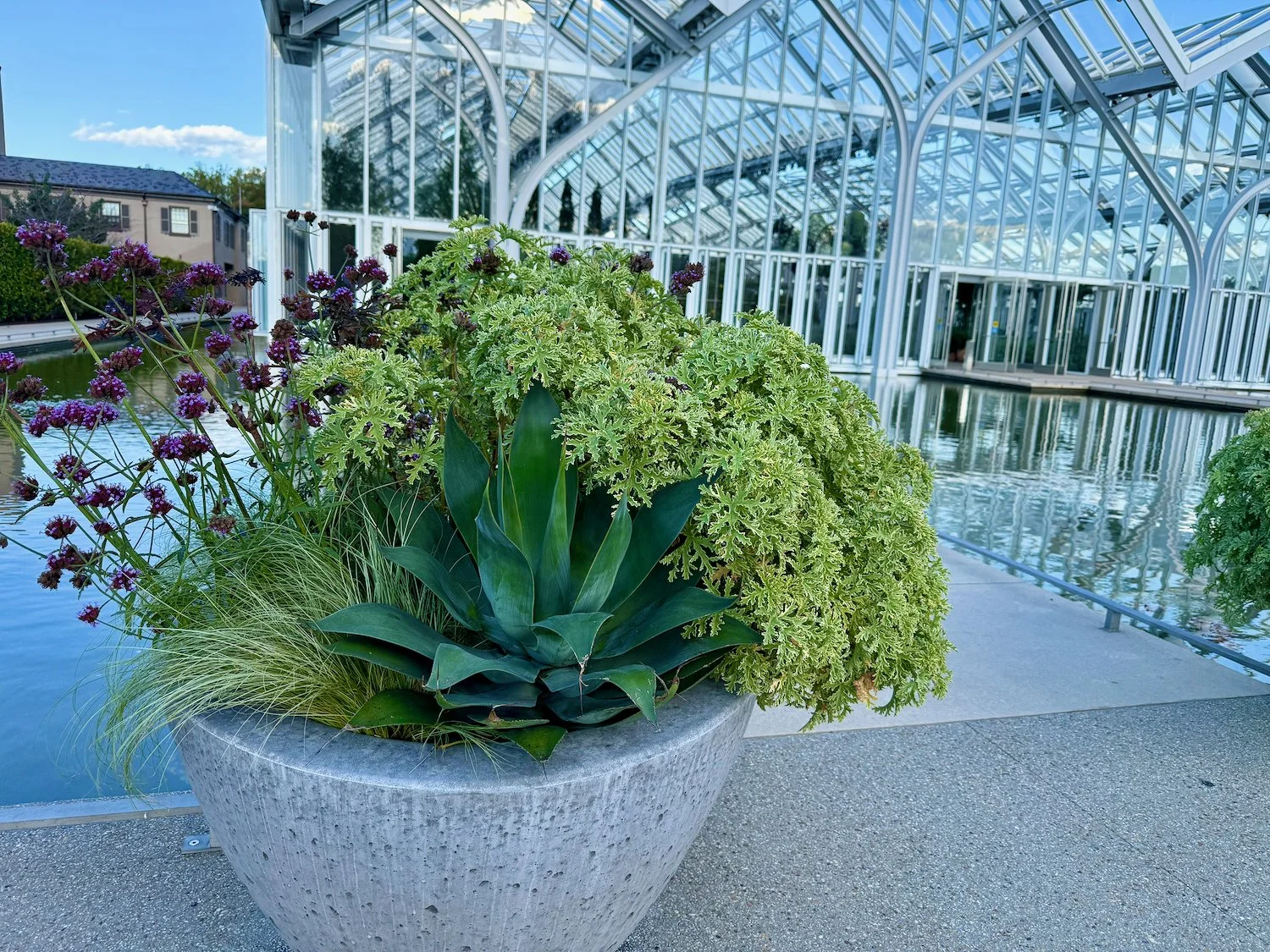
I am going to try this next year. I love this combination!
But even simpler and more elegant is this large planter outside of the conservatories. It consists of four plants: a Pelargonium, Verbena bonariensis, a grass, and an agave.
A Sneak Peek into the Bonsai Potting Shed
Longwood Gardens has a collection of more than 100 Bonsai trees — some of which are more than 100 years old. They require maintenance, and the Potting Shed is an elegant palace to Bonsai. It’s not normally open to the public, but as they moved some plants in and out, we were allowed to slip in for a peek.
at the close…
Sometimes a visit to a big garden can feel overwhelming. So much to see. So many plants — and people. It can be a lot.
But when you are looking for inspiration and ideas for your own garden, the lens through which you’re viewing the garden changes. You become more of a participant in the place. And I find myself saying, “Oh, I could do THAT!” And “That is so clever!”
Frankly, inspiration is the best souvenir!
If you have questions, don't hesitate to ask!
This post originally appeared on my Substack. Subscribe to my Substack, and all of this gardening goodness will appear in your email inbox weekly!
Happy Gardening!
Angela
Subscribe now so you never miss a thing!
A Sneak Peek into the Bonsai Potting Shed
Longwood Gardens has a collection of more than 100 Bonsai trees — some of which are more than 100 years old. They require maintenance, and the Potting Shed is an elegant palace to Bonsai. It’s not normally open to the public, but as they moved some plants in and out, we were allowed to slip in for a peek.