

Planting in Multiples
A Simple Garden Design Trick That Benefits Wildlife
Have you ever visited a garden that was so beautiful, so abundant, so absurdly rich that you simply stopped breathing? Maybe it wasn’t a garden. Maybe it was a natural landscape. Some place wild and verdant. Or lush and abundant. Maybe it was a farm or an orchard just at that peak of production where the air smells of humus and crisp produce. Maybe it was your own garden – a lingering moment of time when everything hit all of the right notes in that symphony of growth and blooming.
I love those moments. I crave those moments. They fill a spot in me that feels empty and full of longing.
When I lived in Sacramento, California, my husband and I used to go for long drives down the Sacramento River delta into the pear orchards. We would just talk – usually with the dog in the backseat – and meander through the small, rural roads soaking in the beauty of the river, the orchards, and the wide, flat valley. Urban life simply didn’t hold enough natural beauty, and there were times when I needed to flee out into the wider landscape.
But what is it about those gardens, those agricultural lands, those wild places that make them so beautiful – a beauty that fills us up?
I think it comes down to one simple idea which is powerful in any garden: repetition.
The Magic of Planting in Multiples
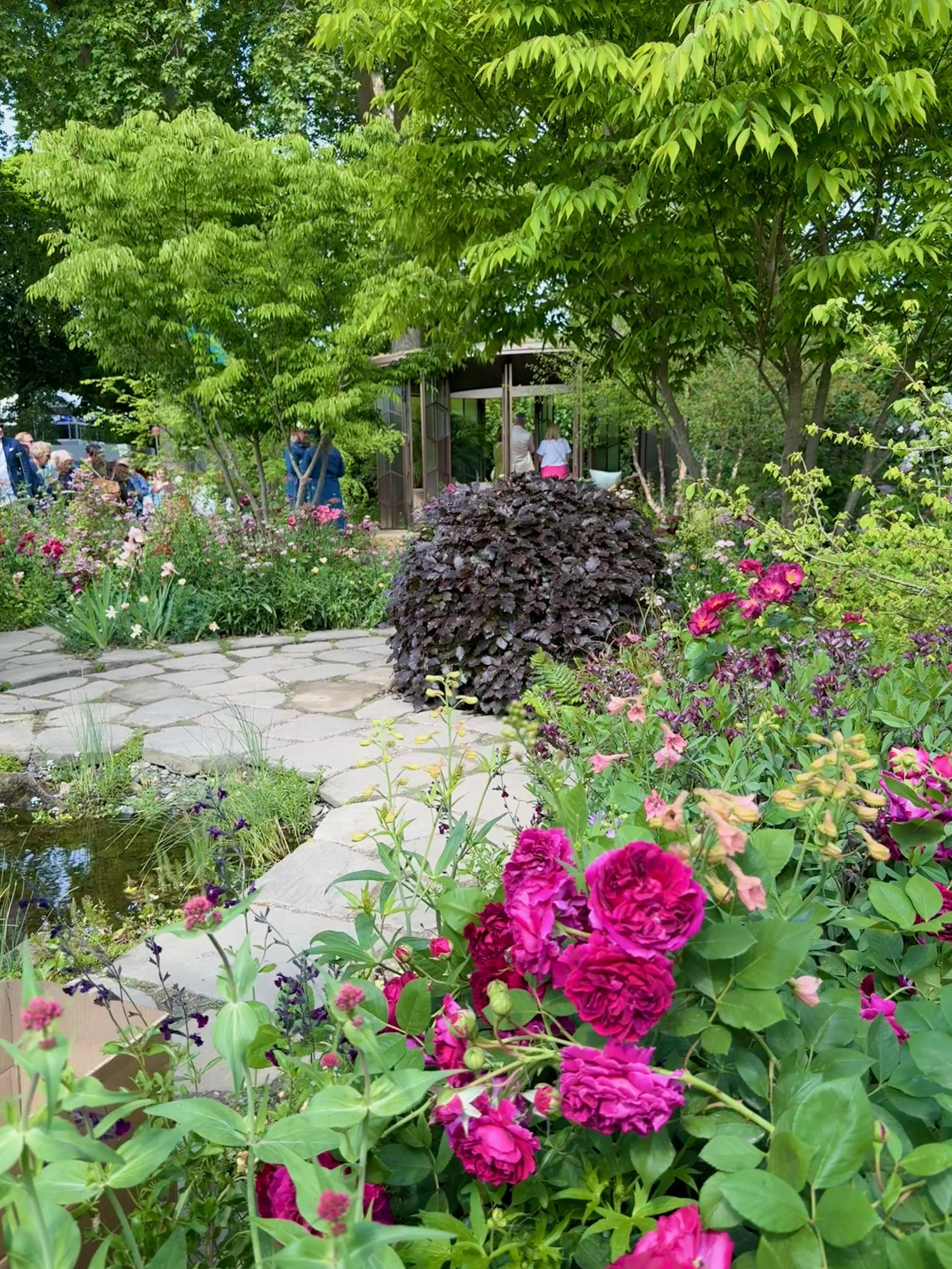
Garden designer, Jo Thompson, writes: “Repetition creates cohesion, which makes the garden feel ‘settled.’” When I interviewed her last winter, one of the great pieces of advice that she offered was this: use 5-10 plant varieties in your garden and then use LOTS of them.
I mean, that is brilliant, honestly. Especially if you have a small garden. Choosing a palette of a few plants that all have the same needs and desires and then repeating them over and over again does several things:
It streamlines care: you only have to know how to care for 5-10 plants.
All of those plants need the same amount of water and sun.
The repetition of those plants is visually pleasing.
But what is magical about repetition?
There are actually TWO pieces of magic happening – and they are the same things that are happening in those beautiful gardens or farms or landscapes that take our breath away.

The Human Appeal
Our eyes are drawn to patterns, sameness, and predictability. Those patterns help our brains make sense of new things – and to find threats and dangers or at least chaos in the order of things. In a garden, repeating a plant in multiple places helps our eyes and brains make sense of a space. We instinctively find the pattern, the order, the repetition – and that has a soothing effect on our brains.
That’s part of why those beautiful gardens or landscapes or agrarian spaces take your breath away. They have an order to them which is both stimulating – “this is beautiful!” – and is calming – “I love this feeling.”
This is why music is written with particular formulas – it is pleasing to the ear. Or why there are repeats in wallpaper or fabric patterns. It’s why we instinctively organize by color or shape even as children. We are wired to make order from chaos any way that we can.
Driving along roads of pear trees – all in straight lines, pruned and green – has that same effect. So does the orderliness of a formal French garden or the tidiness of an English border. Even that natural landscape has that same repetition. Afterall, even in the most abundant landscape, the number of species is limited, and they pop up in repeated groupings across the landscape. There is order in nature, too.
But that natural order isn’t just about aesthetics!
The Wildlife Perspective
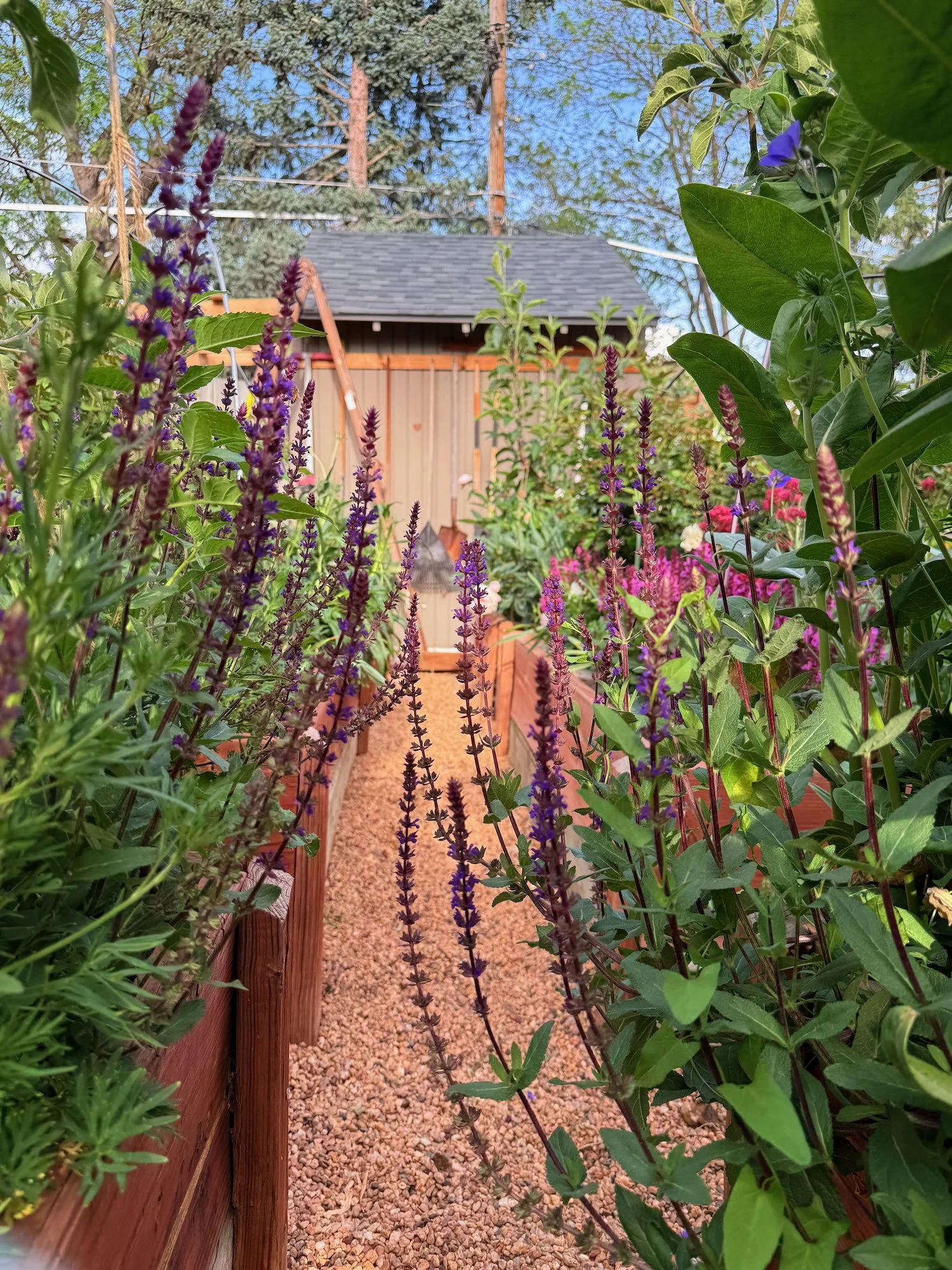
In a natural landscape where thickets or pockets of the same plant groupings repeat across the landscape wildlife thrives. The repetition of those plants provide more food, more shelter, more of a buffet for the wildlife living there. I’m not talking about a monoculture – one plant occupying acres and acres with nothing else growing between. Even those pear orchards aren’t a monoculture. They are interplanted with beneficial cover crops and have been for generations.
So when a butterfly lands on the Achillea blooms in my garden, for example, they can travel from plant to plant to plant sipping nectar, and they can return day after day, because I have multiple plants in multiple places. They know that this place is a good place to feast.
You know how exhausting a day of travel can be, right? Well, imagine you are a bee or a hummingbird or a nuthatch. You are traveling to and fro bringing nectar or insects or pollen to your young. The farther you must travel to get what you need, the more calories you have to consume to keep up. But if there are multiple options for you as you make your way, you are more likely to stop, to rest, and to fulfill your mission without over-taxing yourself.
So the more repetition we employ in our gardens, the better it is for the wildlife we are inviting.
Repetition in My Wild Revival Garden
As a Resistance Gardener I have several goals for my garden amongst them being:
to support wildlife with abundance and variety
to create beauty for my family and my neighborhood
to steward my resources wisely including water, soil, labor, and time
Repetition is the key to achieving those goals! It’s the tool that has allowed me to create beauty and cohesion while supporting wildlife in the process.
That has never been more important than in the Wildlife Garden. If you’ve been around awhile you know that this is what many people would call their front yard. At my house, it is the Wildlife Garden, and it is the main thing that people see when they look at our house. And before planting the Wildlife Garden it was NOT pretty.
But as I planned the Wildlife Garden plantings, one of the keys to the design was repetition. I wanted the garden to be beautiful for my neighbors to enjoy as well as abundant for wildlife.
If I were to do it over again from the start, one of the things I would change, however, is to make the blocks of plantings bigger – more plants of each type in one space. I worked with groupings of 3-5 plants, and in this space I should have planted in groups of 6-9 so that the area had bigger swathes of the same plant. It just would be easier to find the visual patterns that way.
Nonetheless, there is still strong repetition in the planting scheme, and that’s part of why it feels cohesive.
Repetition in a garden can take several forms:
using the same plants
using the same colors
using the same shapes
using the same textures
But to be honest, the easiest way which accomplishes all of those forms is to repeat the same plant – planting in multiples.
Now, is my garden restricted to 5-10 varieties? Nope. It’s not. I don’t have that kind of self-control! I have, at last count, more than 150 varieties in my whole garden and nearly 50 in the Wildlife Garden alone. That’s a lot. But with rare exceptions – fruit trees, mostly – everything is planted in multiples.



How to Get Lots of Plants for Cheap
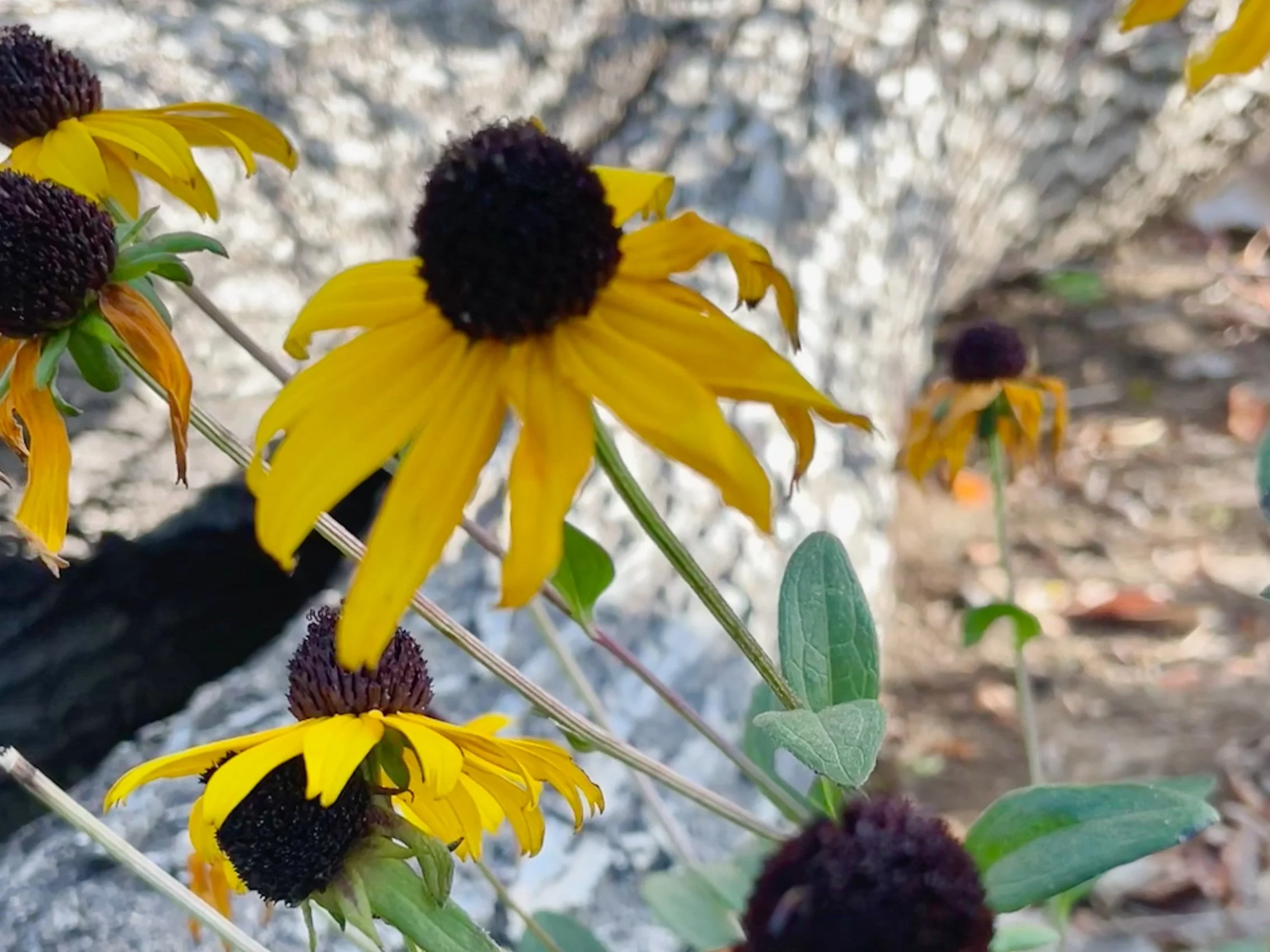
Long ago, recognizing that I have a problem, I made a rule: if I was introducing a new plant to my garden, then I had to buy at least three of that plant. This accomplishes two things: it creates repetition, and it keeps me from buying 3 different plants with three different growing needs.
That rule has served me and my garden well!
How to get multiple plants on the cheap:
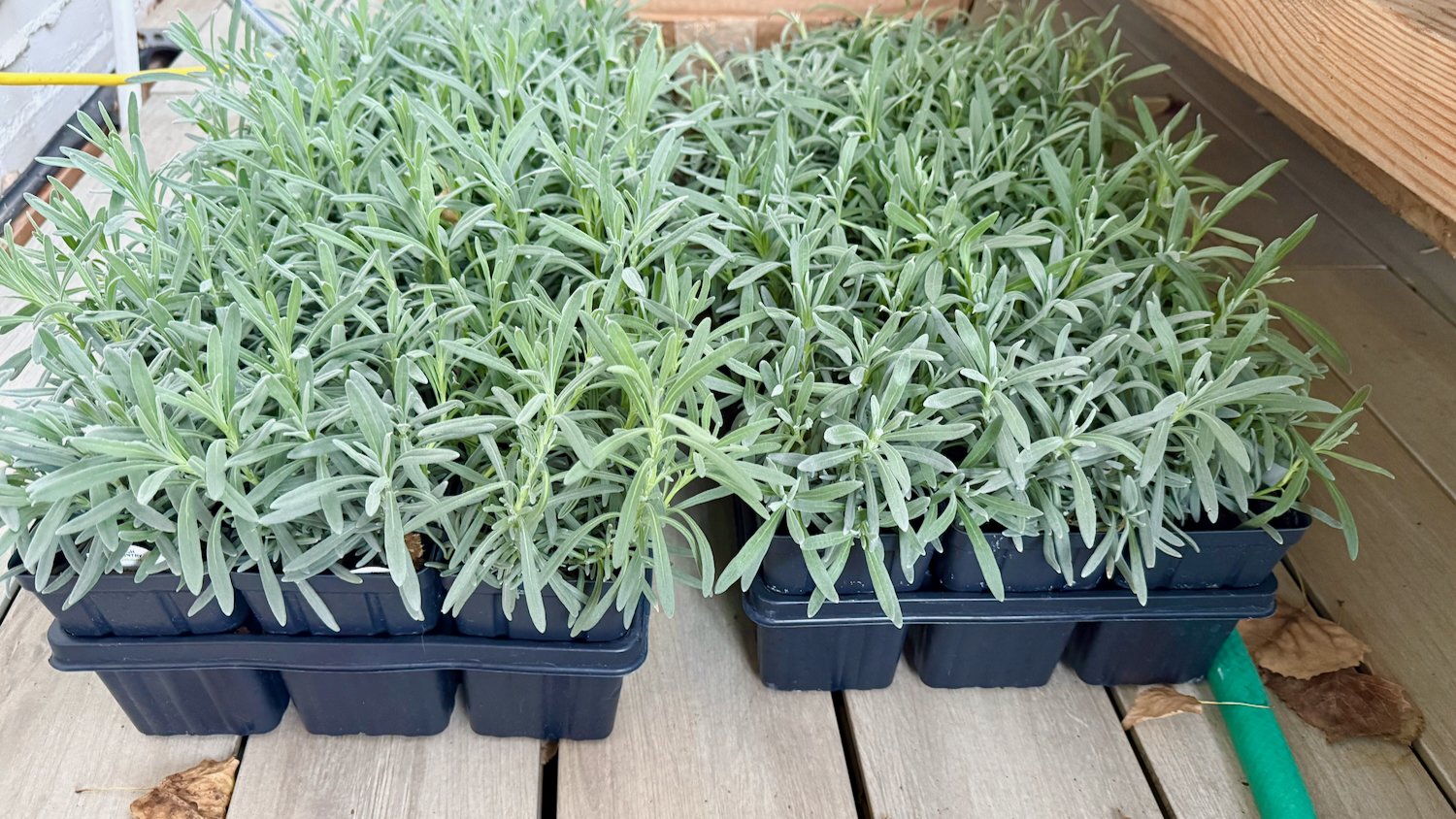
Buying in multiples. One of the easiest ways to do this, I have found, is ordering from sellers like High Country Gardens, who sell plants in multiples – often multiples of nine to fill a tray. HCG even offers a discount when you buy in multiples of nine
Buying larger plants that can be divided before planting. Sometimes plants that are sold at garden centers in larger pots have multiple smaller plants growing together. Depending on the type of roots, many times those plants can be easily divided before you plant them out.
Dividing plants you already have. Perennials can often be divided after several years which is beneficial for many plants anyway. So if you have mature plants hanging out, division may be part of the answer!
Starting plants from seed. This is generally a springtime activity, but starting plants from seed can be an economical way to grow your plant stock.
Taking cuttings from plants you already have. Growing new plants from cuttings is also a great way to expand your plant selections. If you take cuttings now, you’ll have to babysit them over the winter, so plan for that. If you take cuttings in the spring and early summer, they will generally be mature enough to plant out by fall.
My Repetition Challenge: Adding Lots of Lavender
The Wildlife Garden is an ever-evolving project. I don’t think it will ever be “done.” Just in different phases of growth.
This year, I need to do some work on the upper boundary. There is a raised bed at the top of the Wildlife Garden in an L-shape. Originally, I wanted to plant that out with grasses, and there are still some grasses in the raised bed. But they just haven’t taken off like I wanted. Frankly, I think they need more water than I give them.
So I added some Artemesia ‘Powis Castle’ a few years ago. I love the soft, silvery foliage. And this low-growing shrub is tough as old boots – as they say. It will take all kinds of abuse, it’s xeric, and it is evergreen. I love it.
But I am horribly, horribly allergic to it. It makes me so sick – especially after it has bloomed.
Without pruning it gets bigger than I want it to be in that raised bed. But pruning it makes me sick.
So I am removing it all from those raised beds. I’ll leave it in places where I don’t need to do much maintenance, but in those high-maintenance areas, it’s getting the boot.
And I’m replacing it with another Mediterranean plant that is drought-tolerant and loves the sun and the heat: Lavender. Loads and loads of Lavender! Think Provence fields of Lavender – but just one lovely big long row. Neat. Tidy. And soooo fragrant!
I’m very excited about this change, actually. Artemesia, while it is beautiful, doesn’t offer much in the way of support for wildlife. I don’t ever see insects or birds on the flowers or on the plant.
But my Lavender is always covered in bees – honeybees and native bees alike.
And while the Lavender will require some clipping every year, I’m not allergic to Lavender as I am Artemesia. So that won’t be an issue, either.
High Country Gardens sent me two trays of Lavender plants for this project. That’s enough to create a beautiful, Provence-inspired boundary on the Wildlife Garden AND – this is the repetition in action here – to plant some out with the Agastache in the Gravel Garden. This will further tie those two garden areas together giving it all more cohesion and continuity.
at the close…
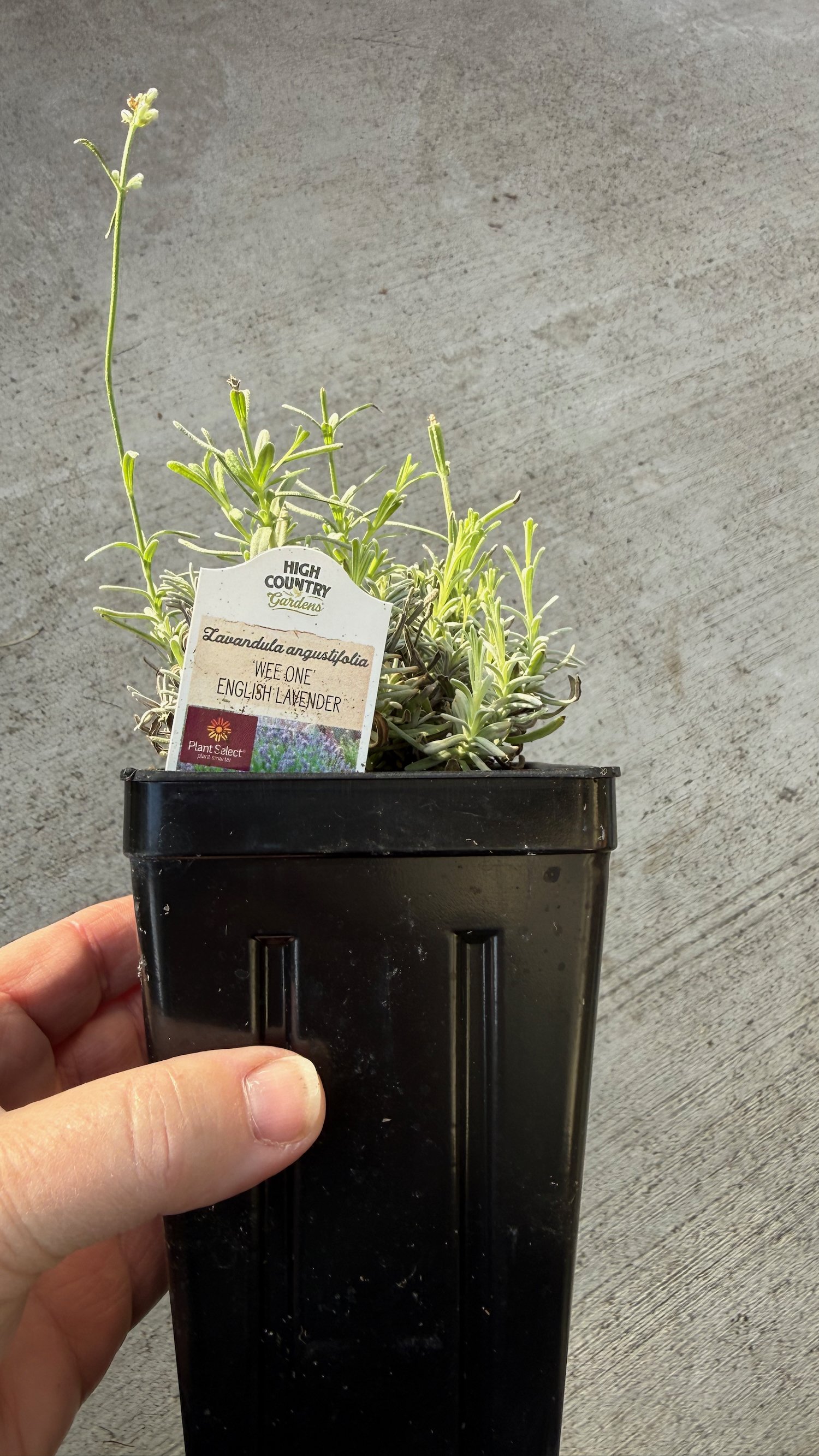
Lavender promises to be a fabulous addition to the Wildlife Garden, but it will take a few years to realize its potential. Until then, I’ll keep you posted!
If you have questions, don't hesitate to ask!
This post originally appeared on my Substack. Subscribe to my Substack, and all of this gardening goodness will appear in your email inbox weekly!
Happy Gardening!
Angela
Subscribe now so you never miss a thing!