

Rose Pruning 101
Everything you need to know to get started!
I will be honest: rose pruning used to really scare me. I am a hard-core perfectionist, and I was terrified that I would do something that would kill my roses. So I tended not to do anything. And then I wondered why my roses didn’t bloom much and looked kind of – well, sad.
But here’s the thing: roses have an unfair reputation for being fussy and difficult. Actually, most roses are remarkably resilient.
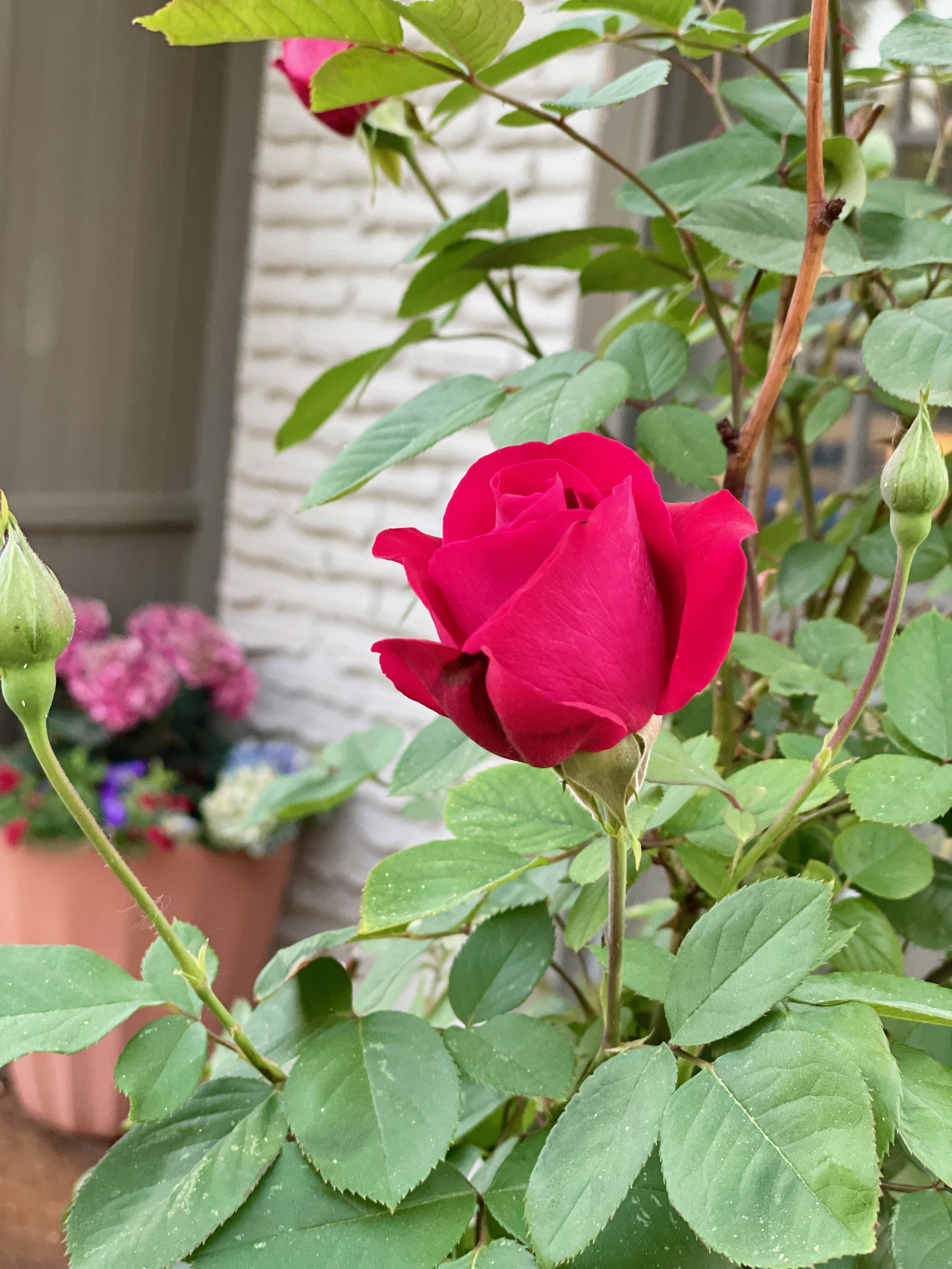

Resilliant Roses in my Gardens
Let me tell you about the Little Rose that Could as an example. When we bought our first house in Sacramento, California, it had a postage stamp of a backyard completely shaded by an oak tree that was, by an arborist’s estimation, 150-200 years old. It was glorious!
However, that oak tree shaded our entire little yard deeply, and when we bought that house there was NOTHING else growing in the little yard except some straggly grass.
As we were mowing said straggly grass one day, I noticed the teeniest, tiniest little rose bush sticking out of the grass – randomly in the middle of the lawn.
So here’s my suspicion: I think the previous homeowners had one of those little grocery store roses, and they tossed it out with the yard waste, but it fell in the grass, rooted, and grew.
It was only about six inches tall when I dug it up. And I honestly considered throwing it away. It had been mowed and trampled. But we didn’t have a lot of money for landscaping, and this was a free plant.
So I moved it out of the lawn and planted it against the new fence we had just built.
I knew nothing about that rose’s pedigree. And I was pretty sure it would die. But I did know that roses needed more sun, so I moved it out from under the enormous oak tree and into a sunny position.
Within a year, that little rose with its miniature blooms was climbing the fence and bloomed for months and months at a time. All after being discarded, mowed over repeatedly, and transplanted — within a year.
I wish I had pictures of it, but I just don’t. Sigh.
My Little Rose that Could showed me the resilience roses can have. It was also the first rose that I ever pruned, and those early pruning efforts were amateur at best. But every year, that little rose bloomed more and more.
I’ve grown roses in almost every place we have lived since – and here in my Colorado garden I finally have a garden full of roses. In fact, this house came with its own storied roses, too.
Just after we bought this house, my mother came to help me unpack. We were standing in the backyard, surveying the sea of weeds and thistles soaring seven feet in the air. My mom turned to me and said, “Why did you buy this house again?” And honestly, I felt the same thing in that moment.
So I began with one small thing: weeding what I hoped was a rose bed. It was so full of weeds I couldn’t be sure. But our neighbor said that there were roses back there – old ones from the original owners in the 1950s.
It was late June, and nothing was blooming. It should have been. It was June! But amongst the thistles and bindweed and other noxious weeds, I could make out some sad and depressing rose bushes – and just a few spent blooms.
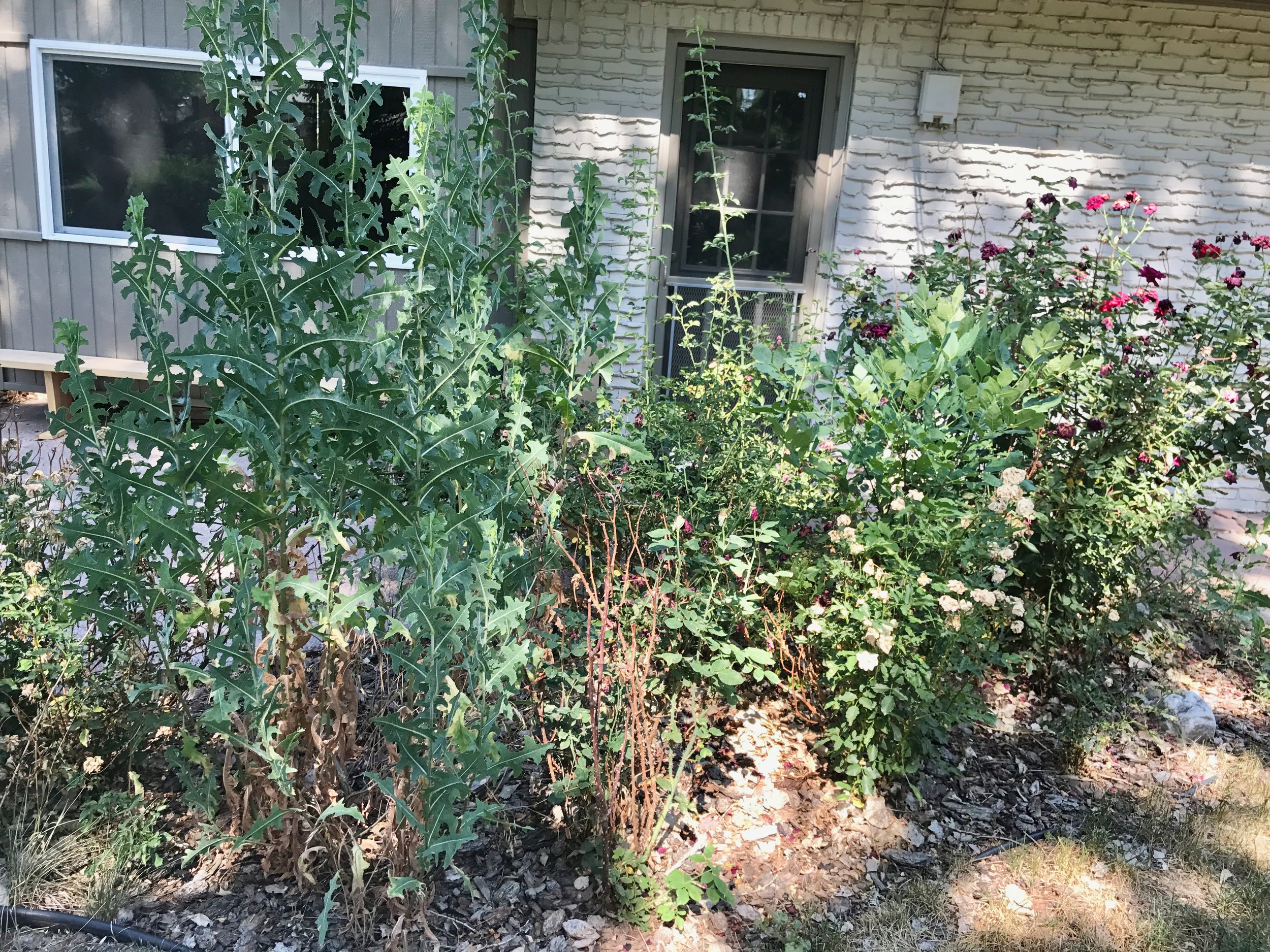
The Rose Bed when we bought this house — overgrown and sad.
So I pulled out my gardening gloves and got to work feeling a bit like Mary Lennox in The Secret Garden. First, I was just plain mad. I was mad at the previous owners for neglecting this house for so long. I was mad at the weeds which scratched my arms and had terrible thorns. I was mad about all of the work we had ahead of us.
Why couldn’t we just buy a house that was DONE for once?
But after several days of weeding – and trash cans filled with waste – I finally uncovered those roses.
The rose bushes looked unhealthy and sad and so very thirsty. But there were definitely roses there – four living plants, and one that was quite dead.
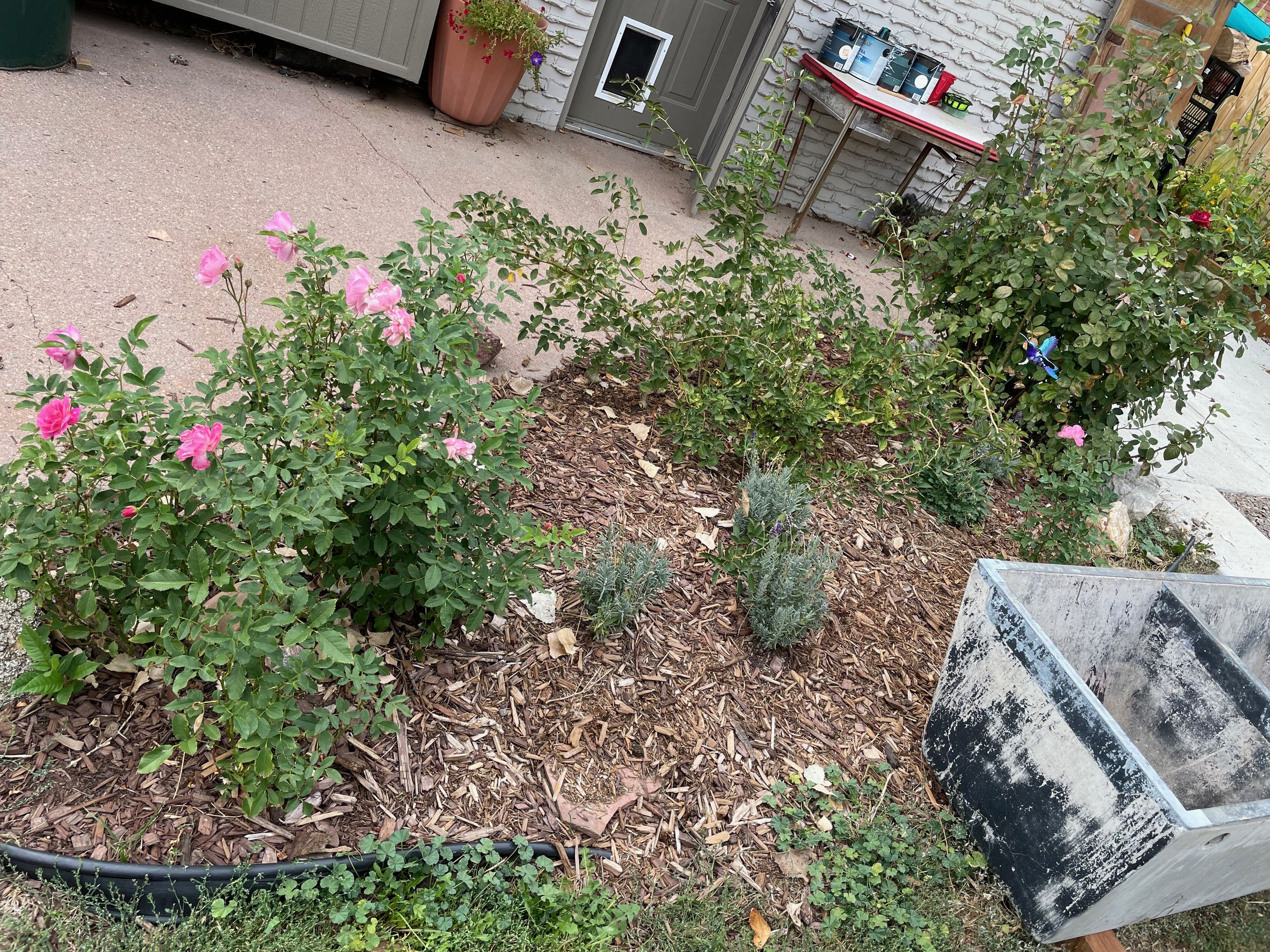
The Rose Bed in the second summer after lots of weeding, adding some lavender plants, and a good layer of mulch. Starting to look better!
They were so overgrown and tangled and untidy that it was hard to even know what type of rose I was dealing with, and that’s the first rose pruning tip I have for you: take time to figure out what TYPE of rose you have. Because when and how you should prune your rose depends in large part on what kind you have.
Types of Roses and How to Figure Out What you Have
When I talk about what kind of rose you are growing, I don’t mean its variety name. Whether it is Crown Princess Margareta or Darlow’s Enigma or Lady of Shalott – that doesn’t matter as much as the rose’s habit in growing.
There are really three basic growing habits for roses: Shrubs, Climbers, and Ramblers. And each type is pruned differently – and at different points in the growing season, too.
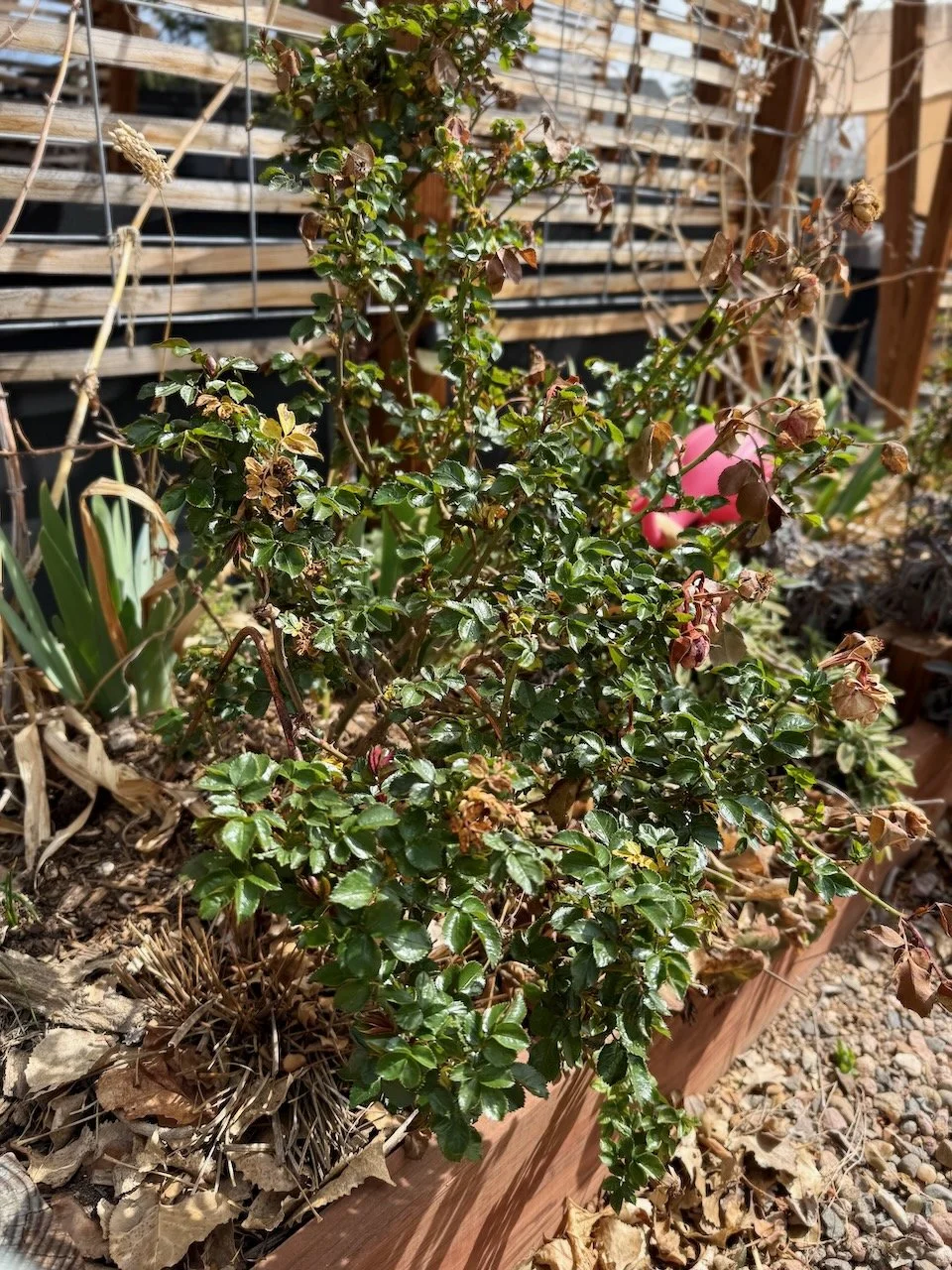
Shrub Roses
grow in a shrubby shape and don’t generally need support (but can be trained on a support as desired);
some are quite short, and others may be up to 6 feet tall,
but they support their own growth and have a shrub shape
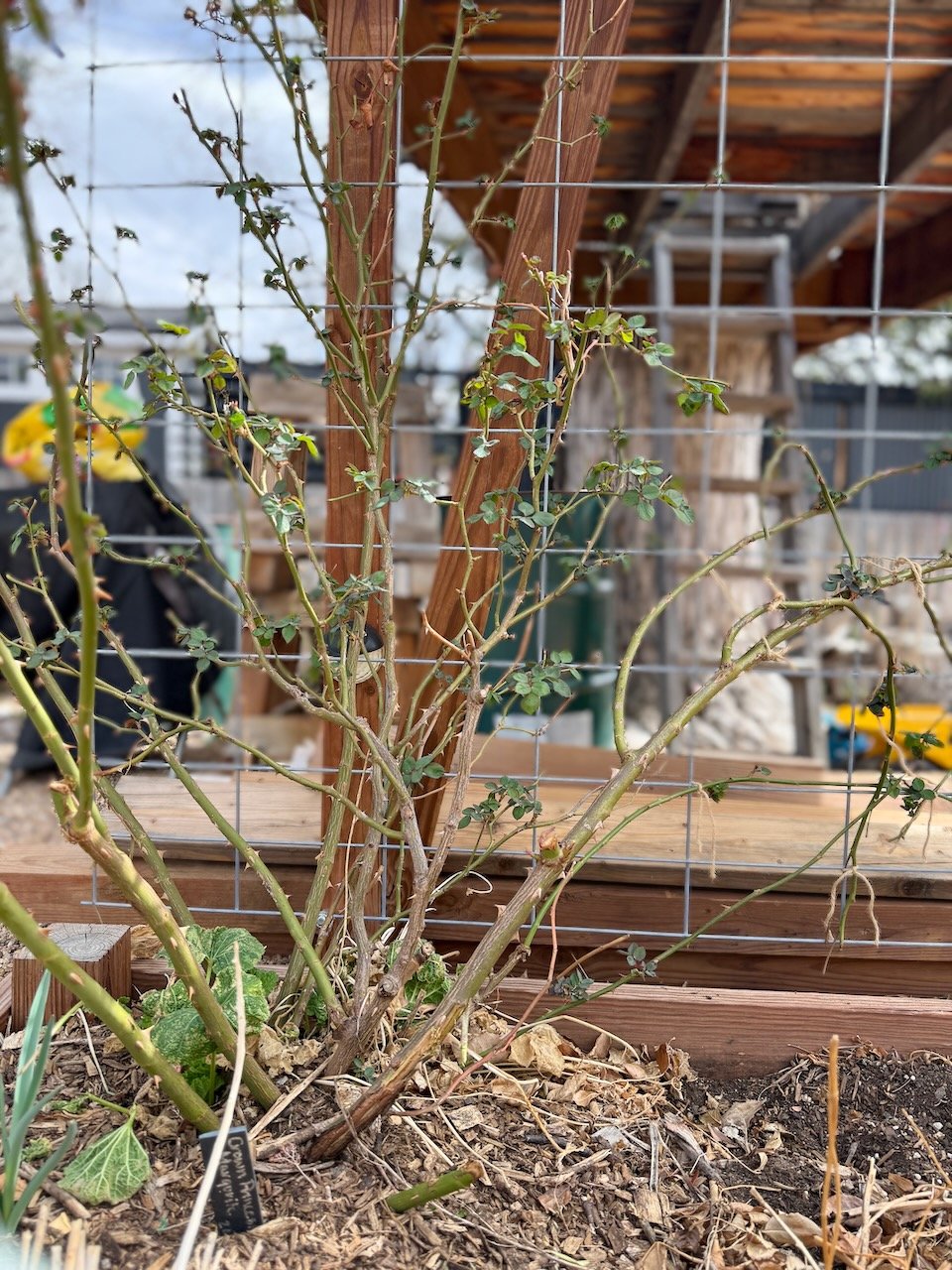
Climbing Roses
have stiffer canes
generally bloom in multiple flushes or all season long;
can be trained against a wall, a fence, an arch, or another support
Unlike some vines, Roses don’t actually climb regardless of which type they are. They don’t wind or attach themselves. But in an effort to reach sunlight, a rambler, for example, can make itself very happy growing through a tree’s branches or over the roof of a shed – looking as if it is holding on for dear life.
If you don’t know what type of rose you have, don’t prune it. Take a year to observe it. And take a photo of your roses on the first day of each month. When you go back through to look at those photographs at the end of the growing season, answer these questions:
When did the rose bloom?
Was it one big flush of flowers?
Or did it bloom multiple times?
What shape did the plant take?
How tall did it get?
Were the canes tall and bending or arching over?
Or did they grow very tall but straight up?
Did it look like a shrub or did the plant bend and look like it needed support?
How thick are the canes?
Smaller and bendy? Generally about the diameter of a pencil?
Thick and stiff? Generally about the diameter of a nickle?
From there, you should be able to figure out at a minimum if it is a shrub rose or a climber/rambler. The difference between climbers and ramblers isn’t as important when it comes to pruning. They are pruned basically the same way.
With my mystery roses, I watched and weeded and watered for a full year – waiting for the roses to reveal themselves. And they did.
I found I had one large red shrub rose, two smaller pink shrub roses – probably the same variety — and a magenta rambling rose.
But it took more than a year of observation to know all of that for sure.
And I will probably never know what varieties they are. But that doesn’t matter. With proper pruning and feeding, they are gorgeous now.
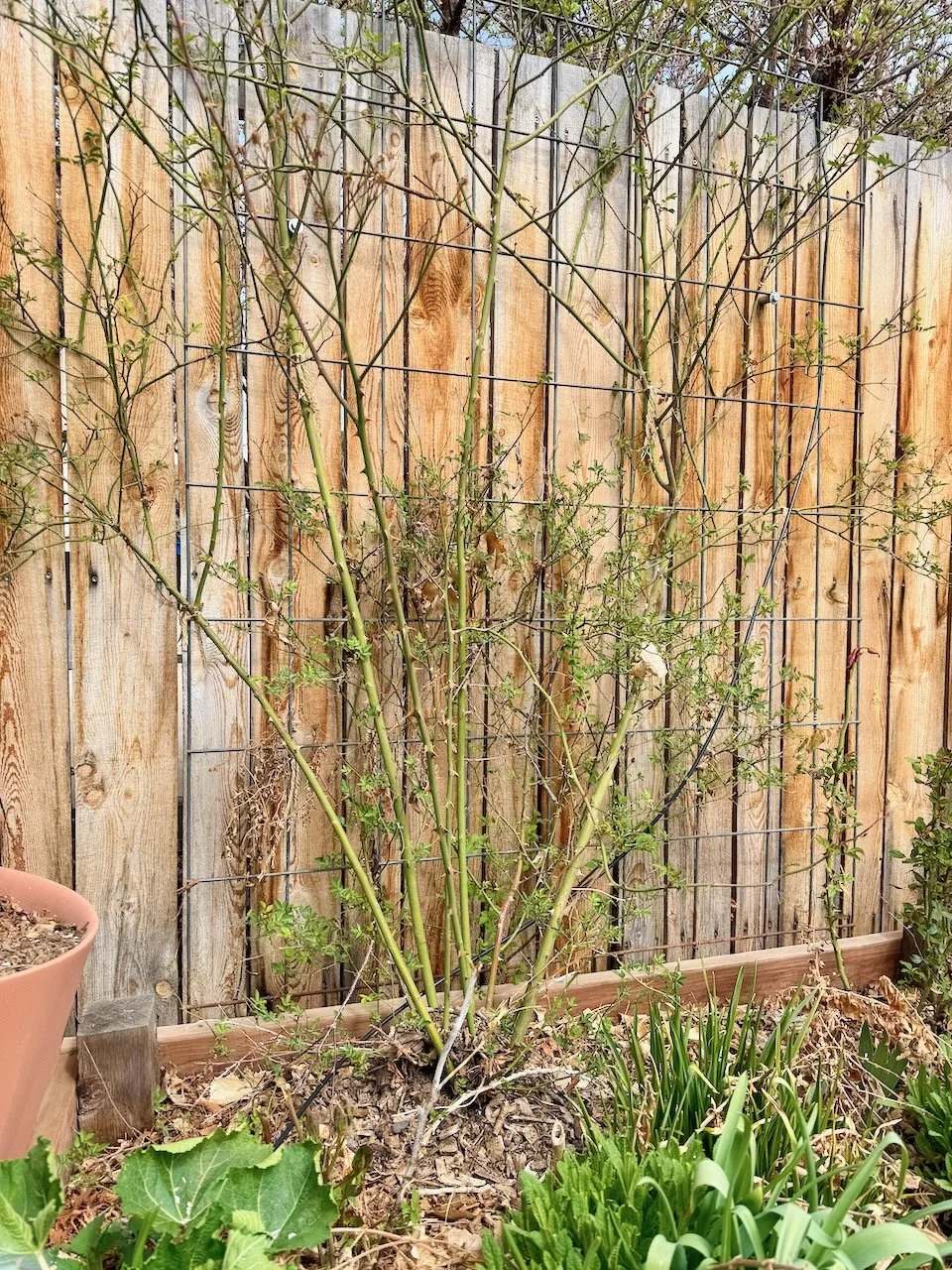
Rambling Roses
have smaller, more flexible canes;
generally bloom once per year – all in one glorious flush;
also can be trained against a wall, a fence, an arch, or another support.
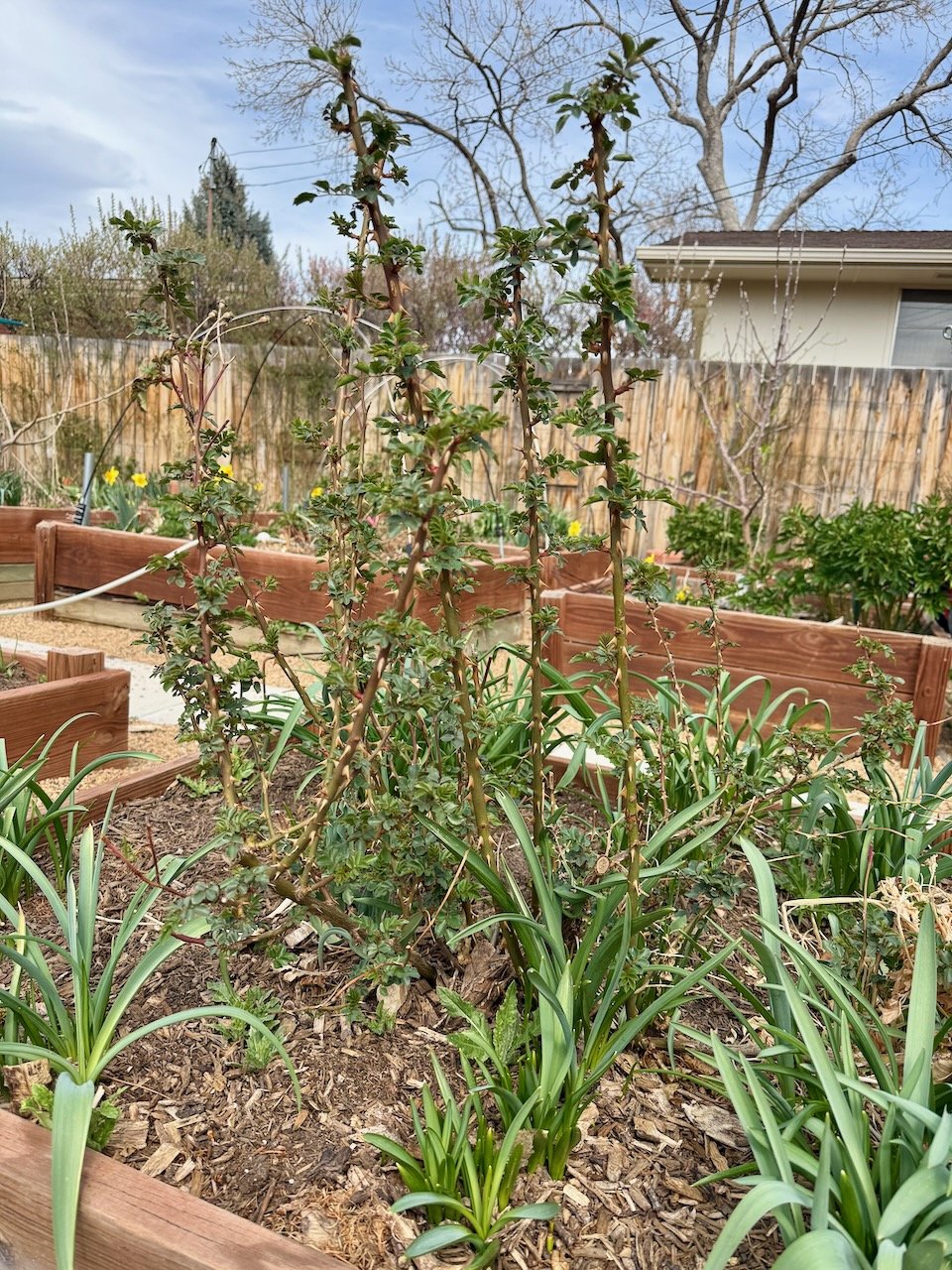
DIY Trellis for Climbing or Rambling Roses
Inexpensive and easy, this is a great way to get more blooms from your roses!
Why do We Prune Roses?
Understanding the why really helps to understand HOW to prune, honestly. Pruning roses has several goals:
Removing dead, diseased, or dying parts of the plant
We want healthy plants, and sometimes parts of a rose plant will develop a disease or will die off during the winter. So the first goal is to remove anything that might spread disease or is just taking up space.
Stimulating growth
When a rose is pruned, the removal of that plant tissue tells the plant, “You need to grow more!” I mean, it is a little more complicated than that, but that’s the general message.
This is why we prune rambling roses in the summer – the new growth will bloom the following year, so for massive flowers, you need to tell the plant to grow.
This is also why fall pruning should be limited — you don’t want a plant to put a lot of energy into growth just as it enters winter.
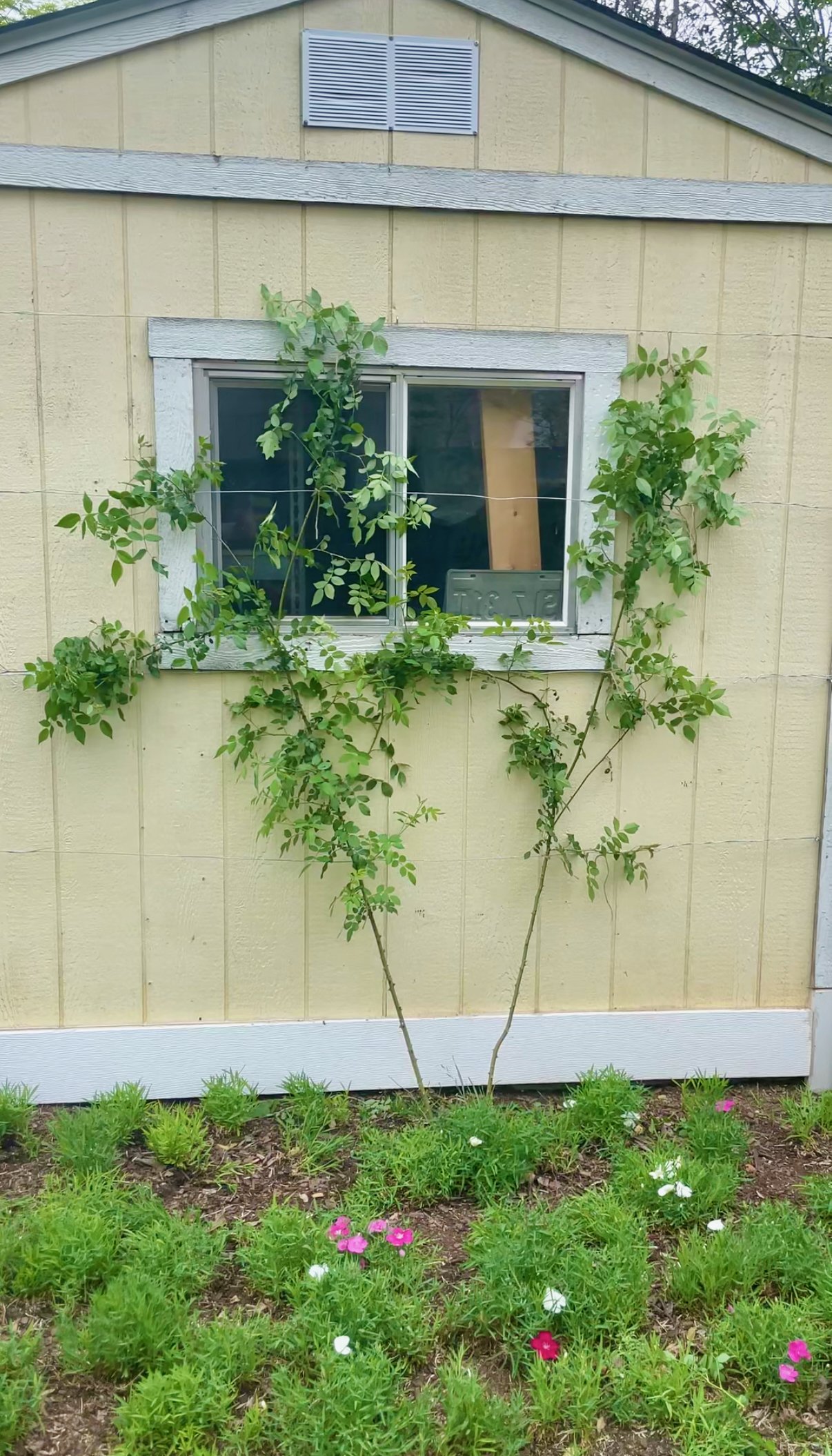
Controlling Growth and Shape.
Just like with any other woody perennial, we want to make sure that the rose’s growth is the right size and shape for your garden. And doing so in the right way means you’ll end up with more flowers and a healthier plant.
Creating space for light and air circulation.
This might be the most important reason, actually. Your rose bush needs light to photosynthesize. It also needs air to circulate to prevent disease and to respirate.
Shrub roses tend to get really congested – each stem and offshoot racing to capture as much light as possible with all of its growth. But that can mean blocking other parts of the plant which then may fail to thrive – an invitation to disease.
So, when we prune shrub roses, we reduce the inner part of the plant allowing more light to reach more canes and allowing better circulation of air throughout the entire plant.
The same holds true for Ramblers and Climbers – our pruning efforts are to allow more light and more air to reach more parts of the plant which means more healthy growth – and more flowers!
When should you prune your roses?
This might be the biggest rose pruning controversy, honestly. The recommended time to prune varies widely depending on where you live. But generally:
Winter & Spring Pruning
In milder climates (zones 7 and above), primary pruning can take place for most roses should be completed by the end of February and done during a warmer spell – for your comfort and for the rose’s health. Winter and early spring can be a fabulous time to prune, because it’s easier to see the shape of your rose bush without leaves on it.
Shrub Roses:
Remove all dead, dying, or diseased canes.
Cut ⅓ of the old growth to the ground in favor of younger, more vigorous canes.
Remove canes growing in the center of the shrub. Your aim is an open vase form where air and light can reach the center of the plant.
Prune each cane’s height by ⅓ to ½ which will promote more growth.
Rambling Roses:
Remove all dead, dying, or diseased canes.
Cut some of the older growth to the ground in favor of younger, more flexible canes. Tie in new canes.
Prune so that light and air can reach each cane.
This should be a light pruning as you did most of your work in the late summer!
Climbing Roses:
Remove all dead, dying, or diseased canes.
Cut some of the older growth to the ground in favor of younger, more flexible canes. Tie in new canes. The RHS suggests maintaining a maximum of six canes per plant and removing canes after 3-5 years.
Cut back side shoots on the remaining canes.
Prune growing tips (the very ends of the canes) by ⅓ to ½ which will promote more growth
In the Mountain West including Colorado, it’s not recommended to prune roses until two weeks before your last frost date. This protects the health of the roses during our unpredictable spring cold snaps.
However, if you want to prune before your rose begins to leaf out, watch for leaf bud growth. For me, I usually prune at the end of March or early April.
Summer Pruning
Shrub Roses: deadhead spent blooms to encourage more blooming unless you know your plant will only bloom in one big flush. Then leave spent blooms to encourage development of rose hips.
Rambling Roses: once your rambler has stopped blooming, it’s time to do a major prune for ramblers. Next year’s flowers will form on this year’s growth, so if you prune in the spring, you’ll cut off the flowers for the next year.
Climbing Roses: deadhead climbers to encourage reblooming. Climbers may need a mid to late summer prune if new canes have emerged which are shading the climbing rose against it’s support.
Fall Pruning
Shrub Roses: before the weather turns consistently cold, take off 6” to reduce wind damage during the winter; prune to a consistent height across the plant.
Rambling Roses: tie in new growth to prevent root rock in winter winds.
Climbing Roses: tie in new growth to prevent root rock in winter winds. Remove any crossing or out-of-place canes.
What Equipment Do You Need?
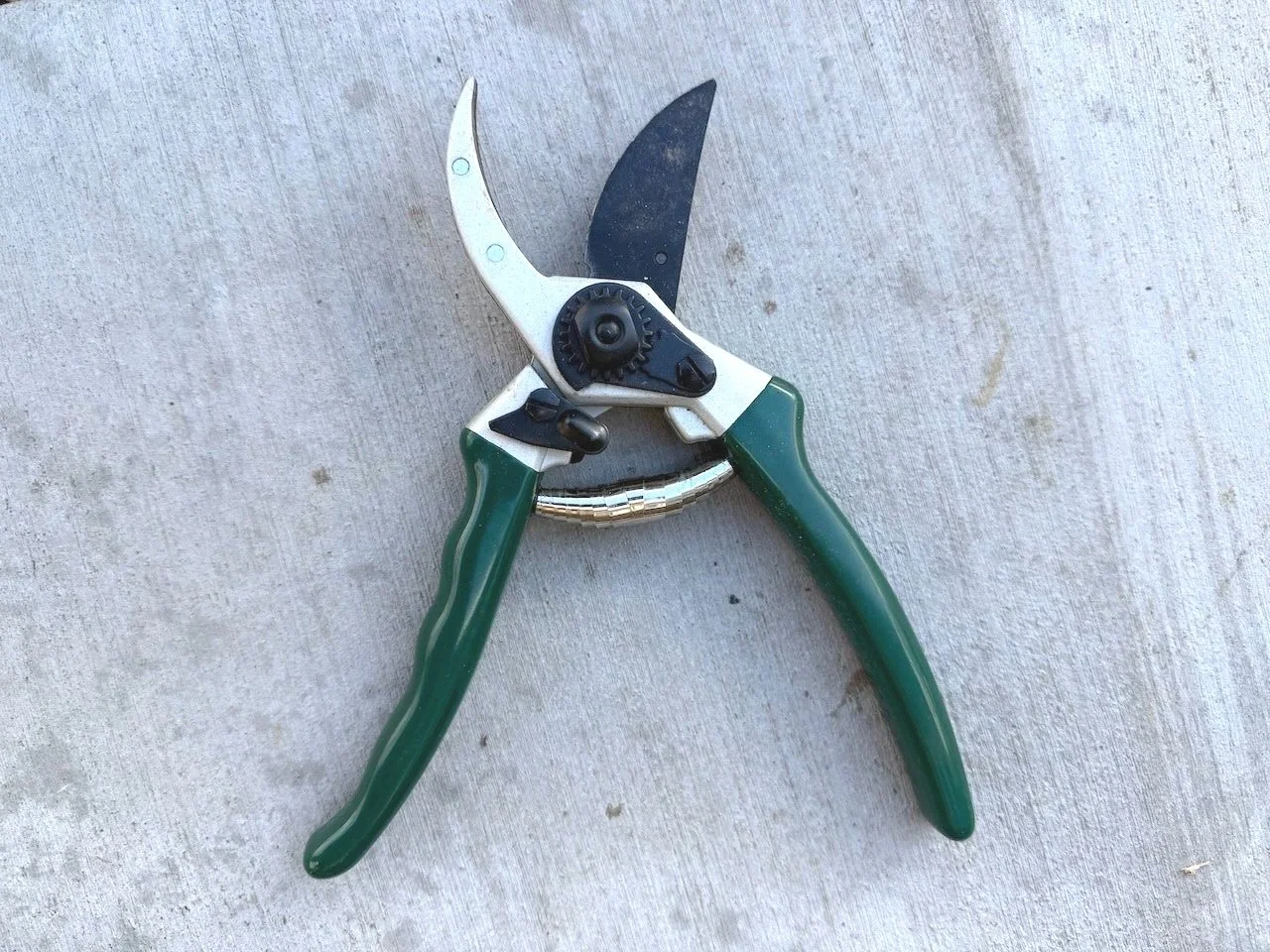
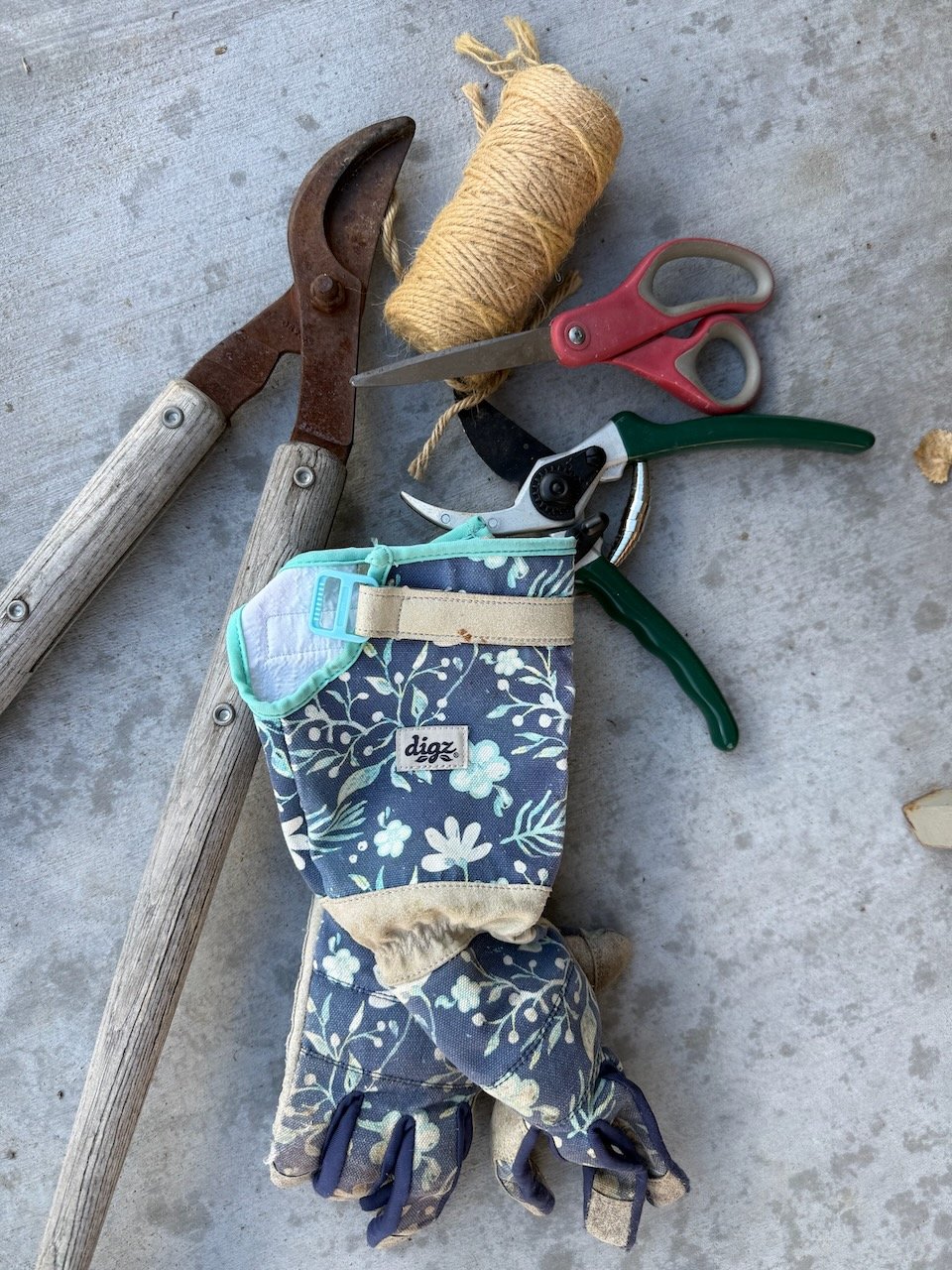
Bypass pruners
Long-handled pruners for getting in amongst the thorns
Rose Gloves
Twine
bag for the waste
spray bottle of diluted bleach solution or other disinfectant
Need to shop? Here’s a list with everything you need.
General Rose Pruning Tips
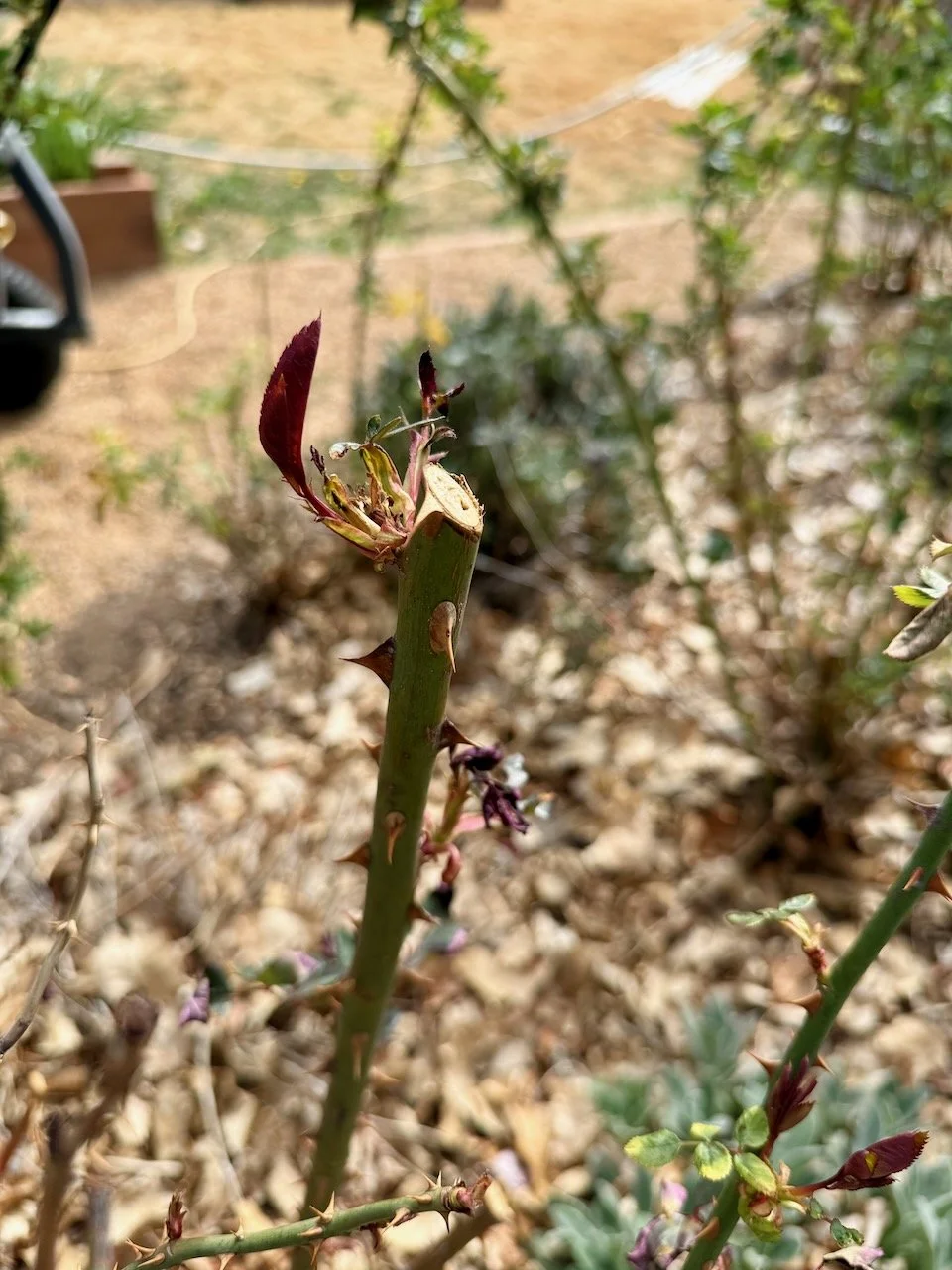
Make your cuts at a 45° angle so that water will run off the cut cane and not pool.
Cut just above a node for best regrowth.
Cut back to healthy tissue – not just a little off, but cut back to where the cane looks green and healthy.
Disinfect your pruners between plants to prevent the spread of disease.
Remove suckers — growth from below the graft line at the base of the plant. These are from the root stock which, unless you grow own-root roses, are a different variety than the rest of the plant.
Be brave!

Important: Don’t Compost Rose Cuttings
Don’t compost your rose waste in your home compost. Thorns take a long time to decompose, and if you keep diseased material, you could reinfect or spread disease from one part of your garden to the next.
Putting rose cuttings into a commercial compost is just fine, though. Their composting process gets hot enough to kill diseases and to break down tough rose canes.
Restorative or Regenerative Pruning
Sometimes a rose just needs to start over. This can be for a number of reasons:
an older rose that has become severely overgrown
a rose that has been infected with certain diseases
a rose that has been poorly pruned or trained in the past
a gardener who just changes their mind about how that rose should sit in the landscape
a rose that needs to be transplanted
So this is where the rose’s resilience really shines. With a restorative or regenerative pruning, you cut EVERY cane on the rose down to 8” or so — with two nodes on the canes.
This does two things: it fully regenerates the entire plant and it gives you a chance as a gardener to shape the plant from the beginning — but with a healthy, established root system.
After a few years of tending my established rose bed here, we had a particularly brutal winter with prolonged sub-zero temperatures and wicked winds.
In early spring, I decided to do a regenerative pruning on all four plants — cutting them all down to about 8 inches tall. I was diligent about feeding those roses all summer long giving them a liquid seaweed feed every week and providing a little extra water every week, too.
They flourished! It was exactly what they needed, and they have been healthier and had more blooms in the years since as a result.
at the close…
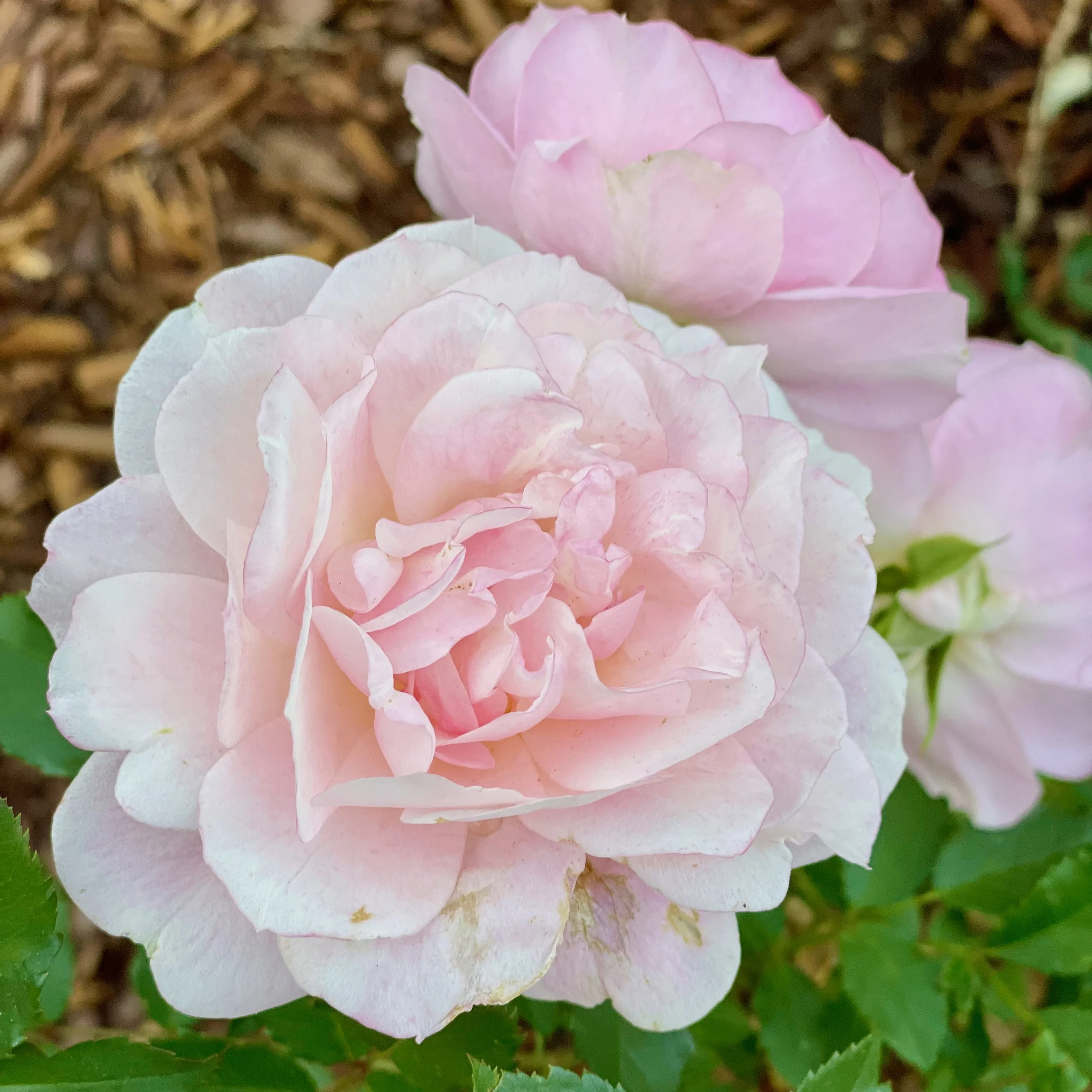
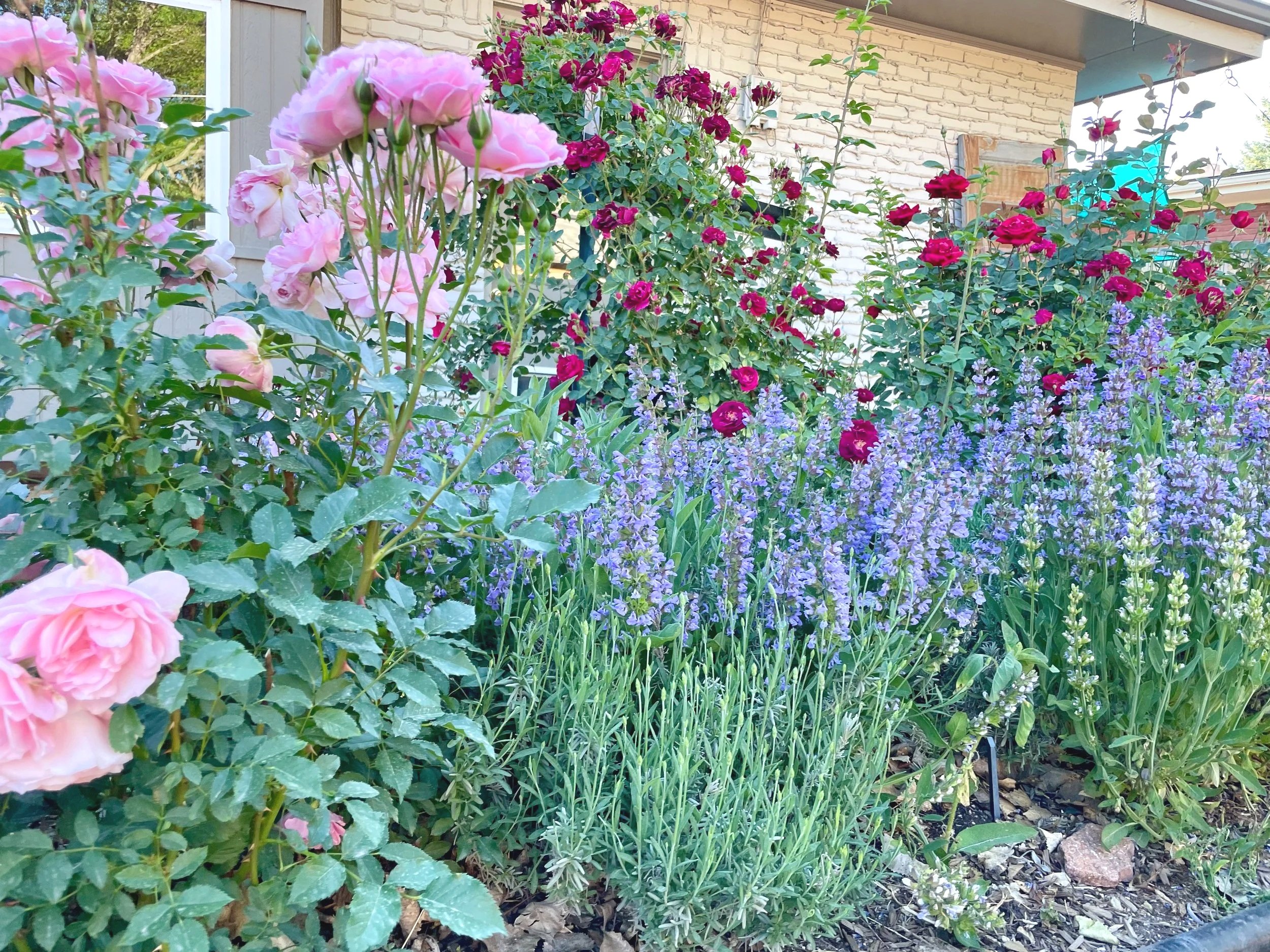
Roses bring me so much joy. They are a fabulous injection of color in my garden, and I see pollinators enjoying their bouquets every day, too. I hope these simple rose care steps will give you confidence to plant and enjoy roses in your garden, too!
If you have questions, pop over to my Substack — I am happy to answer them! And I hope you’ll subscribe, too. We have an amazing group of gardeners who are all in this together.
Happy Gardening!
Angela
Subscribe now so you never miss a thing!