

Best Hylotelephium Varieties for Colorful, Easy-Care Gardens
Which Stonecrop Is Right for Your Garden?
Science is an ever-changing field. Scientists make discoveries. They find new treatments. They do experiments and learn that what we thought was true is not actually true. Some of these discoveries are quickly adopted. Others are slow. Some are very, very slow.
In 1977 a Japanese scientist proposed that some of the plants we know as Sedum should actually be their own genus, Hylotelephium. About ten years ago this change was made officially, but you probably haven’t seen much of a difference. We are just now starting to see these changes in the garden centers – nearly 50 years later. And it is not universal yet.
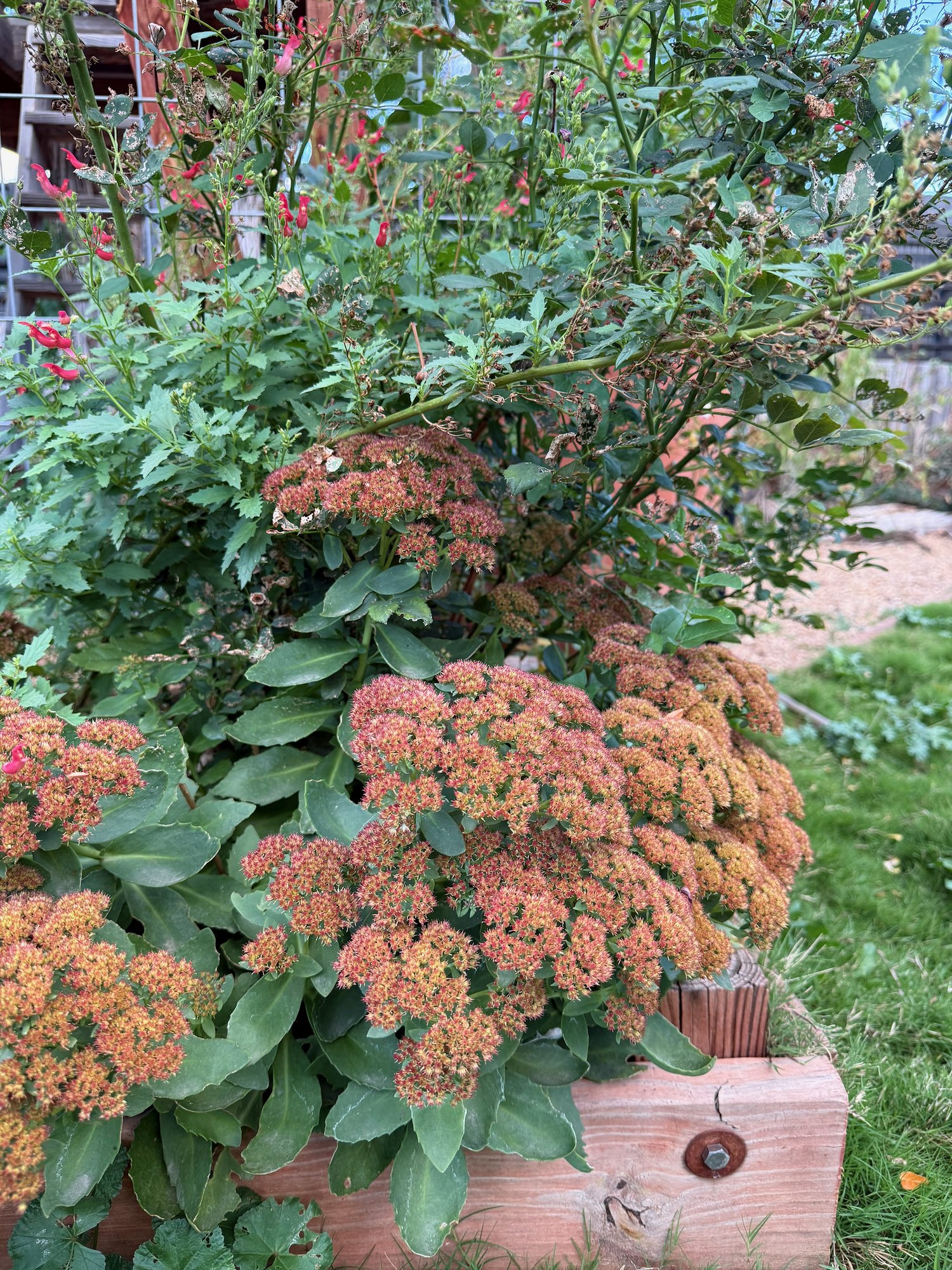
At its overgrown best, here is a Hylotelephium planted out with a shrub rose and Scrophularia macrantha | Red Birds in a Tree.
Why did some Sedum change their name to Hylotelephium?
The plants haven’t changed, but their Latin names have changed – specifically, their genus and sometimes species (remember: King Philip Came Over For a Good Supper? Kingdom Phylum Class Order Family Genus Species). And while the technical reasons aren’t all that important for home gardeners, we should know the new names so we are sure to get the right plants into the right places.
Need a little refresher on plant names? I have you covered here:
So let’s talk about Hylotelephium – a small set of plants formerly known as Sedum.
Now, not all Sedum have had a name change. In fact, it is a relatively small group – just 35 species at last count. And you are likely to only encounter three of them commercially here in North America.
So what are the characteristics that distinguish a Hylotelephium? They tend to be the taller former-Sedums. And most are autumn-flowering. But some of the most popular, commonly-sold plants are indeed now Hylotelephium.

Hylotelephium spectabile 'Autumn Fire’ planted with Artemesia ‘Powis Castle’
What’s the difference between Sedum and Hylotelephium?

The plants that were separated out into Hylotelephium tend to have the following characteristics:
They are taller than Sedum.
They have broad, flat leaves.
Their flower heads are slightly domed.
And a Dutch botanist did DNA analysis and found that Hylotelephium are more closely related to each other than they are to Sedum.
So Sedum are now the lower-growing plants with thicker leaves. Hylotelephium are taller with flatter leaves. But in general Hylotelephium is a group of hardy, succulent-leaved perennial plants. They’re drought tolerant, low maintenance, and offer attractive foliage and clusters of flowers late in the growing season.
Both Sedum and Hylotelephium are part of the Crassulaceae family – commonly known as Stonecrops.
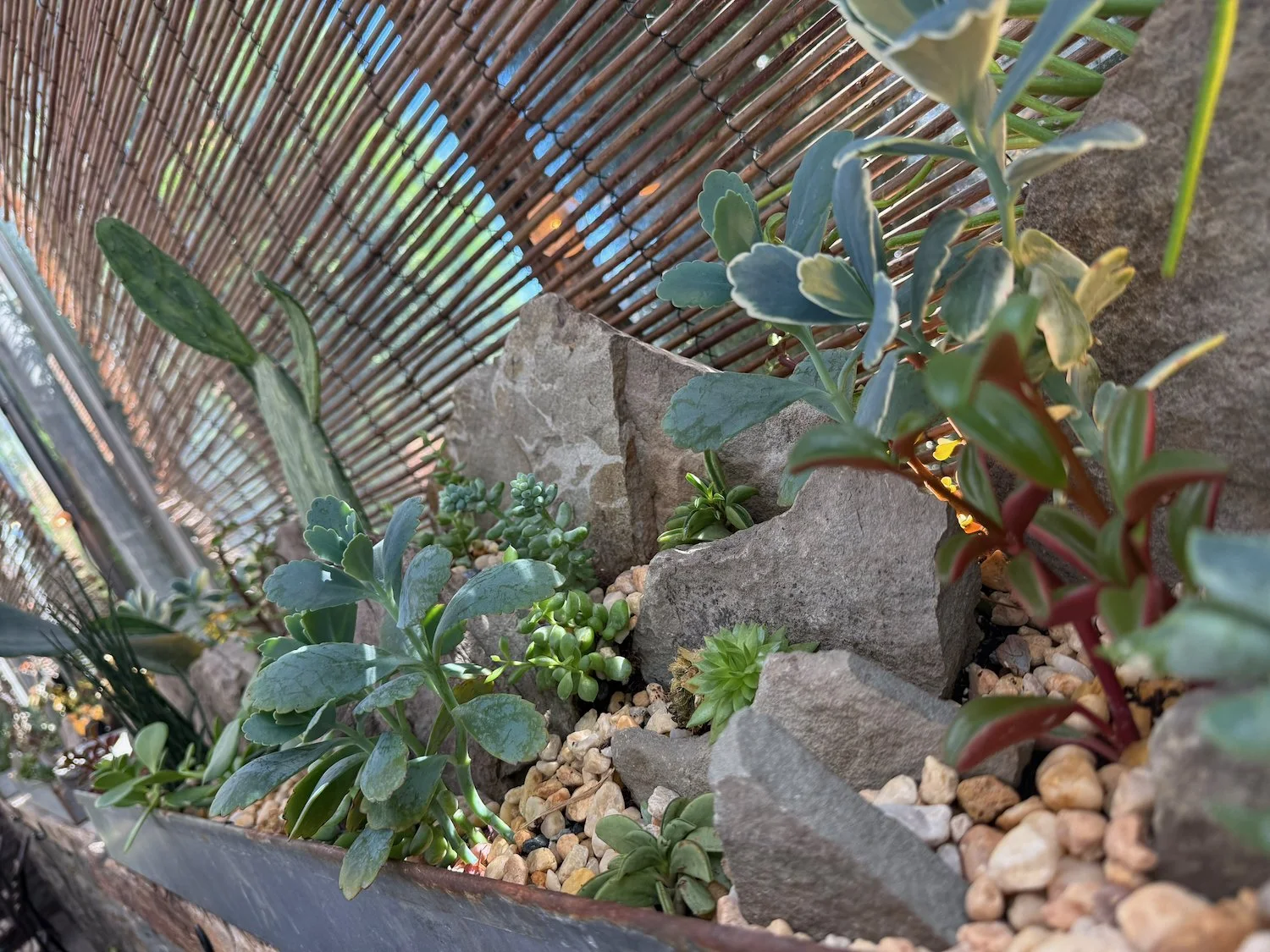
This beautiful planter that I saw at a restaurant was planted out with a range of succulents and Sedum plus two sprigs of Hylotelephium.
Common Hylotelephium Varieties
There are three common species of Hylotelephium which you may encounter at the garden center when buying plants:
Hylotelephium telephoides | Allegheny Live For Ever or Allegheny Stonecrop
We always want to choose a native North American species first, and Hylotelephium telephium is the only native species that you may see in garden centers. It is native to the Eastern US along the Appalachian Mountains from North Carolina to Pennsylvania and other contiguous areas.
This species is usually sold as the straight species – not as a cultivar. But it has been crossed with other species – particularly H. spectabile – to give us some incredible commercial varieties.
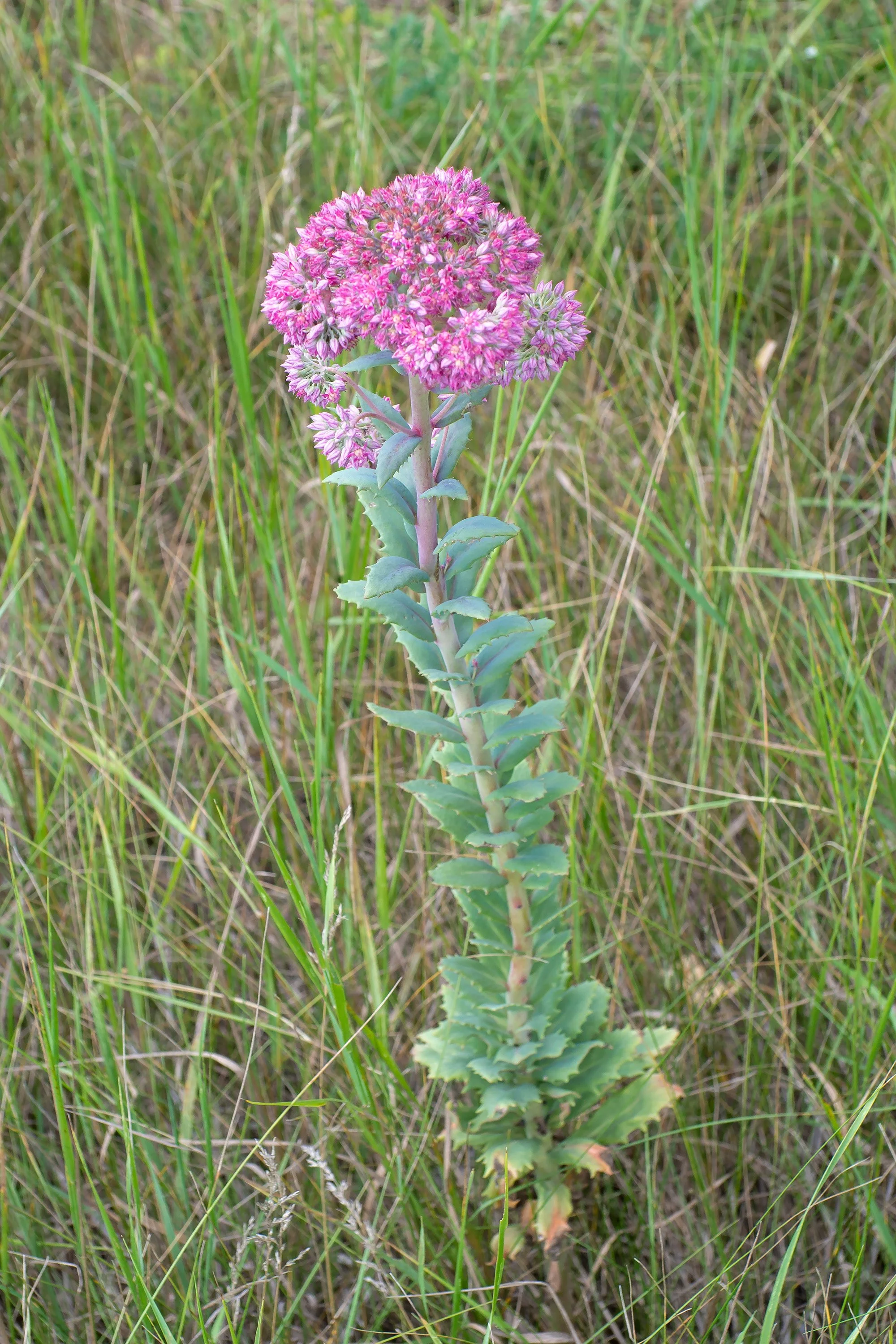
Hylotelephium telephoides growing in the wild | Eugene / Adobe Stock
Hylotelephium spectabile | Ice Plant
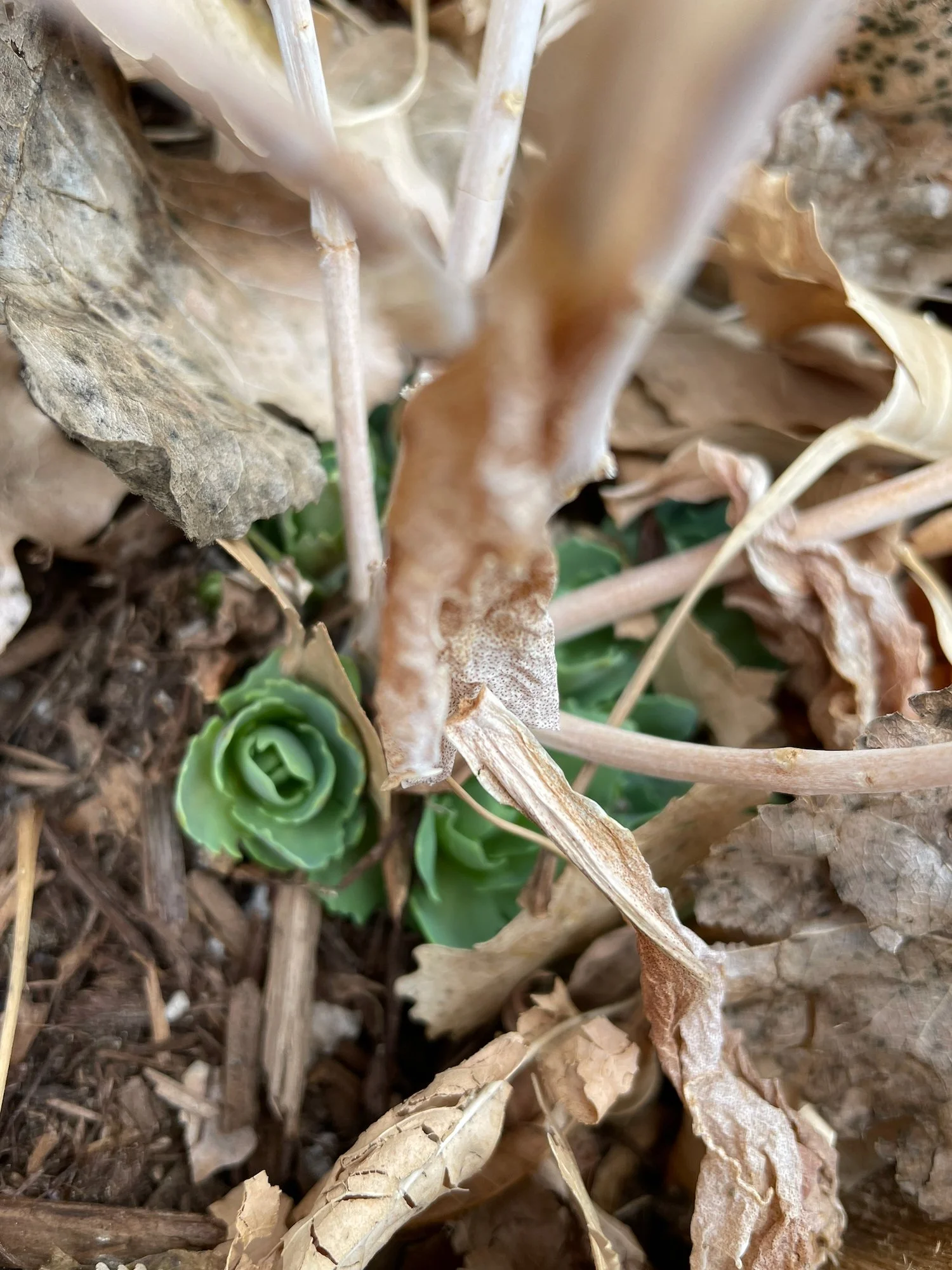
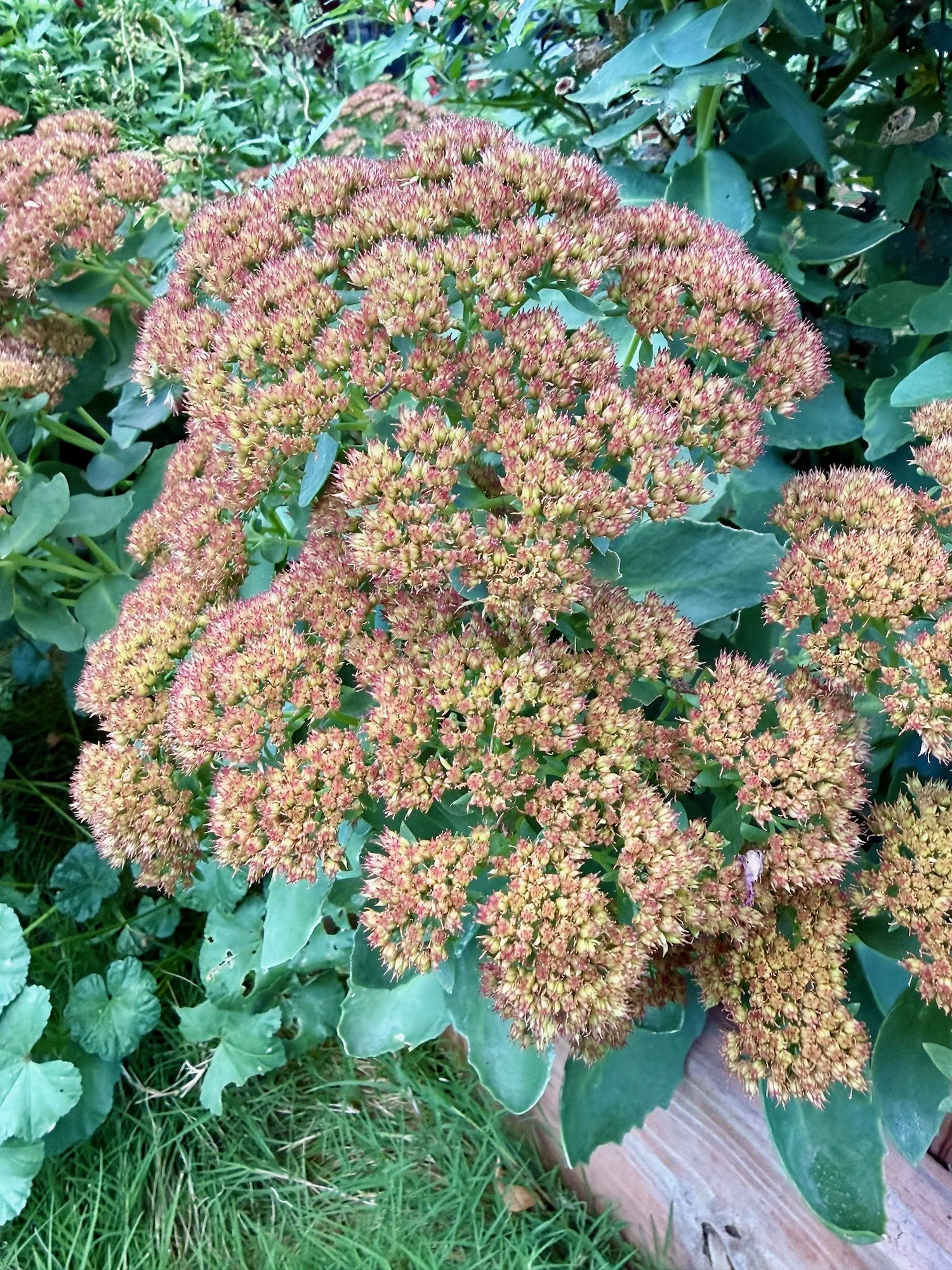
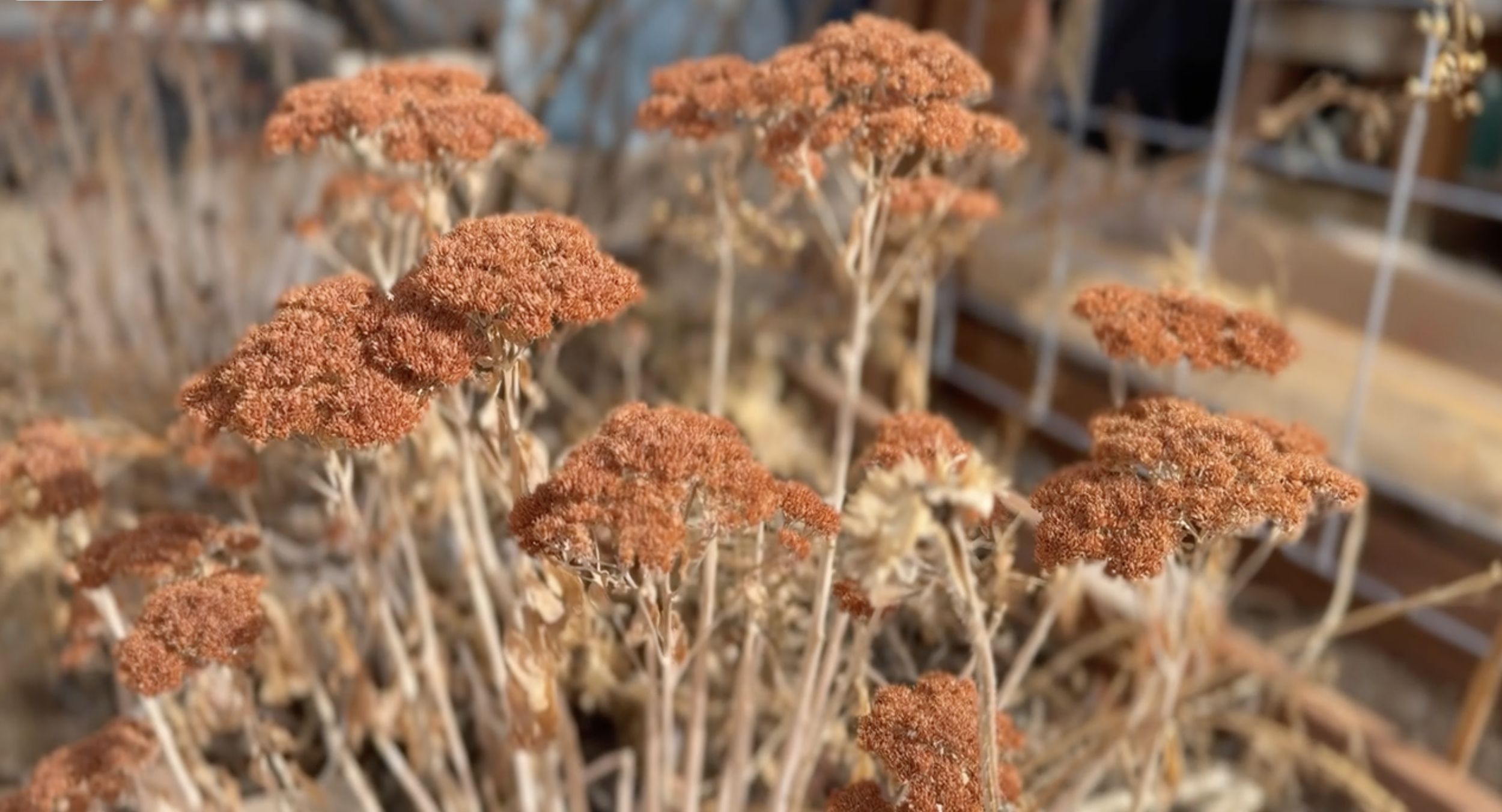
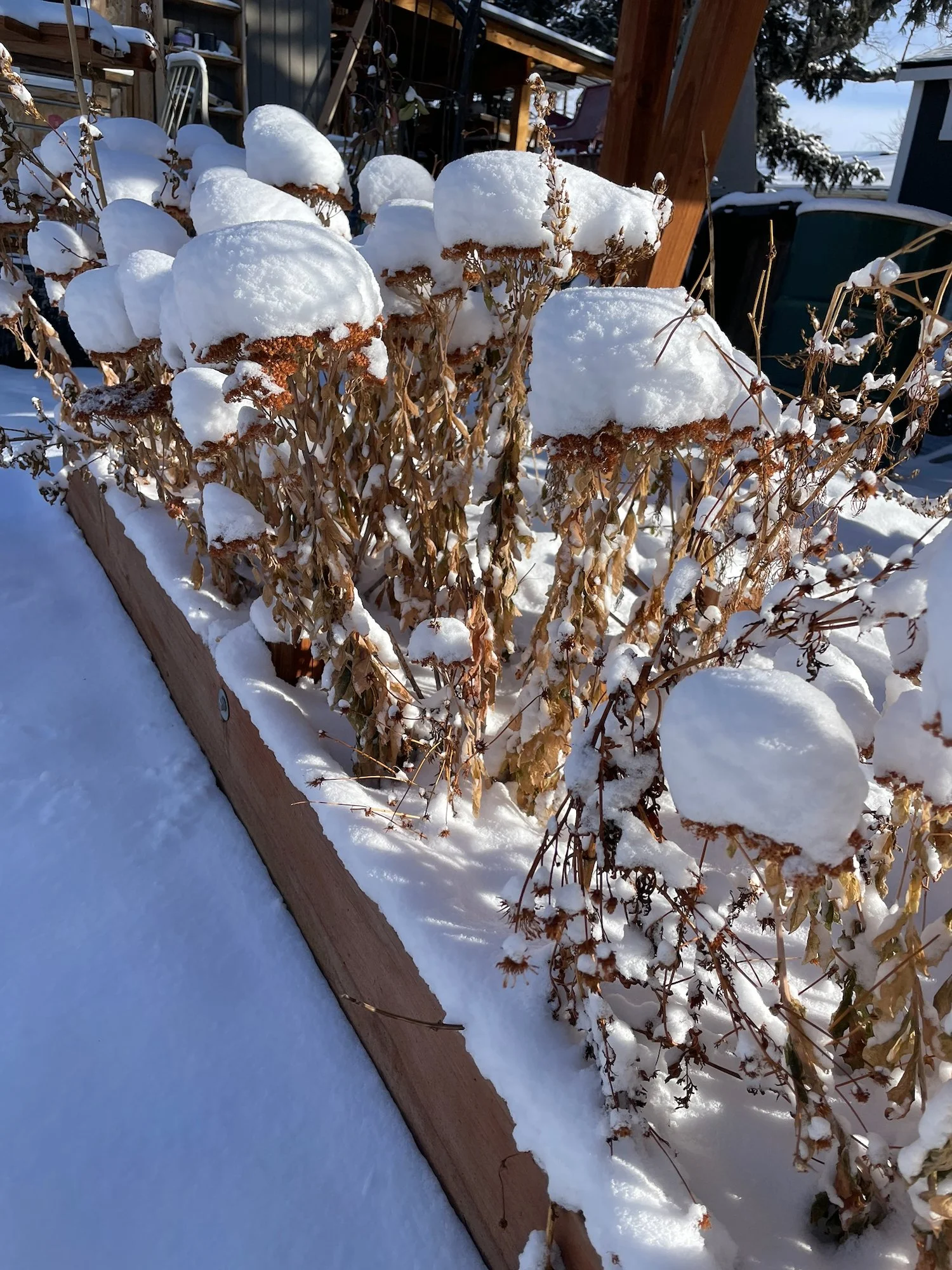
Autumn Joy in my garden in each season
You might be familiar with one very common Hylotelephium and not even know it: Autumn Joy (a cross with Hylotelephium telephoides). While it is still being marketed as Sedum ‘Autumn Joy,’ by many growers, it is in fact Hylotelephium spectabile ‘Autumn Joy’ – and it shows off all of the characteristics of its new genus.
I have grown Autumn Joy for years, and I love this plant. So do the pollinators! In my garden, I have several which form a bit of a border on a rose bed.
Autumn Joy emerges in spring in a ball shape – looking a bit like topiary boxwoods which I can’t grow well here without heavy irrigation. But Autumn Joy takes on that role, giving me shape and structure in spring and summer as they get taller. Then in September, Autumn Joy bursts into pink blooms – and the pollinators enjoy a feast. I especially note small flies, bees, and wasps partaking of the teeny blossoms which pump out sweet nectar for well over a month.
Other common varieties include:
Stardust: white blooms
Brilliant: bright pink blooms
Hylotelephium telephium | Witch’s Moneybags or Orpine
This species wins for best name, to be sure! Witch’s Moneybags hails from Europe and Asia and was introduced in North America more than three centuries ago. It is not aggressive, but it can naturalize and spread. It has been bred into range of varieties including:
Matrona: Green foliage with red stems and pink blooms
Xenox: purple leaves with deep pink blooms
Purple Emperor: rusty-red blooms and foliage
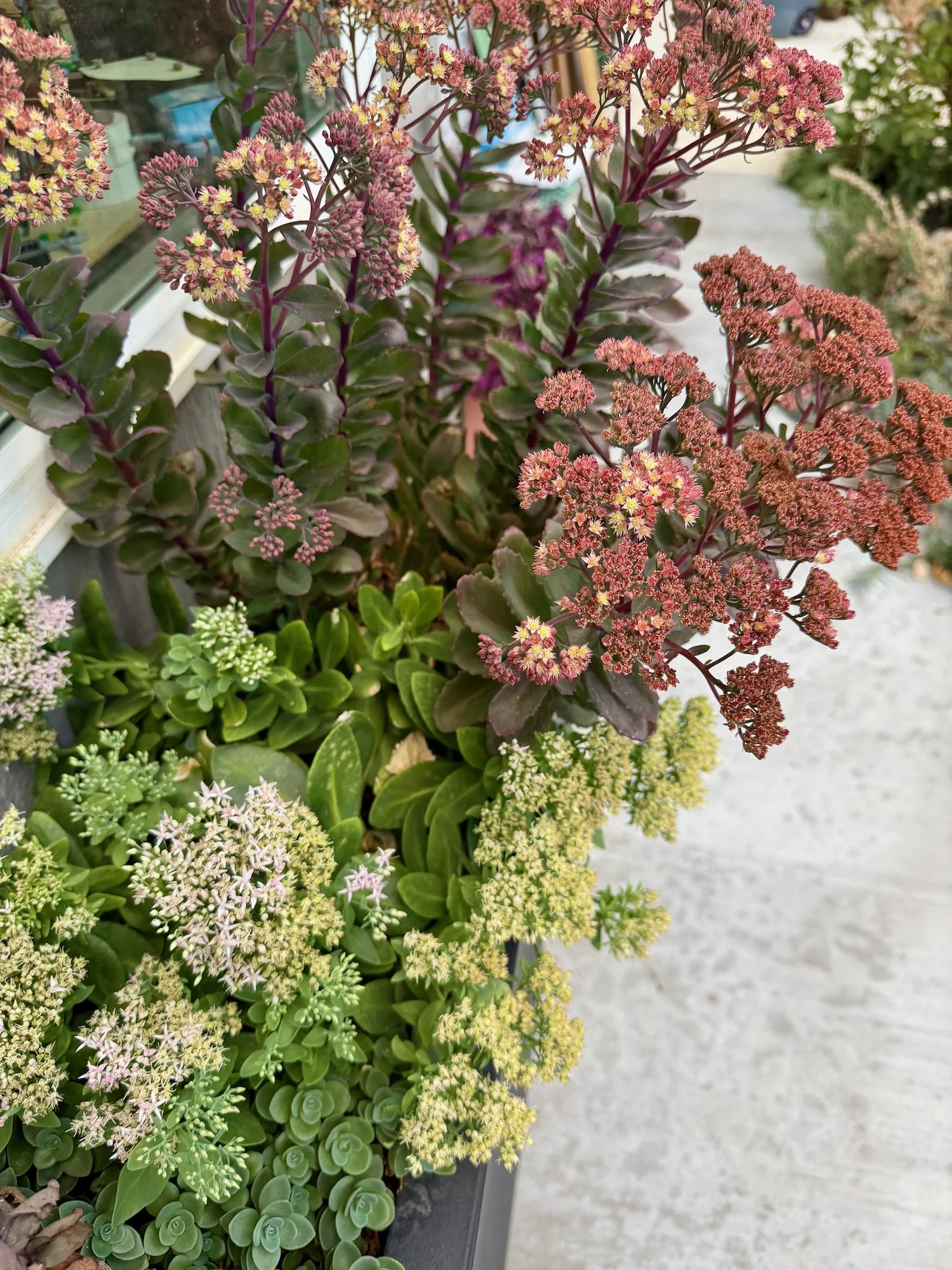
Hylotelephium telephium 'Purple Emperor' has been stunning all summer — and now the bees are all over its blooms.
Growing Tips for Hylotelephium
Hylotelephium is easy to grow in many climates. In general they like:
Sun
Full sun is best—aim for at least 4–6 hours daily. Less light means fewer blooms, but it doesn’t have to be in sun all day long, either.
Soil
In general, Hylotelephium prefers well-drained soil. This means soil that does not stay wet for days at a time. Their fleshy roots will rot in too much water, and their stems and blooms will droop.
Some of my Hylotelephium are planted in heavy clay soil which is usually a problem. However, this location is on a slope which increases drainage, so these plants are thriving.
Water
First 3-4 weeks: keep evenly moist to establish roots
After that: watering every two weeks or even less is plenty for most varieties
Hylotelephium is relatively drought-tolerant. You are more likely to over-water it than under water.
Maintenance (Minimal)
In fall, leave seed heads for birds and winter structure
In spring, cut back the seed heads to about 8” tall when the new foliage begins to appear. Leaving the stems allows native bees and other insects to lay eggs inside the dry, hollow stems. And once the new foliage grows tall enough, the stems will be hidden by the foliage.
For fuller, bushier plants, do the Chelsea Chop in late May — cutting stems back by 1/3 to 1/2.
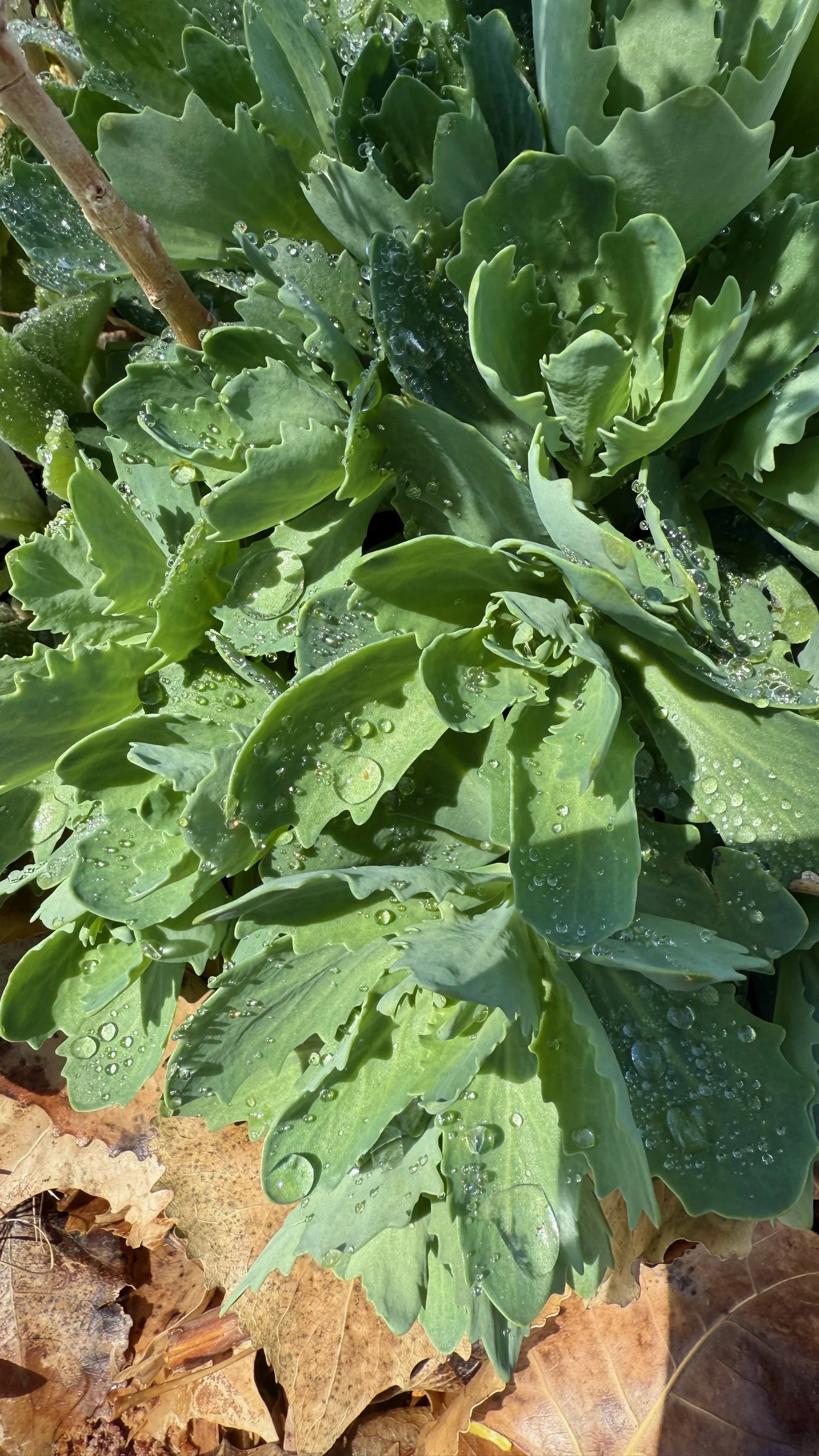
Does Hylotelephium grow well in containers?
Yes! Hylotelephium can grow very well in containers as long as the pot has drainage holes and the growing medium drains freely. Choose a container large enough for the plant’s mature size and avoid letting water sit around the roots.
However, not all Hylotelephium are hardy enough to handle winters in containers. You may need to move them inside or to a sheltered location to overwinter. The general rule is: for a plant to overwinter in a container, it should be hardy to TWO zones colder than your location. So, if you garden in zone 6, anything in a container should be hardy to Zone 4 or lower.
I have several containers of Hylotelephium and Sedum, and I overwinter them all inside the greenhouse. I simply don’t trust that they will do well over the winter.

I mean: you tell me! There are several varieties of Sedum in this planter and one Hylotelephium.
Designing with Hylotelephium
I have used Hylotelephium and Sedums in very similar areas in my garden. I have some in pots. I have others planted out with roses. And just this fall I moved a bunch of Hylotelephium into a mass planting in the Wildlife Garden. These plants had been scattered about, and I decided that they will have a bigger impact in a swathe. We will see next spring if I was right! I love them in big masses though, and I’m certain they will do well in this new planting scheme.
Typically these types of succulents are planted in rock gardens and other planting schemes that have a more sparse aspect, but with Hylotelephium – especially since they are taller and have such colorful flowers – I think they lend themselves well to more of an English Country Garden scheme, too. They can fill in for some of the more typical plants like Boxwood which simply don’t thrive in dry conditions. They aren’t the same, but they can have a similar effect.
Because Hylotelephium die back completely over the winter, consider planting them in a block or a row surrounded by other plants with differing textures. The Hylotelephium will really come into their own in later summer and fall – so they can pick up the color and the punch with plants like Salvia, Asters, Roses (like I do), as well as Rudbeckia, Lavenders, and Yuccas.
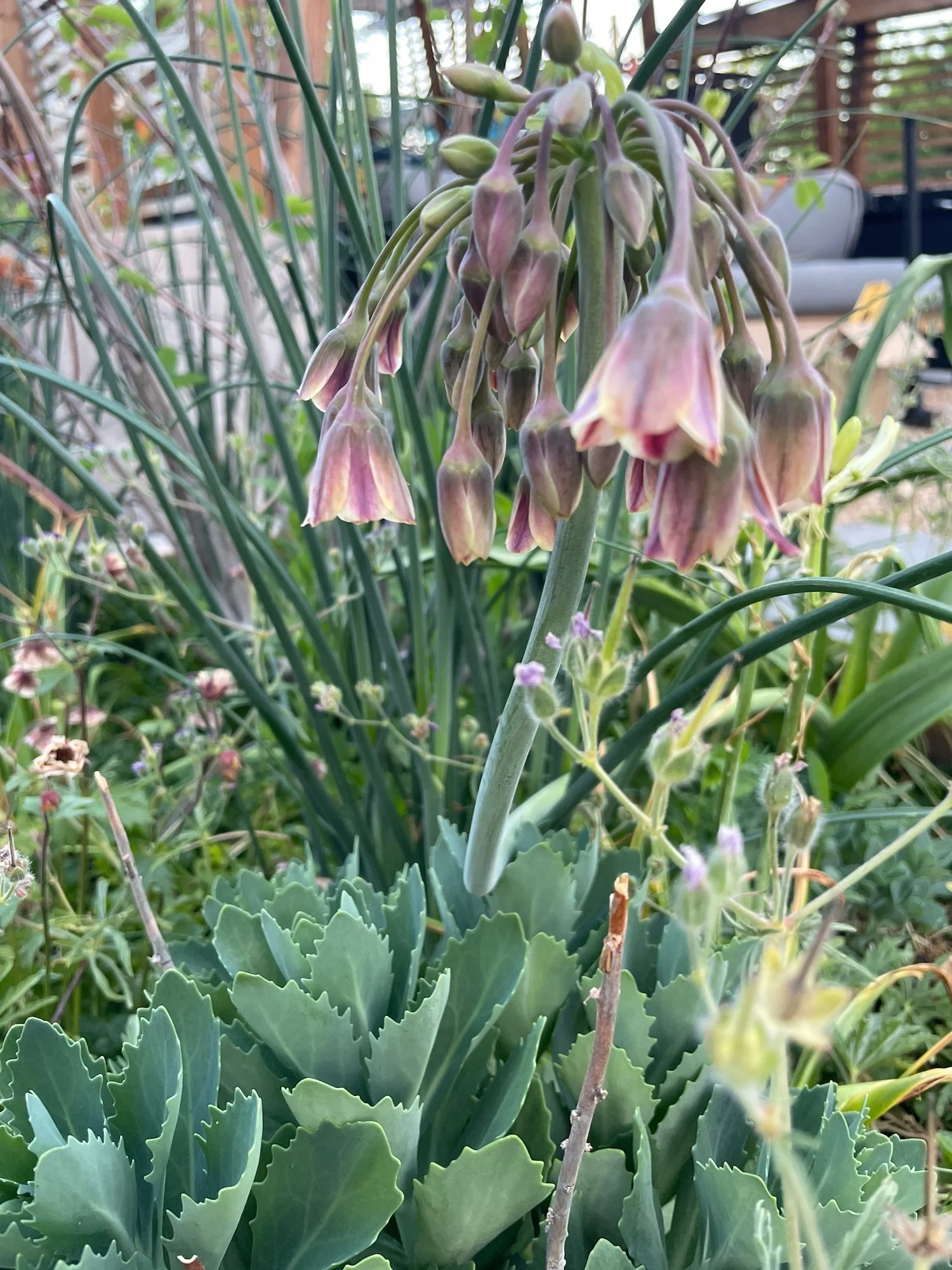
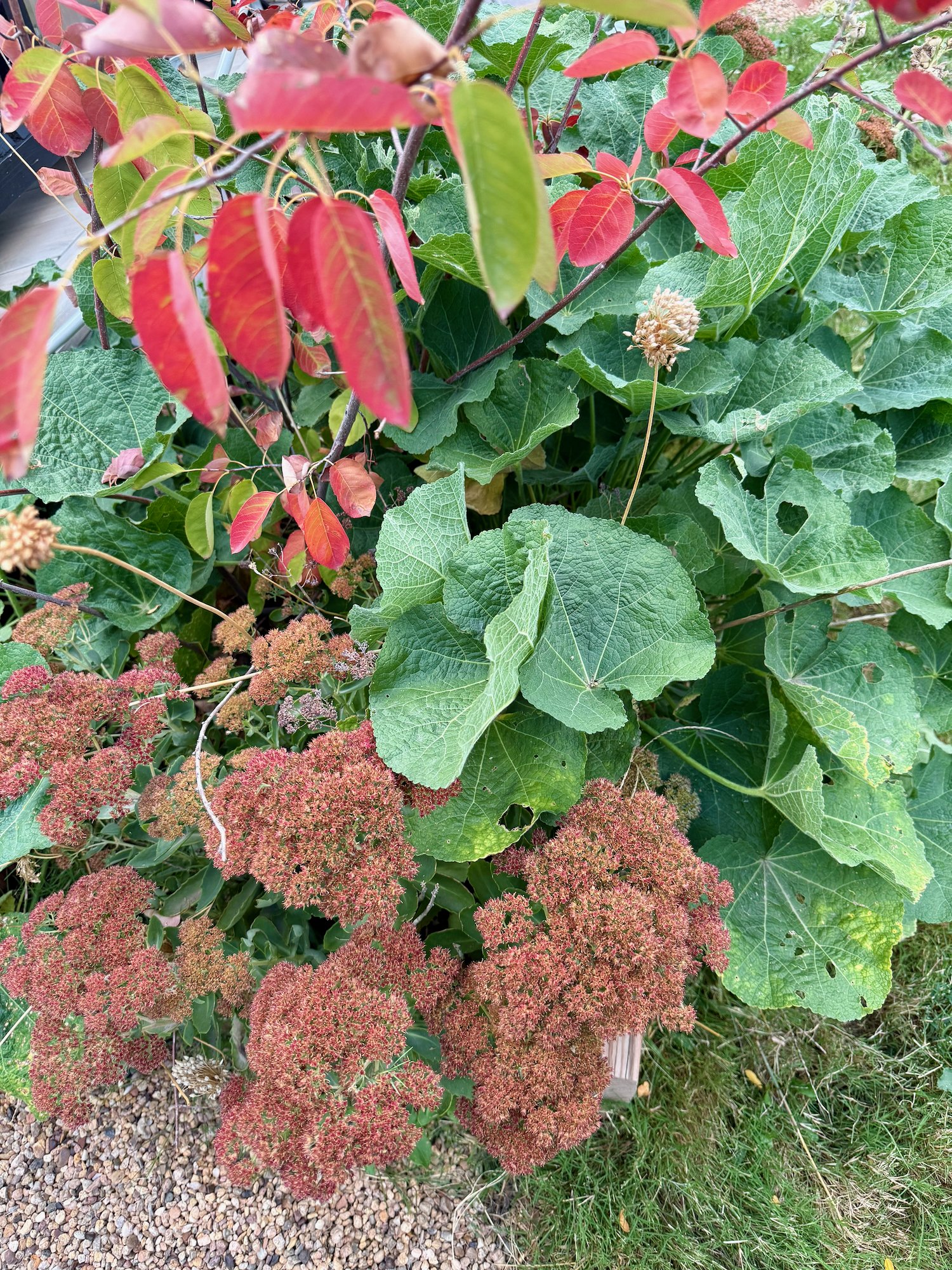

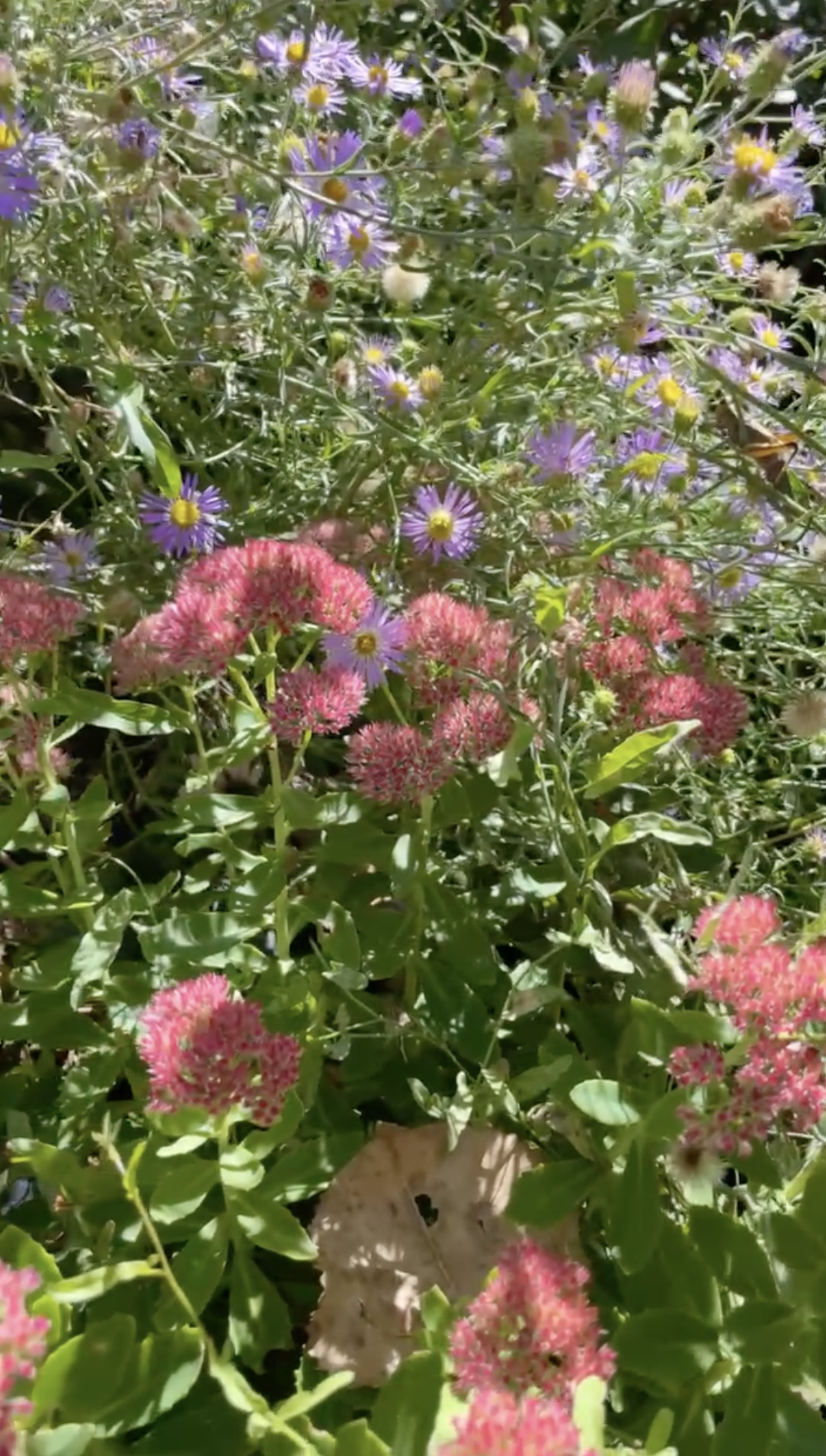
at the close…
Hylotelephium has so much going for it! It’s drought tolerant. It doesn’t need fertilizer. The pollinators love its flowers – and those late-blooms provide such a boost for migrating butterflies and bees who are getting ready to hibernate. It’s a plant that thrives here in Colorado with little intervention – and it is beautiful, too.
If you have a dry, sunny spot in your garden, this may be a good plant to consider.
If you have questions, don't hesitate to ask!
This post originally appeared on my Substack. Subscribe to my Substack, and all of this gardening goodness will appear in your email inbox weekly!
Happy Gardening!
Angela
Subscribe now so you never miss a thing!