

Don’t Plant Yet!
The Smart Way
to Prep Your Garden
in Early April
Every week I get a flood of gardening questions—email, comments, Substack, everywhere—and a lot of them overlap. So instead of answering them one by one, I like to step back and ask: what are we all trying to figure out right now?
This week, the answer is pretty clear:
What should we be doing in the garden in early April—especially after a weird, warm, dry winter?
Let me walk you through how I’m thinking about it (and what I’m doing in my own garden right now).
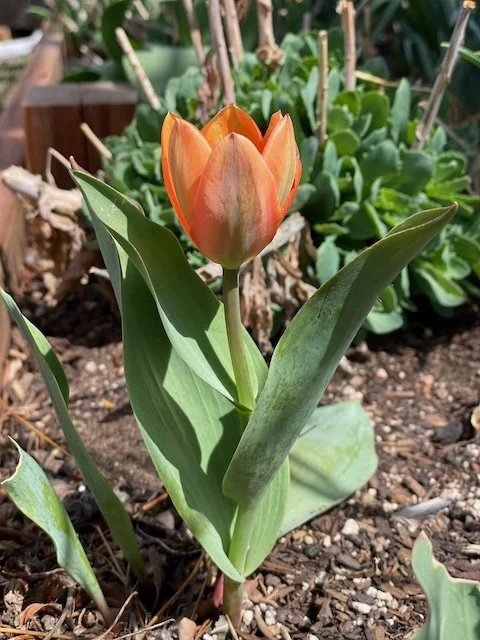
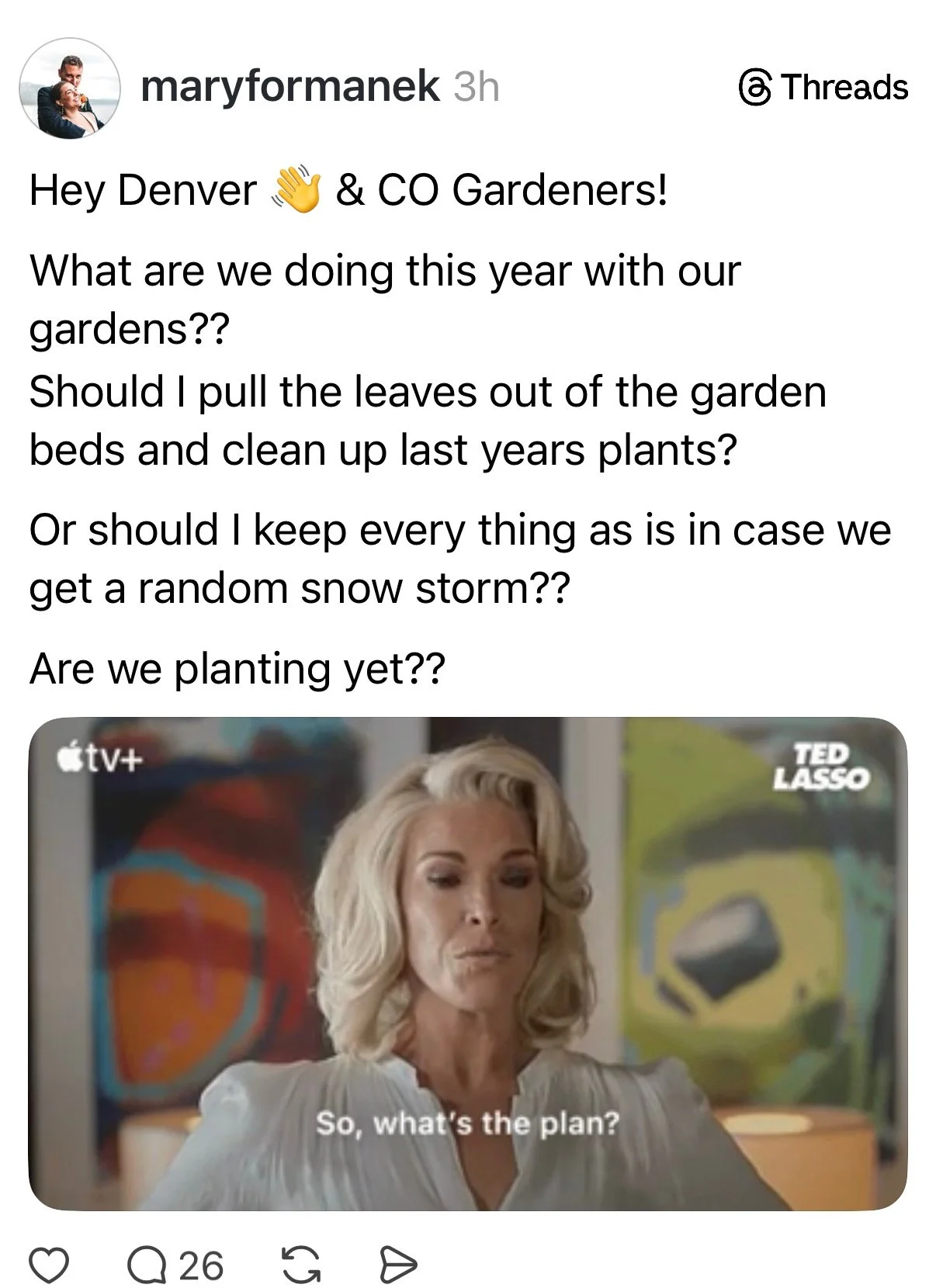
It Feels Like Spring… But We’re Not There Yet
I know. It’s warm. Things are waking up. You want to plant everything.
But at least here on the Front Range—and in a lot of similar climates—we’re still weeks away from our average last frost. And we’ve already got another freeze in the forecast.
So I’m not in “full send” mode. I’m in “proceed, but carefully” mode.
I’m starting to move forward, but I’ve got frost cloth, covers, and backup plans ready to go. Because April will absolutely humble you if you get cocky.
Helpful Links:
April Gardening
Q&A
Answers to all of your burning gardening questions for April!

This Year Is Really Weird | 2026
The bigger story right now isn’t just timing—it’s how dry it’s been.
This winter was warm, yes. But more importantly, it was dry. And that has changed my priorities a lot.
Instead of focusing on planting new things, I’m thinking about protecting what I already have.
For example, I’m not cleaning up my leaves. I know that goes against every spring gardening instinct, but I leave them. They break down into the soil, they help hold moisture, and honestly, this year I want every bit of organic matter I can get.
Same with mulch. If you do nothing else right now, go get some mulch. A lot of cities give it away for free, and it’s going to make a huge difference if this dry pattern continues. It keeps the soil cooler, slows evaporation, and helps stretch whatever water we get.
And yes—I’m already watering. Trees, shrubs, perennials… they’re coming out of winter stressed. If you didn’t water over the winter (and most people don’t), now’s the time to start helping them recover.
A Slightly Unpopular Choice: I’m Planting Less
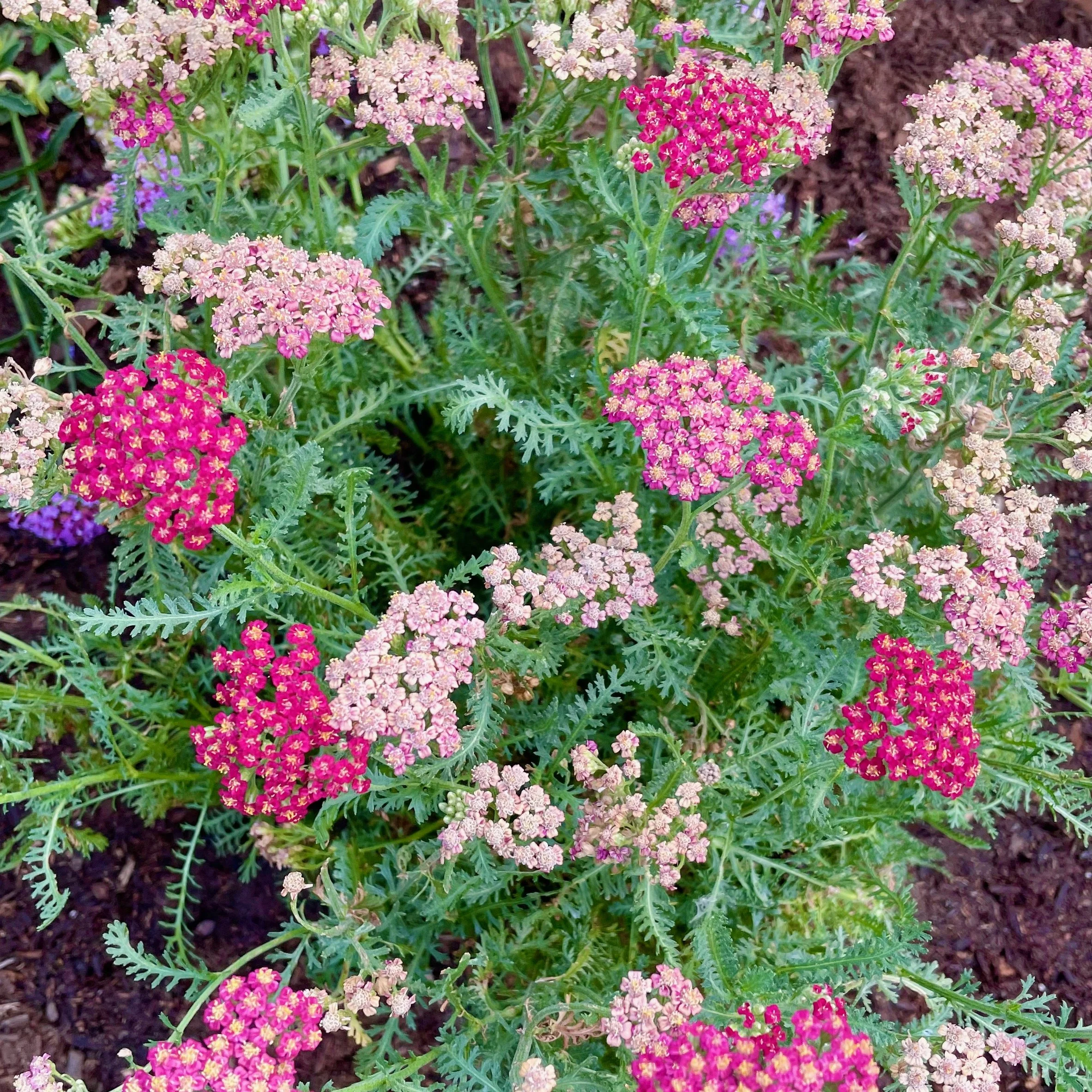
I’m actually cutting way back on annuals this year.
Not because I don’t love them—I do—but because they’re water-hungry to establish. Shallow roots, lots of attention, lots of input. And unless we suddenly get a very rainy spring, that’s not where I want to put my energy (or my water).
So this year, I’m focusing on:
maintaining what I already have
supporting my perennials
being a little more conservative overall
It’s not the most exciting strategy, but it feels like the right one for the conditions we’re in. We already have water restrictions in place here — and it’s only April!
Also… Your Carrots Are Fine
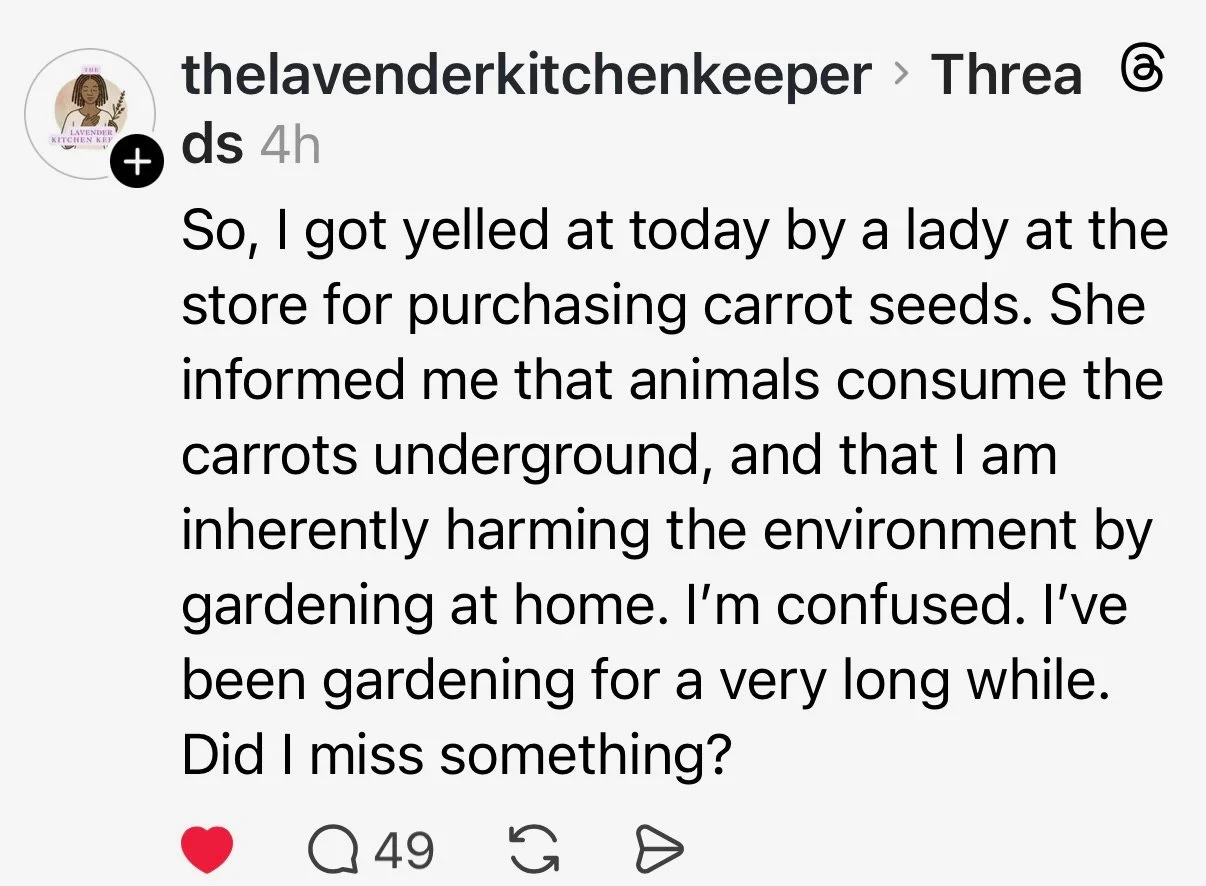
I have to say something about this because I’ve gotten multiple versions of this question.
No, growing carrots is not harming the environment.
They’re taproots. Lots of plants are taproots. Some of them are native. This is not a problem.
If anything, the more useful conversation is about adding native plants into your garden, even if you’re mostly growing vegetables. That’s where you start to see real benefits—better insect balance, more pollinators, healthier overall systems.
But your carrots? Completely innocent.
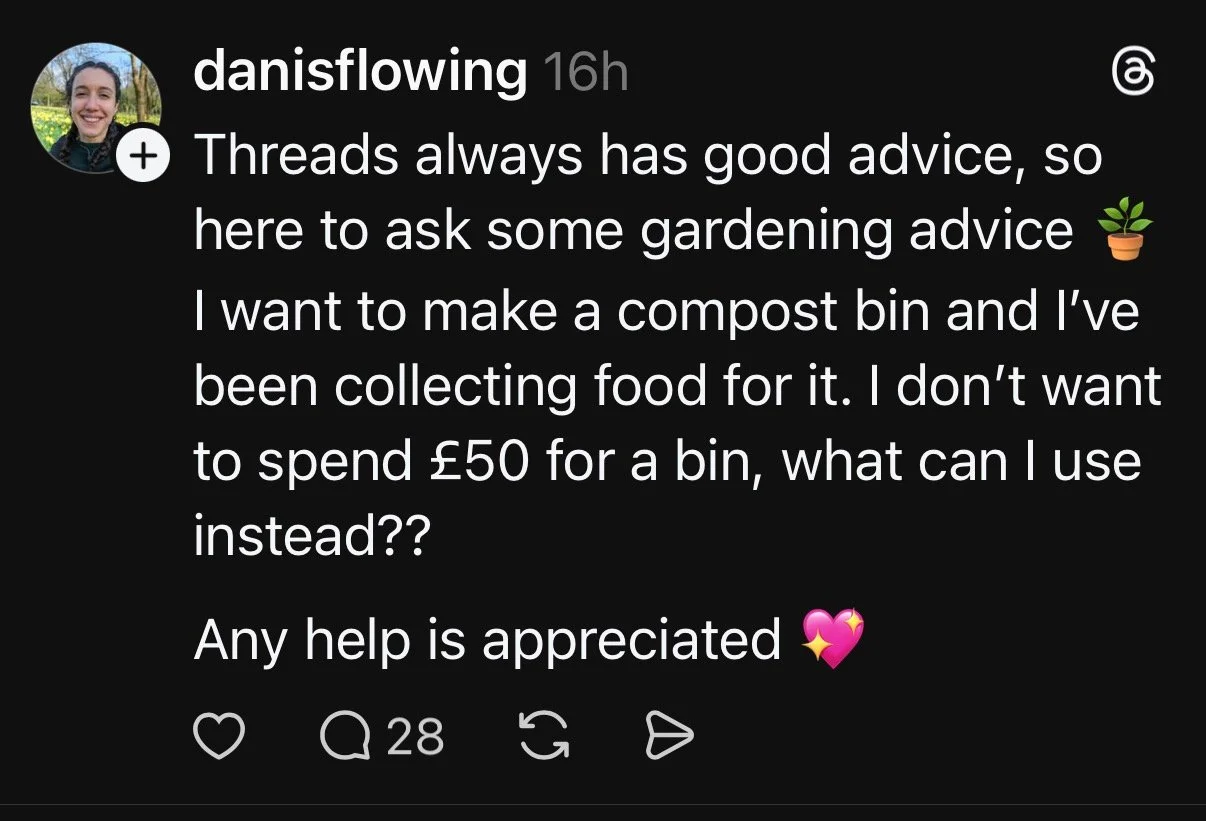
Composting Doesn’t Need to Be Complicated or Expensive
Another theme I’m seeing: people want to compost, but they don’t want to spend a bunch of money to get started.
You don’t have to.
Honestly, one of the best things you can do is just check local groups—Facebook Marketplace, buy-nothing groups, neighborhood pages. People give away compost bins all the time.
And if you don’t find one? Make one. A trash can works. A pile works. It does not have to be fancy. Check out The Compost Fairyy for lots of help on this topic.
If you want to level up a bit, I’m a big fan of adding a bokashi system. It speeds things up and lets you compost more kinds of food. But even that is optional. Garden of Oz NoCo can get you hooked up for all things bokashi, too! They are amazing!
The most important thing is just… start.
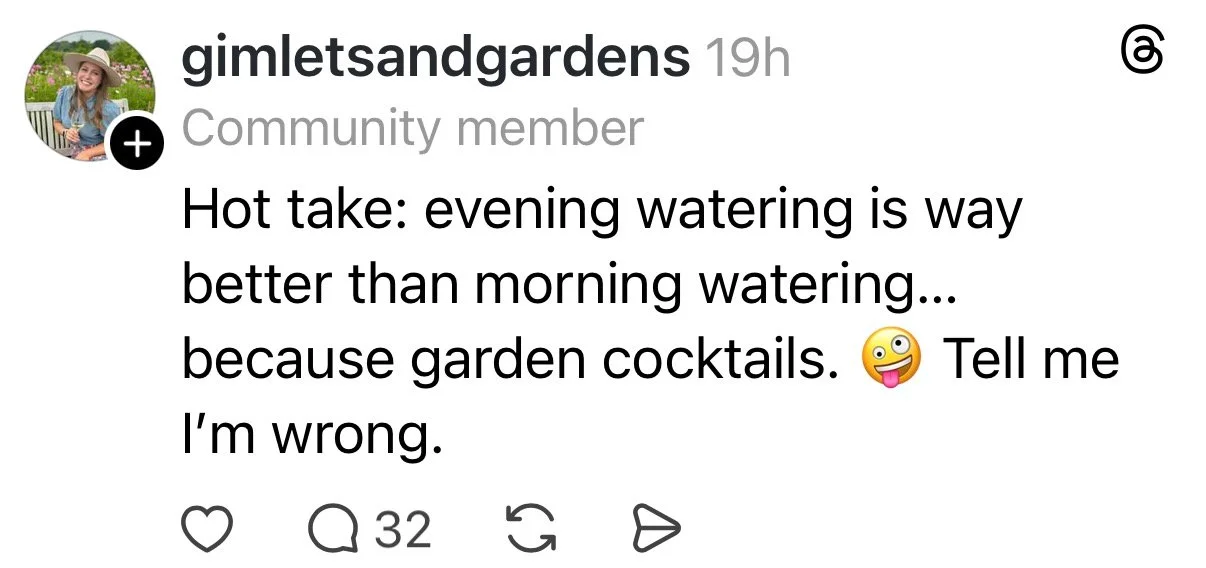
Let’s Talk About Watering (Because It Matters More Than You Think)
Here’s a great question about whether it’s okay to water in the evening—with a cocktail, ideally.
And the answer is: yes… with a caveat.
The issue isn’t when you water. It’s where the water goes.
If you’re soaking the leaves and they stay wet overnight, you’re inviting fungal problems. Roses are especially prone to this.
But if you’re watering at the base of the plant—where the roots actually need it—then evening watering is totally fine. I highly recommend a watering wand!
In fact, that’s how I prefer to do it. It’s more efficient, and less water gets lost to evaporation.

A Quick Love Letter to Serviceberries
I got asked about favorite trees, and I will take any excuse to talk about this.
Serviceberries (Amelanchier) are, hands down, one of my favorites.
They bloom early, which is huge for pollinators coming out of winter. They produce berries that birds absolutely love (and you might get some too, if you’re fast). They have beautiful fall color.
They’re just… good citizens in a garden.
If you’re thinking about adding a tree, look into your local species. You won’t regret it.
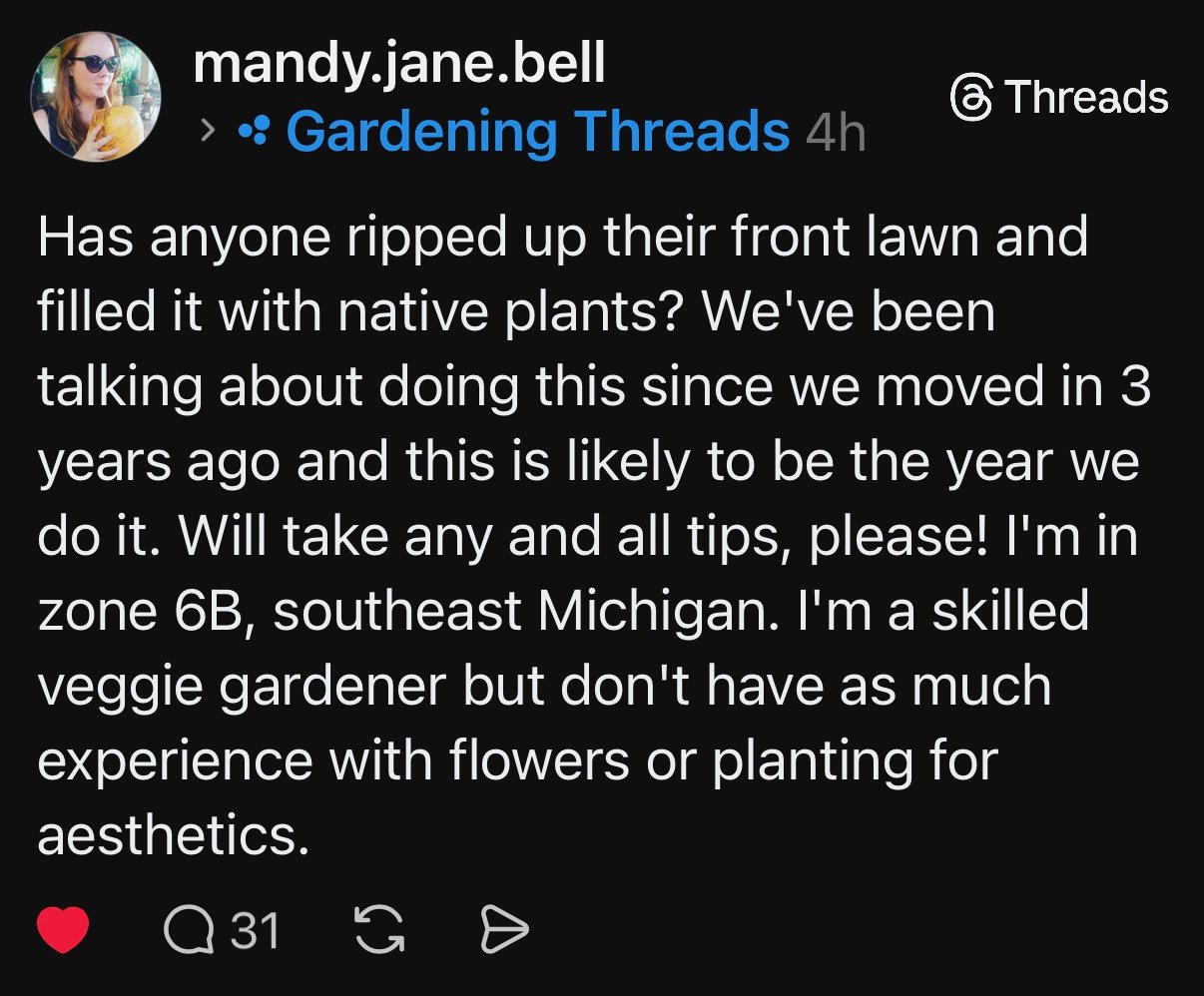
Big Changes: From Lawn to Wildlife Garden
Someone asked if I’ve ever actually replaced a lawn with native plants.
I have. Most of my front yard is now a native-heavy “wildlife garden,” and it’s one of the best things I’ve ever done.
We went from struggling to grow grass… to having flowers most of the year, plus birds, pollinators, even the occasional hawk — and a Golden Eagle one day.
And I want to emphasize: this isn’t a huge property. It’s a pretty standard suburban lot. You don’t need a ton of space to make a meaningful shift.
Helpful Links:
Big Changes: From Lawn to Wildlife Garden
Someone asked if I’ve ever actually replaced a lawn with native plants.
I have. Most of my front yard is now a native-heavy “wildlife garden,” and it’s one of the best things I’ve ever done.
We went from struggling to grow grass… to having flowers most of the year, plus birds, pollinators, even the occasional hawk — and a Golden Eagle one day.
And I want to emphasize: this isn’t a huge property. It’s a pretty standard suburban lot. You don’t need a ton of space to make a meaningful shift.
Helpful Links:
The Wildlife Garden | One Year Later
Check out our lawn replacement one year in!
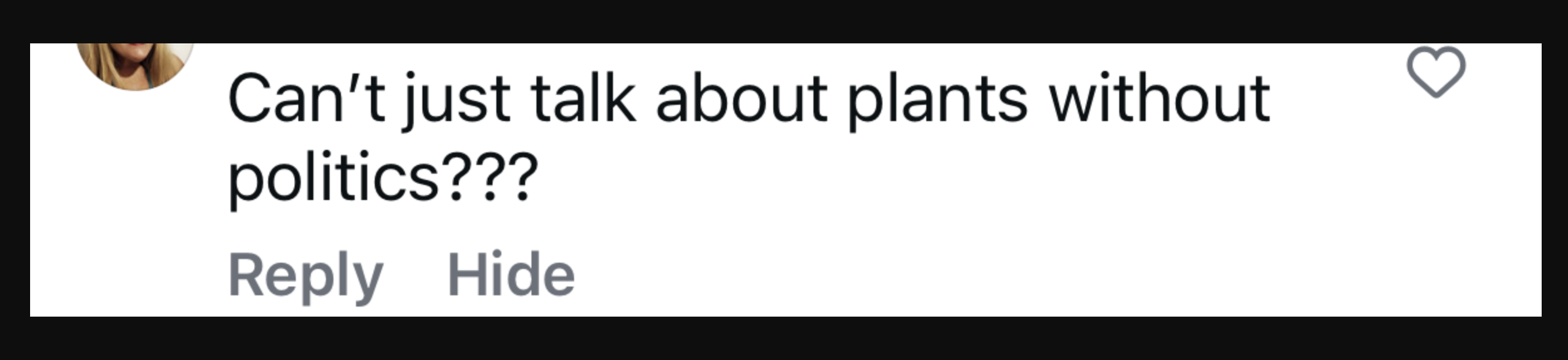
The Bigger Picture (Whether We Like It or Not)
This came up too, so I’ll say it plainly: Gardening isn’t separate from bigger systems—it’s part of them.
Water policy, labor, agriculture, climate… all of that touches what we do in our gardens, whether we think about it or not.
You don’t have to engage with that side of things if you don’t want to. But for me, it’s part of why gardening matters. It’s not just about growing plants—it’s about participating in something larger.
And that’s a big part of what we call Resistance Gardening!
Helpful Links:
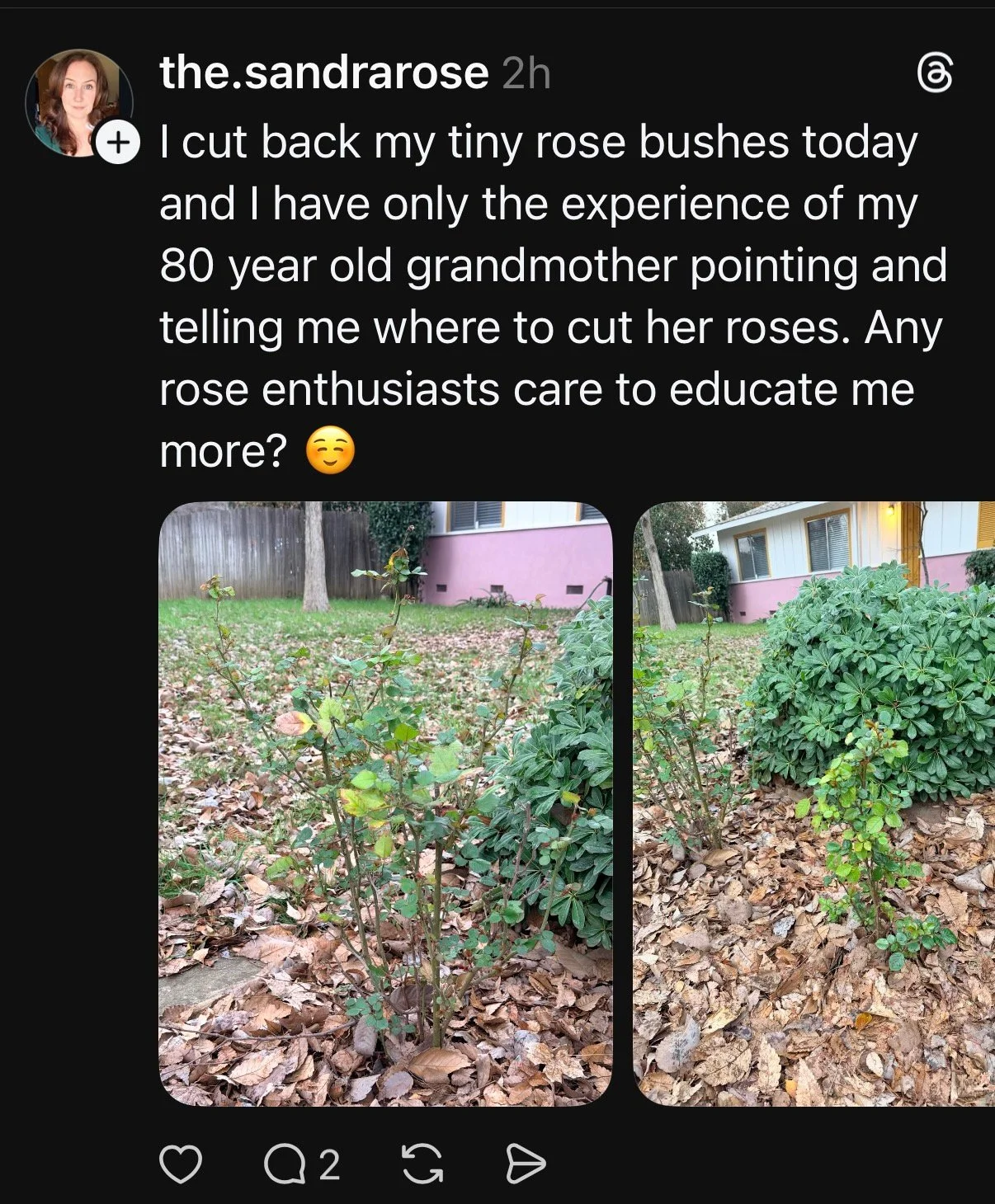
A Few Quick Wins: Roses, Watering, and Setup
If you grow roses, the three biggest levers are:
pruning correctly (based on type)
feeding consistently
deadheading properly
Do those well, and everything gets easier.
And if you’re already thinking ahead to summer watering, there are some great options out there—buried clay pots (ollas), smart sprinklers, even just a good watering wand for hand watering.
Whatever you use, the goal is the same: get water to the roots efficiently and don’t waste it. Again: love those watering wands!
Helpful Links:
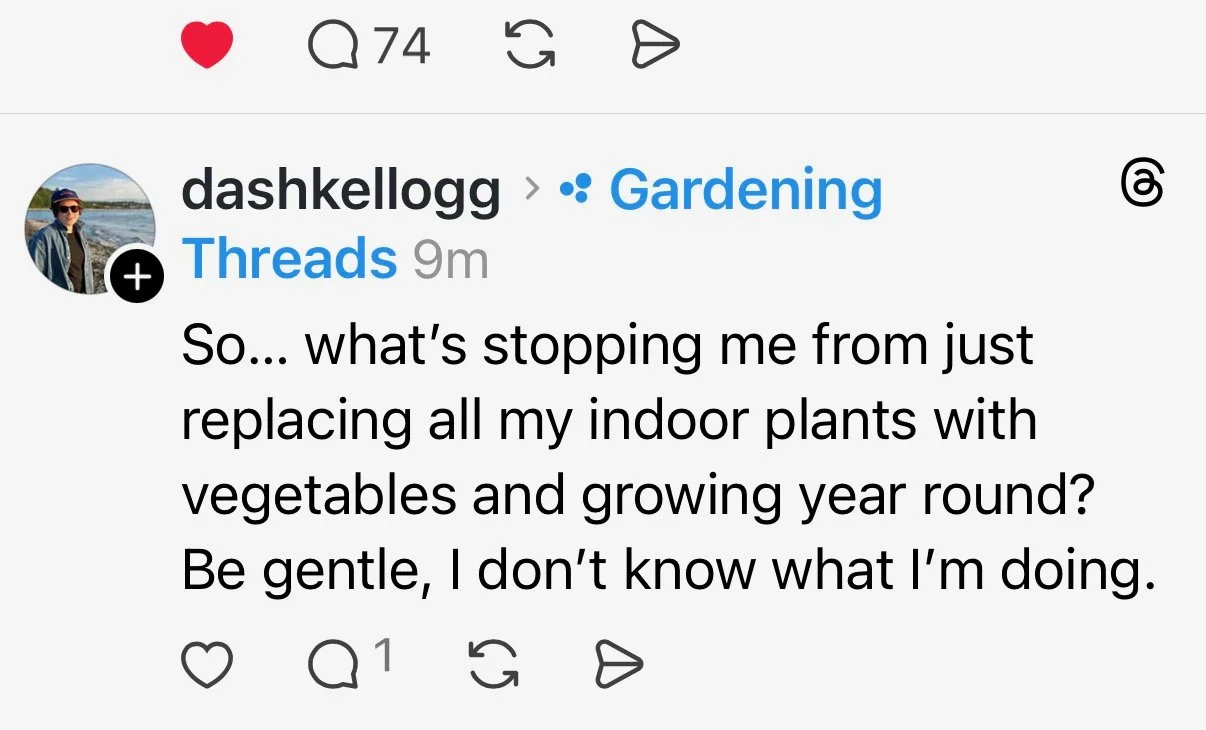
Can You Grow Food Indoors?
You can—but the limiting factor is always light.
If you’re serious about it, you’ll need grow lights and timers. Once you have that dialed in, you can grow quite a bit—lettuces, herbs, even tomatoes in the right setup.
But without enough light, it’s going to be an uphill battle.
at the close…
So… Am I Planting Yet?
After this weekend’s cold snap passes, I’ll start putting some things out—mostly hardier, more established plants. Nothing too tender, nothing I’m not prepared to protect. I’m watching the forecast closely, and I’m ready to cover things if needed.
Right now, gardening feels like a game of chicken. I’m doing enough, but not too much. Paying attention to conditions. Taking care of what’s already there. And watching the weather every single day.
If you have a question, leave it in the comments—I might include it in the nex Q&A!
This post originally appeared on my Substack. Subscribe to my Substack, and all of this gardening goodness will appear in your email inbox weekly!
Happy Gardening!
Angela
Subscribe now so you never miss a thing!