

Stunning Porch Pots with Pizazz
Container Garden Ideas You’ll Love!
When I was a teen growing up in Dallas, we lived adjacent to a very wealthy neighborhood. And as we walked or drove past homes that I could only dream about, there were a few things that made them seem very fancy and tasteful to me: landscaping lighting at night, plants lining the front walk, and HUGE pots overflowing with plants on the porch or at the front door.
Today let's talk about those fancy huge pots – because they aren't just for the 1% – we can have them, too!
I'm going to walk you through how to build out your own gorgeous planters and how to keep them fresh all summer long. Maybe they take pride of place on your front porch. Maybe they festoon your balcony. Maybe they are clustered on a back deck or by a pool. No matter where you put them, big and blowsy are the keywords for summer pots.
We aren't pretending to be fancy or someone who we aren't. We are just bringing beauty in a little closer – and using every square inch we have to our best advantage.
Ok. Let's get started!
Assessing Your Location
Before you invest any money into big containers, you need to figure out what kind of sun exposure you have on your porch, deck, balcony, or other location. And frankly, this can change season to season – and even within a few yards.
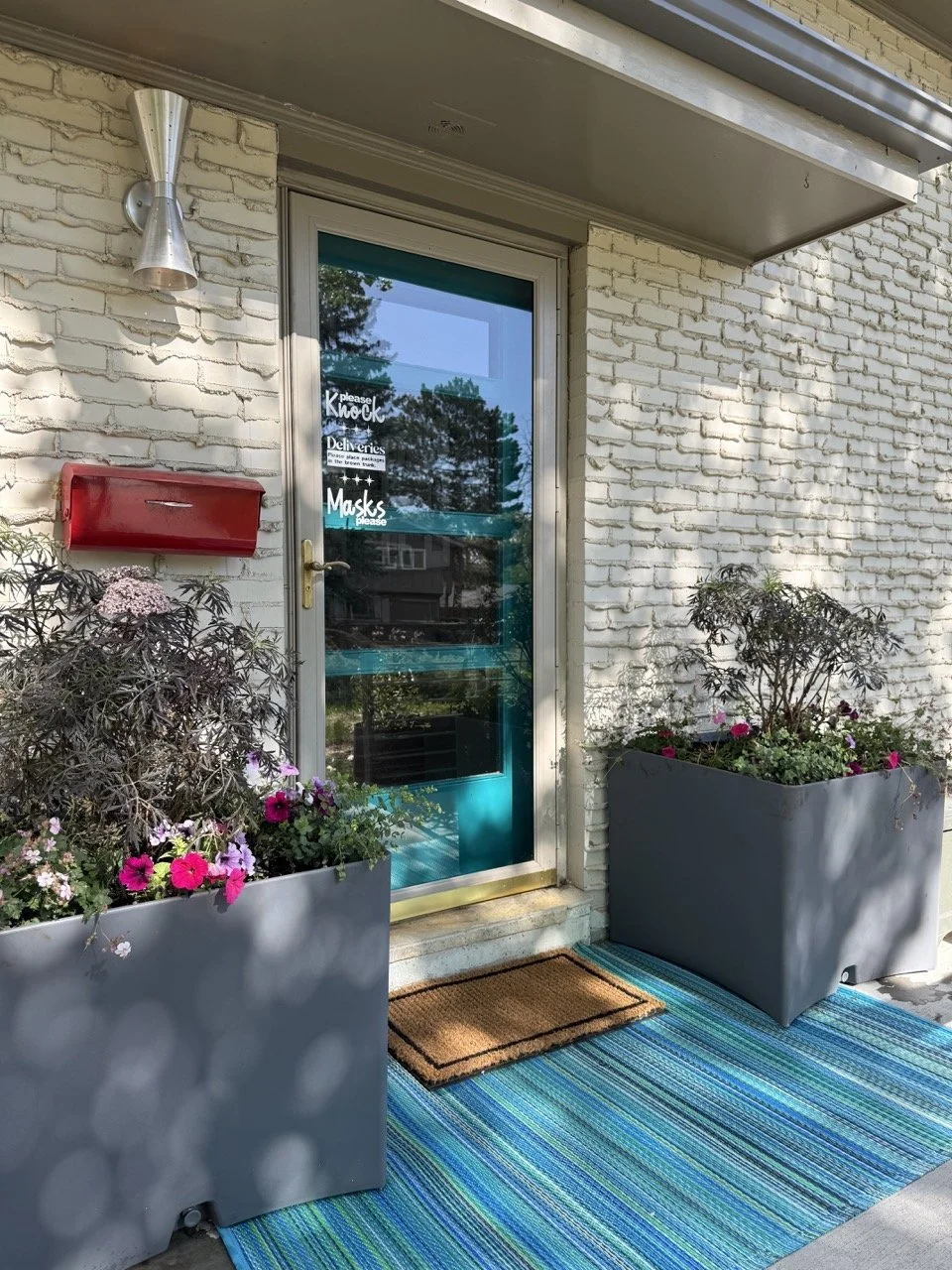
For me, my front porch faces West, and it is in shade all morning, but it gets the brutal summer sun all afternoon. So the plants I choose for the front need to love full sun and lots of reflected heat.
In the back, on our deck, those plants also need to like full sun, because they are in the sun for more than six hours per day, but that is morning sun and is a little less intense. So I can choose slightly different plants for my deck pots than for my front porch.
My front and back gardens also have slightly different aesthetics, so that works well.
Bigger Pots are Better
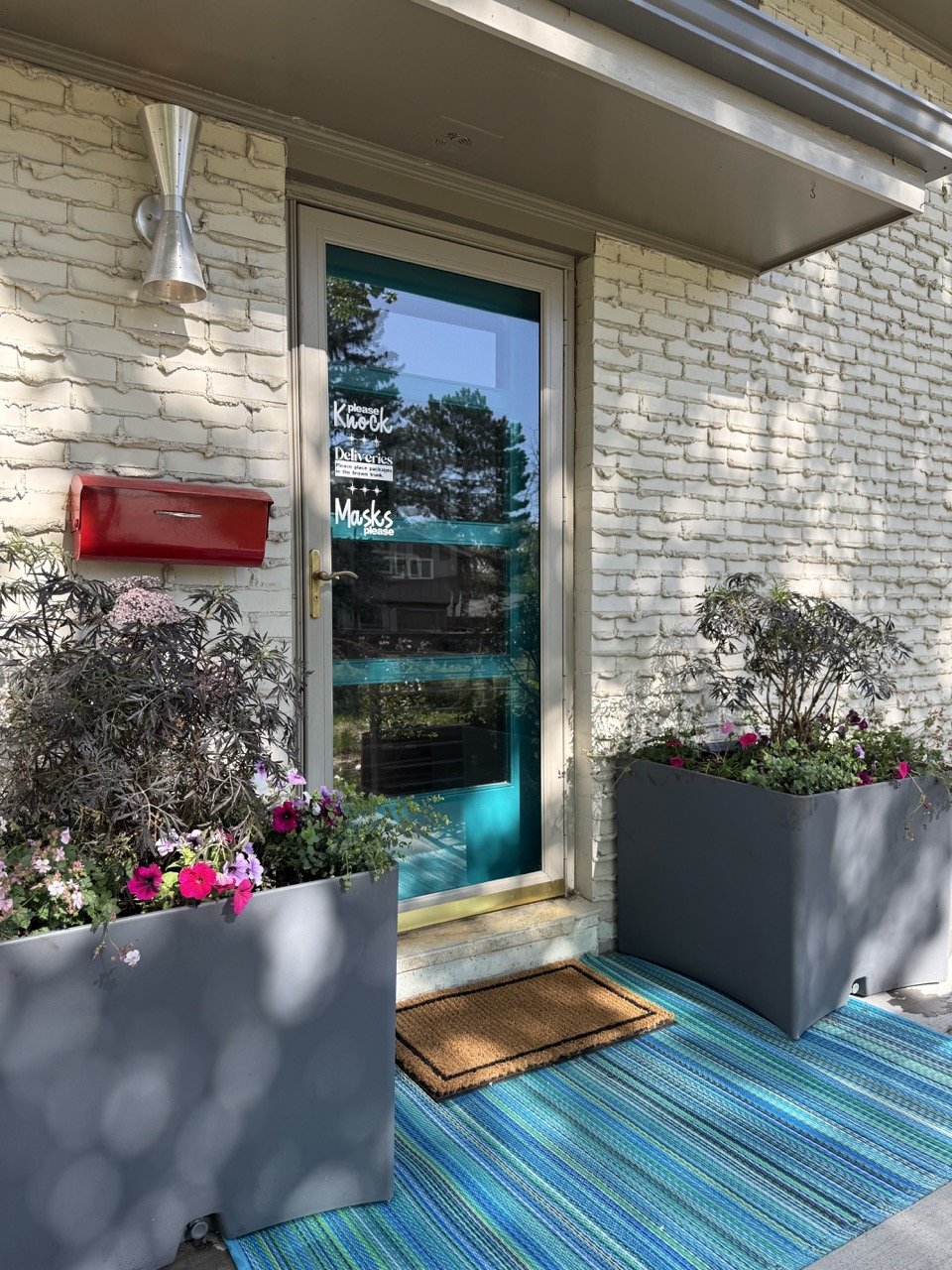
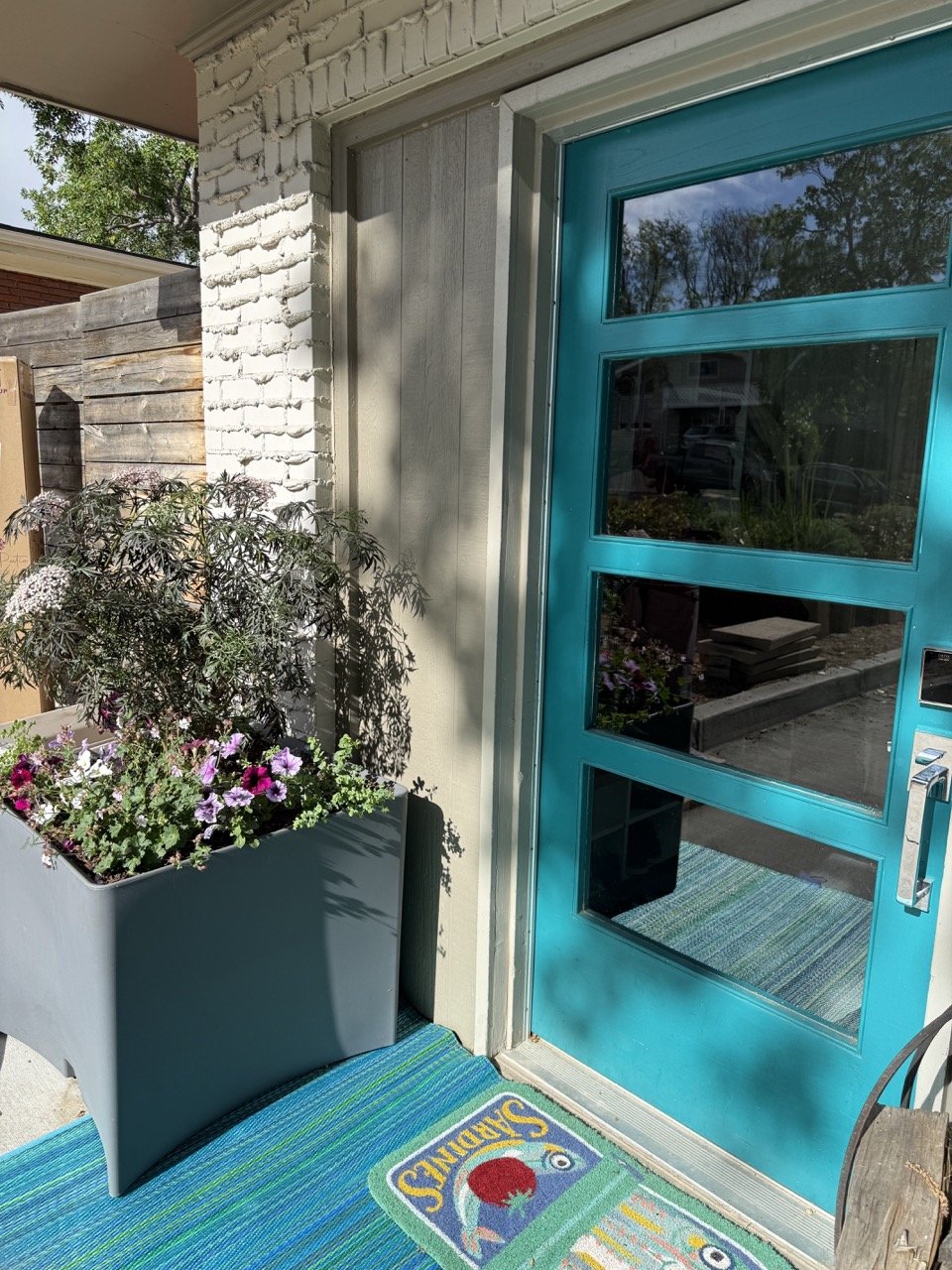
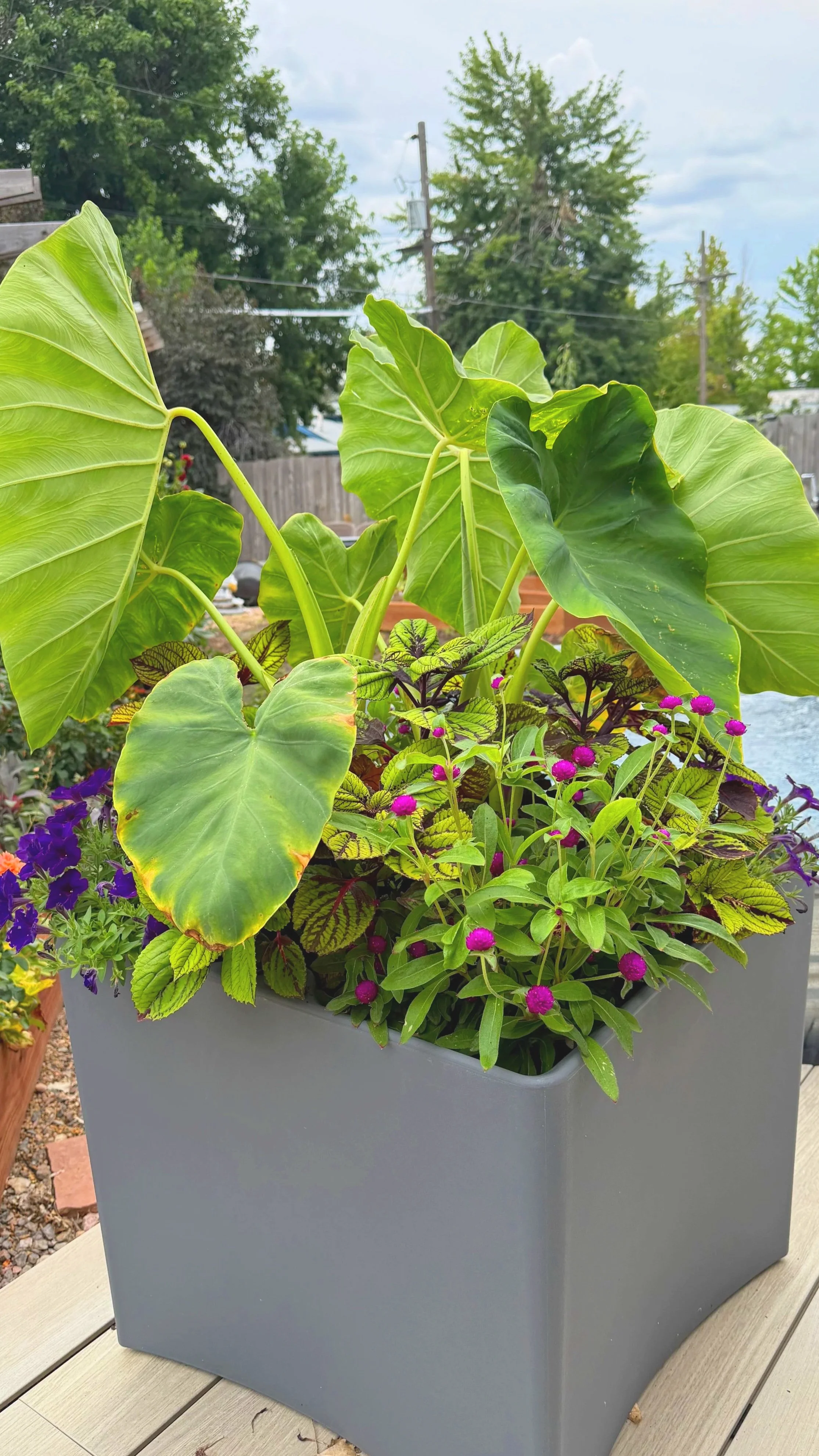
For my front porch, I have the medium-sized, 29" Pinch Planter from Crescent Garden. It's big. Really big. But it is the right size for my porch. First, it is self-watering. But also, that volume of soil gives the plants room to reach down and spread out their roots. And the soil is slow to dry – even with the incessant heat and sun of a Western exposure.

This has been an evolution, though. I started with trash-can planters. They were so cute and gave me height. But they dried out really fast. If you live in a climate with lots of rain – this is a great inexpensive solution. But I do not.
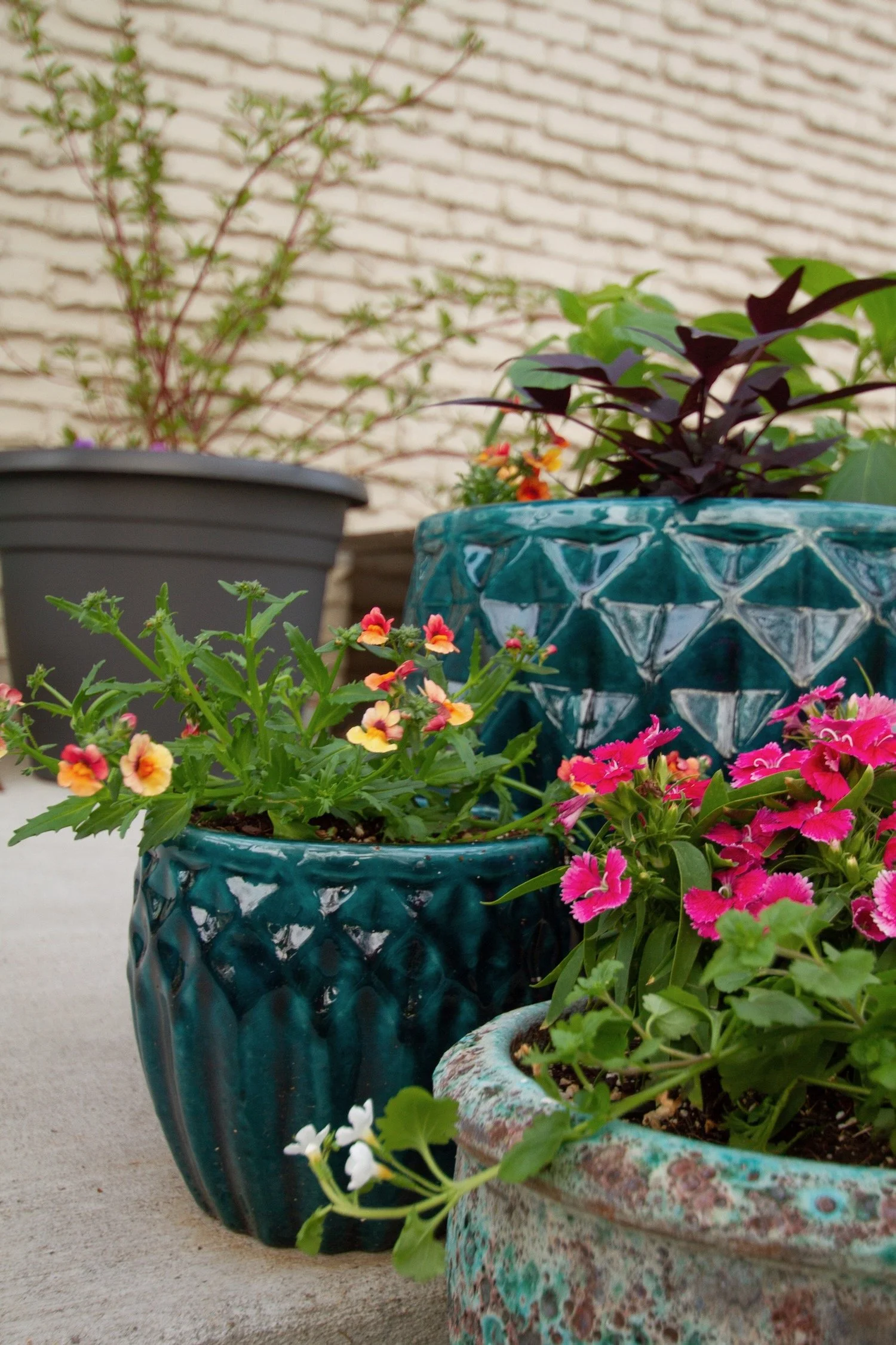
For a few years I tried some smaller terracotta pots on my front steps. They looked so cute in the spring and again in the fall, but once the heat ramped up, I was watering those pots morning and evening – and even then, they often looked rather bedraggled.
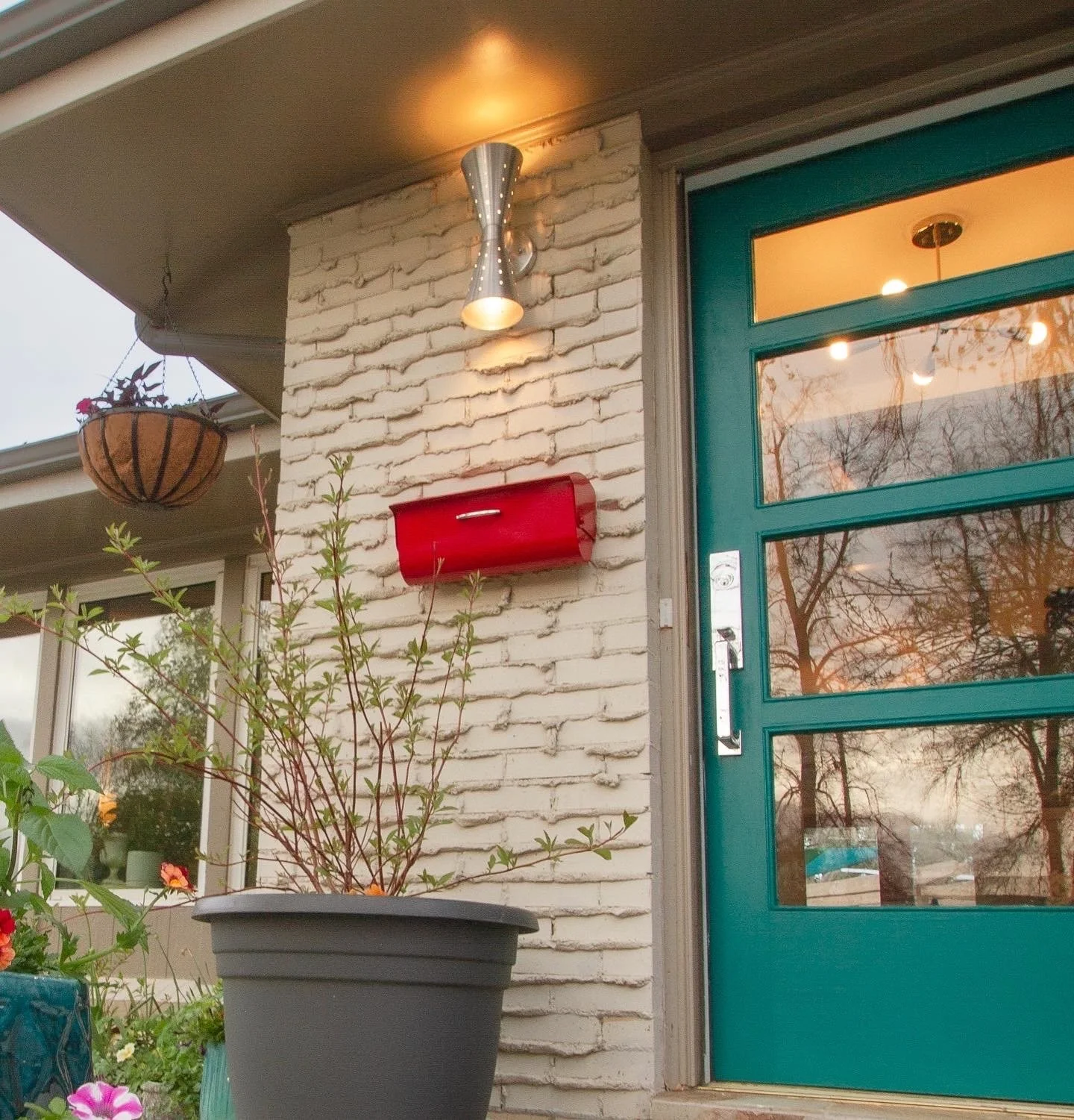
So I replaced them first with larger pots and ollas – a VAST improvement. But I didn't love the style of those round pots. They just never looked modern enough on my Mid Century Modern porch.
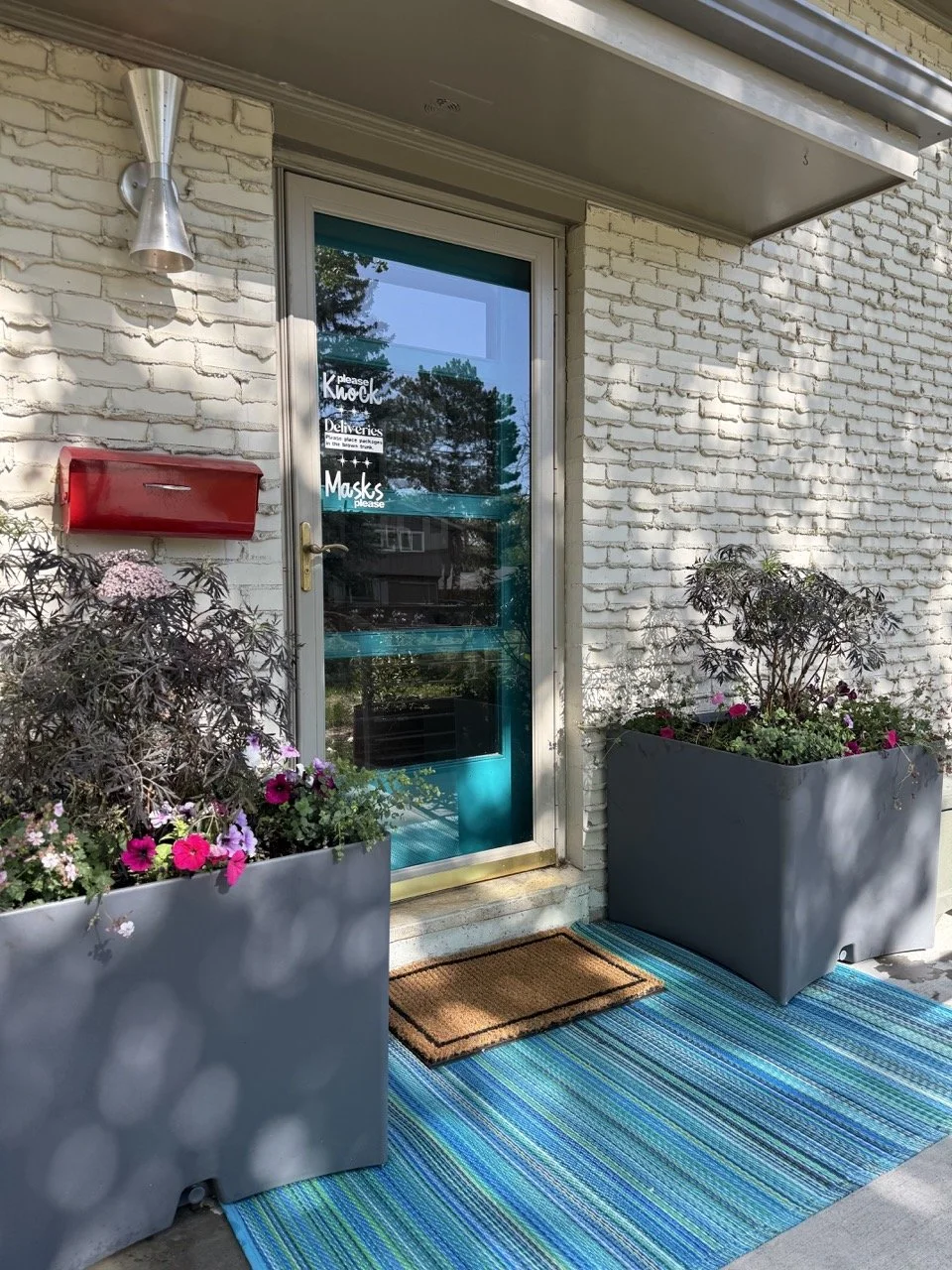
The Pinch Planters are perfection!
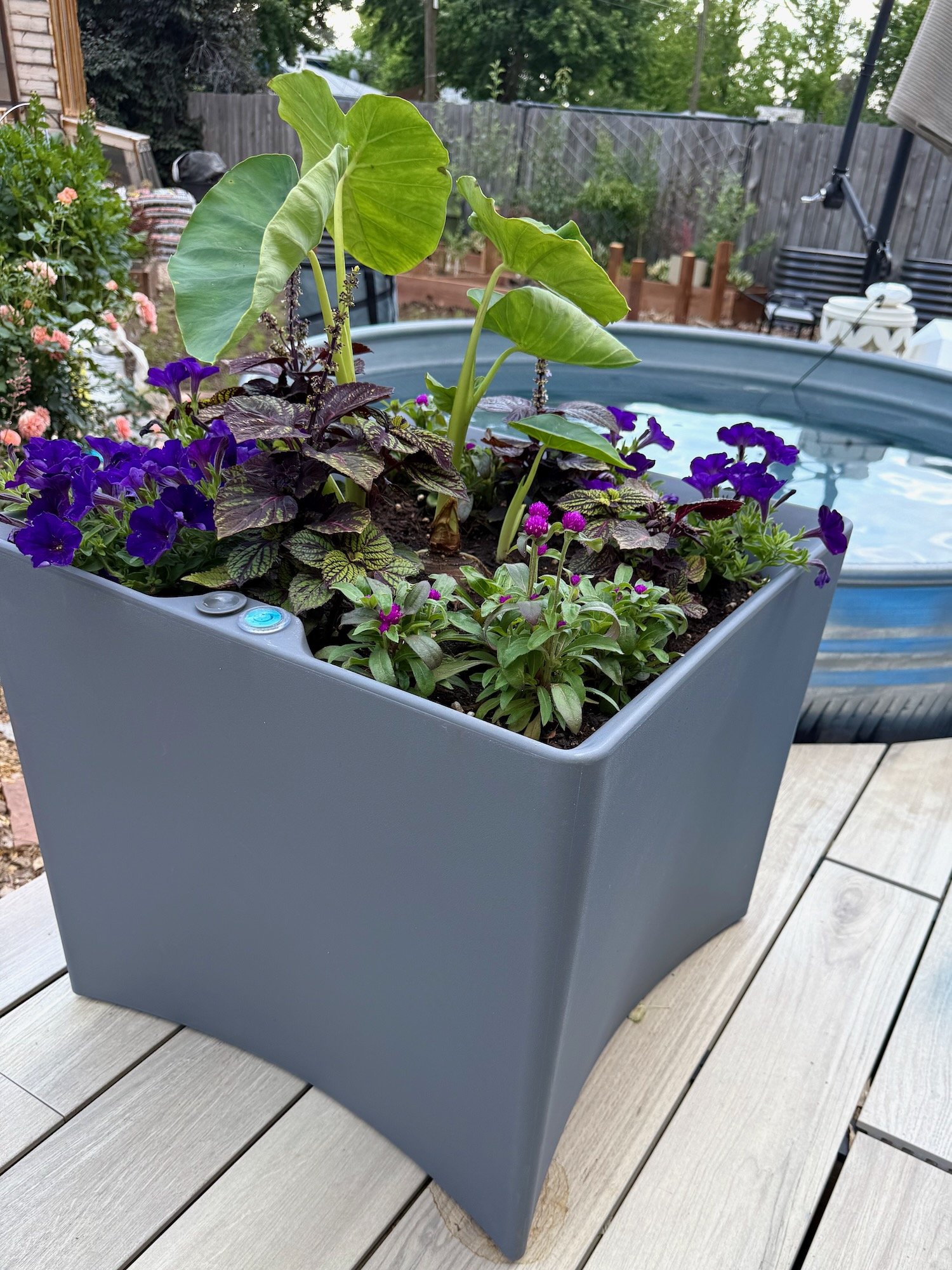
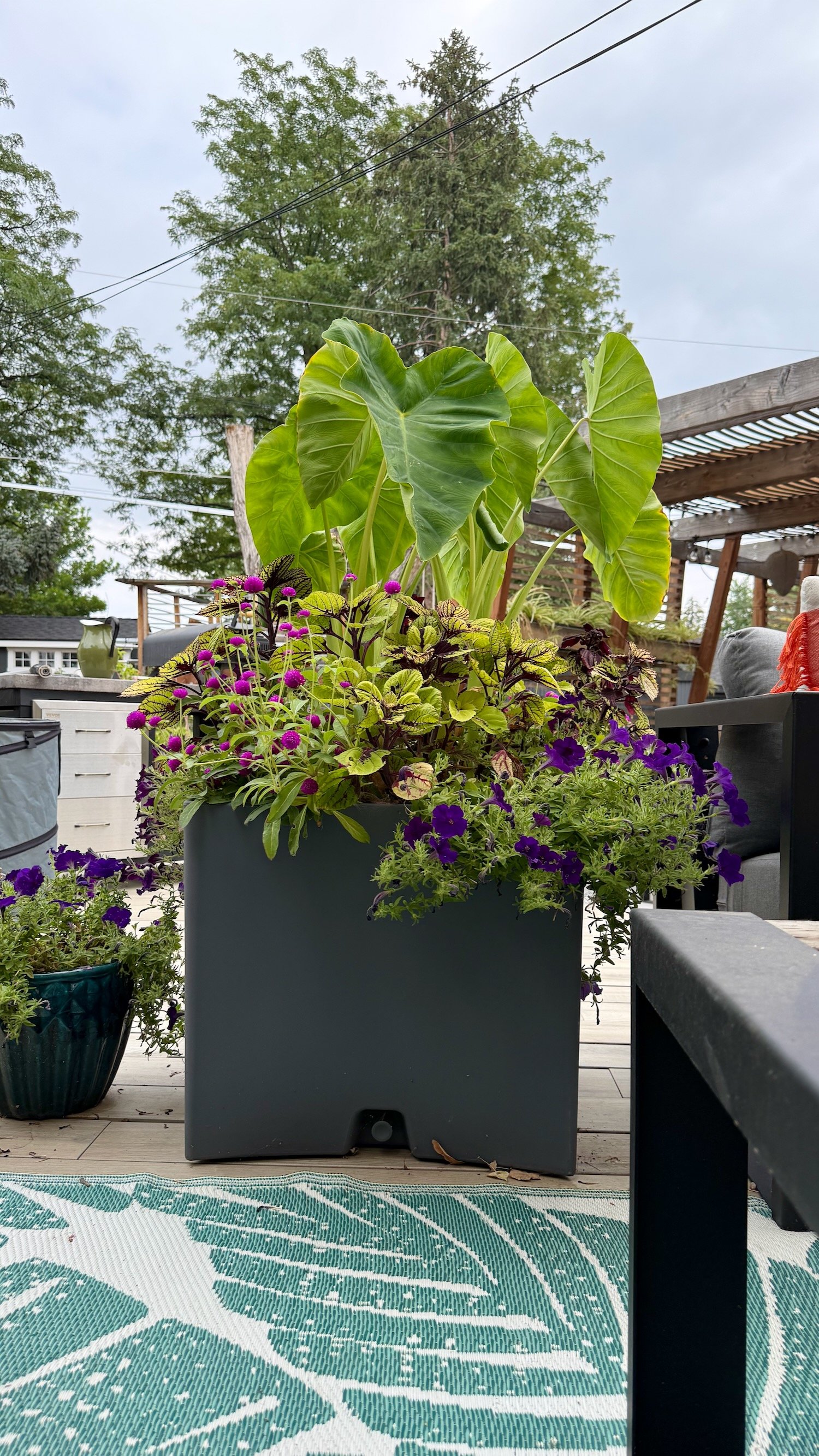
But after we built our deck, I wanted something sleeker. So more Pinch Planters – this time the smaller 23"
version. They are on wheels, so I can stow them away for the winter in the changing room, and filled with tropical plants (my one indulgence) they make the pool area so festive. And since they are self-watering, they keep my plants happy all summer.
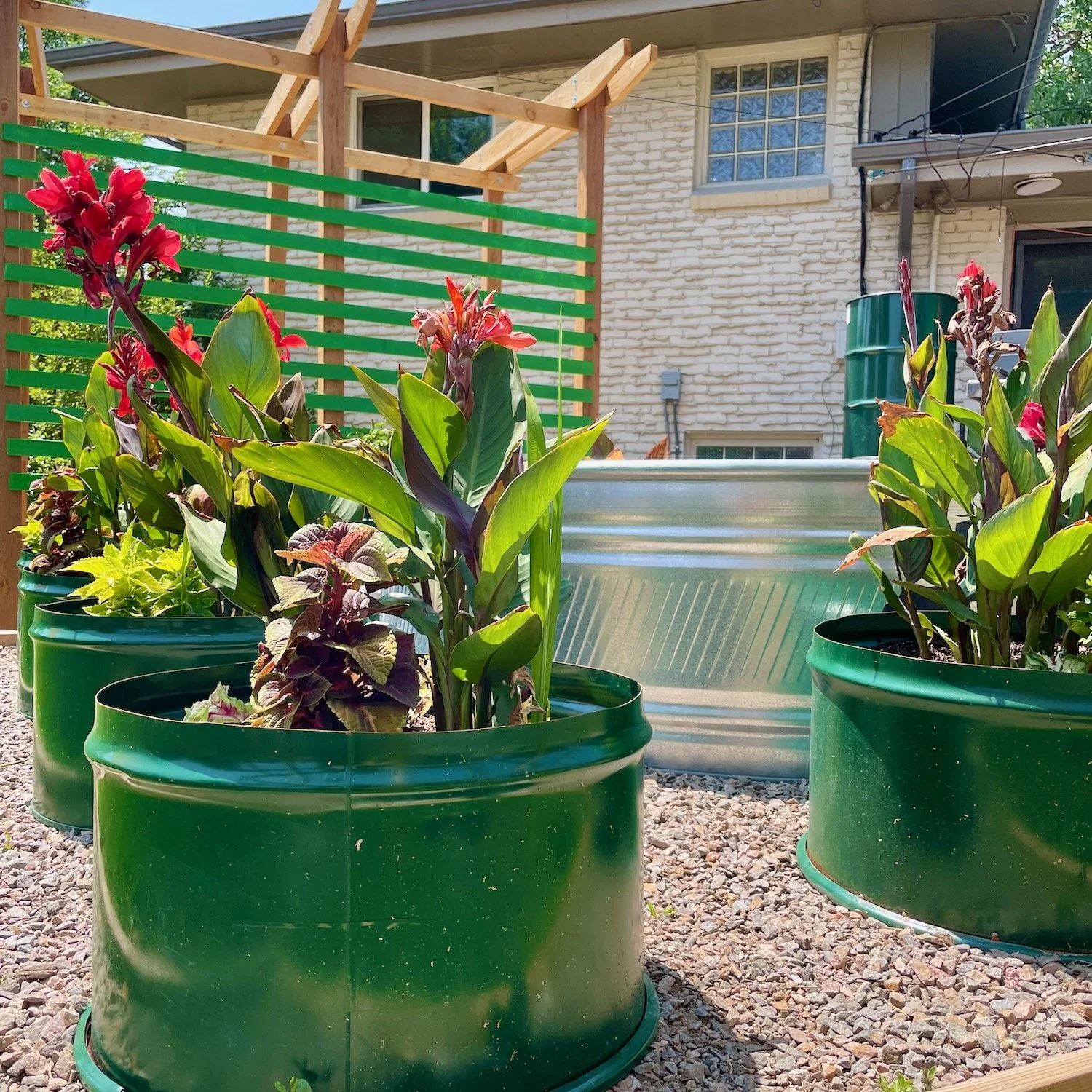
In our back yard, I started with large planters made from 55 gallon barrels. These are a very cheap solution, and they work really well. I grew everything in them – veggies, flowers, you name it.
No matter what type of pot or container you choose, soil volume genuinely makes a difference. The more soil volume your pot has, the more moisture it can hold and the slower it will be to dry out. Those rich people with their huge planters knew that when I was a kid – and now I know why.
My best tip for Vacation Watering: Designate a place for your pots to be gathered while you are out of town. Ideally it will be a spot where they will be watered by your sprinkler system (like on a garden path). But even if you are hiring someone to come to water for you, moving them close together reduces the likelihood that one plant or another will be neglected.
Another vacation strategy: place all of your pots together in a wagon or wheelbarrow filled with 5-10 inches of water and move them all into the shade. This only works if your pots have drainage holes or are unglazed terracotta. But it has worked many times for me! I usually come home to find the water is gone, but the plants are healthy and happy.
Make a Watering Plan & Plan for Vacations
This may sound elementary, but here's the thing: no matter how pretty your pots are, if they are a pain to water, they will suffer. So make a plan first! Here are some ideas – all of which I have done at one time or another:
Put your pots within easy reach of a hose – or relocate the hose to make watering easier.
Find a good watering can that is easy to fill and to carry to do the watering.
Put ollas into your pots so you don't have to water as frequently.
Tap into a drip irrigation system – or consider installing a small one for your pots.
Place your pots within the watershed of your sprinkler system. You can even repurpose a sprinkler head to water specific pots with some minor adjustments.
Invest in self-watering pots – more on that below.
Don't forget to take advantage of rainfall! If rain is in the forecast, move your plants around to take maximize it!
Consider Self-Watering Pots
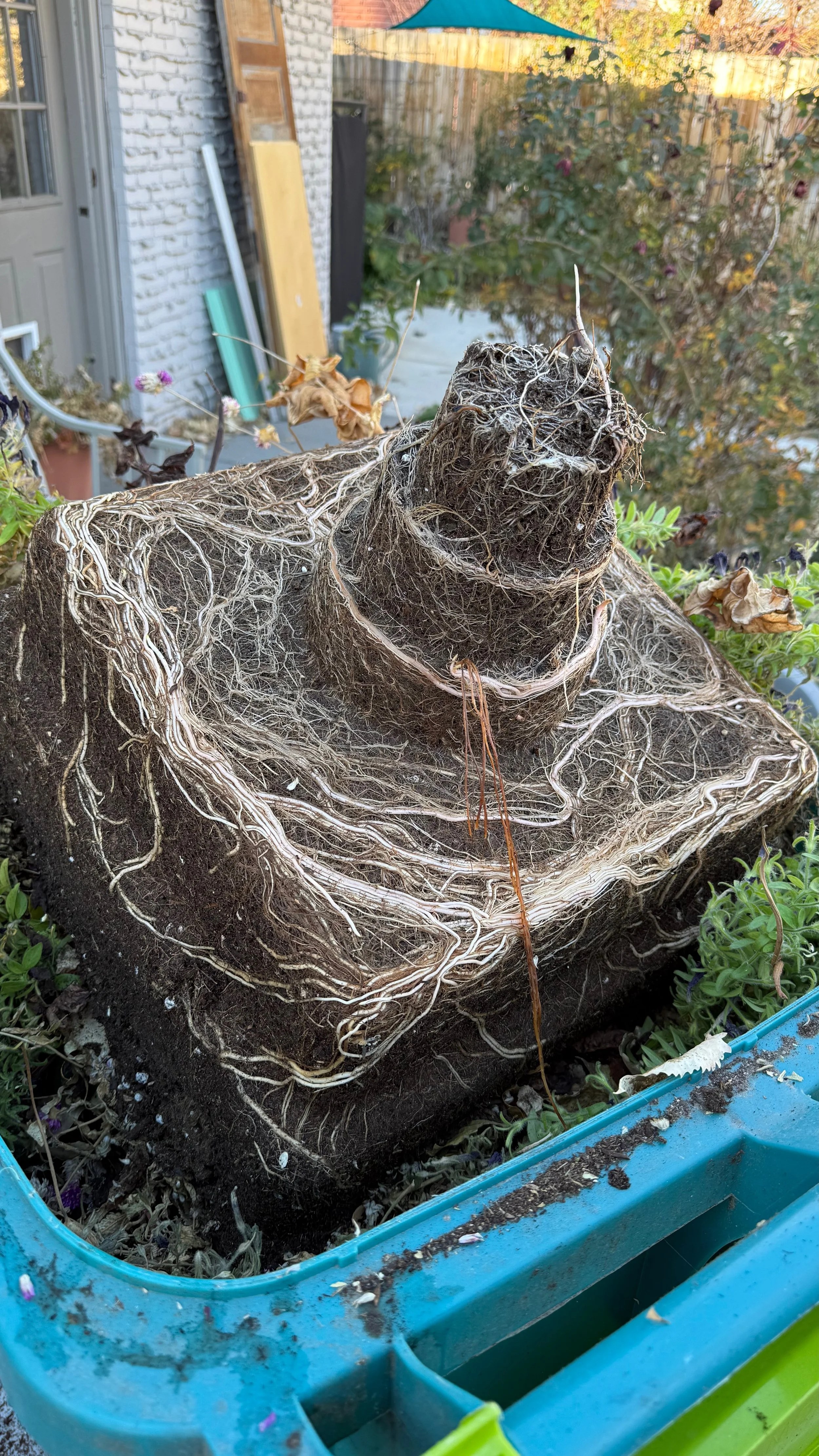
I am a BIG fan of self-watering pots. They are such an easy and efficient way to keep your plants healthy over the summer. In general, a self-watering pot has a reservoir at the bottom which maintains contact with the soil. The soil can only take up so much water, so it maintains a perfect moisture level as long as the reservoir is filled on a regular basis. And the bigger the reservoir, the longer your pots can go between waterings.
My favorites are from Crescent Garden. Full disclosure, I have a professional relationship with Crescent Garden, but I maintain that relationship because I LOVE their products.
I have their Pinch Planters in two different sizes, and they are fabulous! They have transformed my front porch and our back deck, too.
Additionally, I have one of their new Flex Self-watering planters. This is an insert designed to drop into many of their other planters, but I also think they would work in other round pots – as long as your pot doesn't have a drainage hole in the bottom.
Crescent Garden Discount Code!
Click here to order and use Promo Code: WILDREVIVAL15
15% off total purchase
Expires 12/31/2026
Cannot be combined with other offers
For more about self-watering pots, check out this post:
Spillers, Thrillers, and Fillers
Fillers
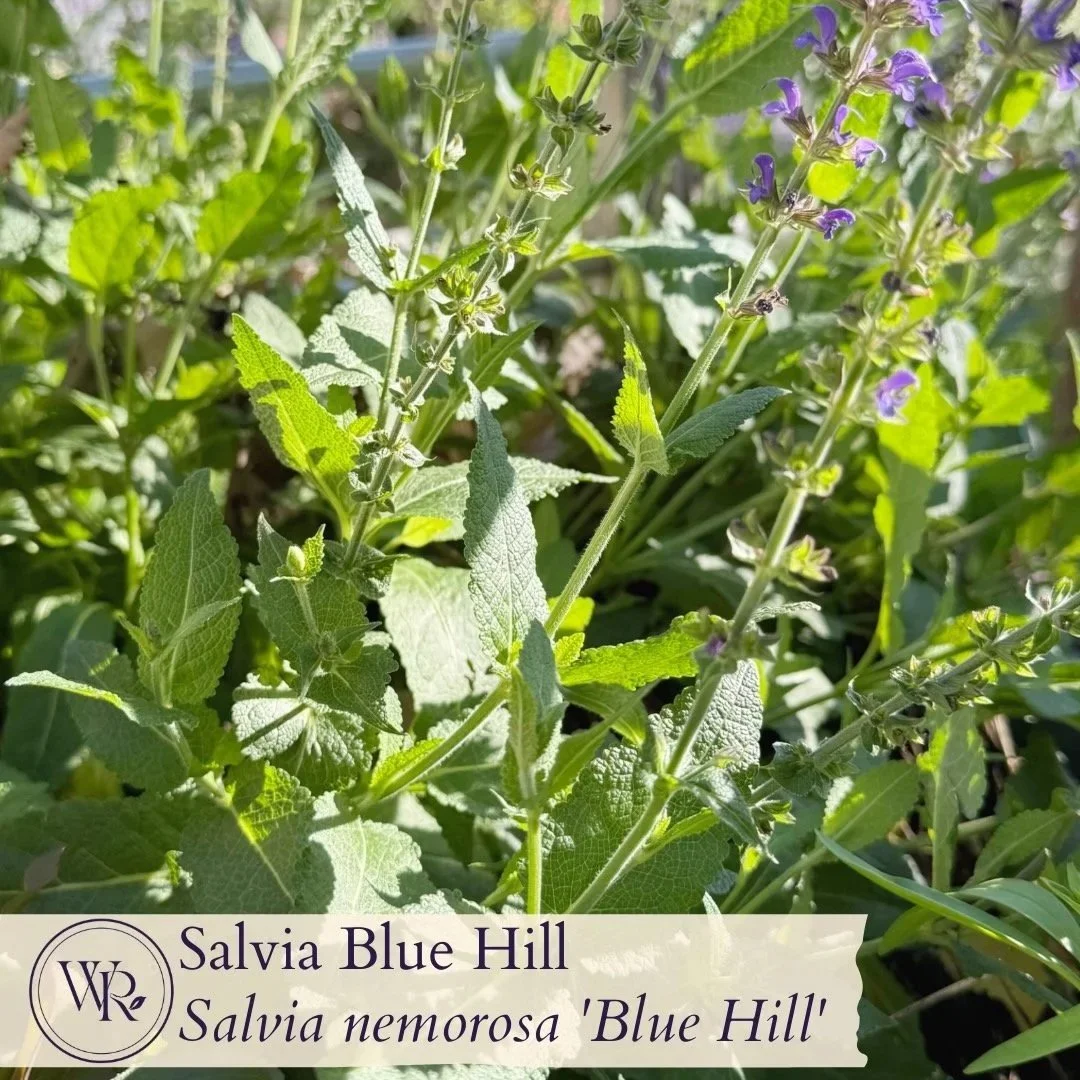
Salvia
Coleus
Heuchera
Gaura
Agastache
Coreopsis
Basil
Salvia
Mint
Pansies
Violas
Now for the really fun part! When choosing your plant combinations, the conventional wisdom is to combine "spillers, thrillers, and fillers."
Spillers: plants that will eventually tumble over the edges of your pots and trail down
Thrillers: plants that add height and will eventually be as tall as the container itself (ideally)
Fillers: plants that provide volume and fill in the spaces in the pot
My goal is that by the middle of summer, the soil in the pot isn't visible and neither are the edges of the pot itself. I want voluminous, opulent plants.
But I am also CHEAP. I don't buy huge plants. My planters start out small in May and develop over time. If I am going to use bedding plants, I buy little plants in 4- and 6-packs, and I just wait for them to mature. I am patient! And spending a ton of money on my pots – it's just not in the budget.
Some of My Favorite Plants to Use in Pots
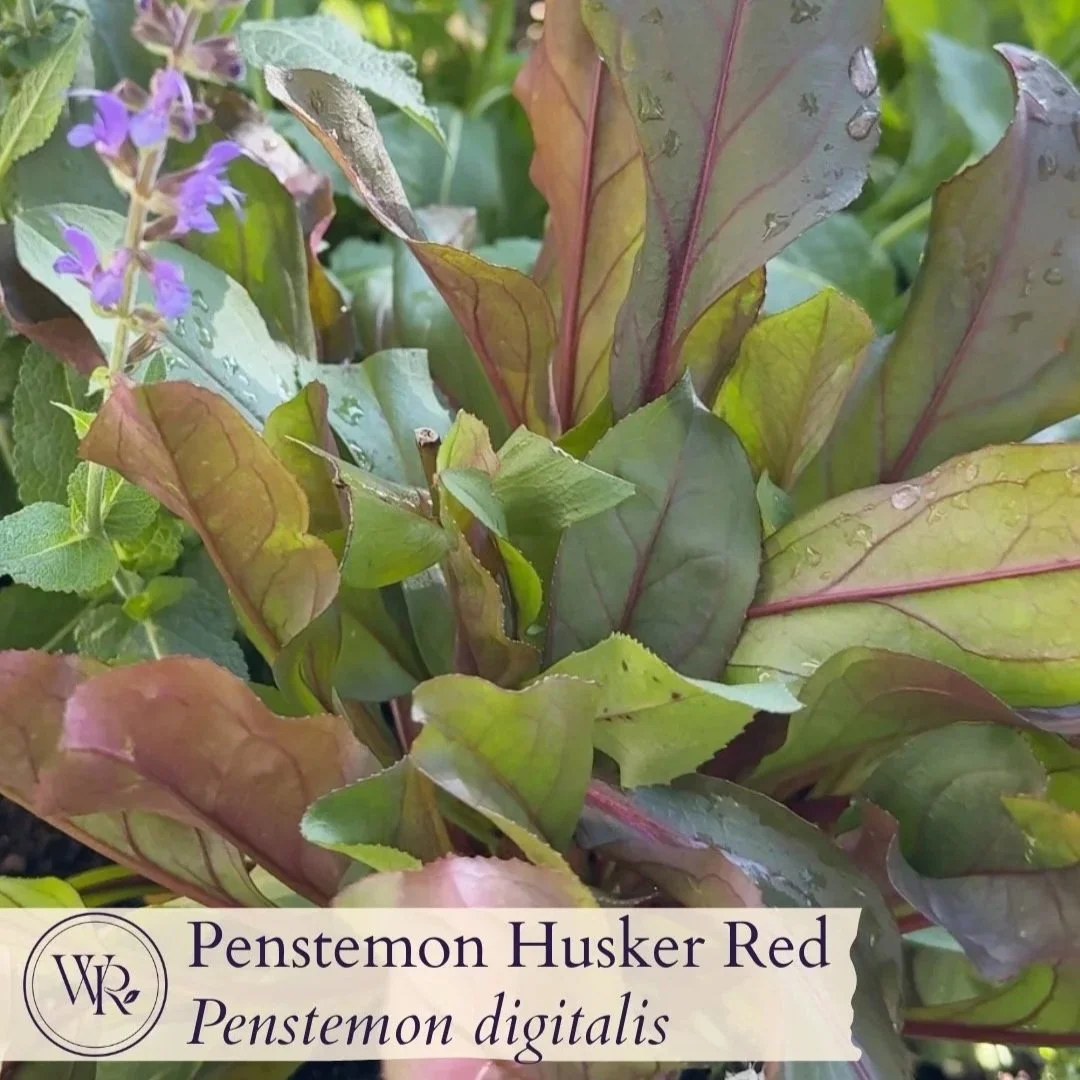
Penstemon digitalis
Coleus
Papyrus
Aeonium
Yucca
Ornamental Kale
Rosemary
Lemongrass
Helianthus angustifolius
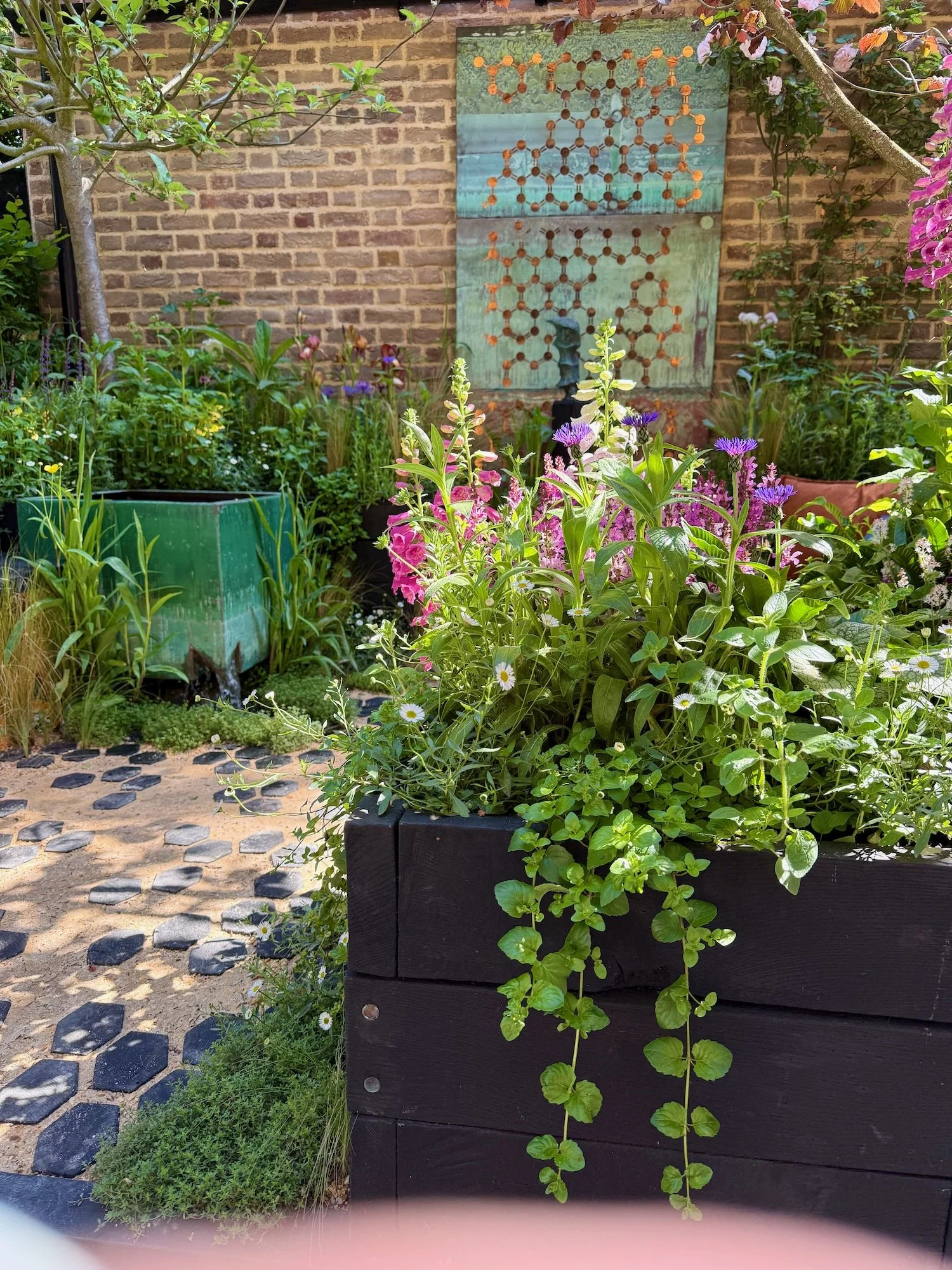
One of the gorgeous container gardens at the 2025 Chelsea Flower Show filled with familiar plants.
Spillers
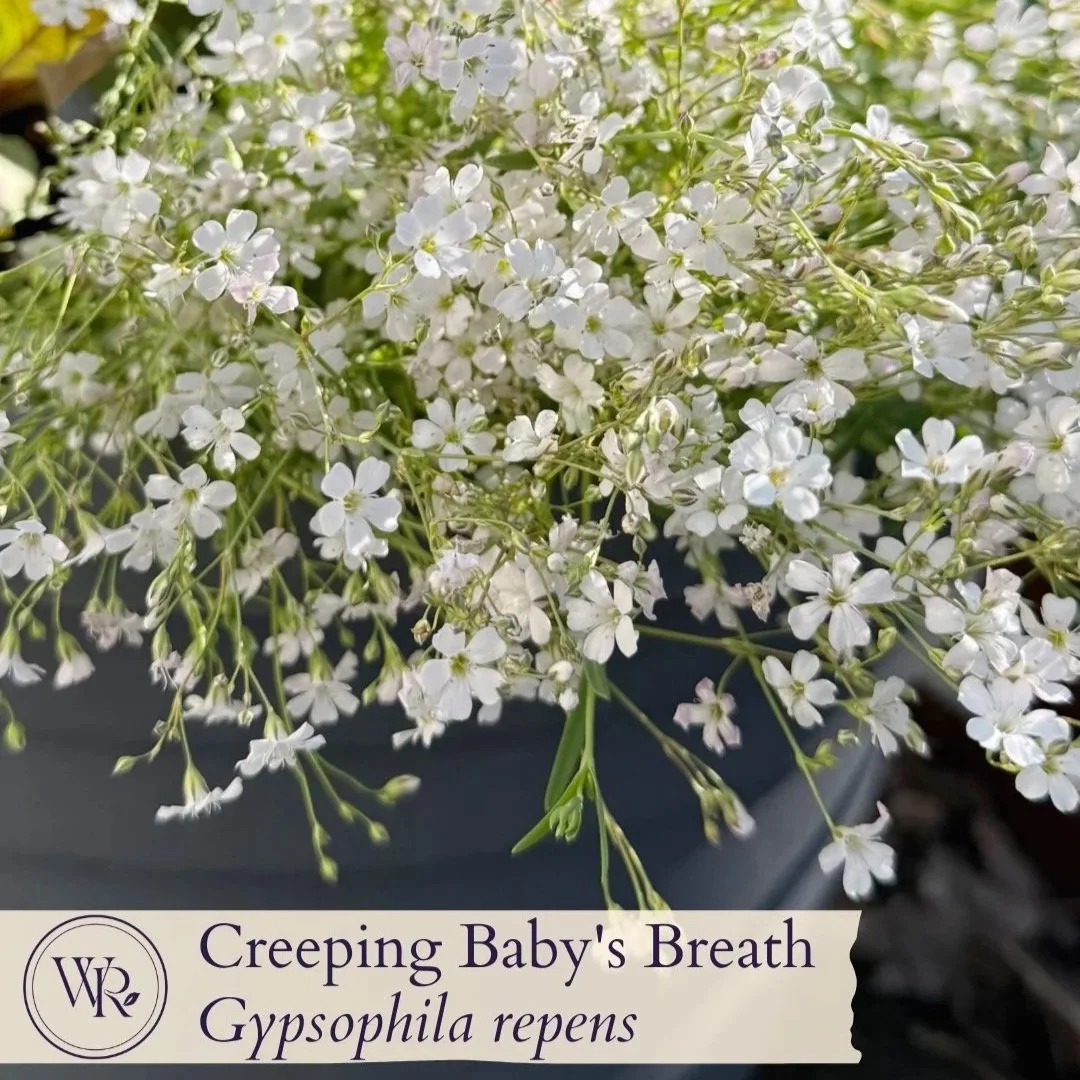
Gypsophila repens
Dichondra argentea 'Silver Falls'
Helichrysum
Phlox subulata
Creeping Jenny (invasive in some areas)
Scaevola
Carex
Erigeron karvinskianus
Wild Strawberry
Thrillers
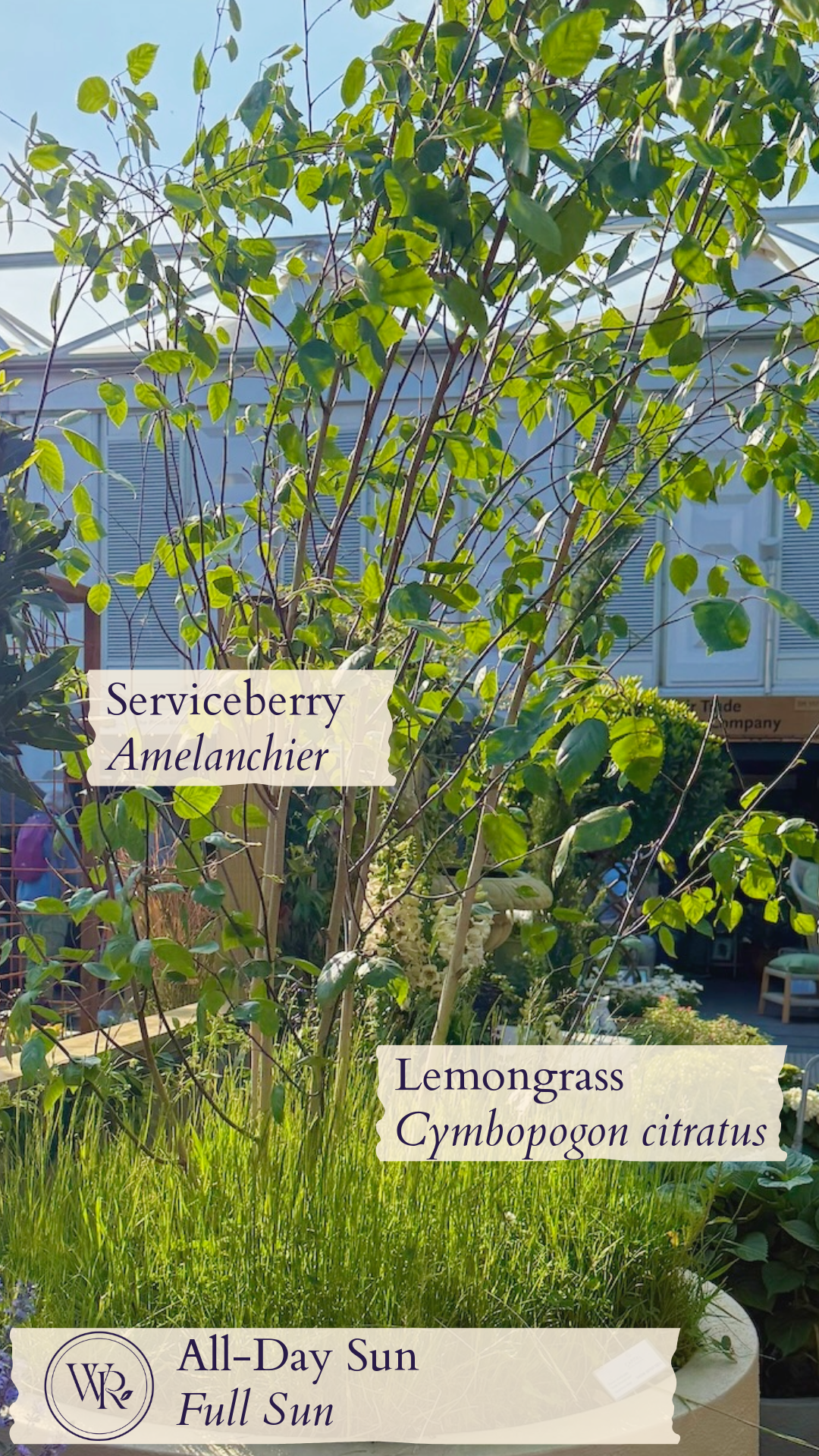
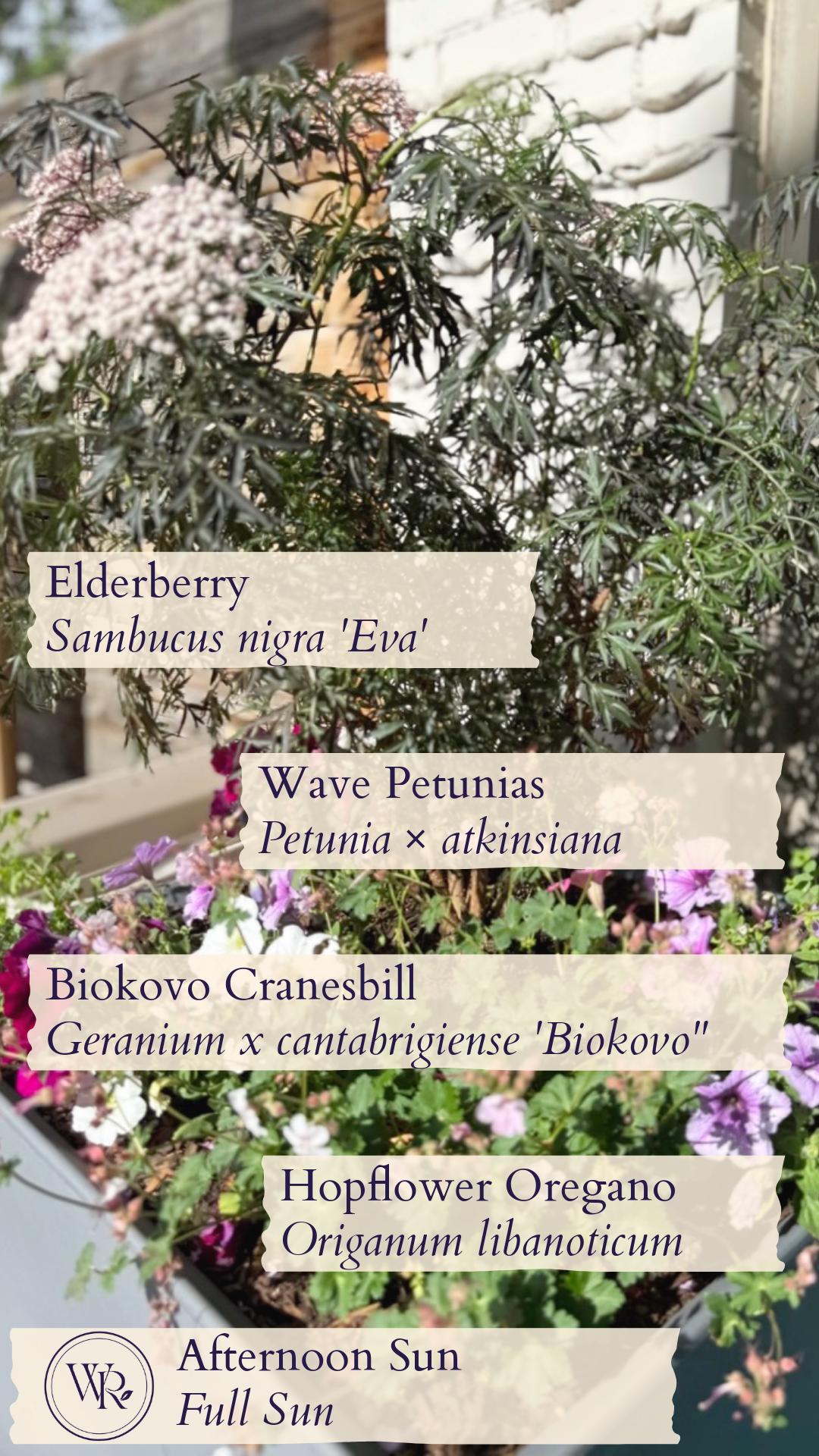
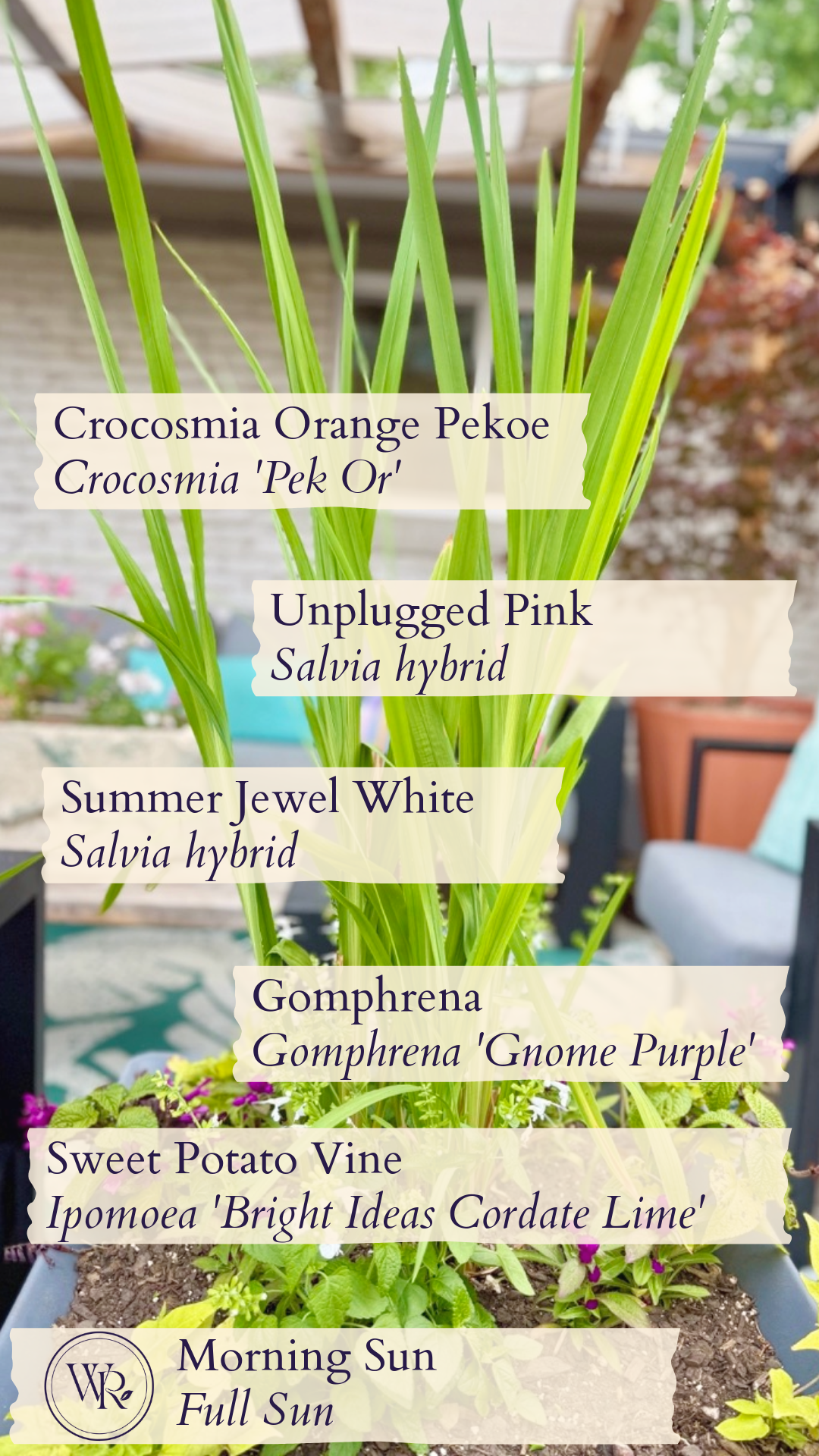
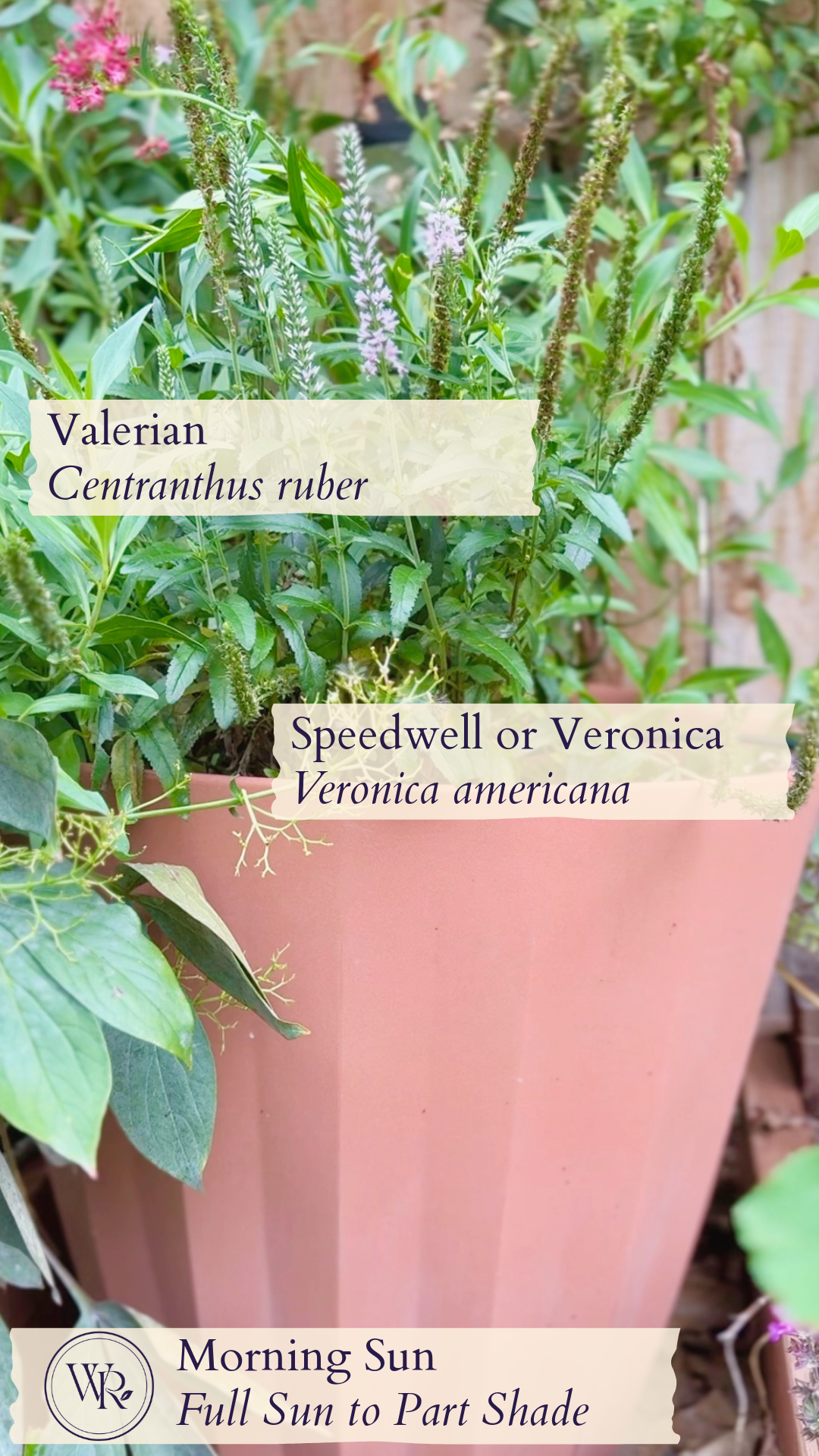
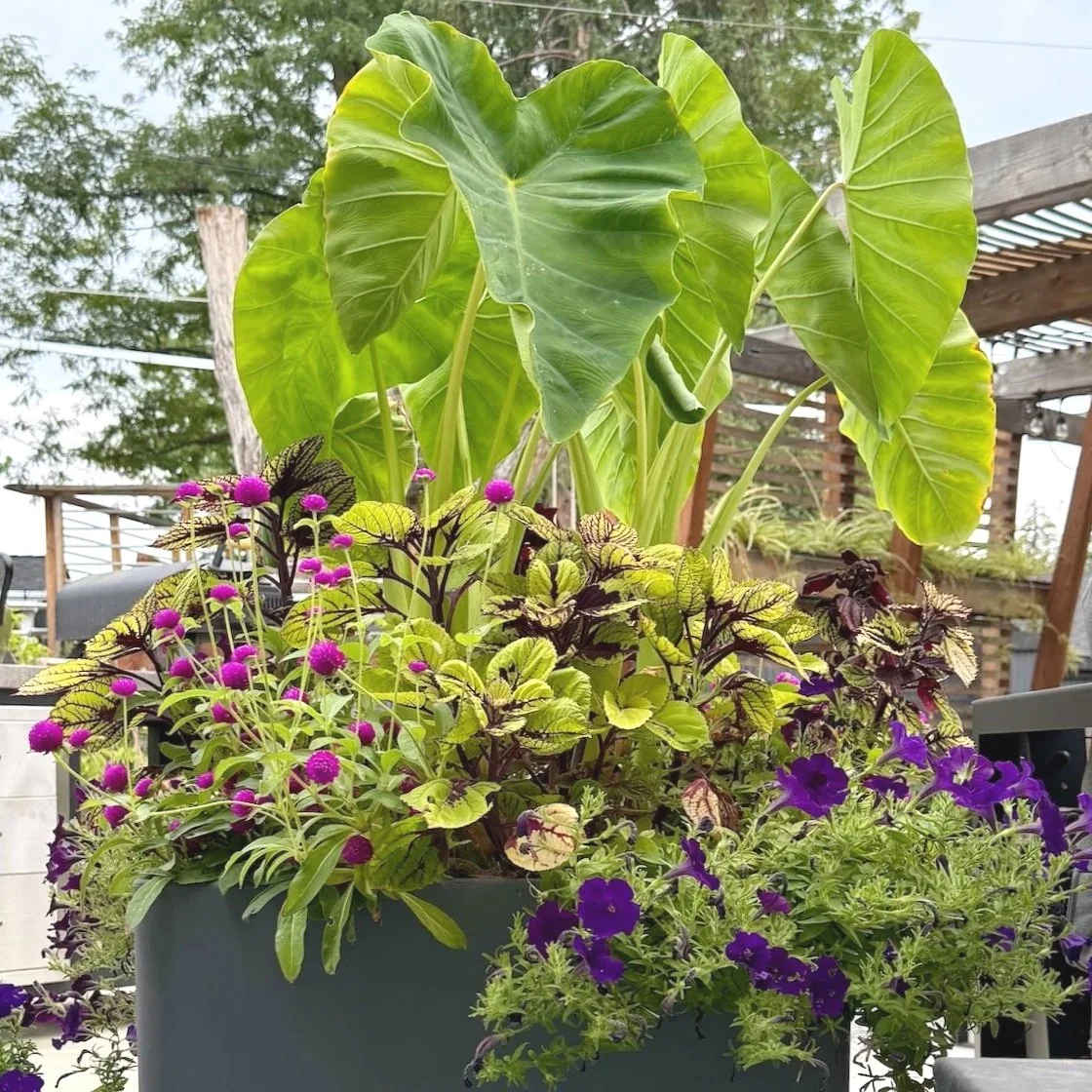
Porch Pot Combinations
Here are a few of my favorite porch pot combinations.
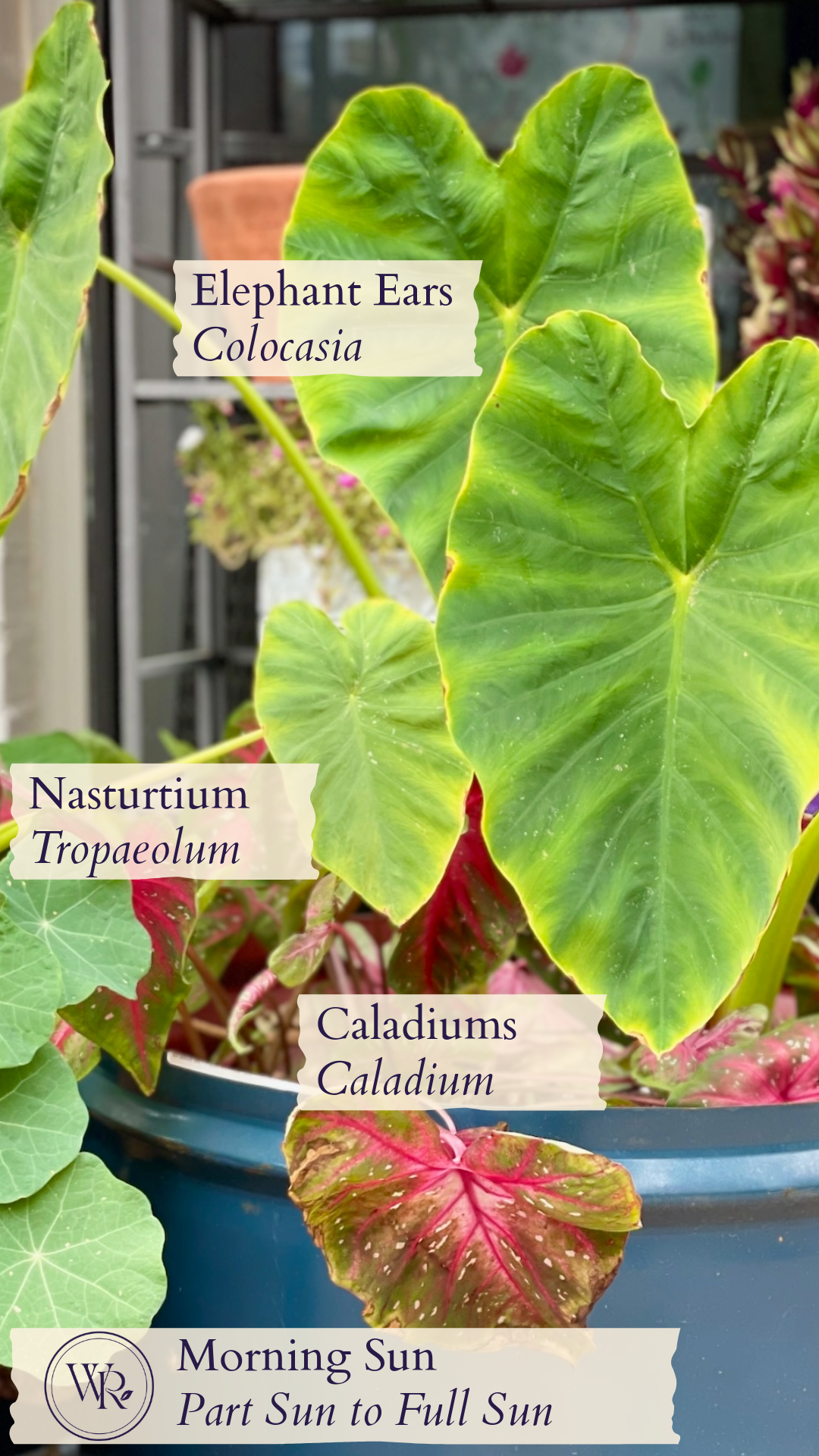
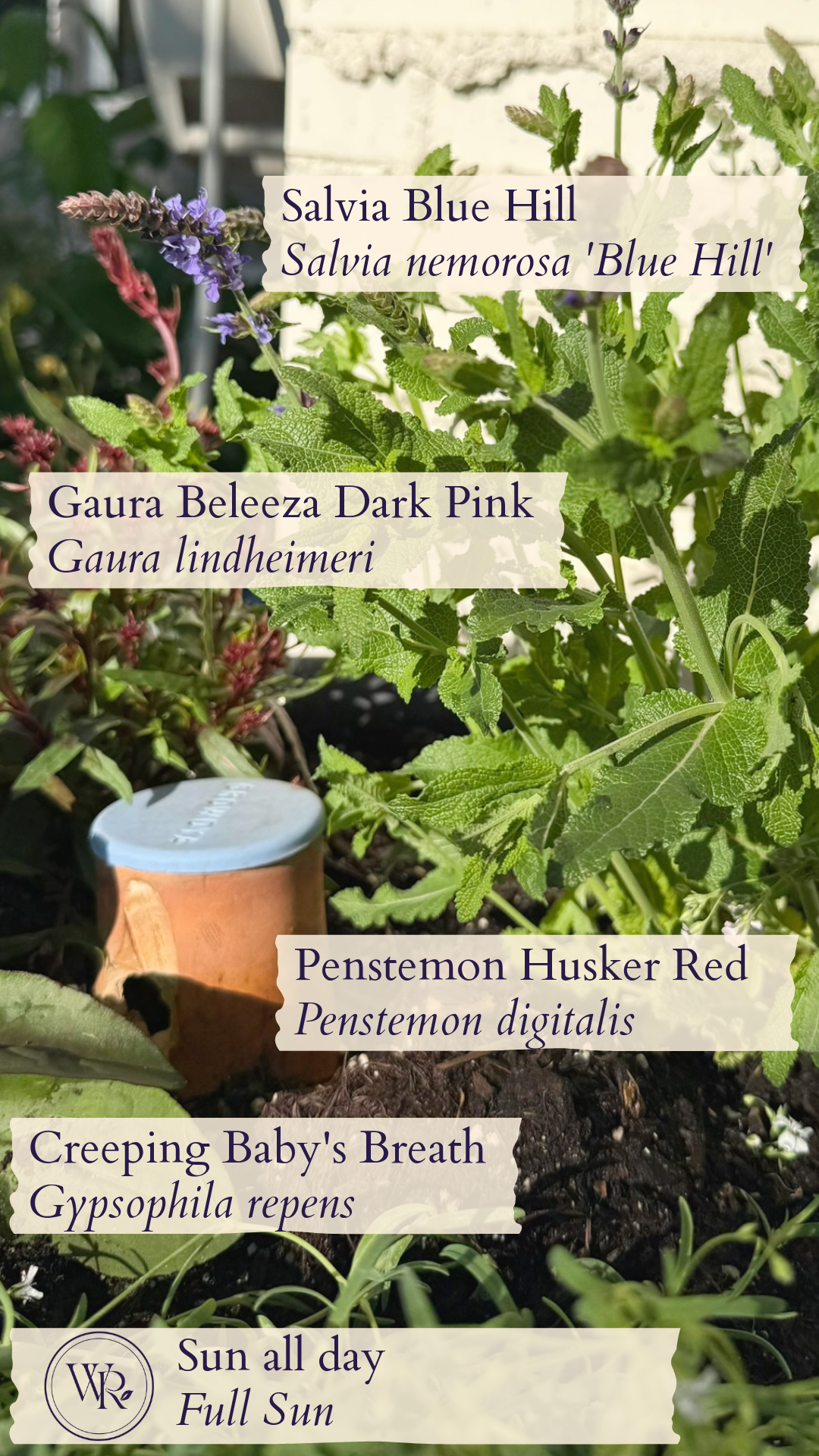
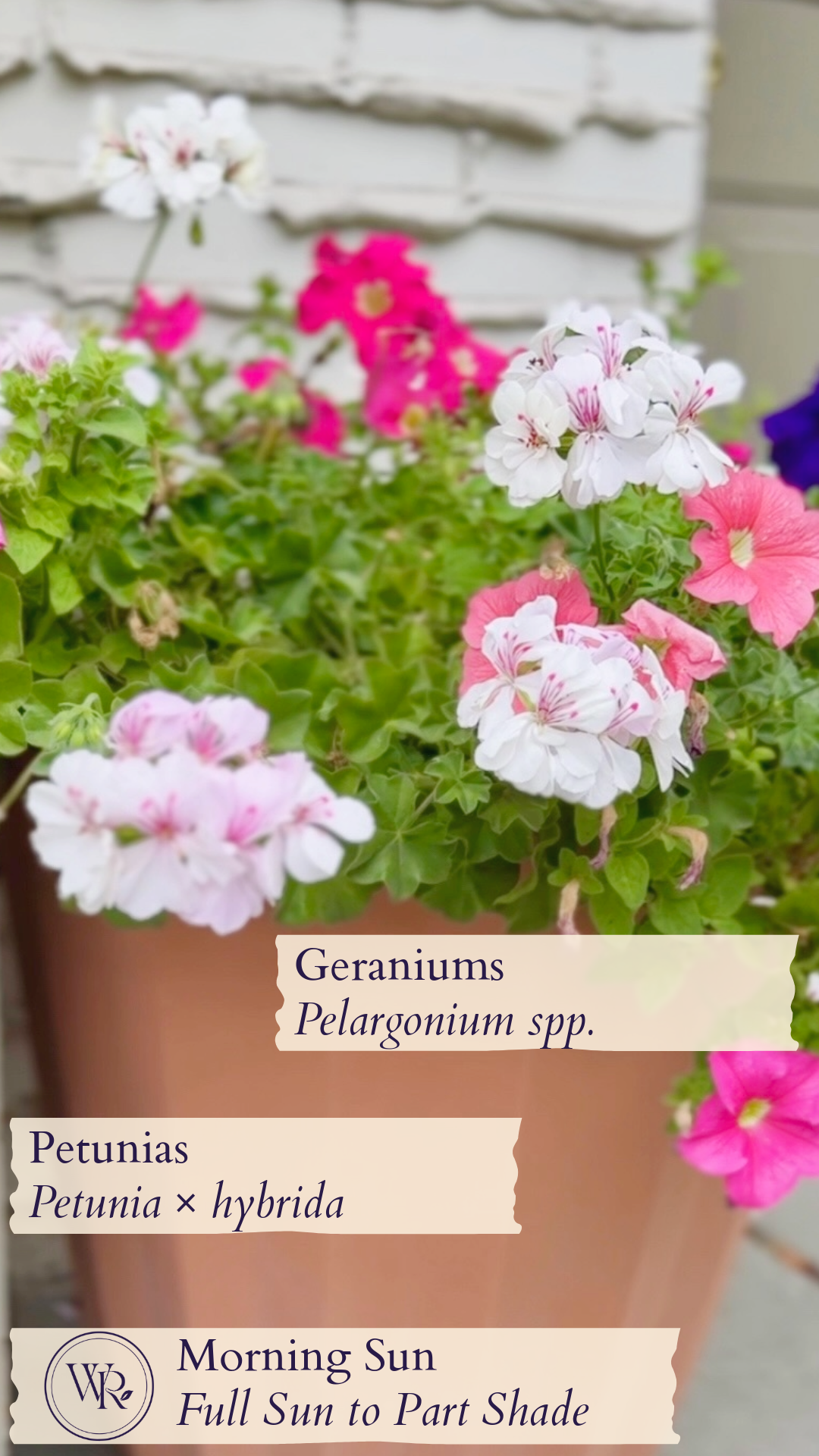
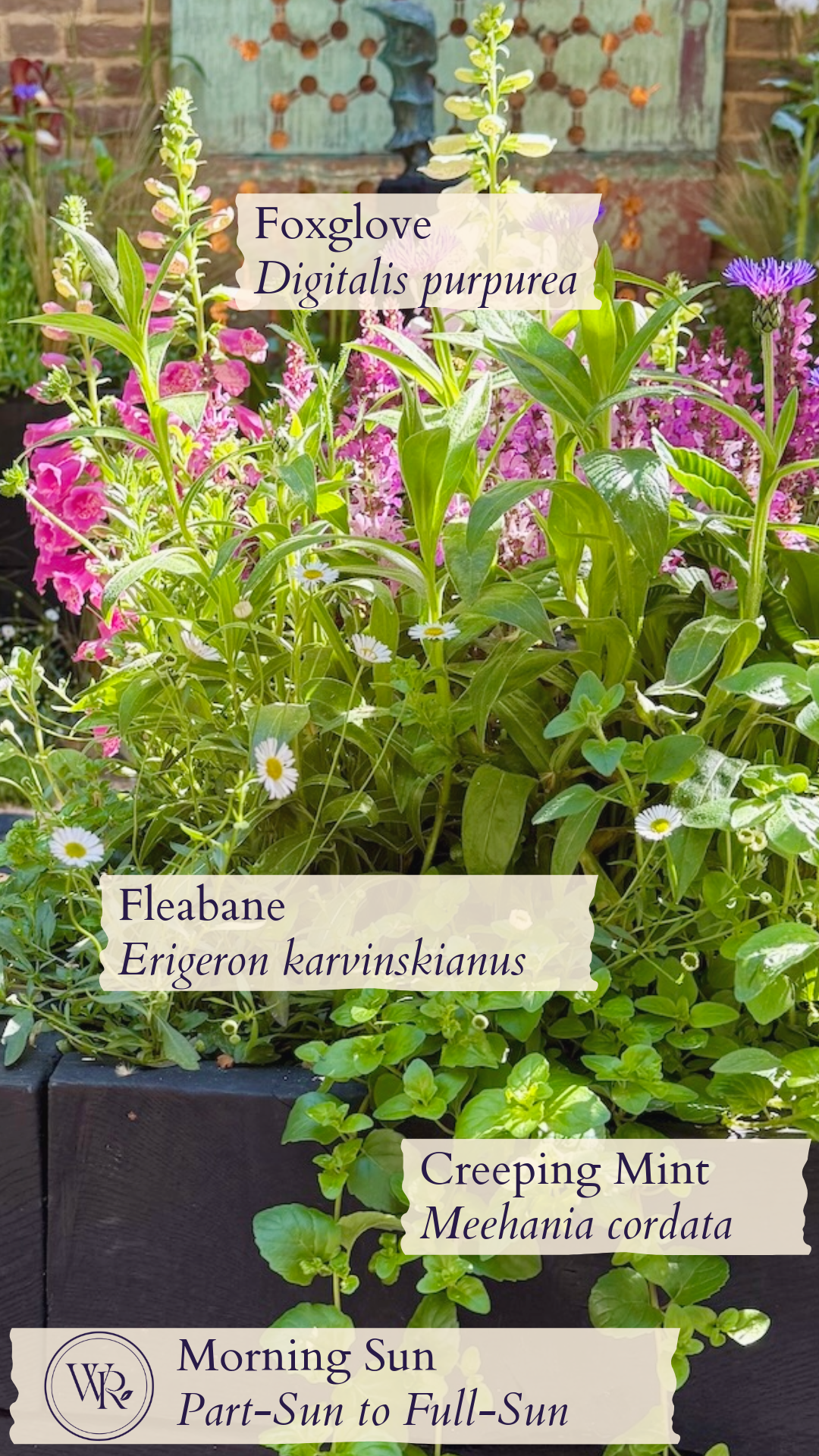
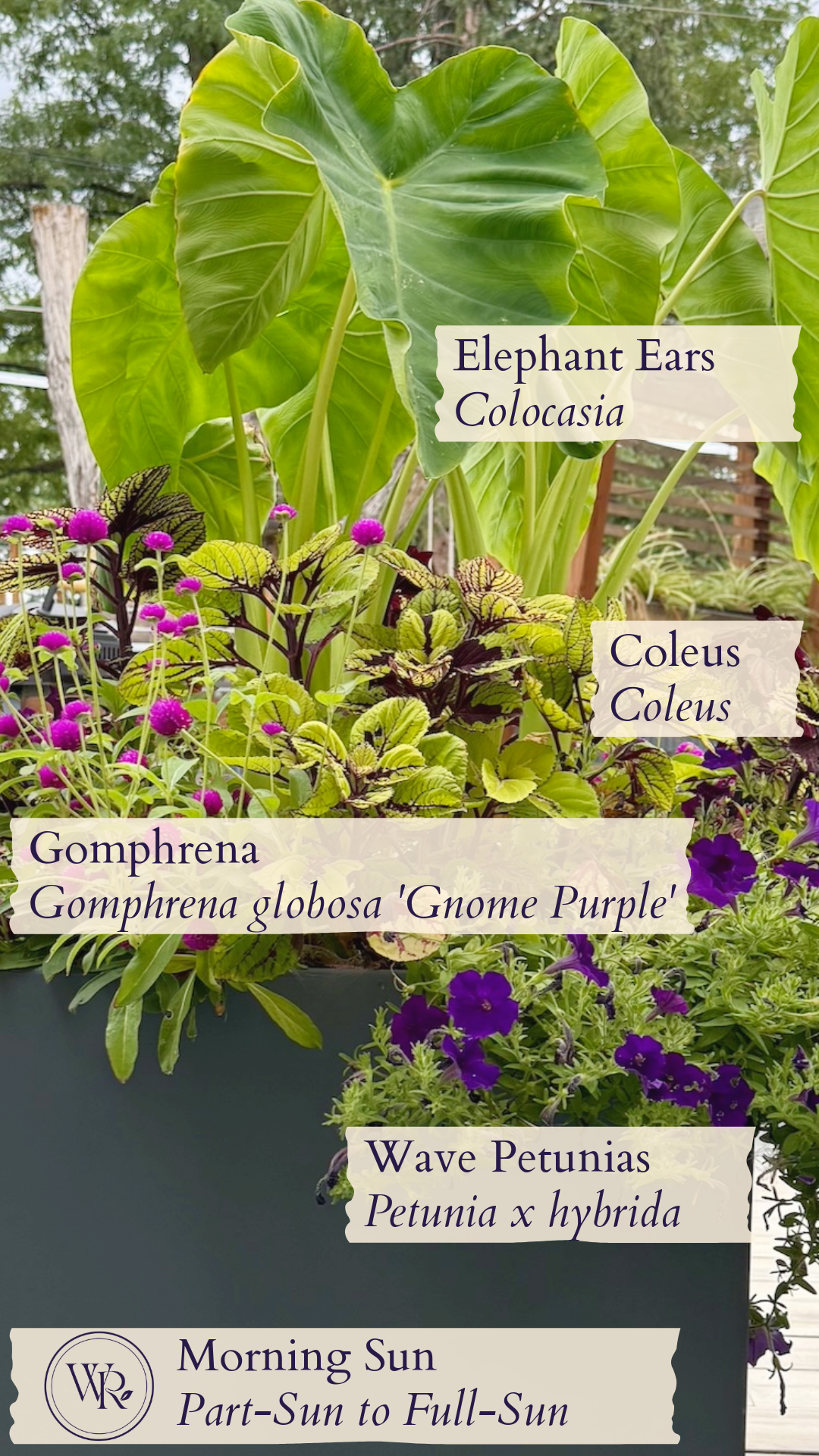
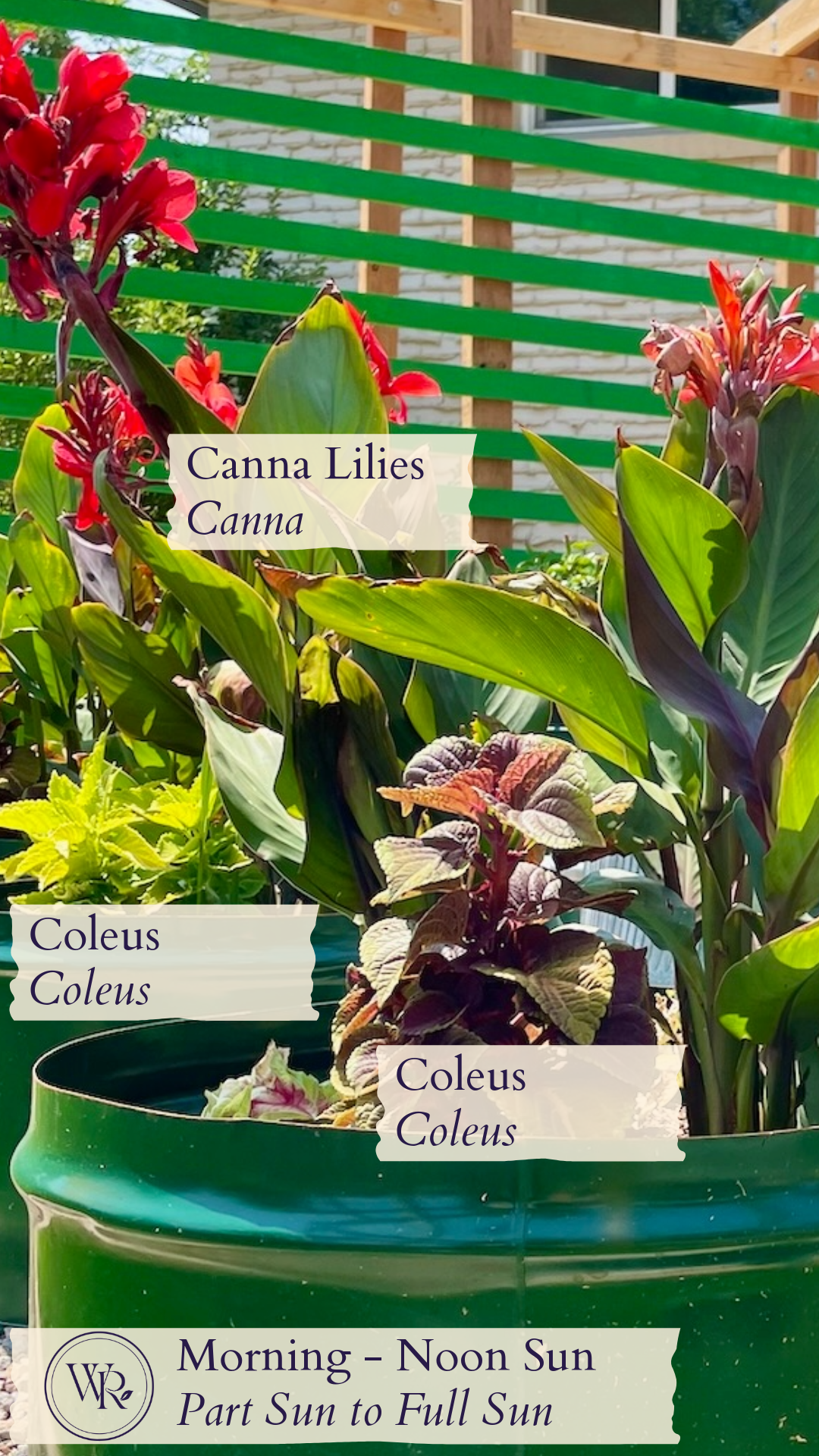
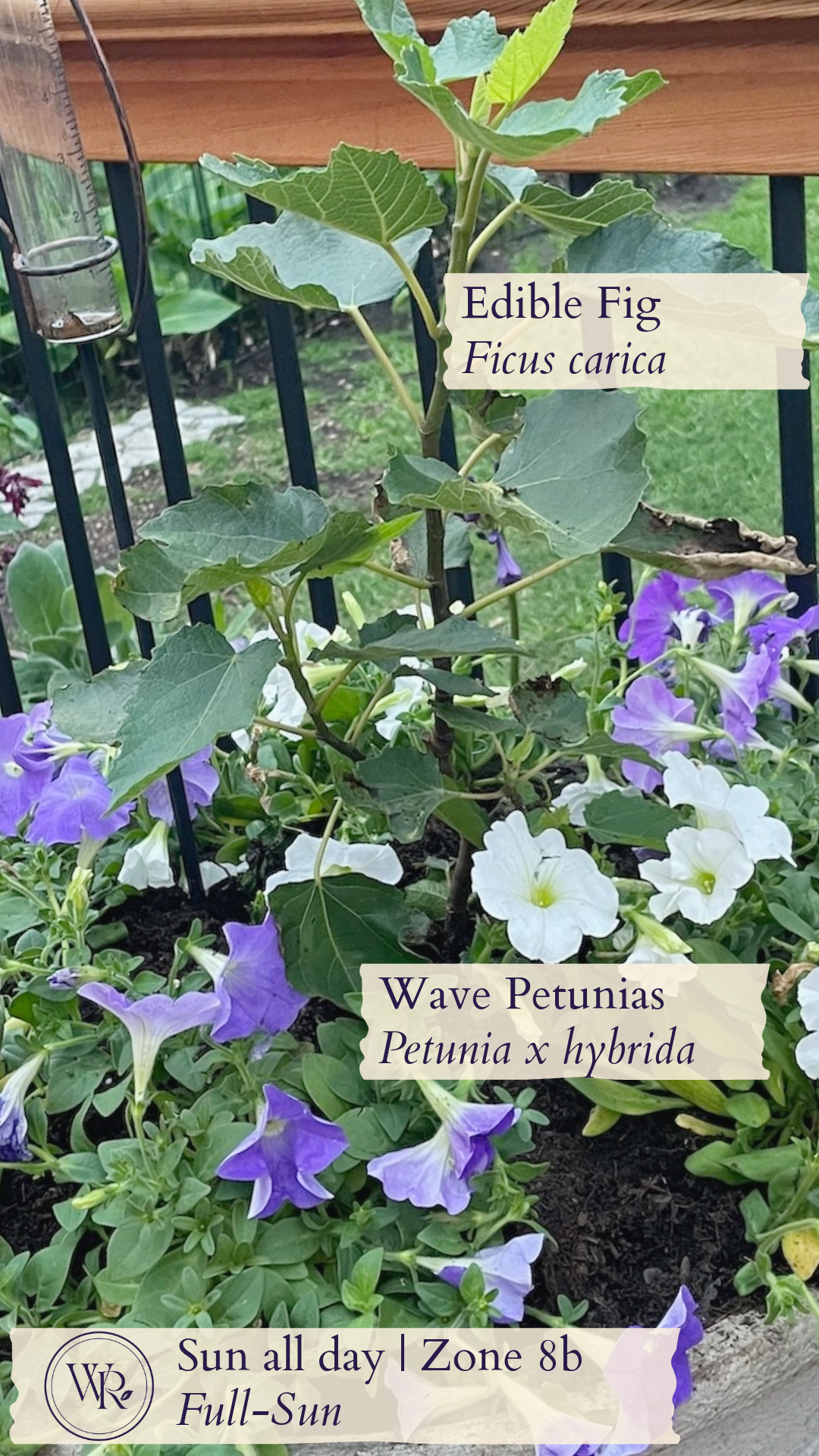
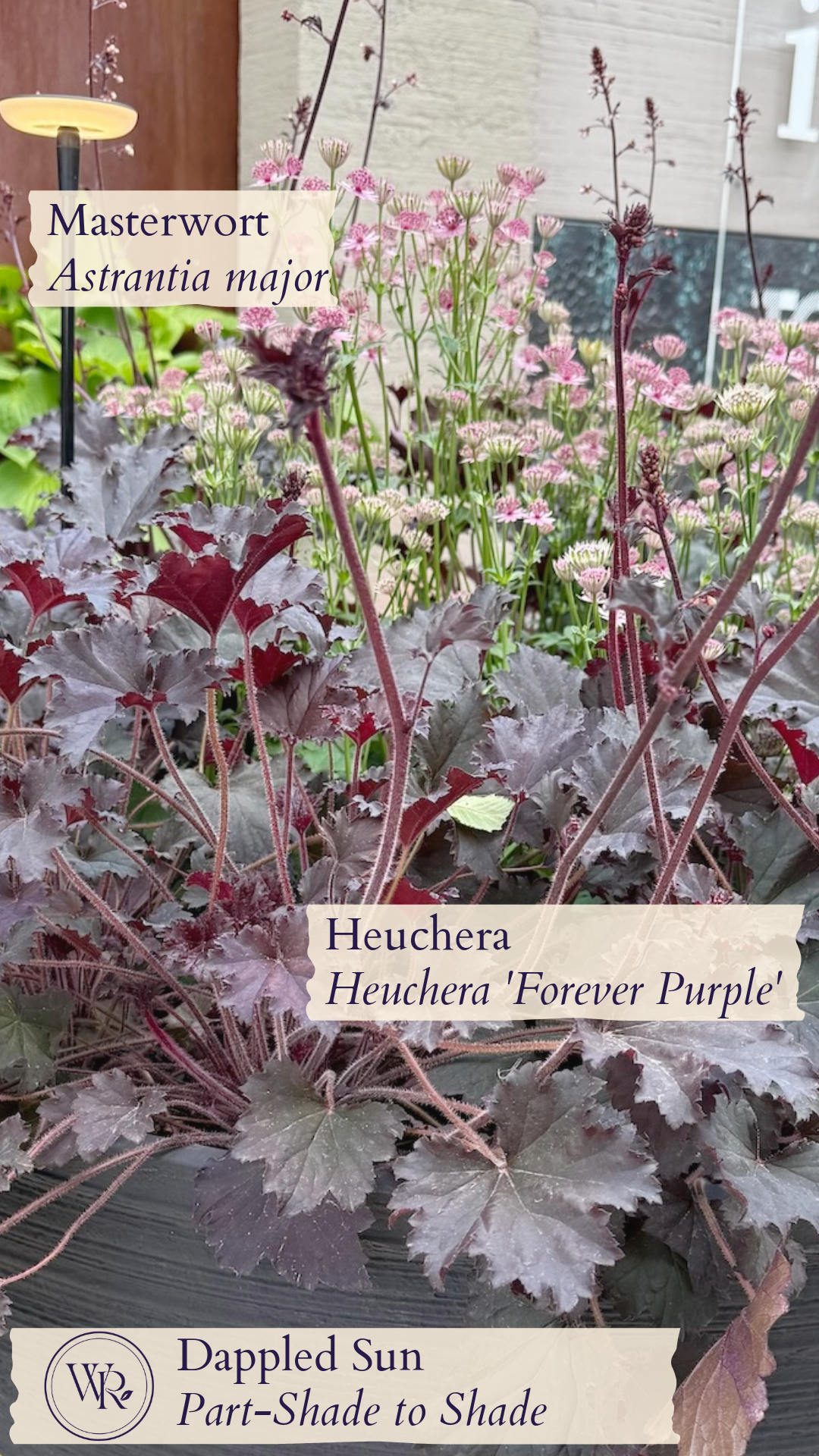
Using Perennials
in Containers
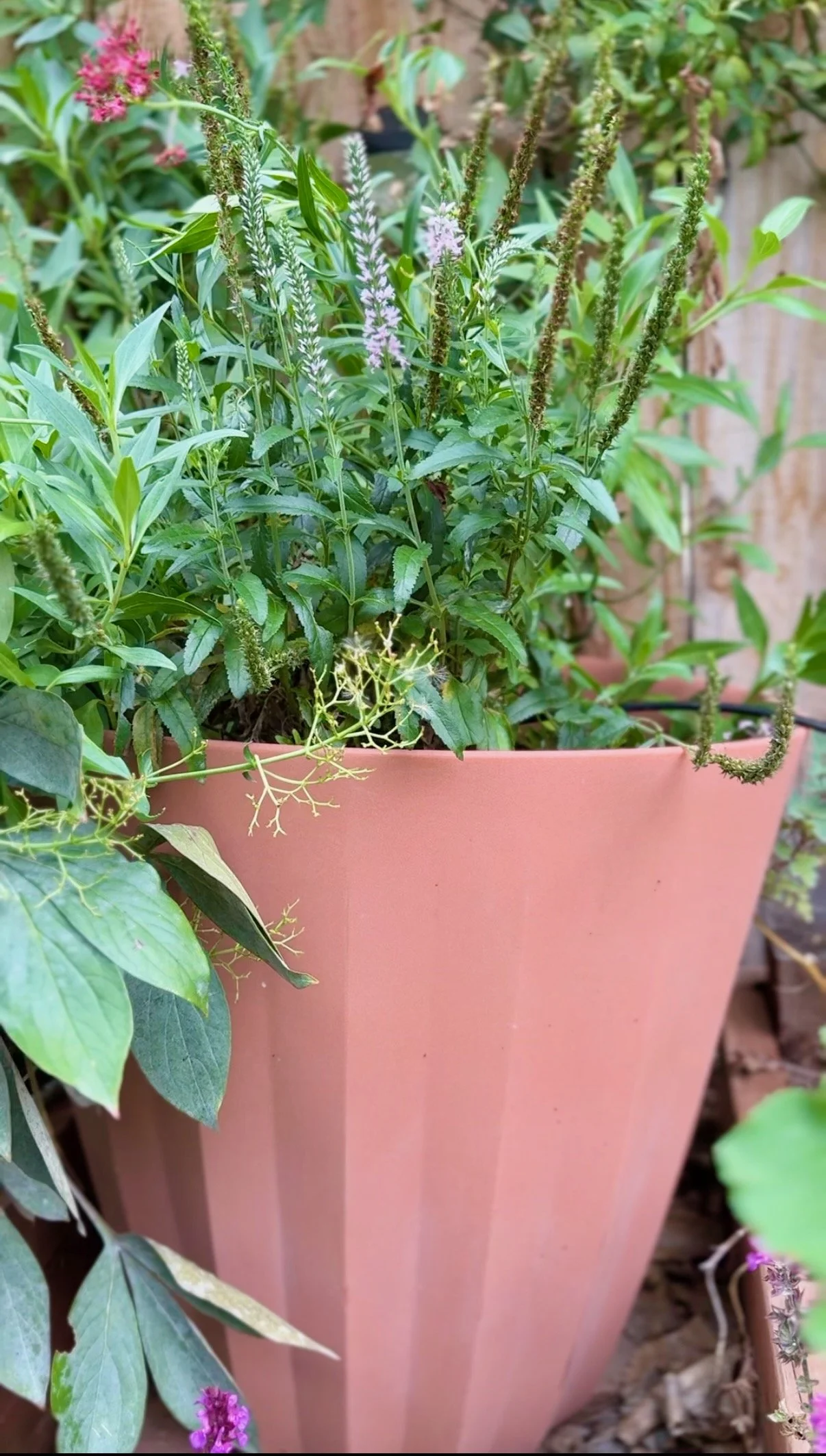
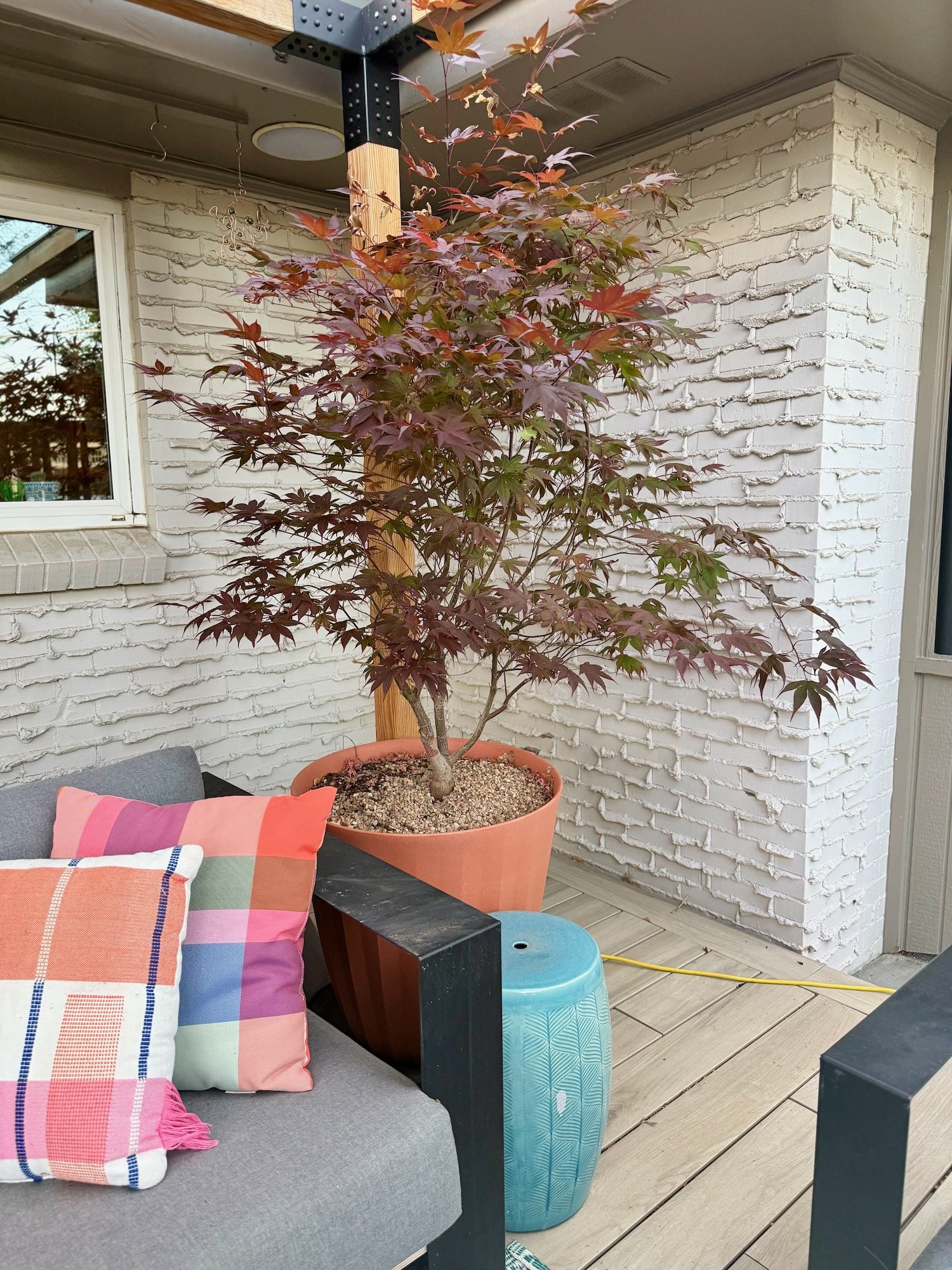
Like I said: I am cheap. And I really hate killing plants. So I often choose perennials for my porch pots, and then I plant them out into the garden in the fall. This accomplishes two goals: I have beautiful plants all summer long that the pollinators love, but then in the fall I am expanding the selection of plants in my garden before winter comes.
Fall planting is great – the soil is warm, and as long as you plant out before the soil gets too cold or freezes, your plants should have time to get established and happy before winter comes. For me in Colorado Zone 5|6 I try to have all of my fall planting done by mid-October, but sometimes it's even later than that.
For more on perennials in containers, check out this post:
Cover the Soil with a Mulch
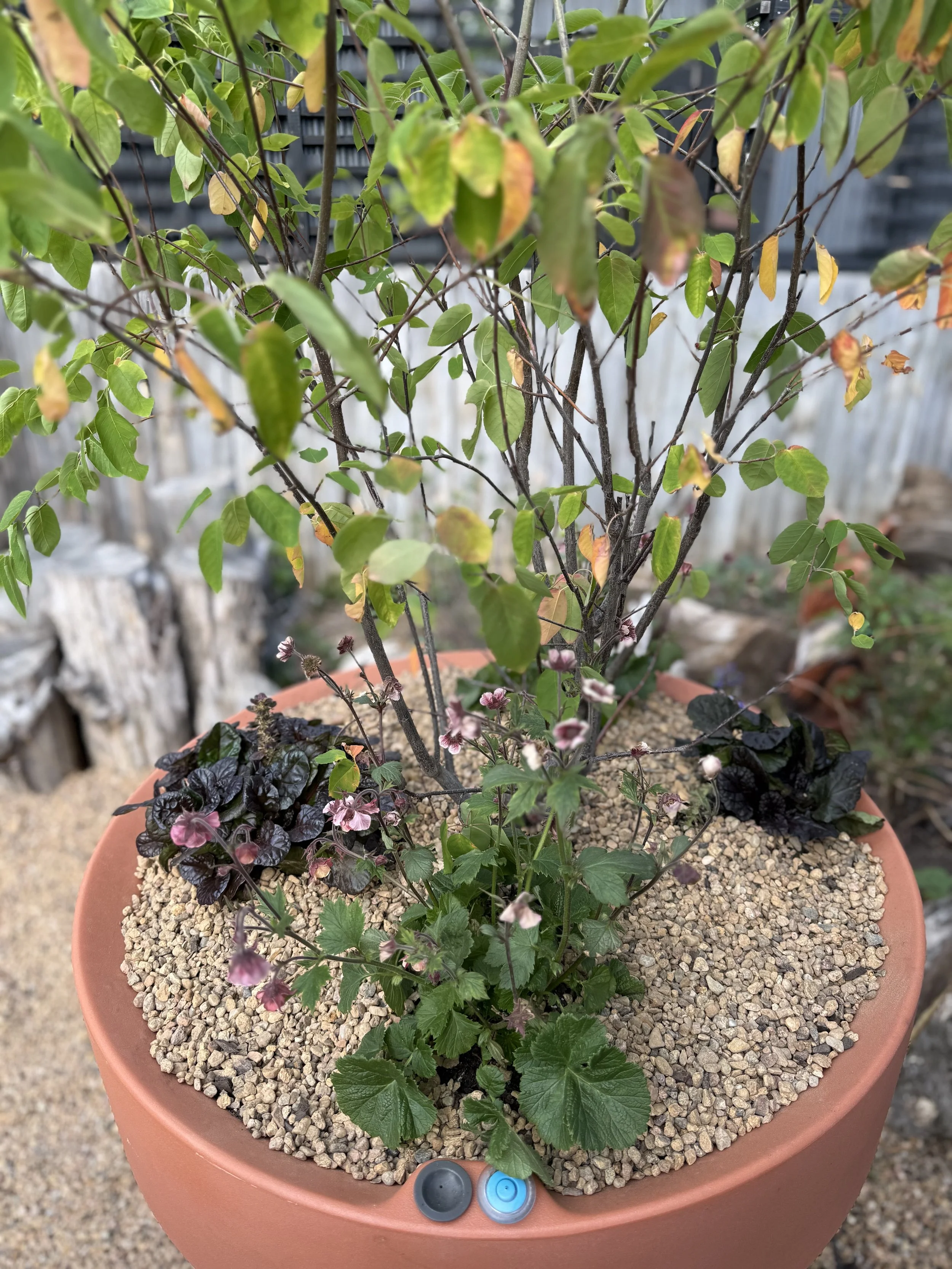
No matter what you plant, every container will do better with a good layer of mulch. Mulches preserve moisture in a container preventing drying out too quickly. And they keep the soil cooler which can be important on hot summer days.
I have two that I love: wood chips and pea gravel.
I use pea gravel frequently because it keeps the soil from washing away, and it finishes off a pot beautifully. Wood chips are also fabulous and act a bit like a sponge holding in moisture. Either one is a good choice, but mulch is an important step in keeping your pots healthy for the long run.
Make a Plan
for Feeding
and Maintenance
Many plants in containers need regular feeding. Their resources are finite – whatever is in their pot or container. So the best feeding plan is one you can stick with. Research your plants before feeding to determine what kind of fertilizer works best – and on what schedule. And always follow the manufacturer's instructions.
I always choose an organic formulation, and I tend to use two types of plant foods:
Organic granular feeds for roses, peonies, and fruit trees
Organic liquid seaweed or tomato feed for everything else
As for maintenance, deadheading and pruning are the two things to do through the season. Deadhead spent blooms to encourage new growth. And prune plants back as needed to encourage bushier growth when plants get leggy.
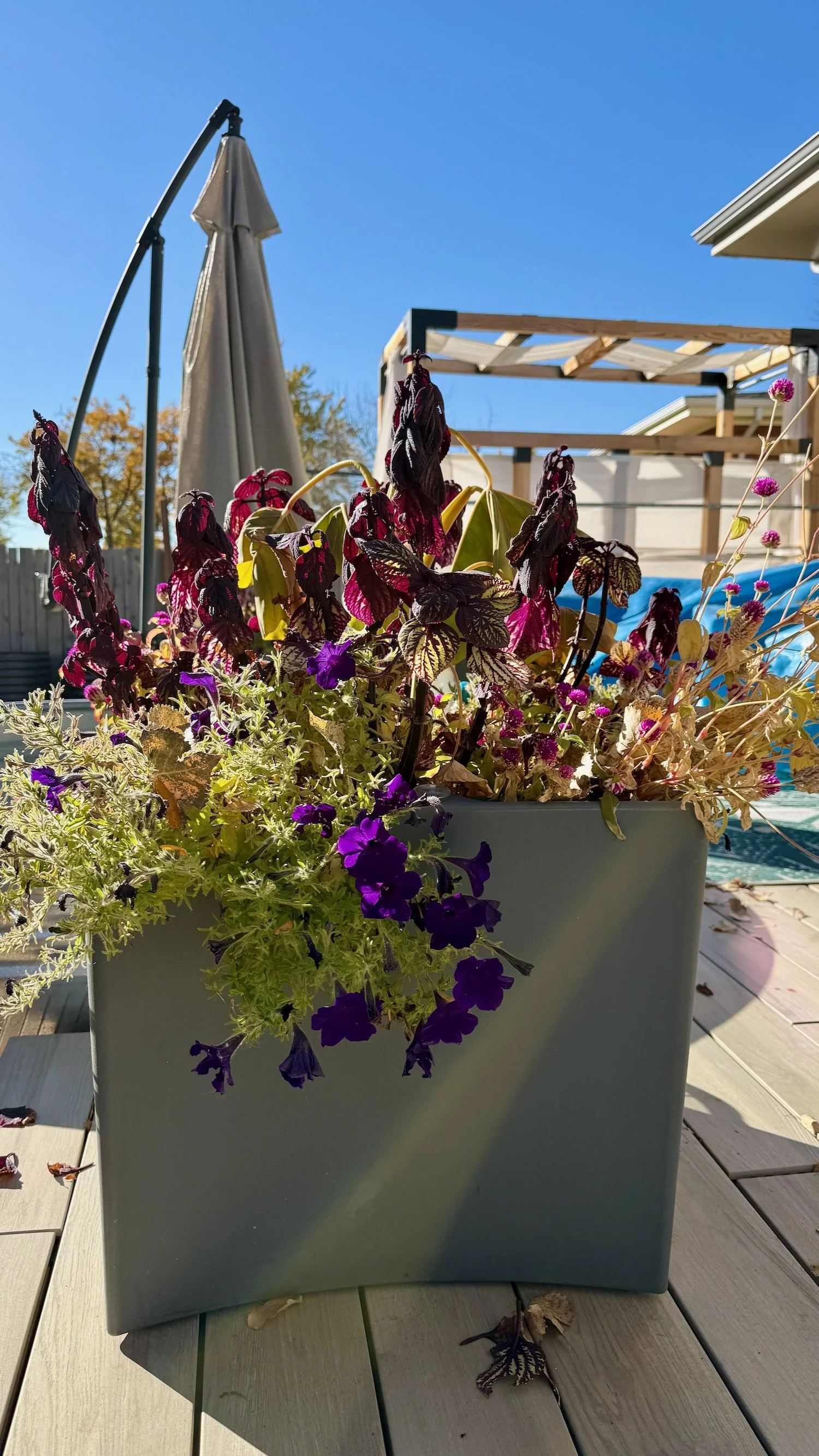
A planter on my back deck after our first frost with no protection.
Plan for Protection from Frost & Freezes
Depending on where you are, protection from frost and freezes can be very important – particularly in the spring and fall. There's nothing worse than losing your just-planted containers to a late spring frost. And even mature plantings in the fall can last longer with a little preparation.
First, anything that can be moved on a cold night, gets moved. Sometimes that is just a matter of moving small pots inside or close to the house.
But for larger planters, a little more strategy is required. I use the same strategies for pots and containers that I use for protecting plants in my garden.
Large trash bags can be cinched around pots creating a bubble of warmth
Boxes are also effective
And plants can be huddled together and protected together as well.
For more about plant protection, check out this post:
at the close…
That's a lot of information, and there is a lot that goes into planning beautiful porch pots. But the more you know, the better your results will be. When I think back to those beautiful containers at those grand homes, I know that teams of gardeners and landscapers were employed to keep them looking their best all summer long.
We don't have teams of gardeners and landscapers. We have ourselves. But when we are armed with knowledge, we can create beauty at our homes, too – for a lot less money and with the same incredible impact. We just have to make smart choices about containers, plants, and placement.
And with that, our homes can look like a million bucks (or more), too!
If you have questions, don't hesitate to ask!
This post originally appeared on my Substack. Subscribe to my Substack, and all of this gardening goodness will appear in your email inbox weekly!
Happy Gardening!
Angela
Subscribe now so you never miss a thing!
Crescent Garden Discount Code!
Click here to order and use Promo Code: WILDREVIVAL15
15% off total purchase
Expires 12/31/2026
Cannot be combined with other offers